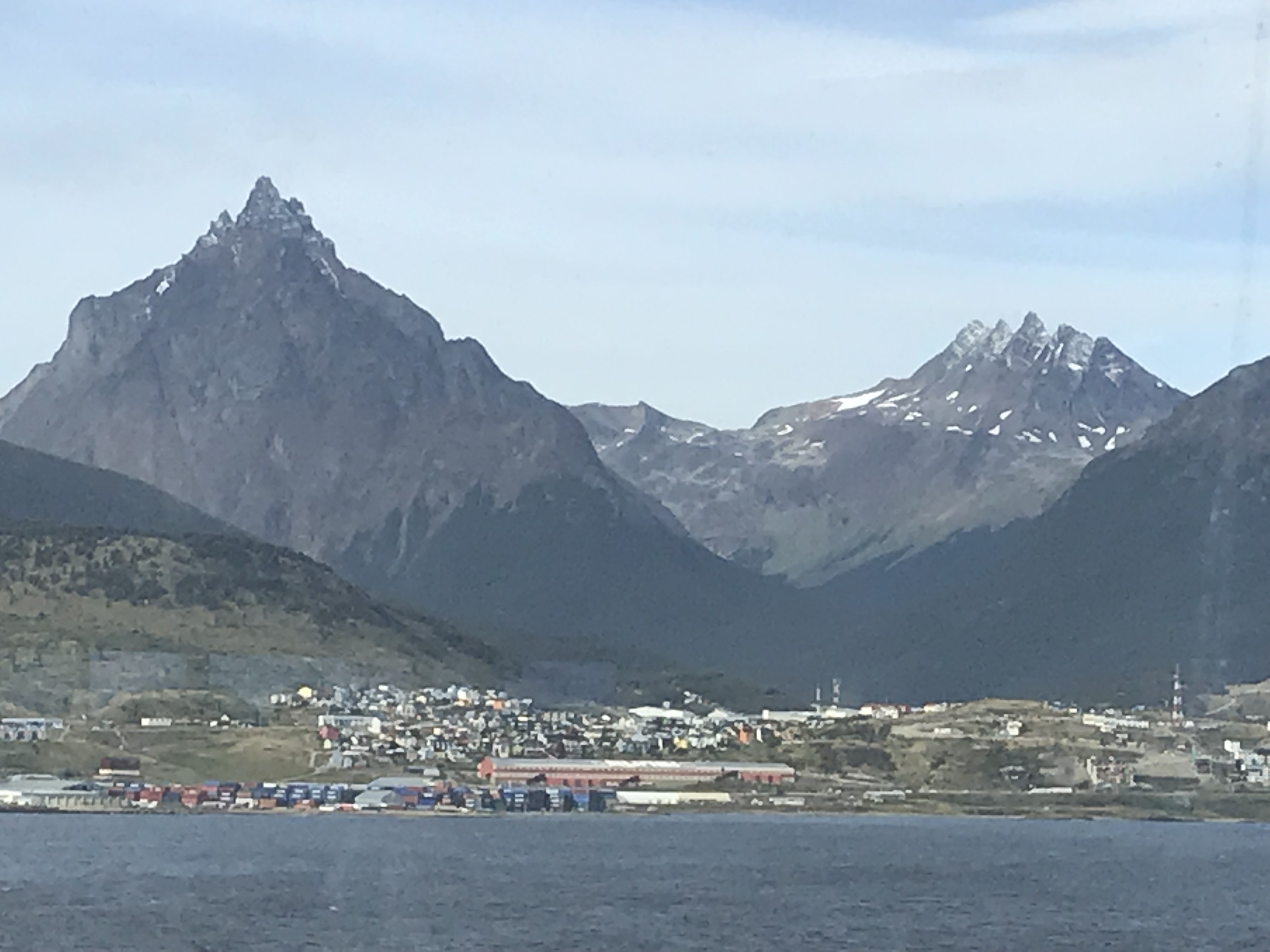
View of Ushuaia from the Beagle Channel 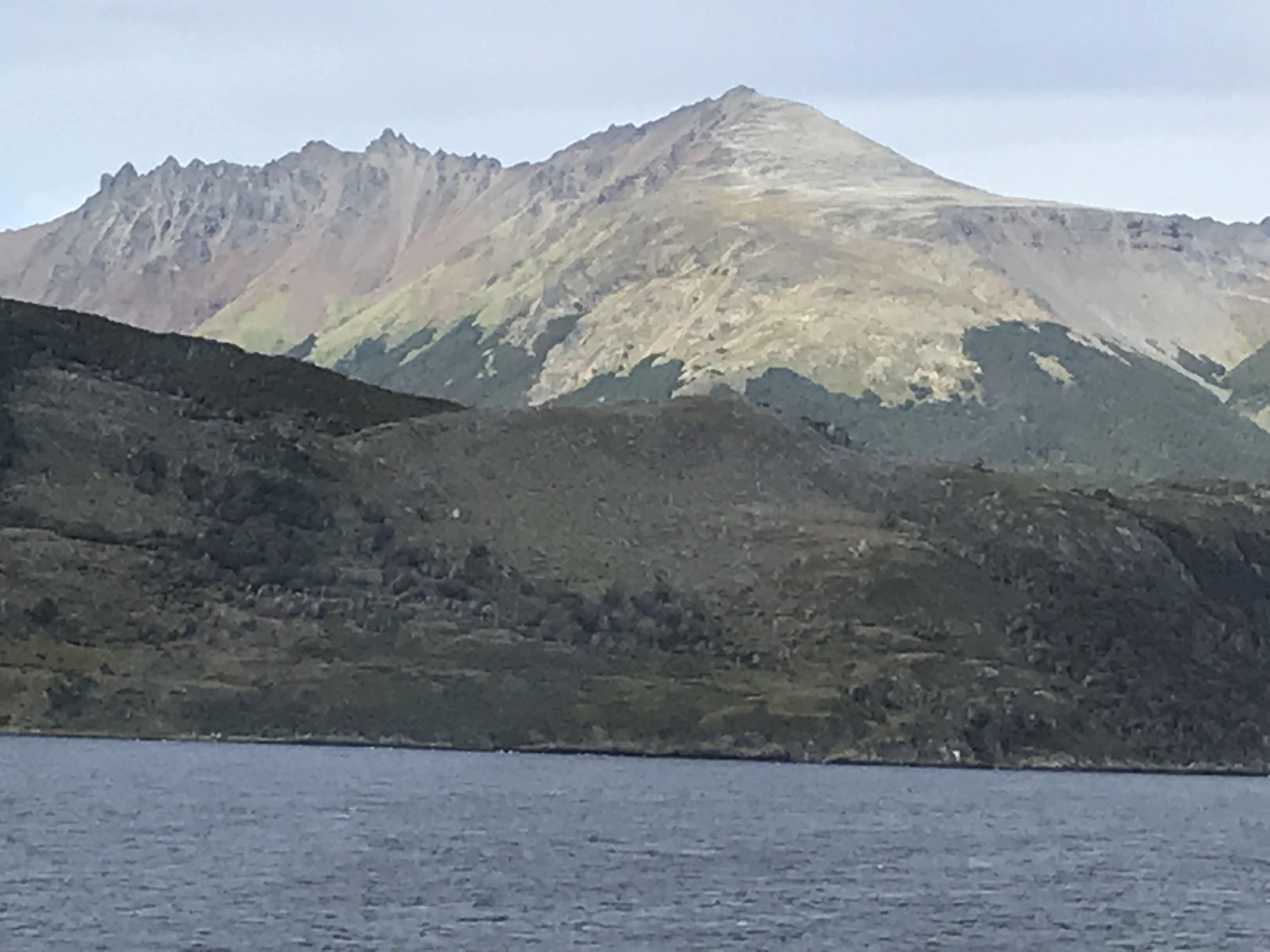
View near Ushuaia 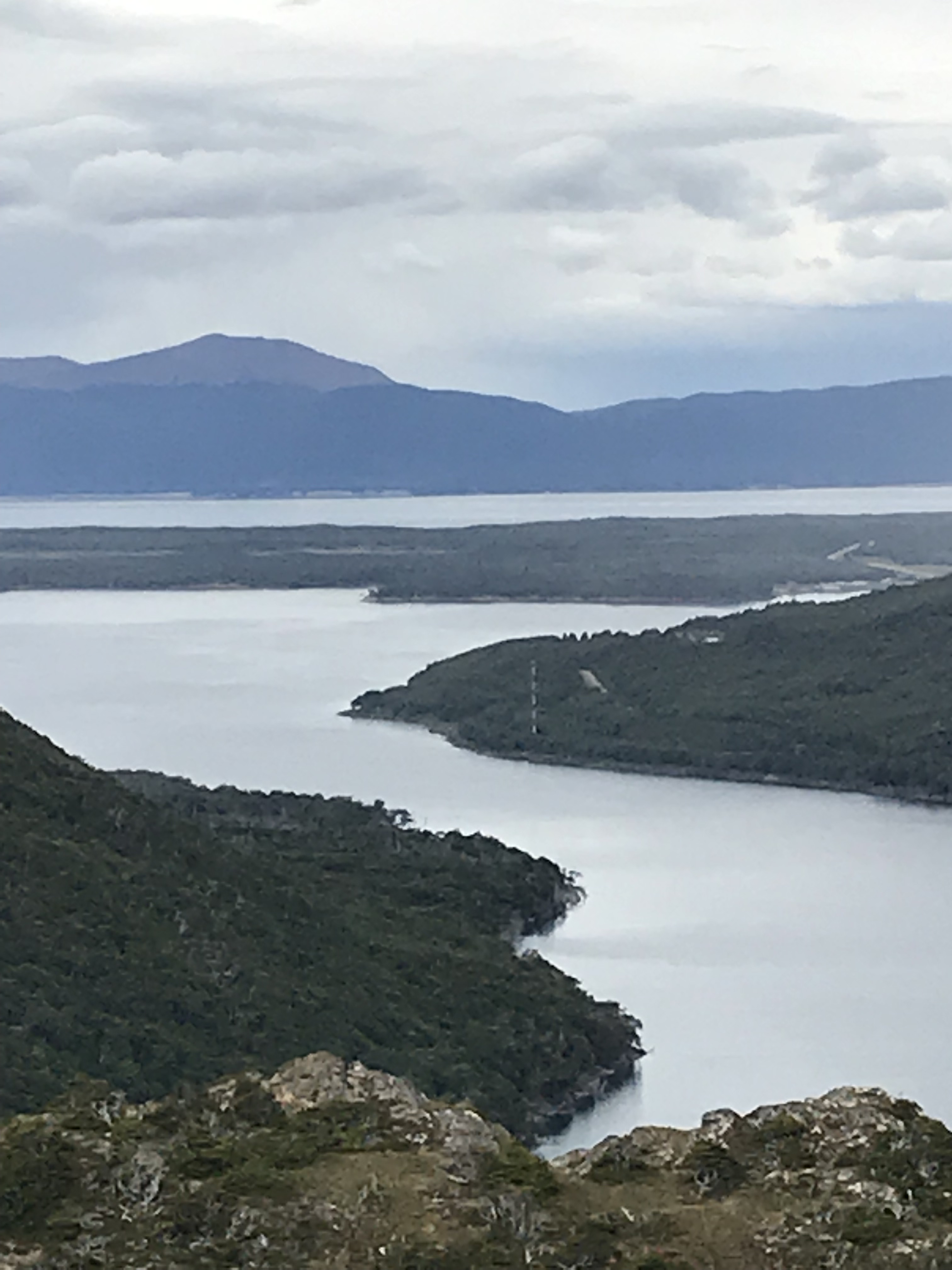
Fagnano Lake 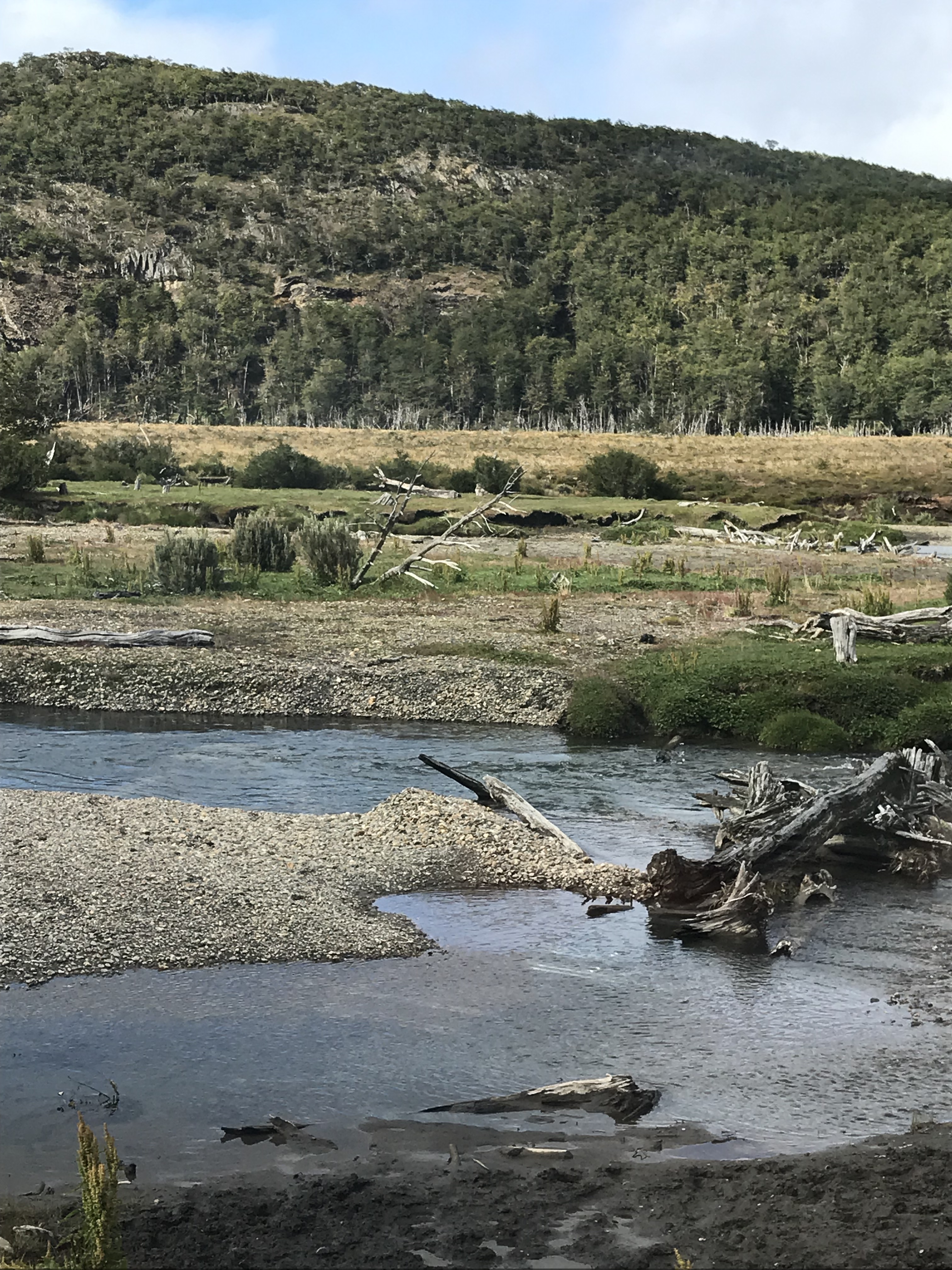
On the way to the lake 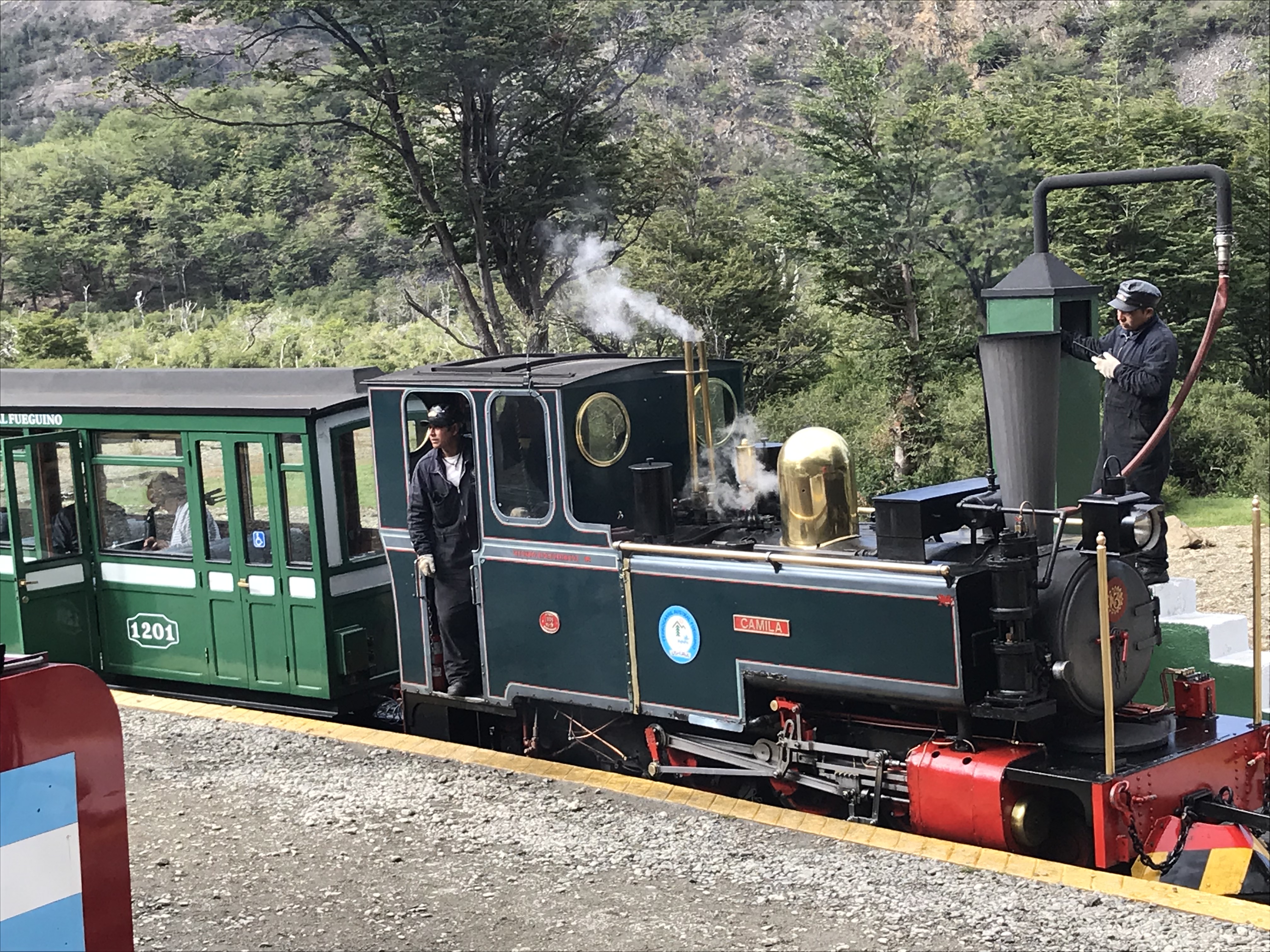
Our train 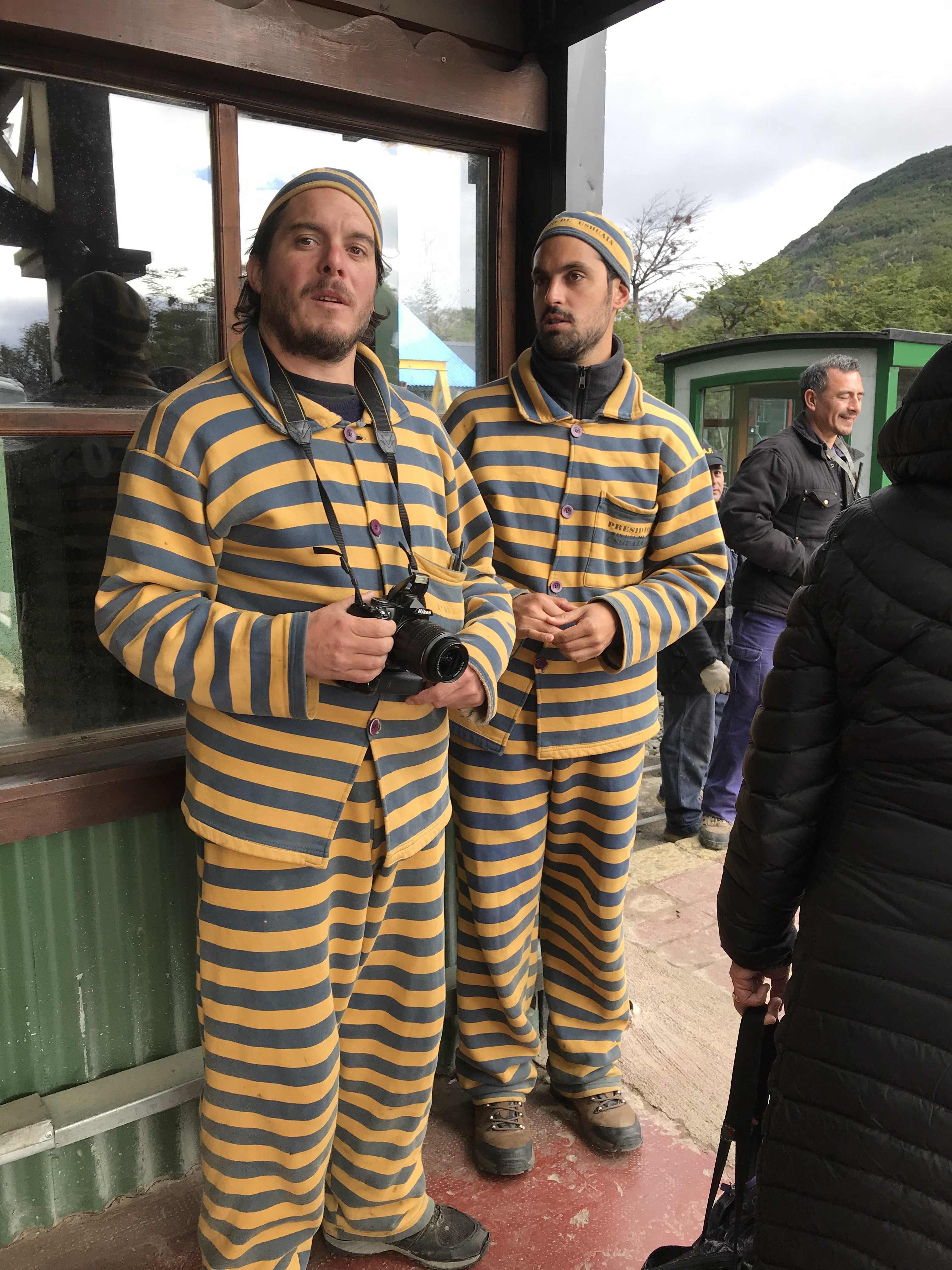
Dressed as prisoners to take your photo 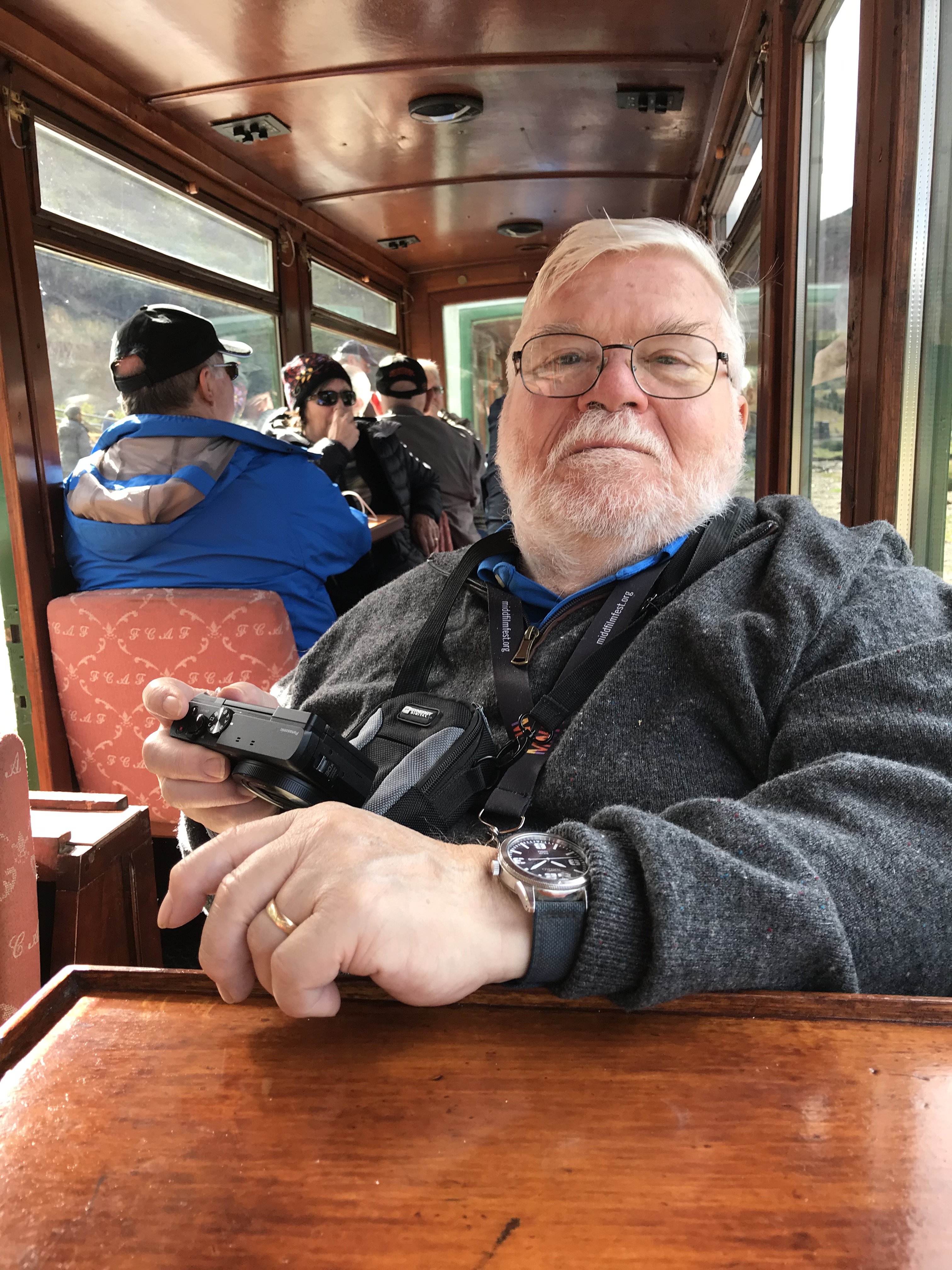
Chris on the train 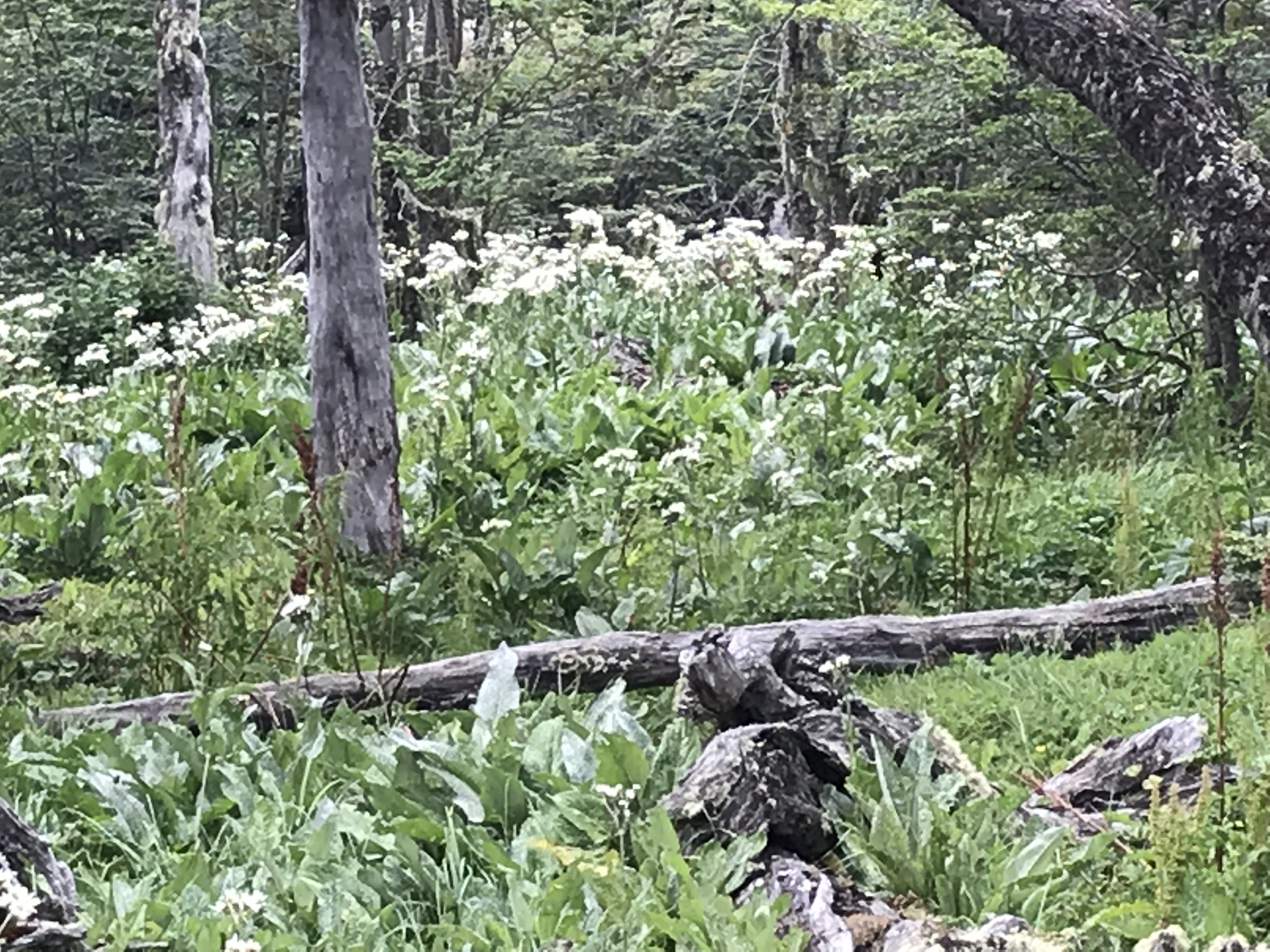
View from the train 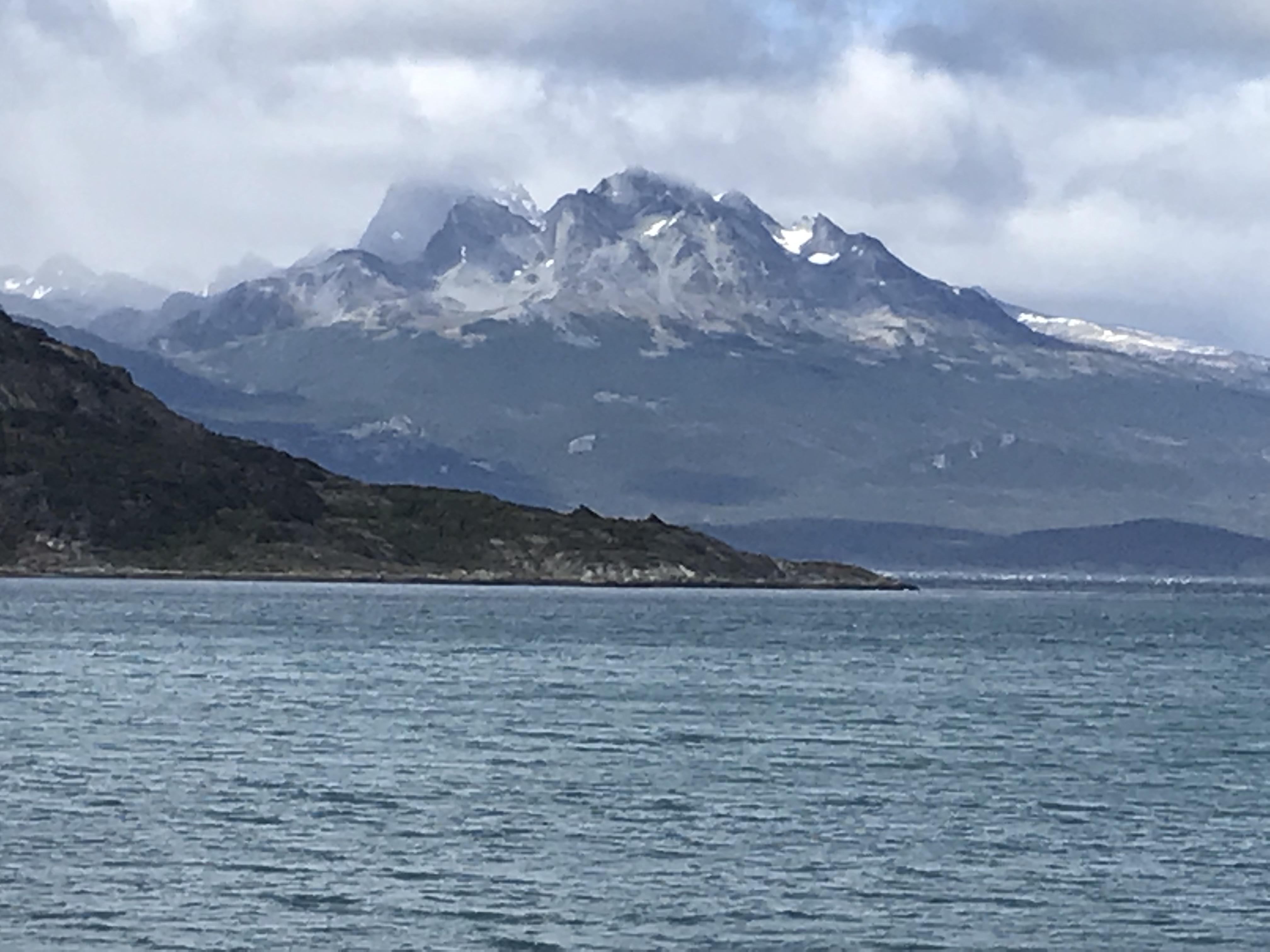
Mountain near Ushuaia
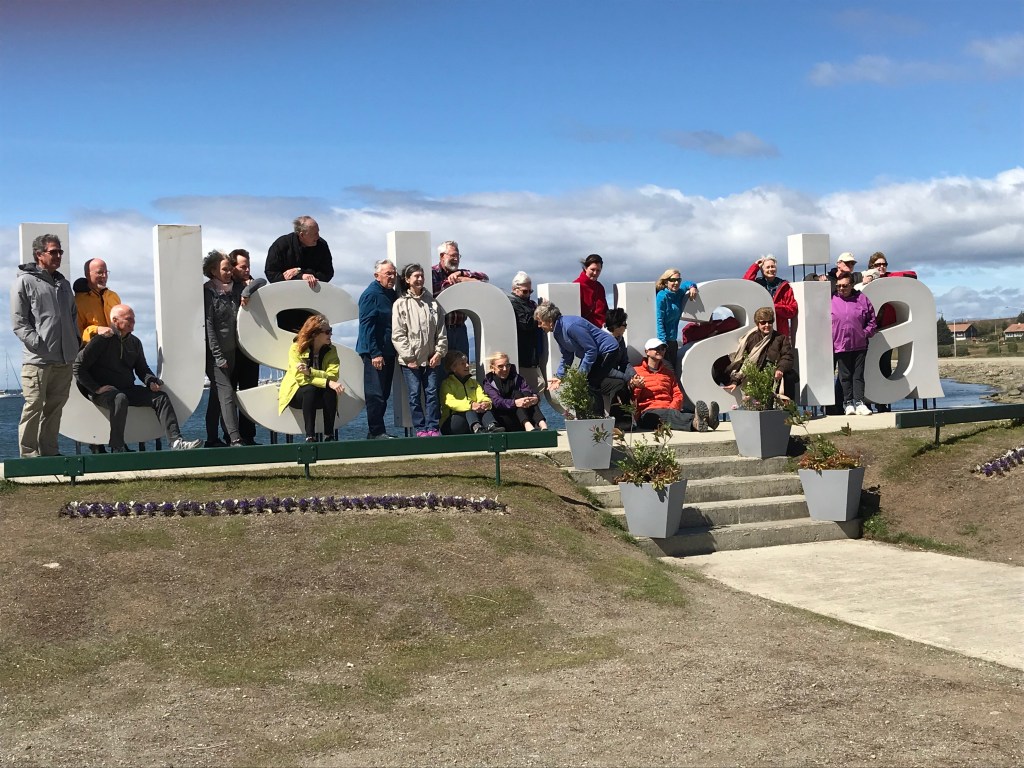
I made no entry for January 30 because it was a typical ‘at sea’ day and Ushuaia was much more interesting. First of all, ‘Ushuaia’ is the Yamana Indians name for the area as written by British explorers meaning ‘deep bay.’ That the spelling was determined by English language speakers is important because, although the pronunciation that follows the Yamana word is something like ‘oo-shwuy-a’, the Spanish language doesn’t pronounce an ‘h’ following an ‘s’ so another ‘correct’ pronunciation is ‘oo-swuy-a.’
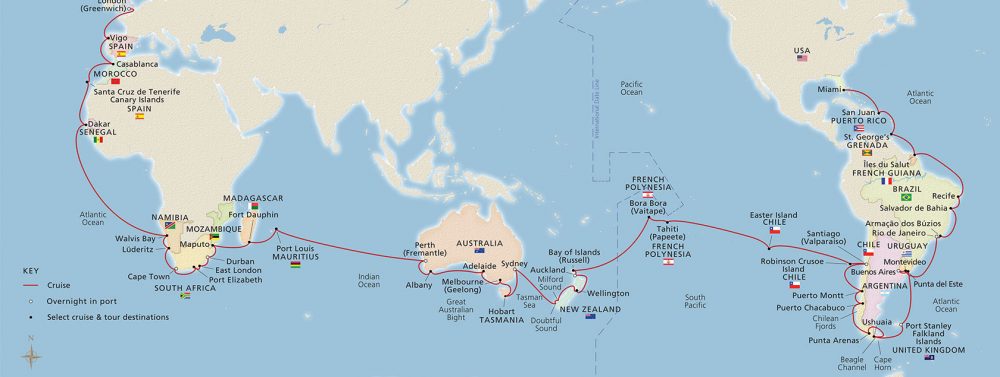
We sailed in from the east along the Beagle Channel. Ushuaia is a beautiful spot surrounded by snowcapped mountains on southern end of the island of Tierra del Fuego, which itself is part of Patagonia. The population is about 70,000 although as little as 20 years ago it was about 15,000. The Argentinean government wants to boost population so established much industry and gives financial incentives for living there. The biggest industry is electronics, a surprise to all of us. Another big industry is tourism mostly summer but also winter for downhill and cross-country skiing and dog-sledding. Summer tourism is partly related to it being the closest port to Antarctica and more and more expedition ships as well as pleasure cruisers go to Antarctica. As many as four other passenger vessels were in port simultaneously during our time there.
I would find it difficult to live in a place where the average summer high temperature is in the low 50s with much wind and, at 55 degrees south of the equator (equivalent to somewhere in Hudson Bay or Glasgow, Scotland), winter days are exceedingly short, but people who live there seem happy. One of our guides was born there but grew up elsewhere and moved back as an adult; another was from Buenos Aires but prefers the mountains to the city.
Since we were in port for a day and half—an extra half-day—we managed to fit in three excursions as well as some tourist shopping. We took a bus east and north over the Garibaldi Pass to beautiful Lake Fagnano—great scenery. Since this is the tail end of the Andes mountains chain (before it goes under the sea and resurfaces in Antarctica), we were told we can say we conquered the Andes (admittedly at about 2800 feet or somewhat higher than Appalachian Gap in Vermont)! The trip included a rainbow trout or roast lamb lunch at a small resort where many sled dogs were boarded.
The following morning, we took a tourist train into the National Park—again lovely. Ushuaia was originally established as a penal colony, and the prisoners were transported into the forest by train for firewood. Our train was much more comfortable and enclosed where theirs was open. Until the prison closed in the mid-twentieth century, the town basically consisted of prison employees. After a quick lunch we had a bus tour of the town.
The sail out from Ushuaia east on the Beagle Channel was lovely—we basically retraced part of our route in two days ago and then hung a right toward Cape Horn. I’m afraid I’m overusing the words ‘beautiful’ and ‘lovely’ but the whole landscape really is beautiful and lovely!
 C&C travel the seas
Loved your pictures and comments. We are going to Patagonia to the places you visited and more, as well as Buenos Aires and Santiago, in November (the begin of next summer there).
LikeLike