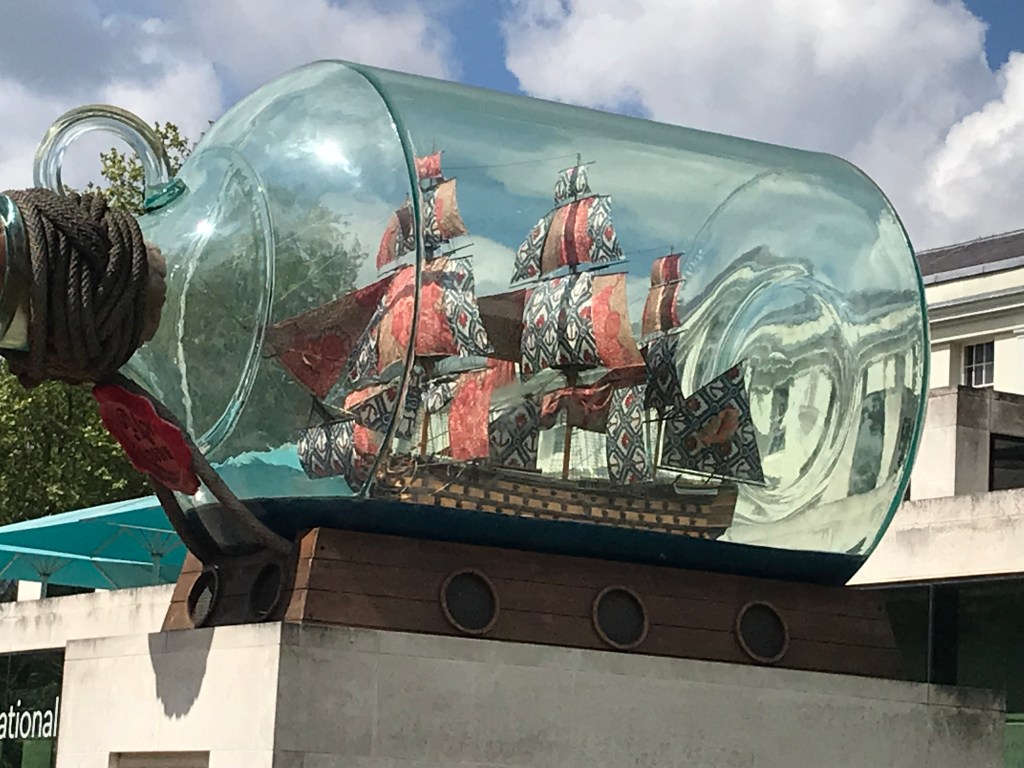
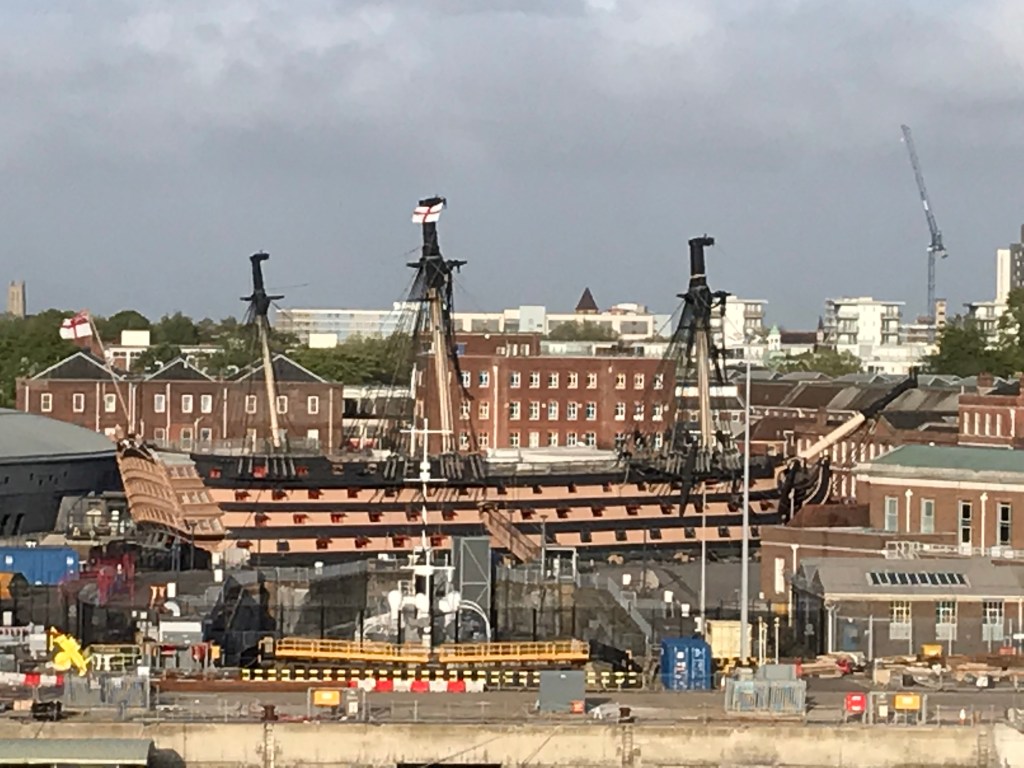
Art celebrating Lord Nelson’s ship (but with African prints for sails) in front of Maritime Museum
Sailing up the Thames is supposed to
be lovely, but, since we arrived at 5:15 am, we missed seeing it.
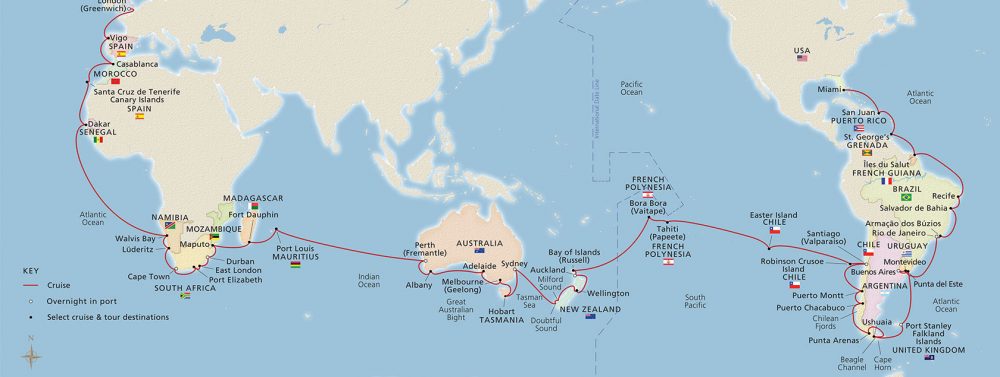
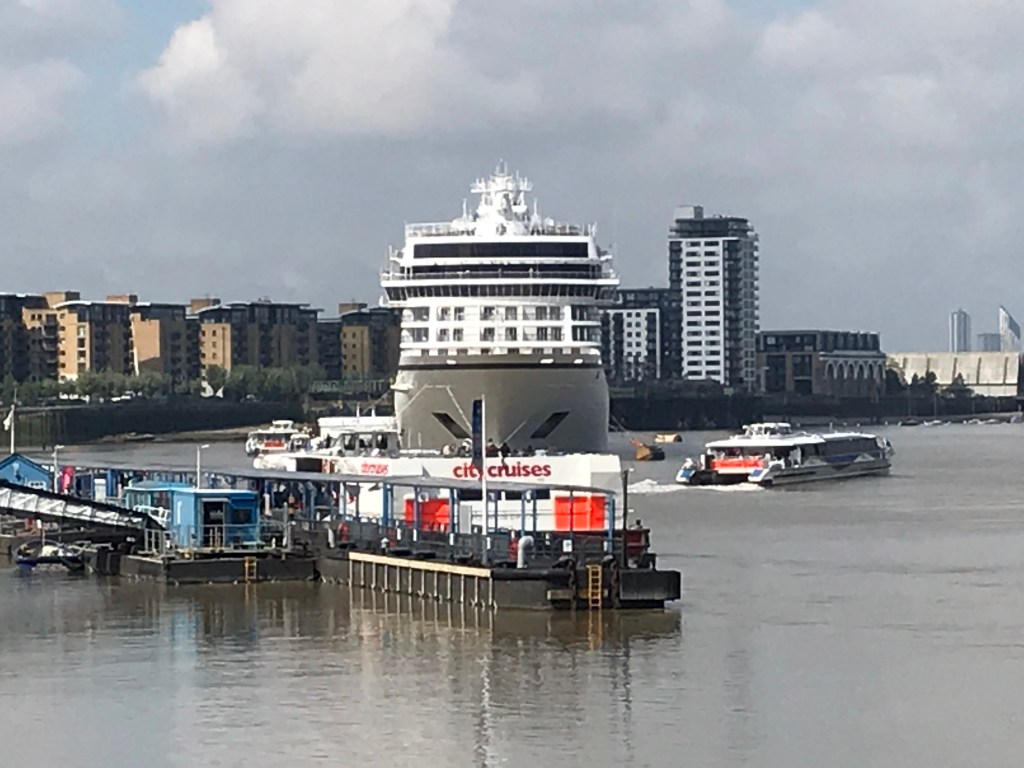
We are moored in Greenwich in
southeast London and go ashore by tender.
That seems awkward when they have to get over a thousand people’s
luggage off (half the staff as well as pretty much all the guests are departing),
but Viking regularly moors here so I guess it works.
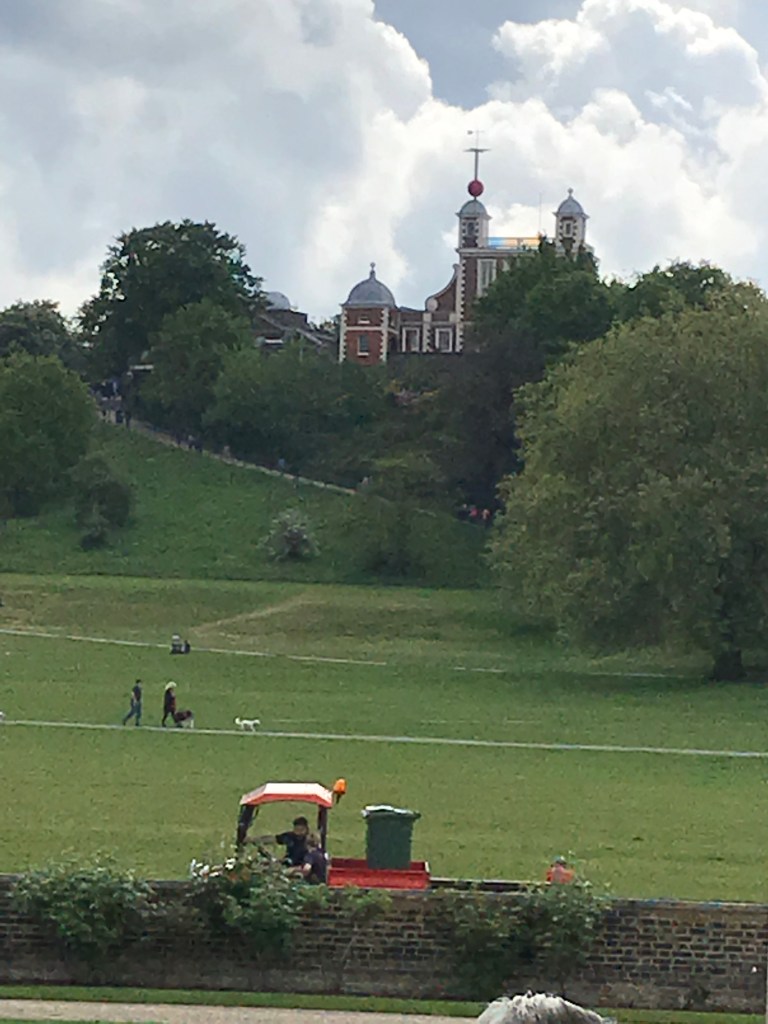
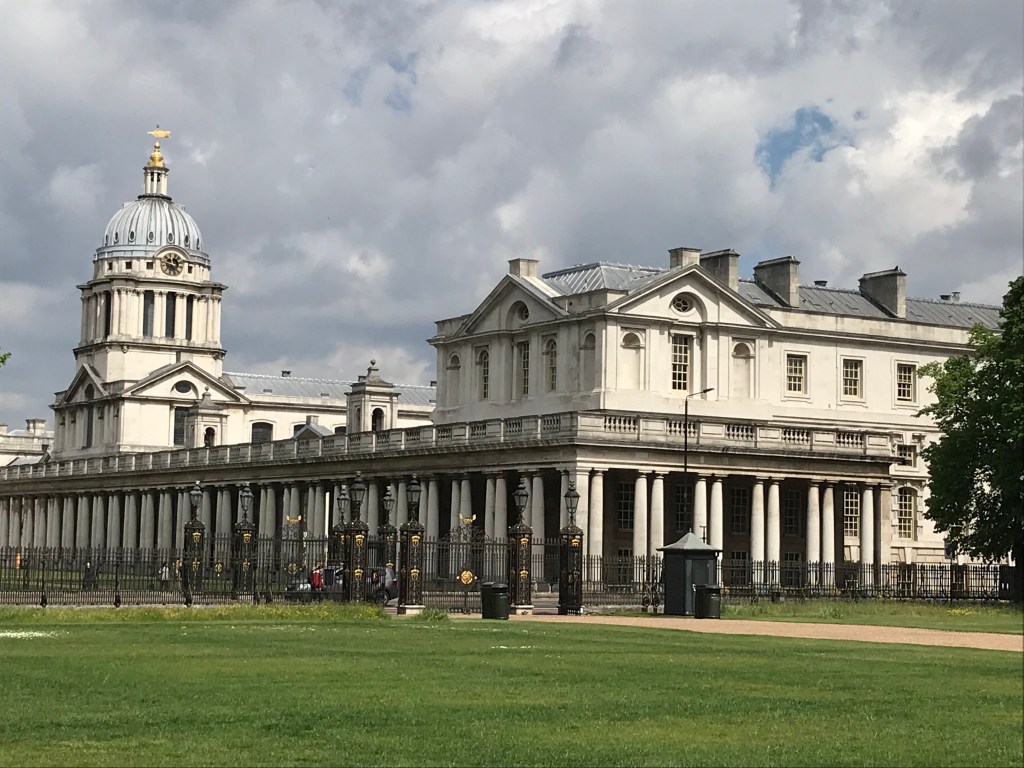
Greenwich, of course, is the center of
the universe or, at least, the prime meridian.
That was established in the Royal Observatory on a hill in the town.
The walking tour this morning was
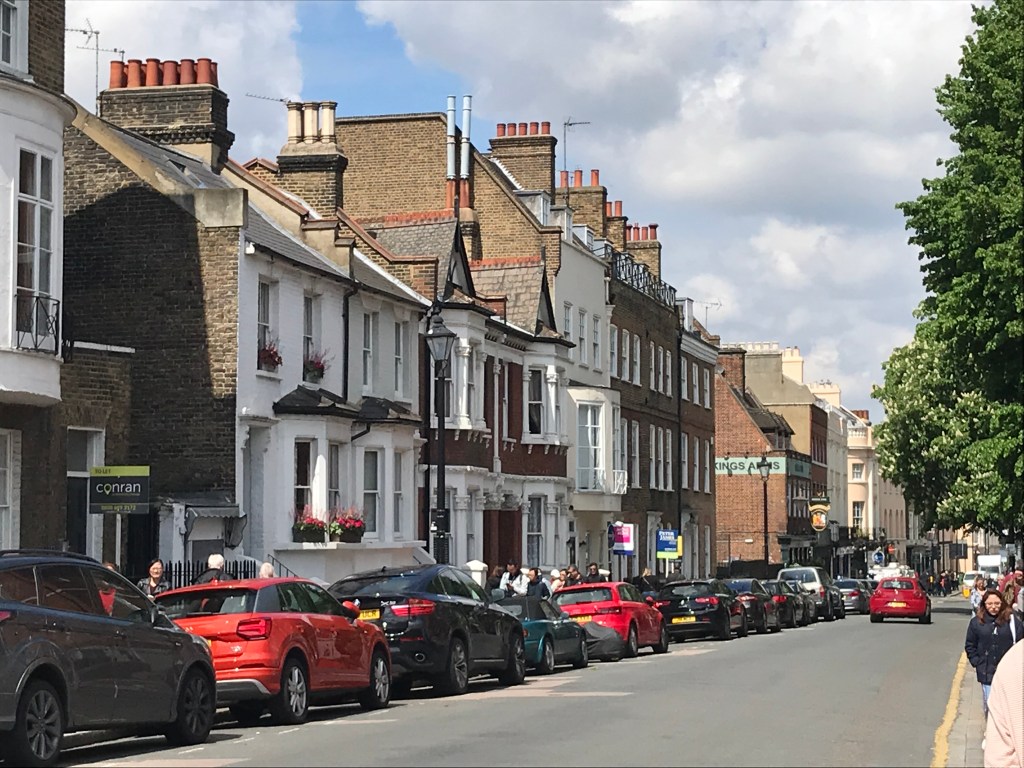
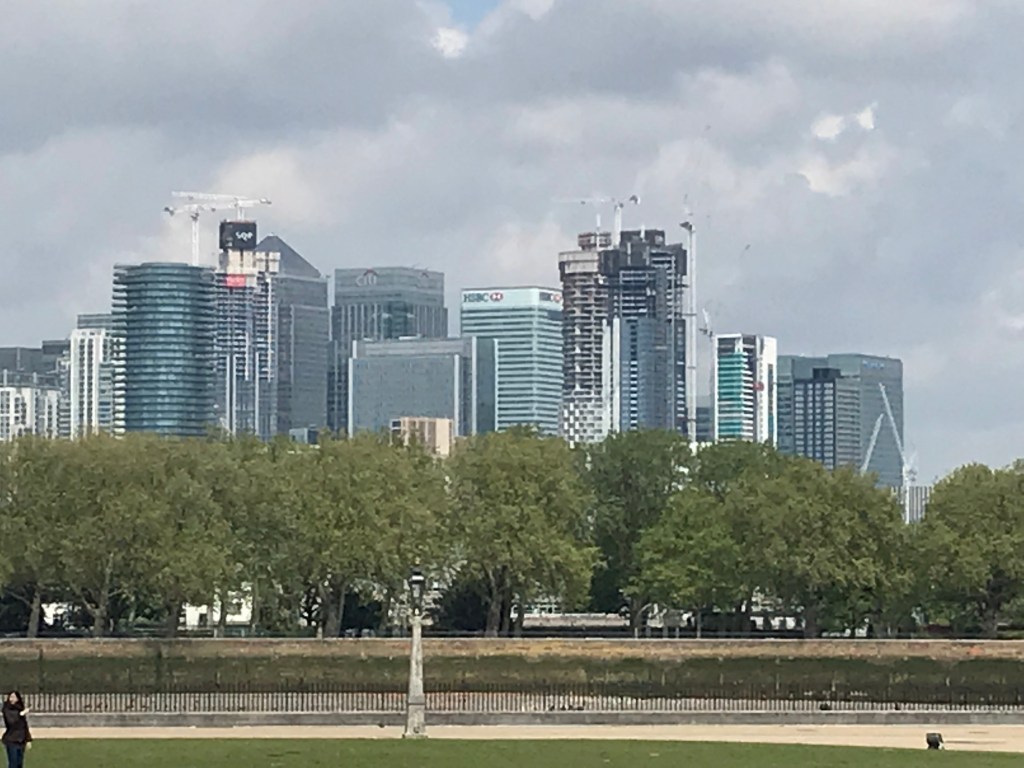
excellent and I really like Greenwich—just down river from the center of
London, it feels like a village.
Apparently its become an expensive place to live, but it seems to me it
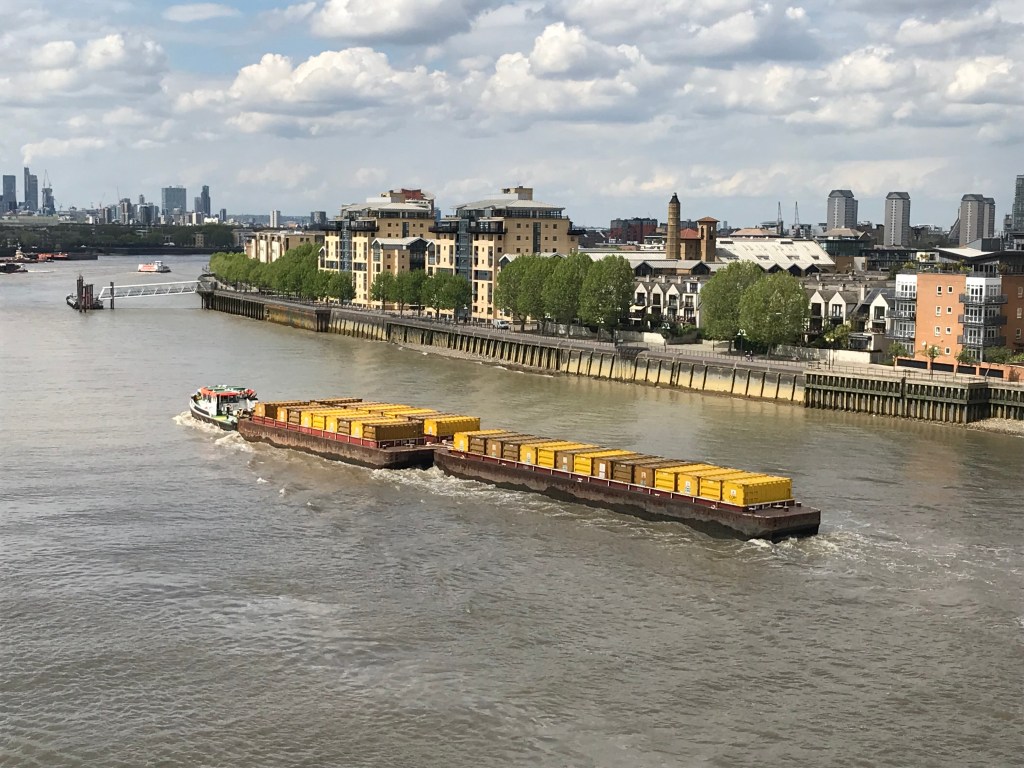
would be a good place to stay when visiting London. You can get the metro here or take an
equivalent ferry to almost any place along the river you choose.
Chris didn’t go on the walking tour—which
was exteriors only—so in the afternoon we both went and enjoyed the local
market and the Maritime Museum.
In the evening we are taking a boat
upriver and going on the London Eye (ferris wheel); it should be pretty with
all the city lights on.
Today is the 128th and last
day of our world cruise. We get off at
8:30 tomorrow morning. Then we spend two
nights in a London hotel with a tour of St. Paul’s and the Tower of London before
we fly home. But since the cruise is
officially over, this is the last entry of the blog. Thank you for reading. And happy travels.
Portsmouth to London doesn’t require the
full day and a half scheduled so the ship is dawdling. We began by circling the Isle of Wight and
then wandered toward France before finally approaching the Thames Estuary.
Since Britain doesn’t allow the
discharge of gray water into the Thames, once we enter we need to be very sparing
in our water usage, and the laundry is shut down.
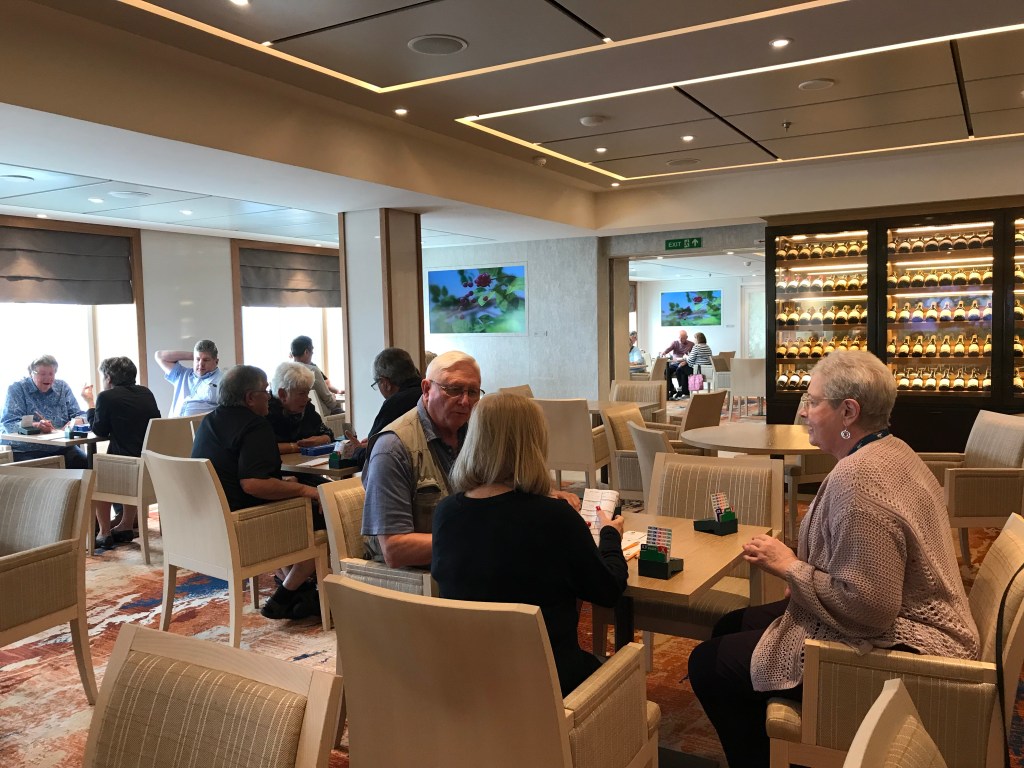
Being the last sea day of the cruise,
this afternoon was the bridge ‘club championship’ with double master points
(whoopee…), and Chris and I won! Nice
ending to the program. I am so
appreciative of the 74 (!) bridge lessons and games during the trip. I’ve learned a lot, made a lot of good
acquaintances, and kept busy during all the sea days. I wonder, if I didn’t play bridge, whether a
world cruise’s number of sea days would be too much.
I’ve realized I really hate the end of
the cruise. The knots in my stomach over
whether everything will fit in our bags, whether all the luggage transfers
(ship to our 2 night hotel in London, to the airport, through the airport &
customs, etc) will work, seeing people for the last time and saying goodbye,
and a myriad of other concerns drive me crazy.
But I too will survive…
It’s cold and rainy so it must be England… We had grand plans of taking the ferry to the
Isle of Wight and visiting the Brading Roman Villa “one of the finest Roman sites in the UK. It’s Visitor Centre and Museum
offer unique insights into Roman life in Britain from beautifully preserved
mosaic floors to an extensive collection of Roman archaeology. It’s a great day
out rain or shine.” Nonetheless, it
sounded complicated so we decided to stick with the included bus tour. I’d still like to visit sometime—I realize
we’ve never been to the Isle of Wight, and we like archeological sites.
But I maligned England. Low and behold by lunchtime the sun had come
out, and it wasn’t too cold—though it was windy, and I could actually wear the
warmish jacket I brought on our tour.
There seemed little rhyme or reason to the places we stopped—not where I
wanted to take pictures—but it was pleasant enough. At the top of the ridge, we had a great
distance view of the port and the channel.
Portsmouth is unusual for Britain in
that it is an island city, and there certainly are many bays making a very lacy
landscape. It is the home of the Royal
Navy and the port at which the D-Day invasion was planned and executed so we
saw where Eisenhower was headquartered, received his intelligence, and made his
decision. There is a D-Day Museum that
is supposed to be excellent, but we didn’t visit it.
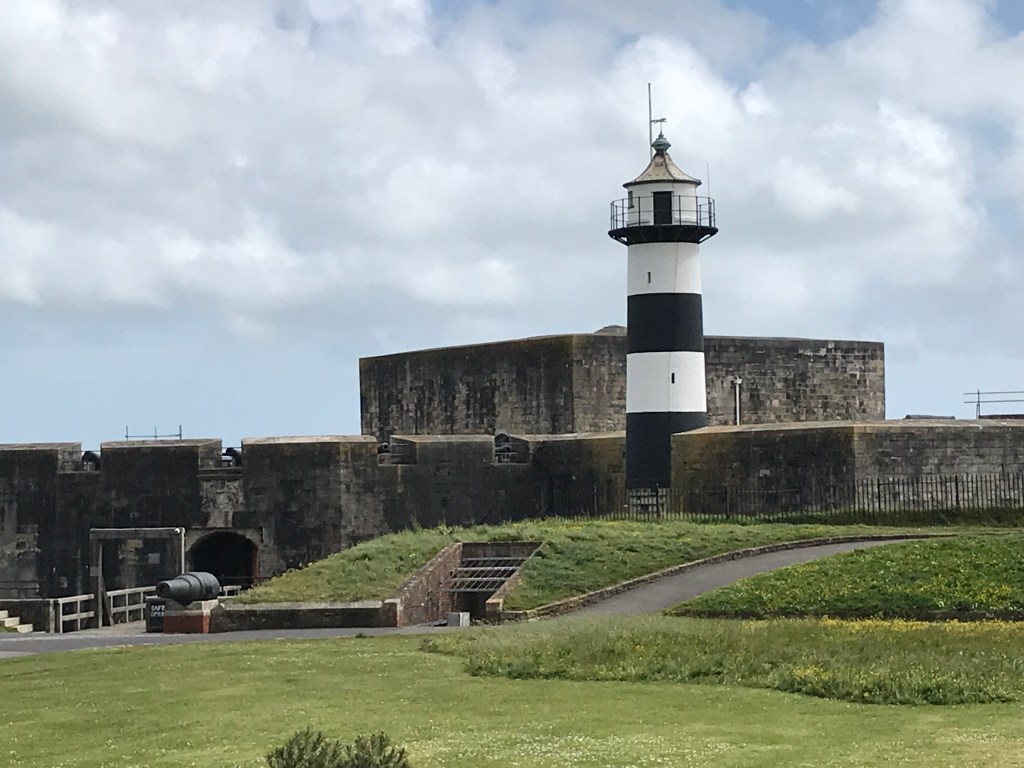
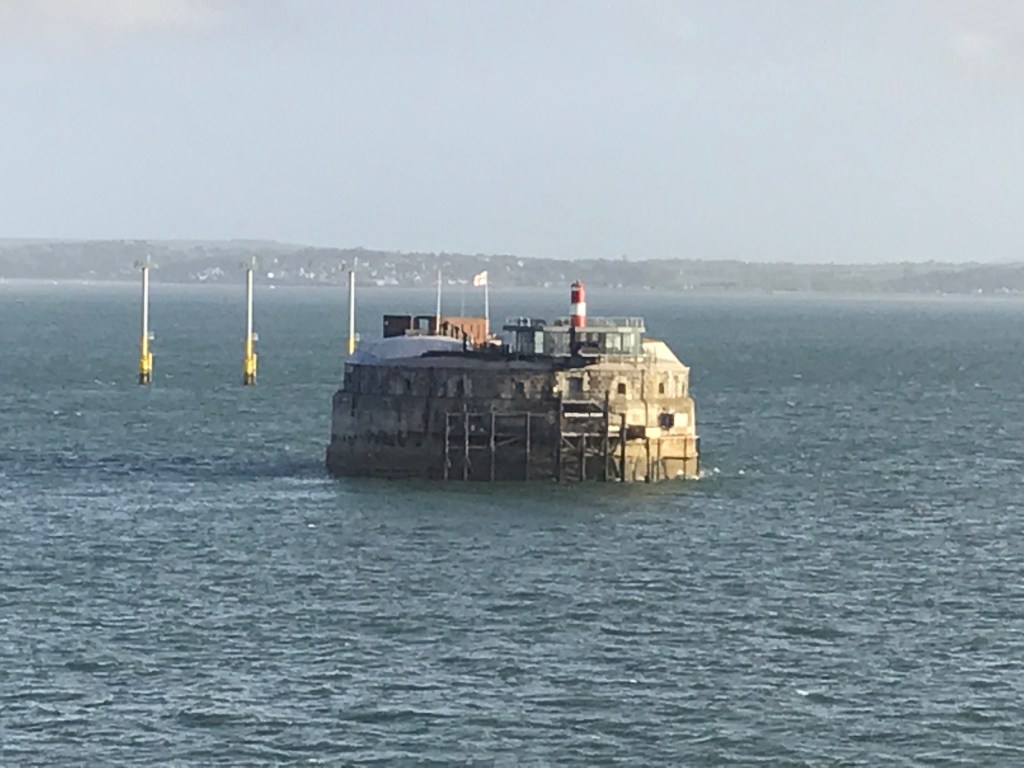
One of the fortification castles Henry
VIII built in the 15th century to guard against the French is here,
and we saw it from the outside. In the
19th century fortifications were again built to defend against the
French including on the ridge behind the town so an army couldn’t land
somewhere else and come by land; other small fortifications were built in and
along the harbor—small circular stone buildings attached to the sea floor, some
are now hotels or venues to rent for a wedding or conference. Portsmouth was so important because the Navy
was here.
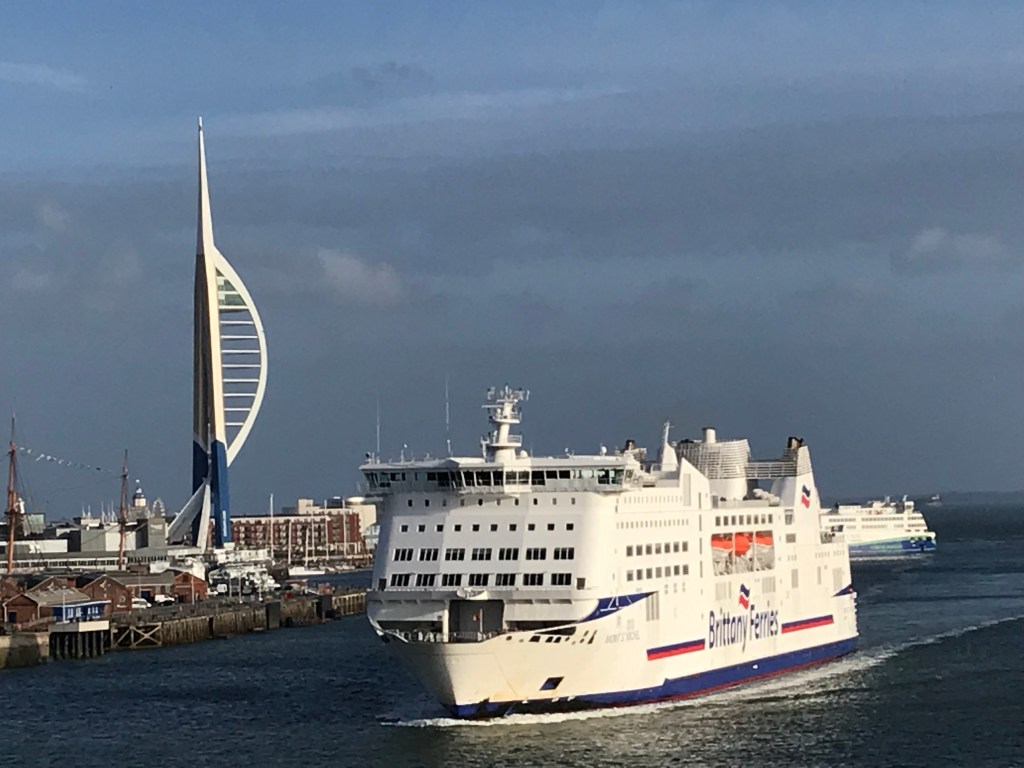
The Spinaker Tower is a recent
monument on the renovated harbor to commemorate the millennium; since a major
corporate sponsor was Emirates Airlines it is officially renamed the Emirates
Spinaker Tower. The design is to evoke
sails billowing in the wind (and we had a lot of wind) and has an observation platform on top.
We were docked at the pier of the ferries to France and right next to a Brittany ferry. The ferries’ bows open up like a big mouth and vehicles exit on two levels—interesting to watch.
Since I have a Mini Cooper, I’ve been noticing Minis wherever we are. Interestingly (to me anyway) I’ve seen some in almost every port—not Senegal and maybe not another but almost all. Not surprisingly, I saw more Minis in Portsmouth than I had in any other port.
We sat in the Explorers Lounge—high up and in the bow—to watch the ship sail out and around the Isle of Wight. Later we actually attended the evening performance which was our Cruise Director Heather Clancy singing with the Viking Band to back her. She really is an extraordinarily gifted and versatile singer from opera to country western to anything you can name.
A week from today we’ll be home. It’s hard to believe. On the one hand, I’ll be glad to get home and
I love May and June in Vermont; on the other hand, I could go on forever
cruising the world. I’ve enjoyed this
immensely, but probably a once-in-a-lifetime experience. The ship has become like a neighborhood; some
folk you know better than others; some you don’t know their names, but still
smile, say hi, and have brief conversations when you see them.
We attended the cocktail reception for the bridge
players, knitters, and spouses today. It
was a large and fun gathering filled with most of the people we know best. Heather was there to thank Michael (bridge
instructor and bridge director) and Beverly (knitting instructor and bridge
director) and one of the bridge players (in his best British accent) gave
heartfelt and eloquent thanks, expressing what we all felt. They are going on the 240-day (!!) world
cruise leaving in August and claim that will be their last. We won’t be on it, I’m afraid.
I have wanted to say a few words about bathrooms
(just what we all wanted to know about).
The public bathrooms are distinguished by occasional bird calls (various
bird species) which makes them kind of fun.
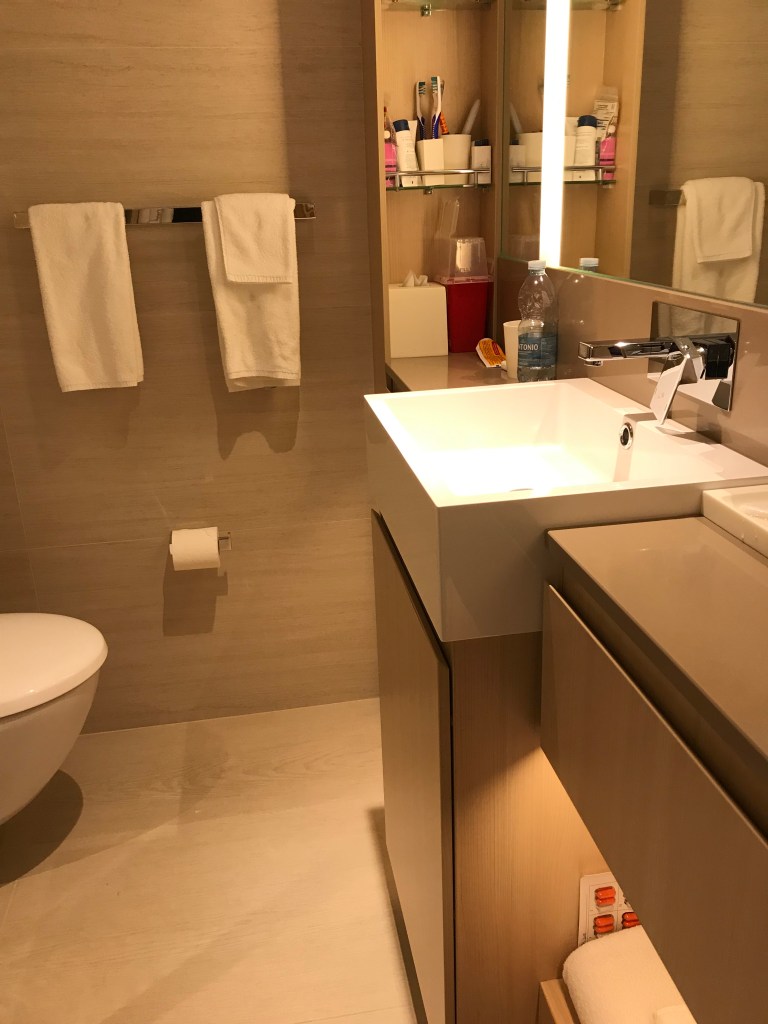
But I am most impressed by the efficiently arranged and functional
stateroom bathrooms. I have long been a fan
of European shower fixtures and don’t understand why American fixtures don’t
emulate them.
The shower head is attached to the faucet by a
flexible pipe or cable and seated in a bracket on a vertical pipe. You can easily move the bracket and shower
head up and down as well as move the shower head from side to side and turn it
any direction you wish. The
volume/on-off knob is separate from the temperature knob so you can leave the
shower set at a desired temperature and not need to reset it every time you
turn the water on. Perfect, I think.
The shower has a curved corner—which should help
keep falls from being serious. The sink
is a lovely rectangle, with counter and drawers to each side. Unfortunately the sink does have sharp
corners so I’d think people occasionally fall and hit their head on the
corner. Of course, even without a corner,
hitting your head on a sink can be pretty serious.
se
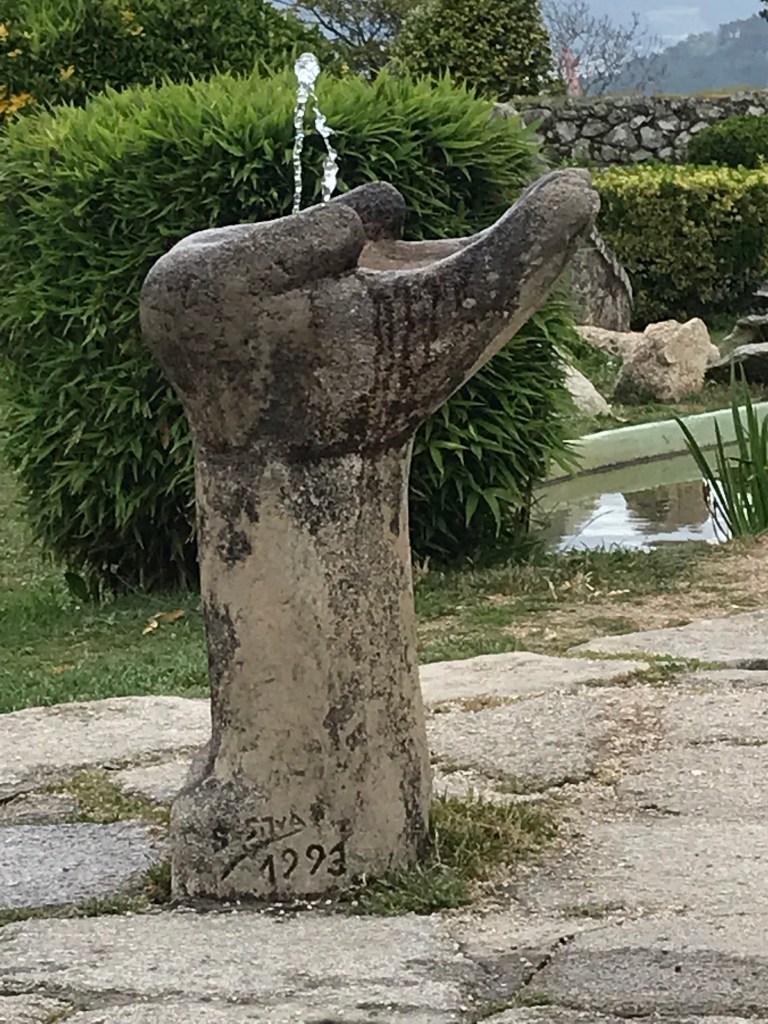
Drinking fountain shaped like open hands in the castle park
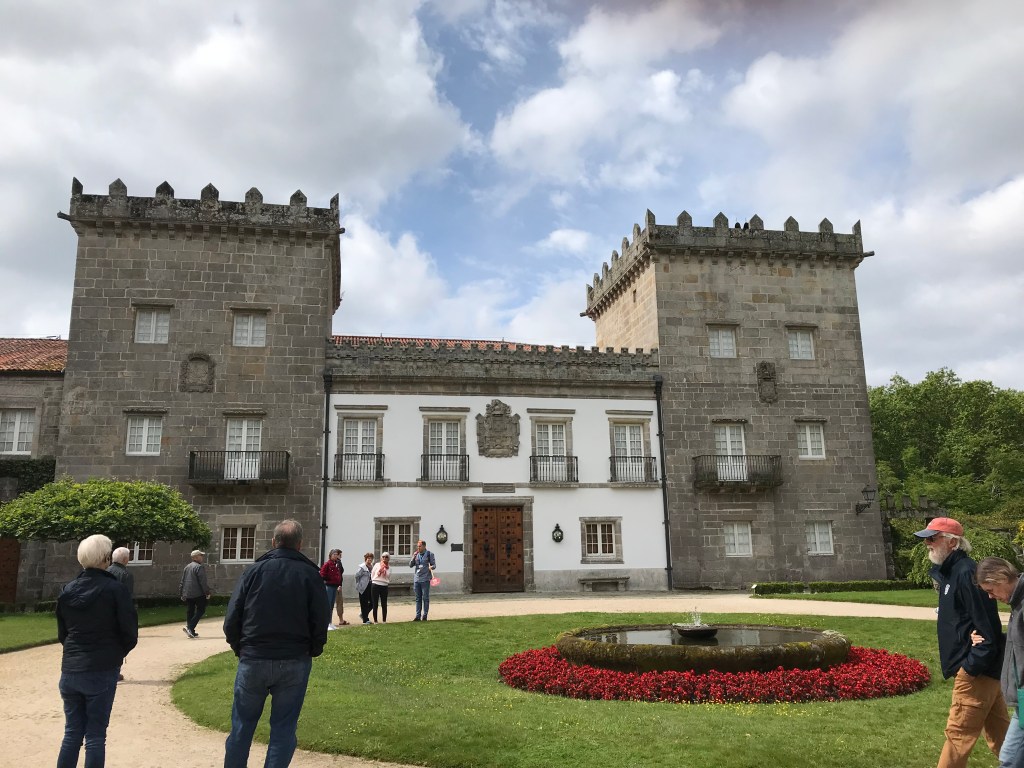
The 17th century manor with added wings
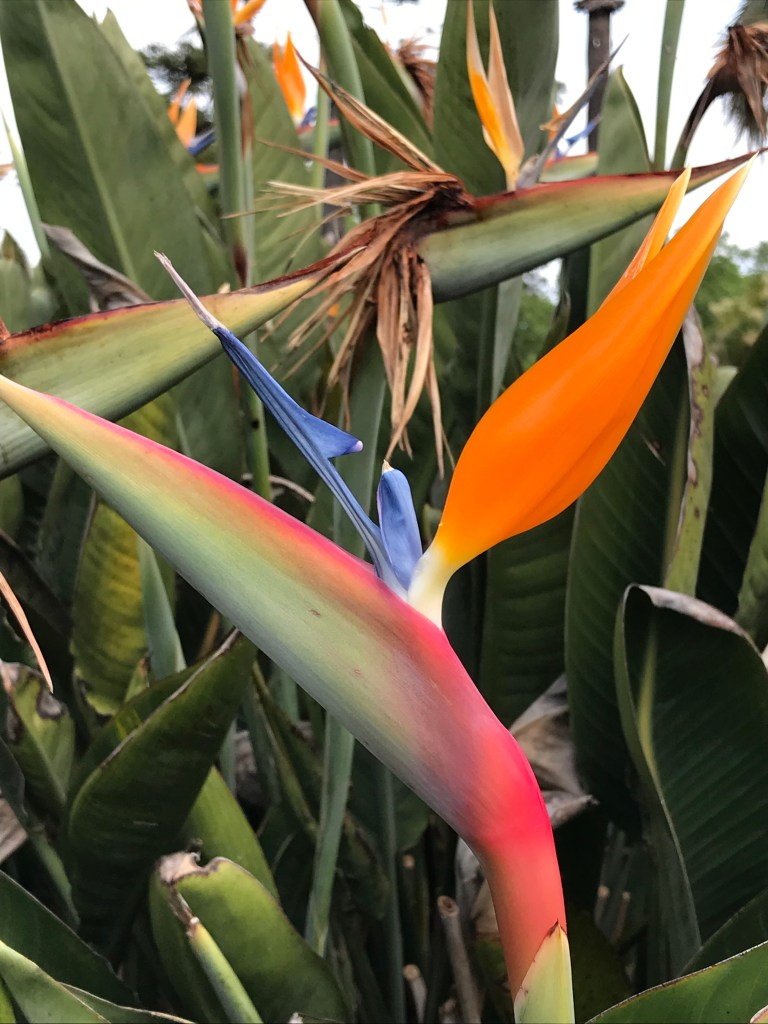
Bird of paradise in the gardens
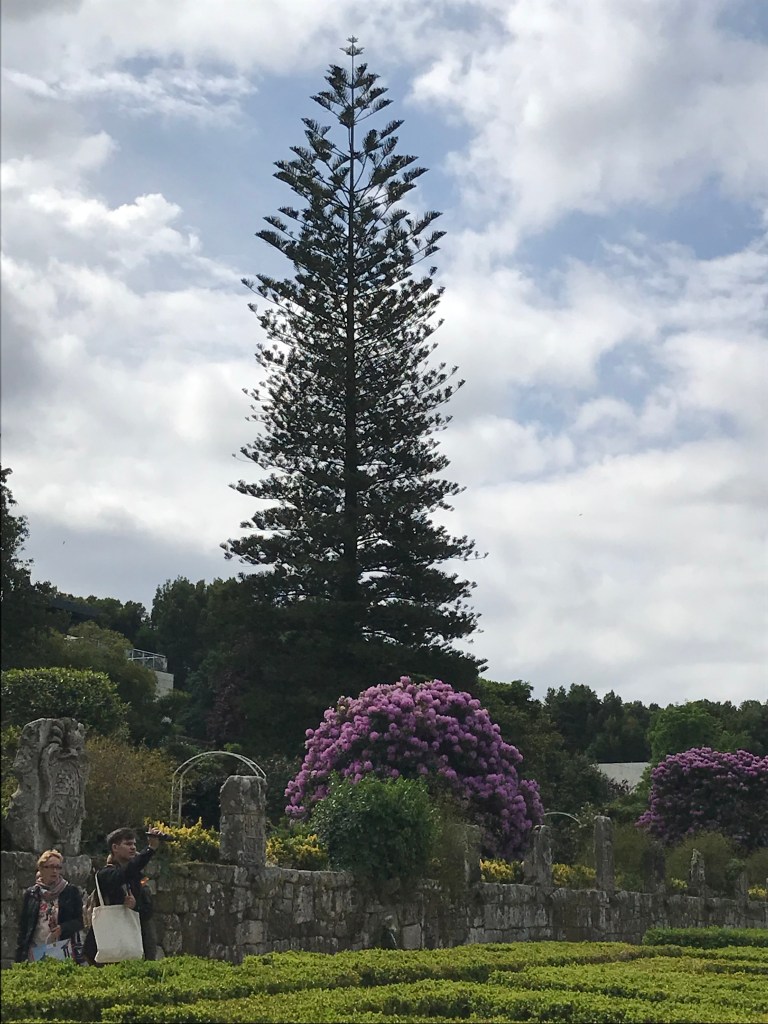
Norfolk Island pine and rhododendron
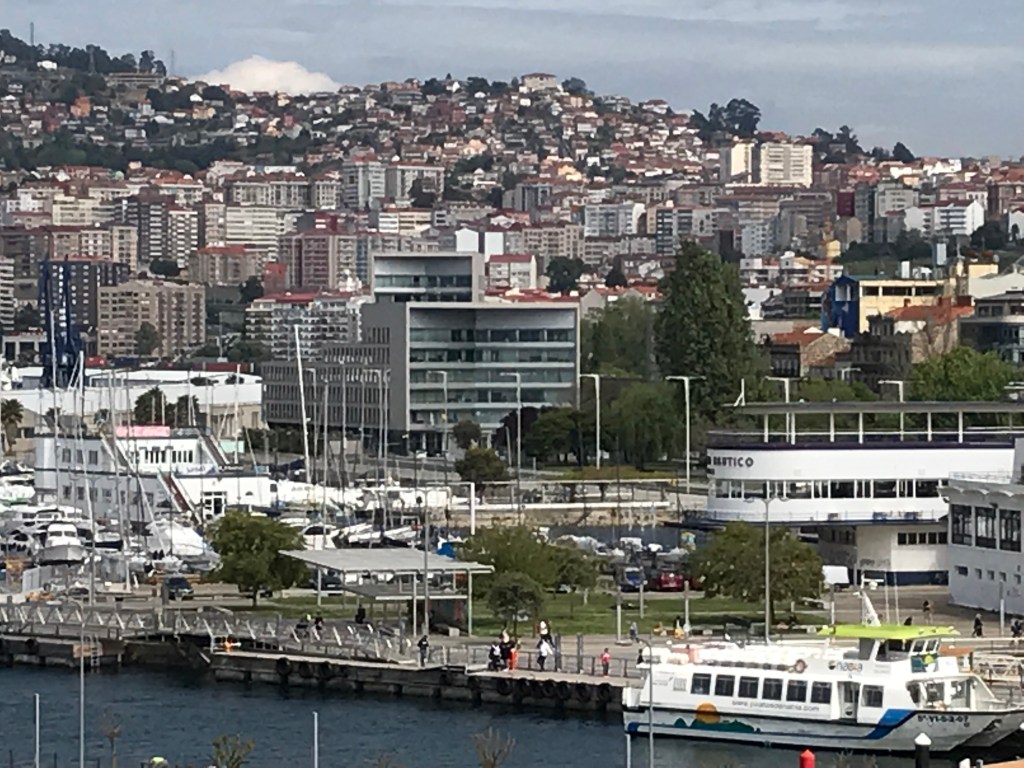
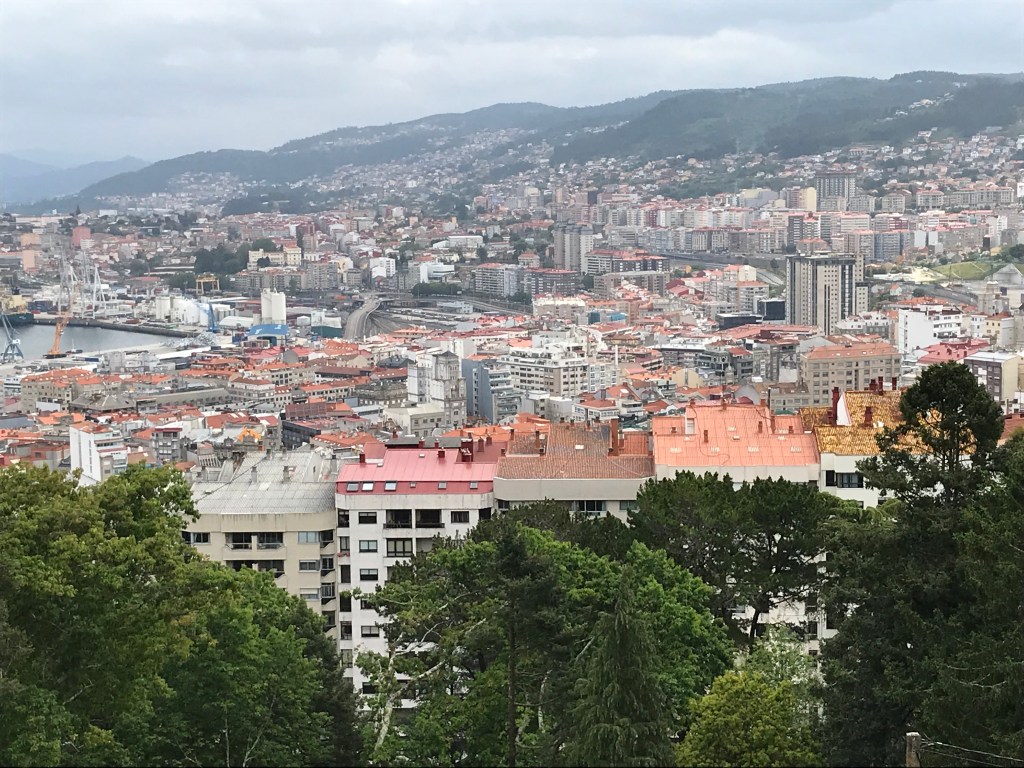
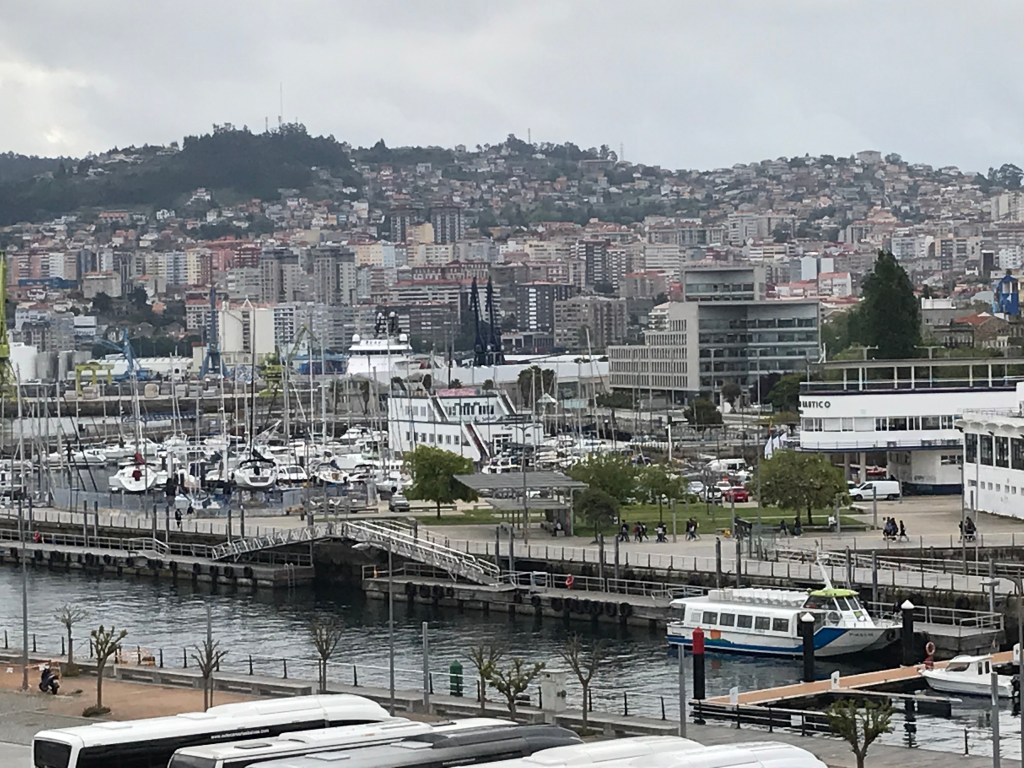
Vigo from the hill
Vigo with tour buses in foreground
It was cold and cloudy this morning—we must have
arrived in Europe! Actually, the sun
came out while we were on our excursion and by noon it was in the high
50s. Our guide informed us we were lucky
because the area gets a lot of rain. It
also has a temperate climate and, thus, vegetation is green and profuse.
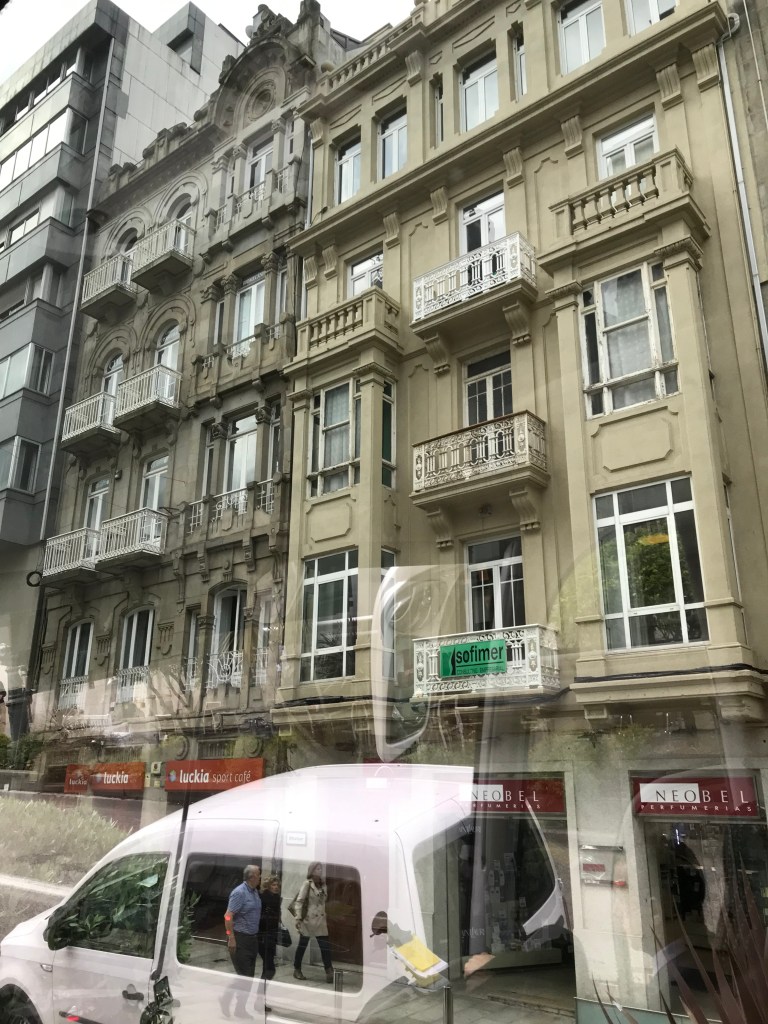
Our bus and guide took us through the attractive
city with streets lined with handsome 19th century facades, many
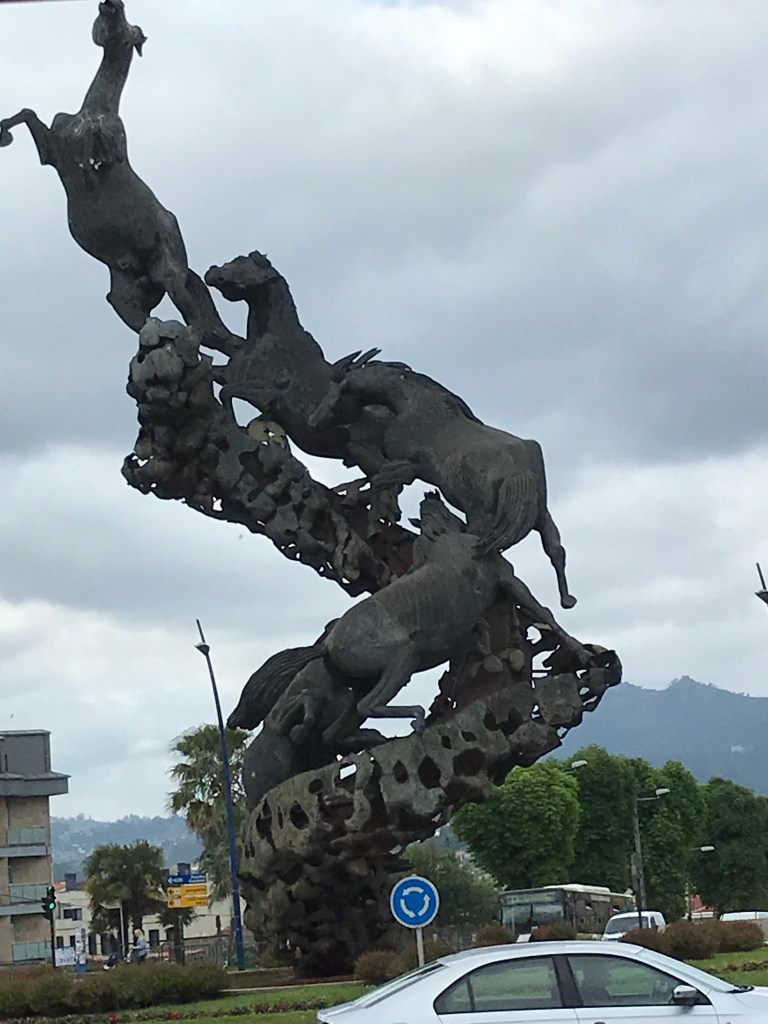
with narrow balconies, and lots of traffic circles (he said ‘cycles’) with
large sculptures in the middle of most and also along the coastal beaches. The ocean is cold enough to require a
wetsuit, but it’s attractive as well.
Galacia is rather separate from the rest of Spain and used to be united
with Portugal in the Kingdom of Galicia; the Galacian language (which, along with
Spanish, is an official language) is more closely related to Portuguese than to
Spanish.
Galicia was settled in the Iron Age by the Celts (hence the Galician bagpipes which are still part of their music), and we visited the remains of a medieval castle built on the hilltop site of the original Celtic settlement; the castle was demolished in the 17th century, the walls renovated, and the whole area turned into an attractive park.
We also visited the Quiñones de León Manor House built in the 17th century and donated to the town by the owners in the 20th century. The manor is now an art museum but was closed since today is Monday, so we only visited the gardens which are extensive full of very happy camellias, rhododendron, roses, and other flowers, bushes, and trees.
Our guide pointed out the Norfolk Island pine. I’m not sure why he did so, but it reminded me that the most ubiquitous plant on our trip is the Norfolk Island pine—I think we saw them in every country we visited. They are endemic to Norfolk Island, a small island belonging to Australia and somewhere in the Pacific between Australia, New Zealand, and New Caledonia. From there they have spread far and wide. They are very distinctive looking trees—they almost look like the old fake Christmas trees because each branch is so distinct from each other. How close together they are depends, I suppose, on how much the tree grows in a year so vary from country to country.
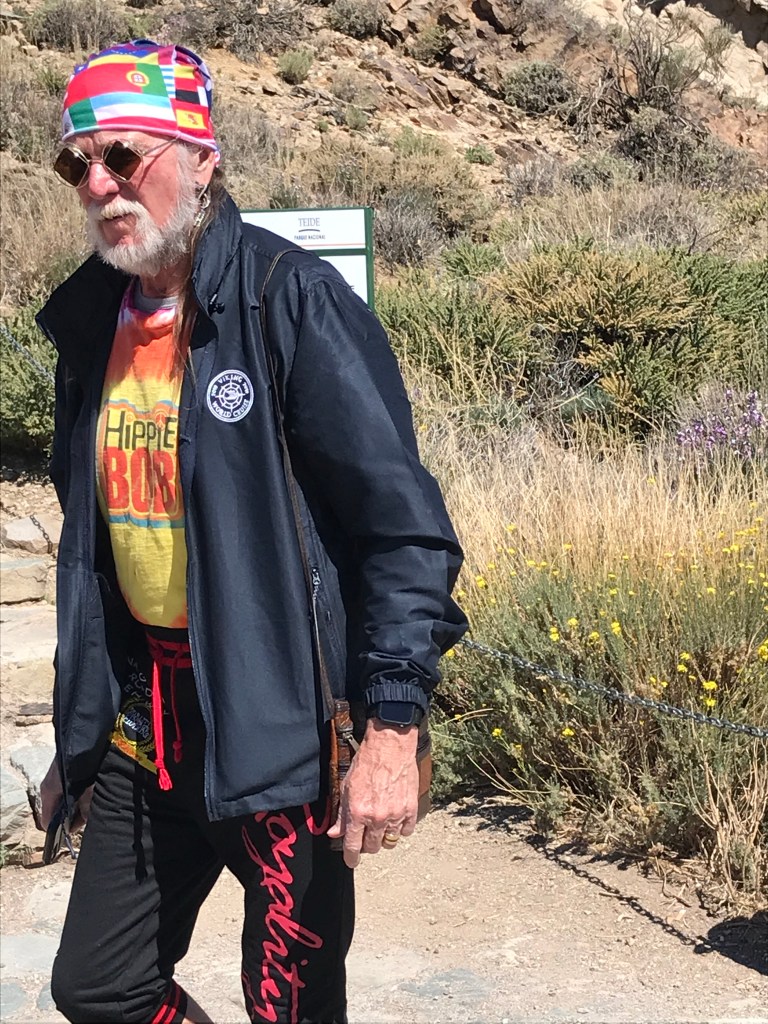
One of our more colorful passengers; shirt says ‘Hippie Bob’
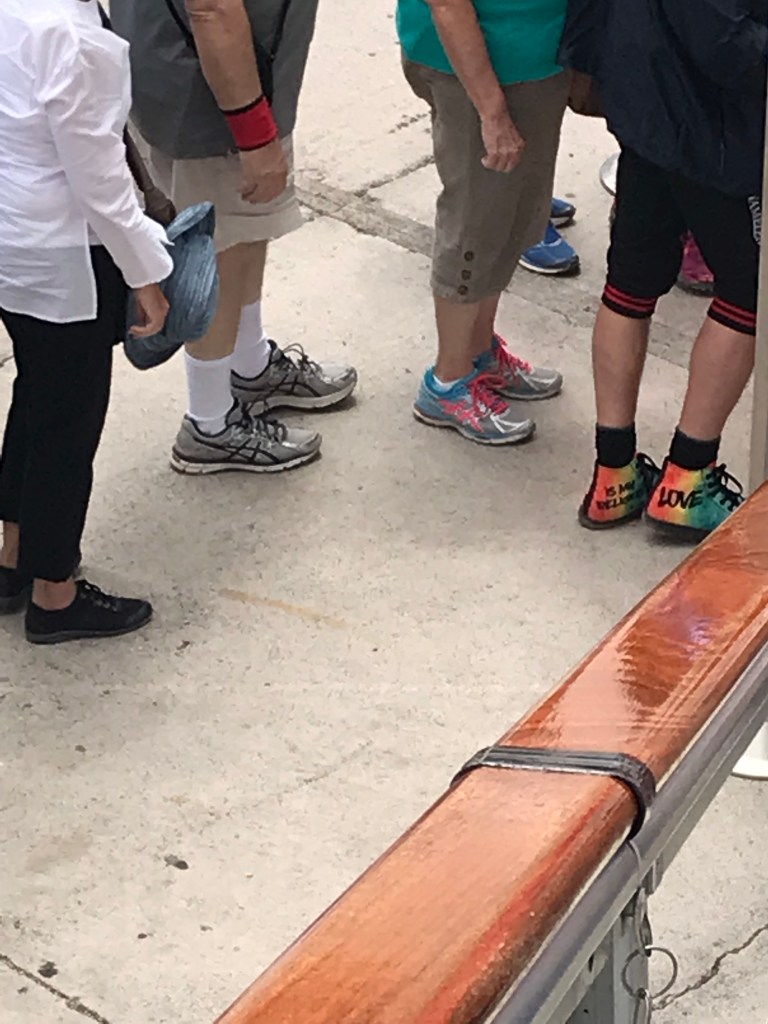
And his shoes saying ‘Love is my…’
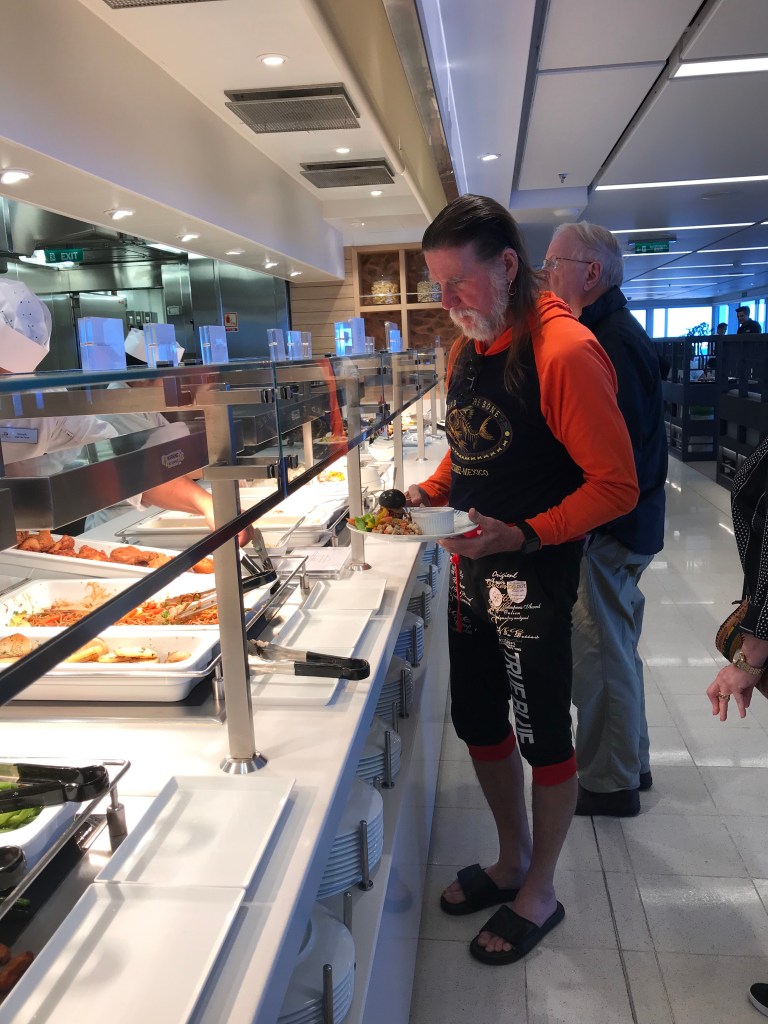
And another outfit
We were scheduled to be at sea May 4 and be in
Casablanca, Morocco May 5, but Mother Nature had a different schedule. There is a big storm brewing in the Atlantic
she has scheduled to raise havoc in the Bay of Biscay (between France &
Spain) on May 8 when we are supposed to be crossing from Vigo, Spain to
Britain. The Captain has decided we need
to avoid the storm. So we must cancel
Casablanca, be a day early in Vigo, and be safely in Britain when the storm
arrives. He has then added a day in
Portsmouth, England. Probably also it means it won’t be a very nice day in
Portsmouth, and even if it were, Portsmouth is no substitute for Casablanca,
but ‘it is what it is’ as they say. Perhaps
some year we can do a Mediterranean cruise that includes Morocco. It’s different from missing Easter Island, which
we will now probably never see since it’s halfway around the world and far from
anything else.
Meantime, we will enjoy the last of the bridge games and lectures. Sunday was the last church service of the cruise. There were fewer people, probably for the same reason we were late because it was earlier than usual and we set our clocks ahead yesterday making it even earlier and my alarm time wasn’t synched. Otherwise the number of attendees has increased every week, and Heather keeps telling us she made even more copies of the service than before and still ran out so someone had to run and make extra copies. I’d say there are well over 200 people there usually.
In the Viking Daily we have been receiving one-page
descriptions (and photo) of each crew ‘team,’ and they are very interesting—I wish
we’d received these at the beginning. I’ve
wondered what the ‘Sanitation Officer’ does and now I find there’s a whole team
and they are responsible for all the dishwashing as well as maintaining the
high public health standards set by the US CDC.
I’d only heard about the Sanitation officer coordinating with local
restaurants who provide meals during long excursions to make sure they are up
to Viking standards.
There is also a Deck Department who clean and
maintain the ship from washing the decks to doing carpentry and electrical
work. In addition they moor the ship and
provide tender services; they also teach safety procedures and are responsible
for security (including screening us on entrance to & exit from the ship)
and all insurance, licensing, etc.
And we have a Crew & Officers Mess team who
serve four full-service meals in two venues to the crew! Also a Provisions Team responsible for
ordering & loading provisions, including dealing with Customs. And many
more—including those who actually operate the ship.
We have, they announced, during the World Cruise so
far consumed 80,000 bottles of wine (500 a day!), 12,000 kg bananas, 200,000
eggs, and 55,000 rolls of toilet paper (the special kind you can use in a ship’s
toilet, which is what we use in our van camper as well.)
We already know about the room stewards, the wait
staff, the chefs and other kitchen crew, the guest & excursion services
folk, the laundry team, the financial folk, the IT guys, the entertainers, and technical crew for the productions, the
lecturers (and bridge teacher), and more…Running a ship is a major operation!
Tenerife is the largest of the Canary Islands, which
are a region of Spain with their own parliament and seats in the Spanish
senate. They are volcanic islands with
those nearest Africa the oldest and the western ones the youngest
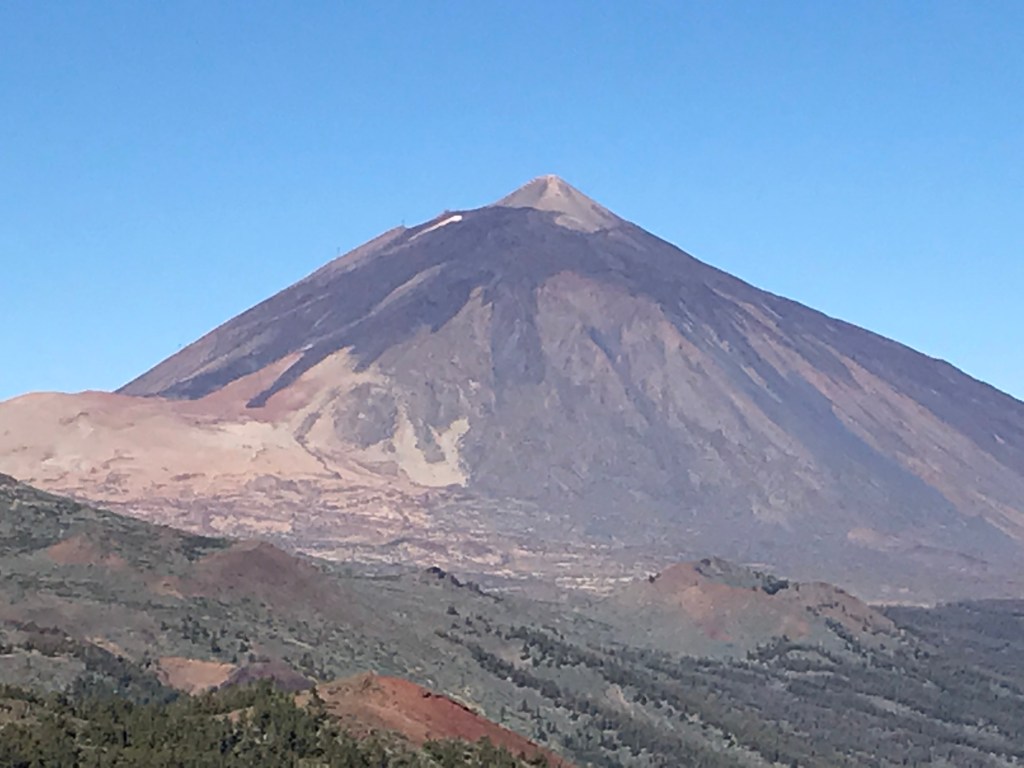
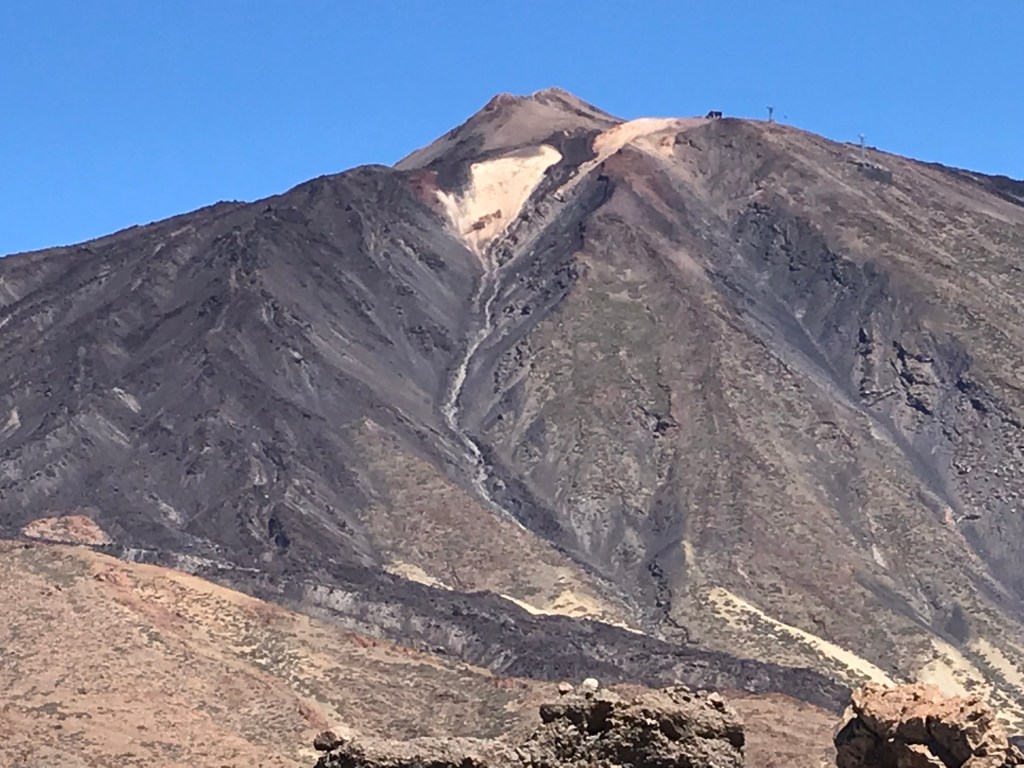
geologically. The center of Tenerife is
Mount Teide, the highest mountain in Spain and the third highest volcano on
earth (measured from the ocean floor.)
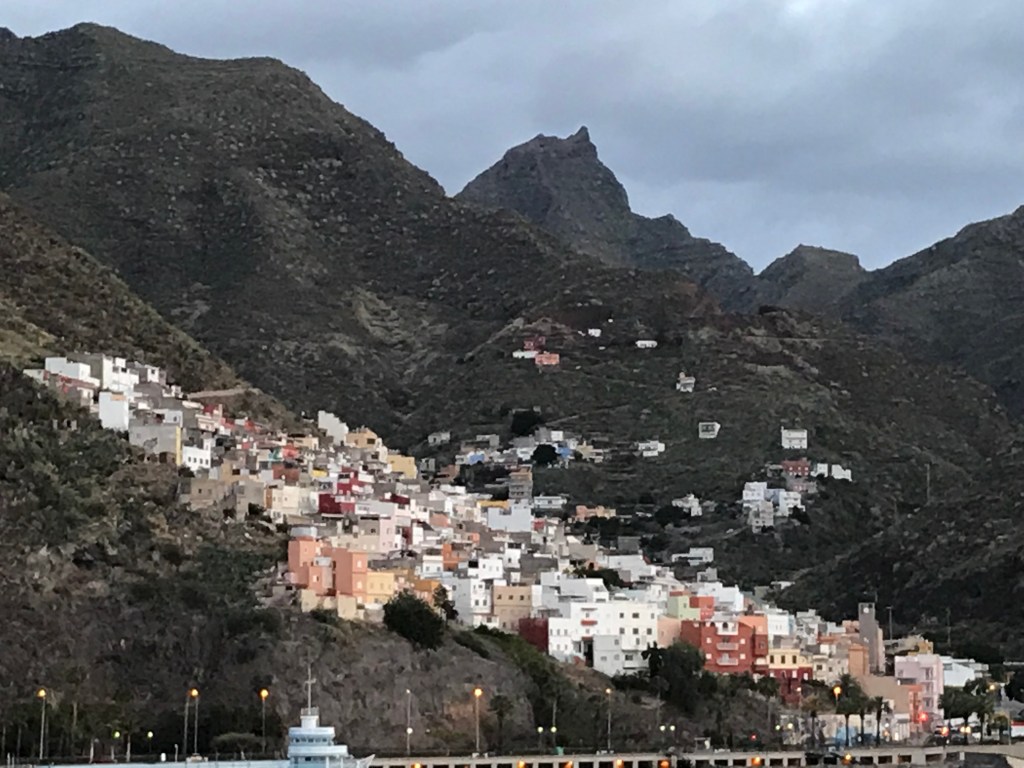
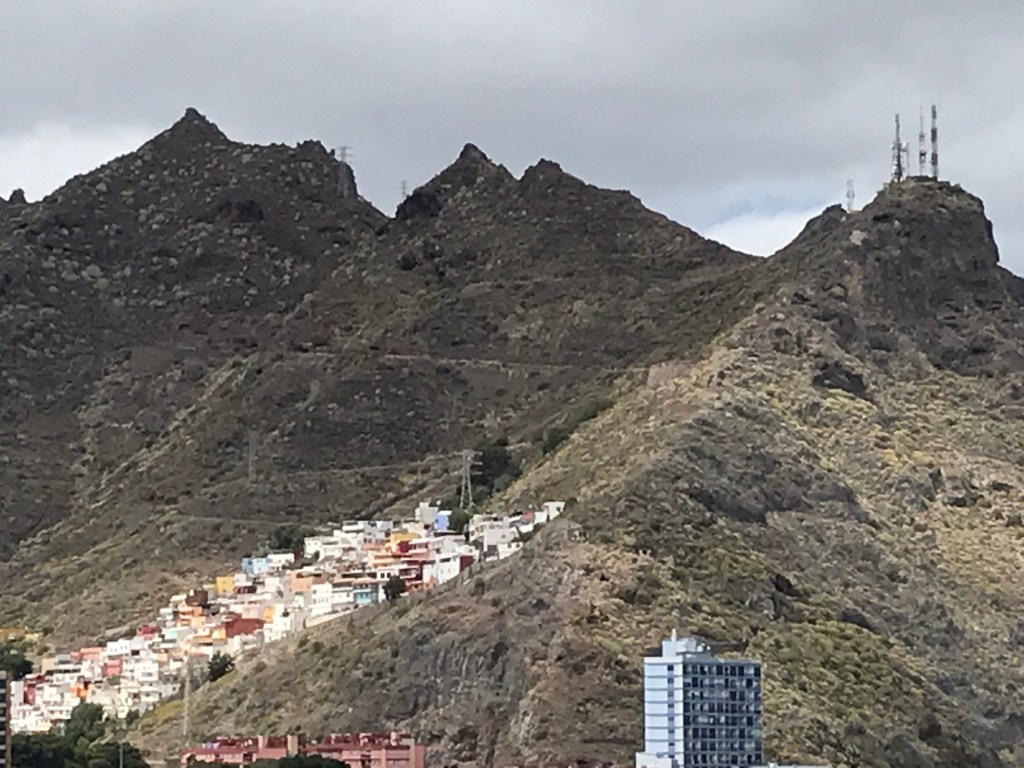
Our pre-dawn arrival meant we only gradually saw the
attractive city with its white and pastel houses nestled on the slopes,
reminiscent of Greek islands. What a
lovely island! I can see why it’s popular
with tourists as well as ex-pats from Europe desirous of a good place to live. It has abundant sunshine, lush vegetation
(despite low rainfall), and temperatures in the 70s most days of the year. It is also clean and modern with excellent
roads. After Africa, it looks like
paradise! This may be the place I would most like to come on a holiday of all
the places we’ve visited.
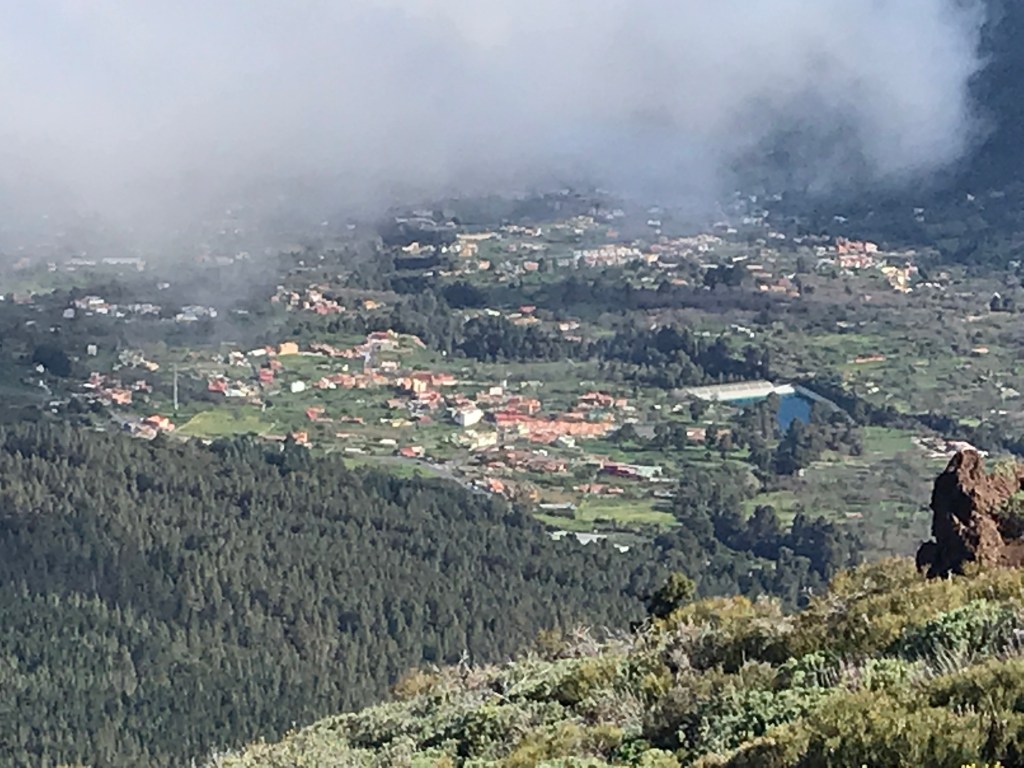
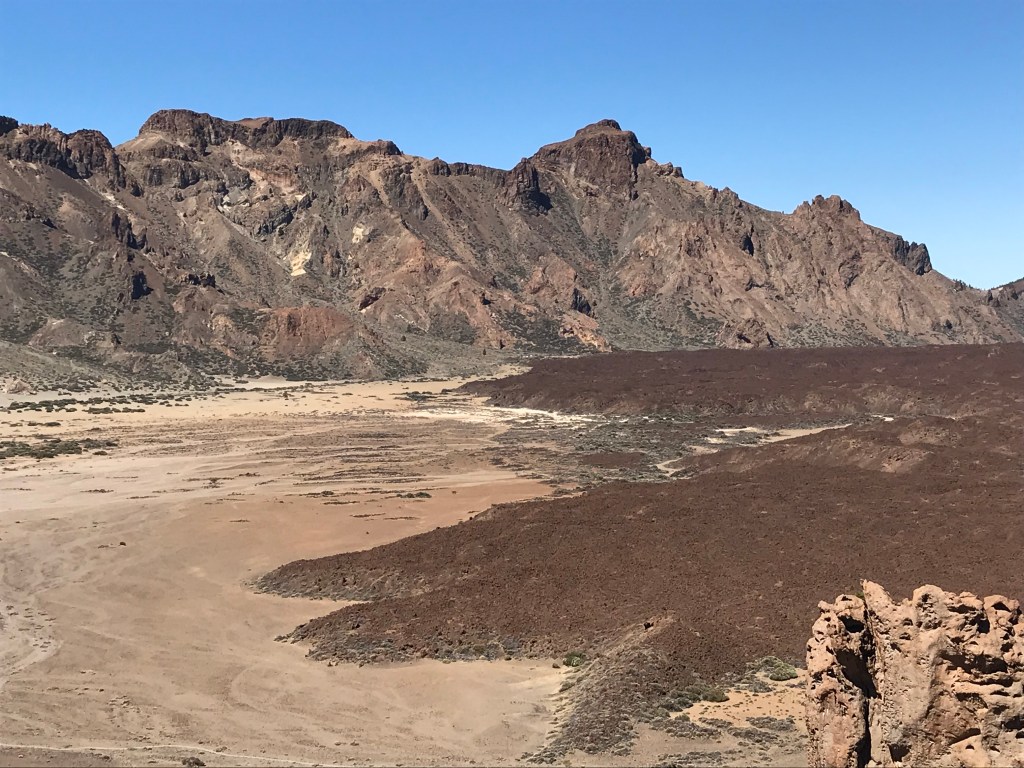
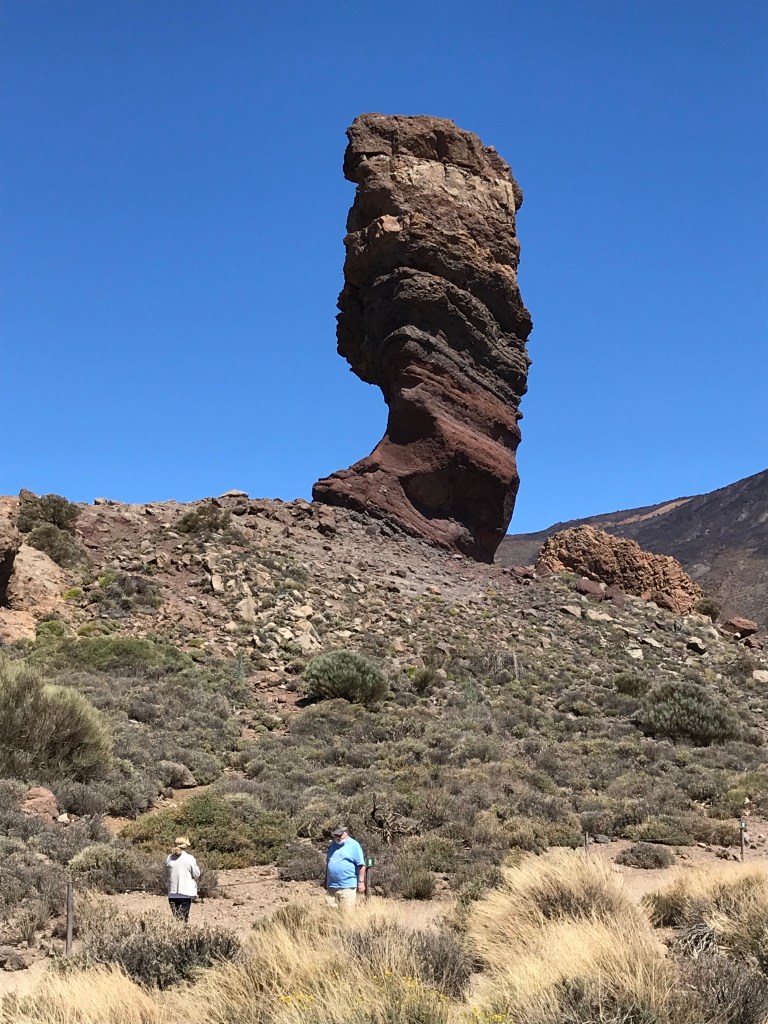
Our tour took us up into the Teide National Park,
along a ridge where we could see each coast alternately and stopped to look
down at the valley and ocean with the clouds below us—an interesting
perspective,–through the caldera, and to a spot at 7200 feet where several
movies have been filmed. The interesting
lava formations make it an appealing landscape (apparently including for
spaghetti westerns.) It is a very popular park, but despite all the buses, cars,
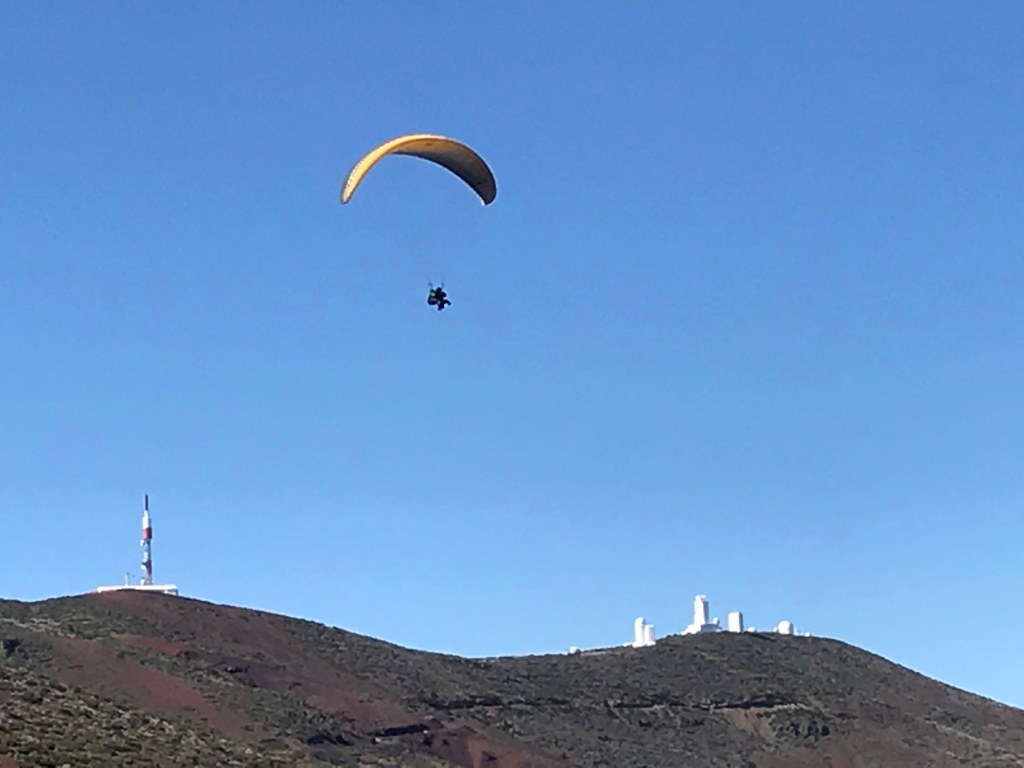
and people, it feels remote and private. In the park, given its altitude, people train
for running and bicycling, hike, and take off for paragliding. In addition, at night it’s great for star
gazing, and at 2400 ft, there is an important international observatory.
Near sea level the vegetation is what you’d expect
given the weather and includes lots of flowers, palms, and cactus. Next is the Canary pine forest, and a
wonderful pine forest it is too—I wanted badly to get out and walk through
it. When you get above tree line, you
find alpine vegetation. A very beautiful
landscape.
Our guide told us they always had plenty of water
despite low rainfall and no rivers because snow in the mountains melted through
the porous lava soil and water was available by digging into the island at
various angles and altitudes. For the
past 18 years, however, there has been little snow and the water ‘sacks’ have
been depleted leading to problems; they are desalinating sea water, which is
expensive and provides low-quality water.
A Trip to the Mountain. Teide National Park (and its mountain) our guide told us is the most frequently visited of all the World Heritage sites in Spain. Reaching the Park required a 90 minute bus trip, first along a very modern 8 lane motorway from our mooring in Santa Cruise and then along a steep, winding but exceptionally well-maintained secondary road, Coming as we had from Dakar two days ago, I marveled at our transition from 3rd world to 1st world infrastructure. We made a break in our journey at a small restaurant very near Teide Mountain, and I ruefully marveled at the lack of both toilet paper and soap in the otherwise well-appointed men’s bathroom. (The women’s facility lacked only soap.)–Chris
We’ve gained a couple more of hours of sleep since
Senegal is on the far west of Africa making us 2 hours behind London time. Since we end in London, we must lose them
again at some point and today was the first.
Cleverly—since no one is happy losing an hour of sleep, setting the
clock forward was scheduled for 2 pm.
That meant our 2 pm bridge session was rescheduled for 1:15 which at
least one person missed—because he didn’t, as they keep telling us to, ‘read
the Viking Daily delivered to your cabin after dinner each night.’
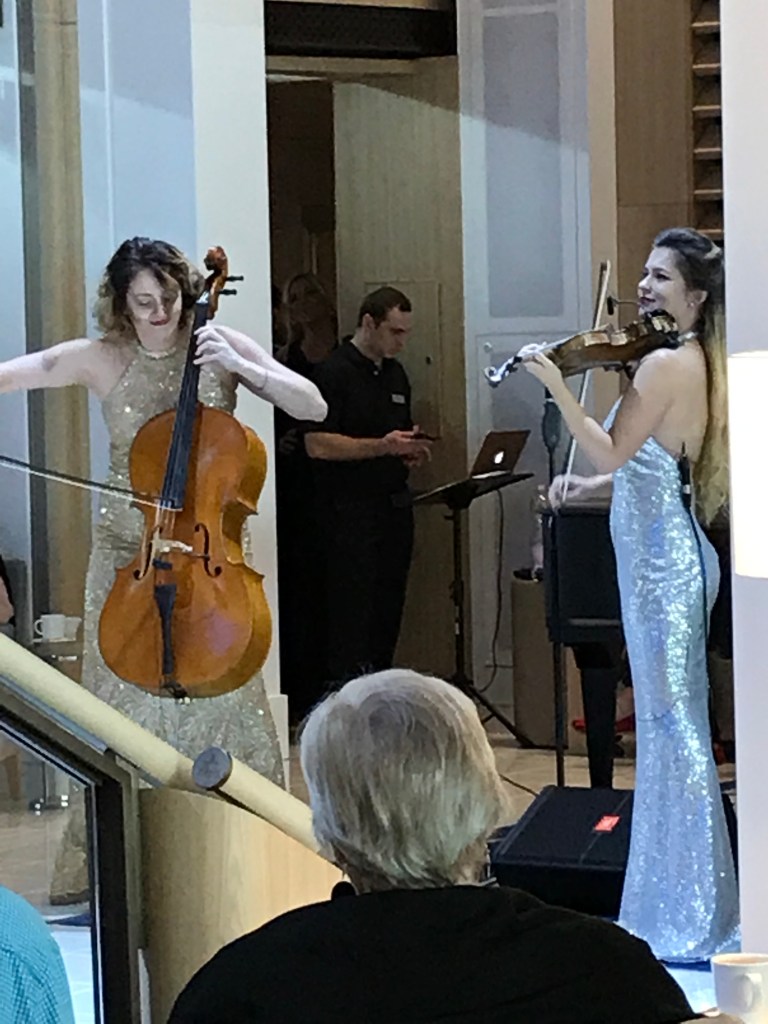
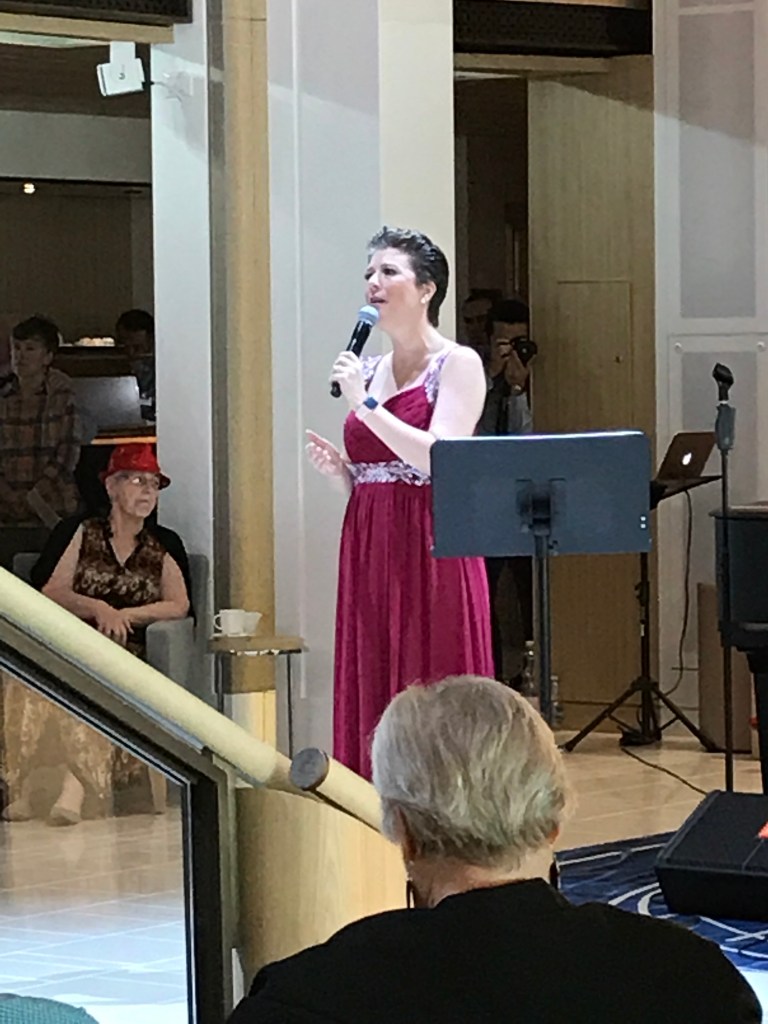
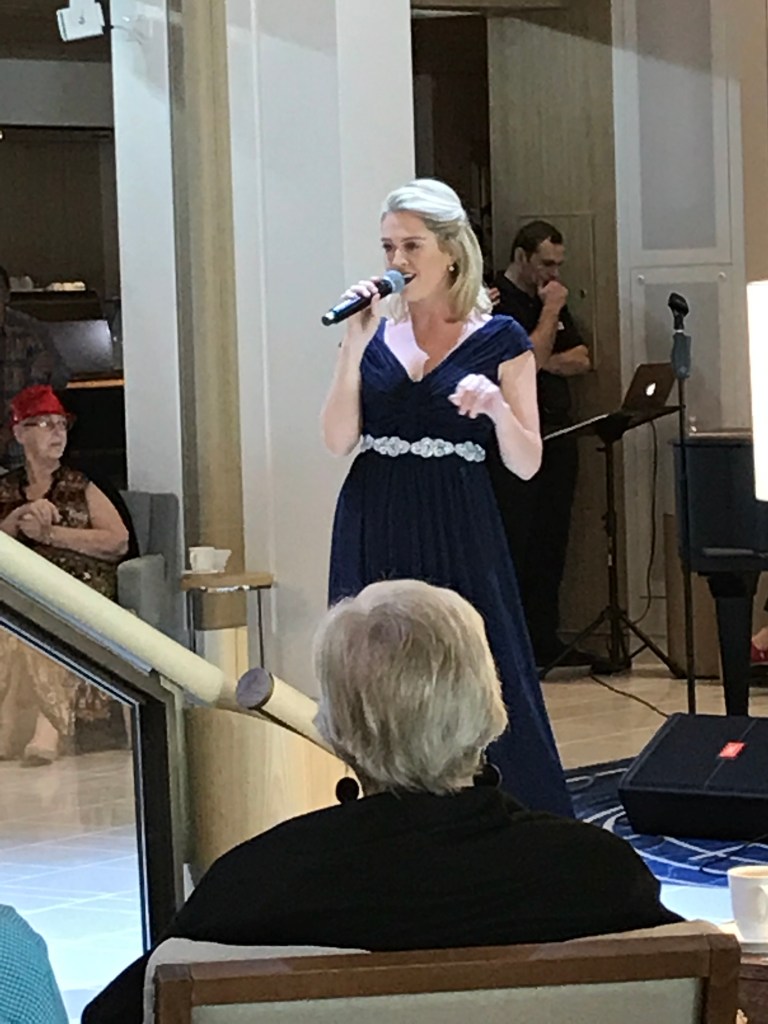
We had another great Atrium concert featuring our
staff singers and string players celebrating Disney movie music. It was a lot of fun and the performers were
dressed to the teeth. Yeah, I’ve only
put in pictures of women, but the men looked pretty spiffy too.
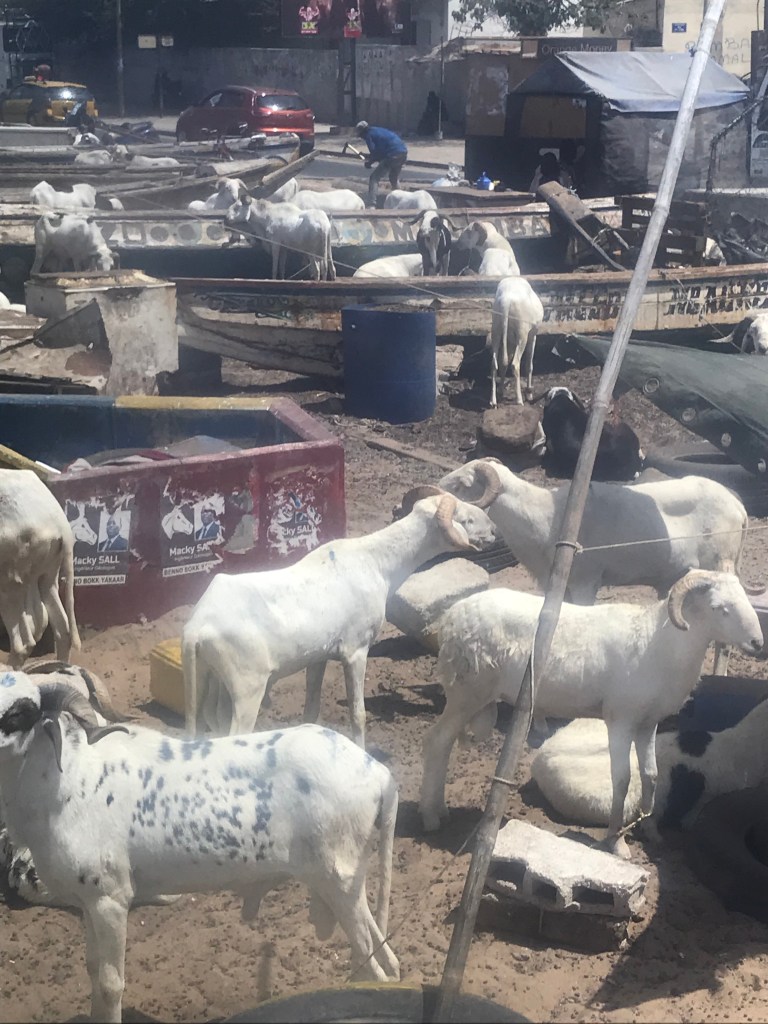
Senegal, like the three Ms (Mauritius, Madagascar, Mozambique) is really poor. It was colonized by the French in the late 1800s and the official language is French, though what most people speak is Senegalese. It has been independent only since 1960. 95% of the population is Muslim (though not the burqa kind.)
Emblematic of the city (and country) it seemed to
me, after we boarded the bus for the included tour, we were told we needed to
change buses because ours had a flat tire.
We moved to a different—and seemingly brand new—bus, but the guide and
driver couldn’t get the PA system to work!
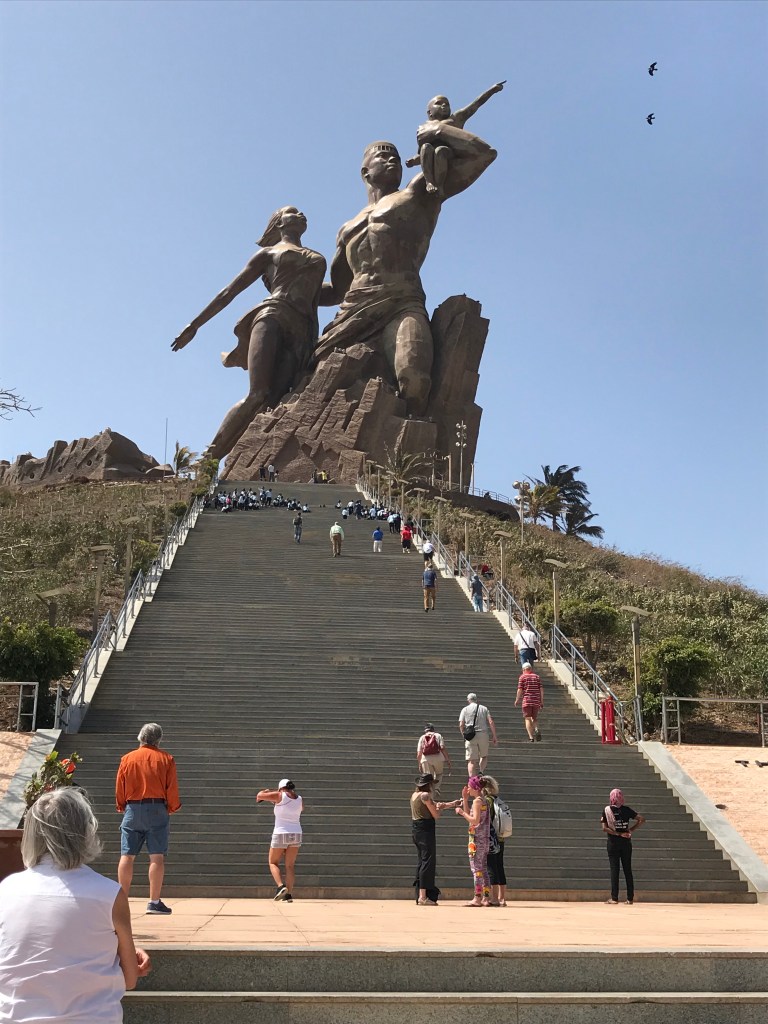
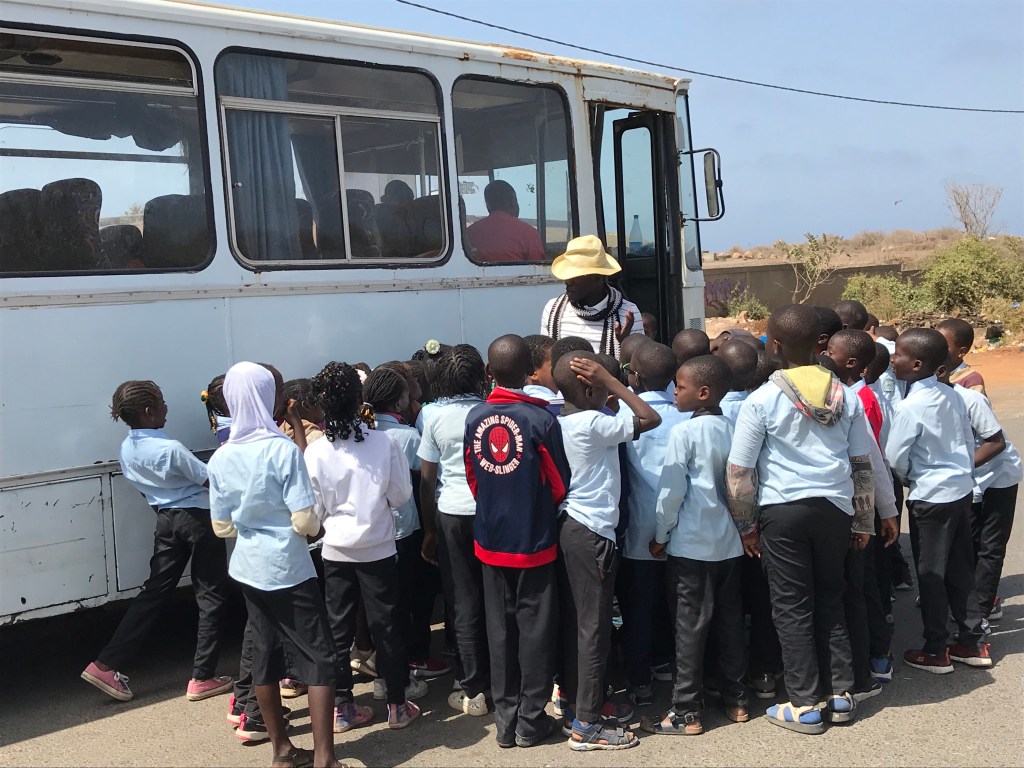
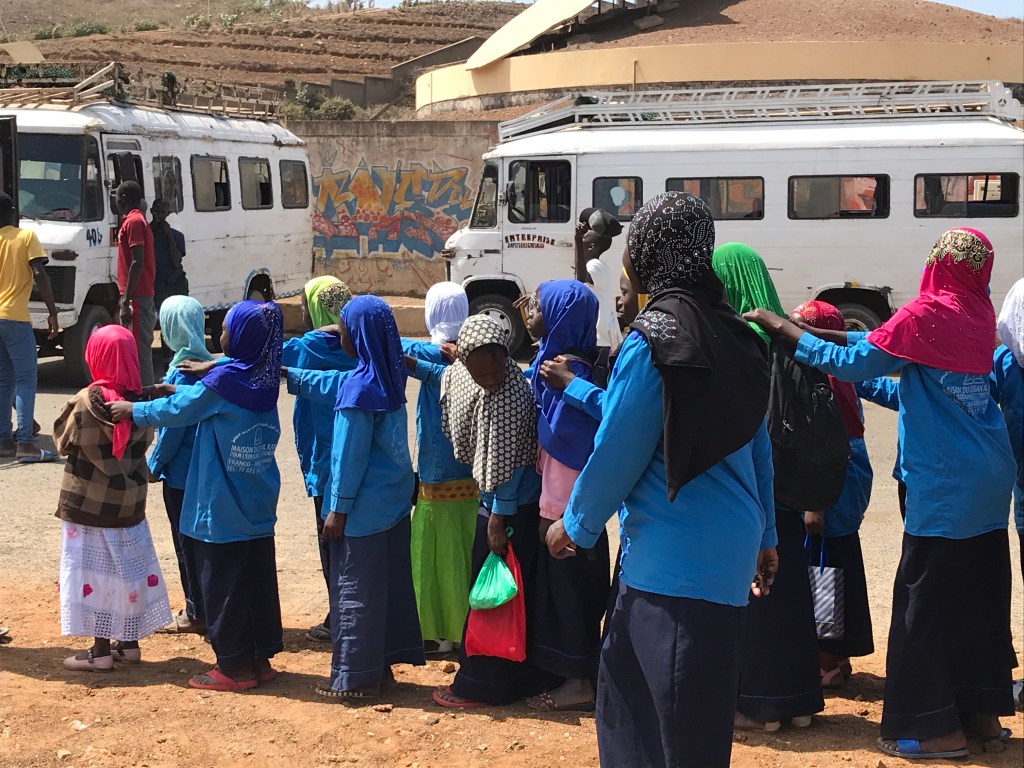
We saw the city plus some landmarks including the huge statue commissioned by a former president and unveiled in 2010 to celebrate the 50th year of independence and ‘the renaissance of Africa.’ Hugely controversial because it cost an enormous amount of money, the features on the statues are only vaguely African, Muslim imams objected to the lack of clothing on the figures, it is quite macho, it is variously claimed to have been designed by a Senegalese artist or by a Romanian artist (and, if the latter, not really African), and perhaps most offensively it was constructed by a North Korean firm! It is, however, impressive. Several school busses of children were visiting the statue as well. They climbed to the top (more than 200 steps); we didn’t…
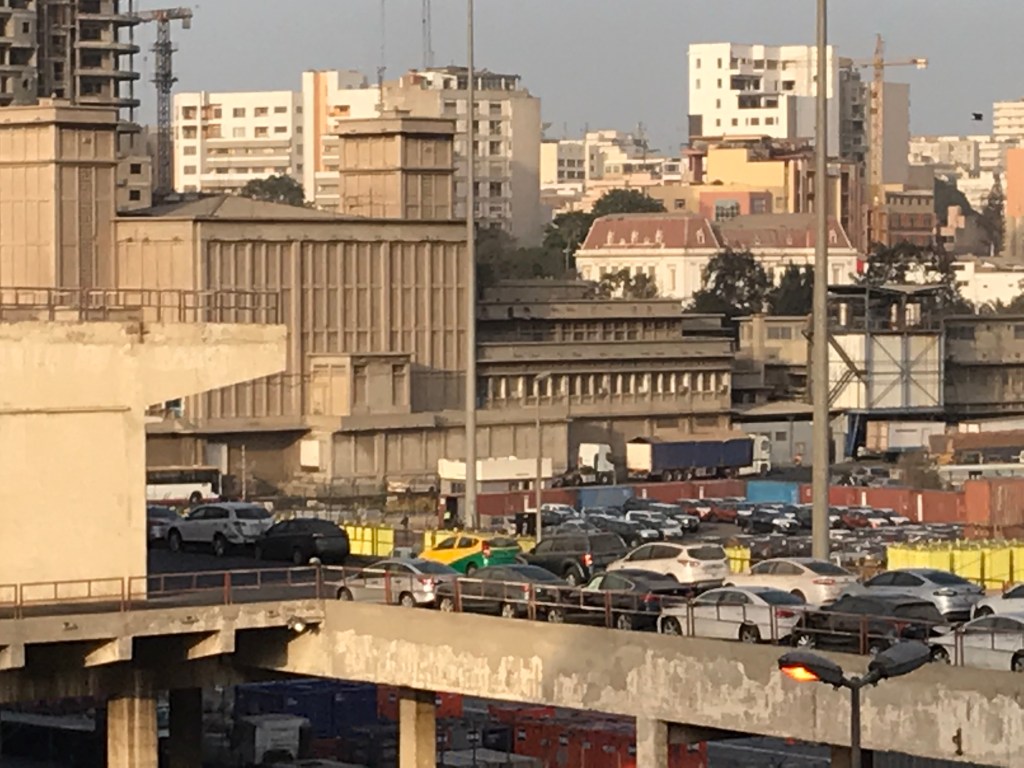
The city reminds me a bit of Addis Ababa with
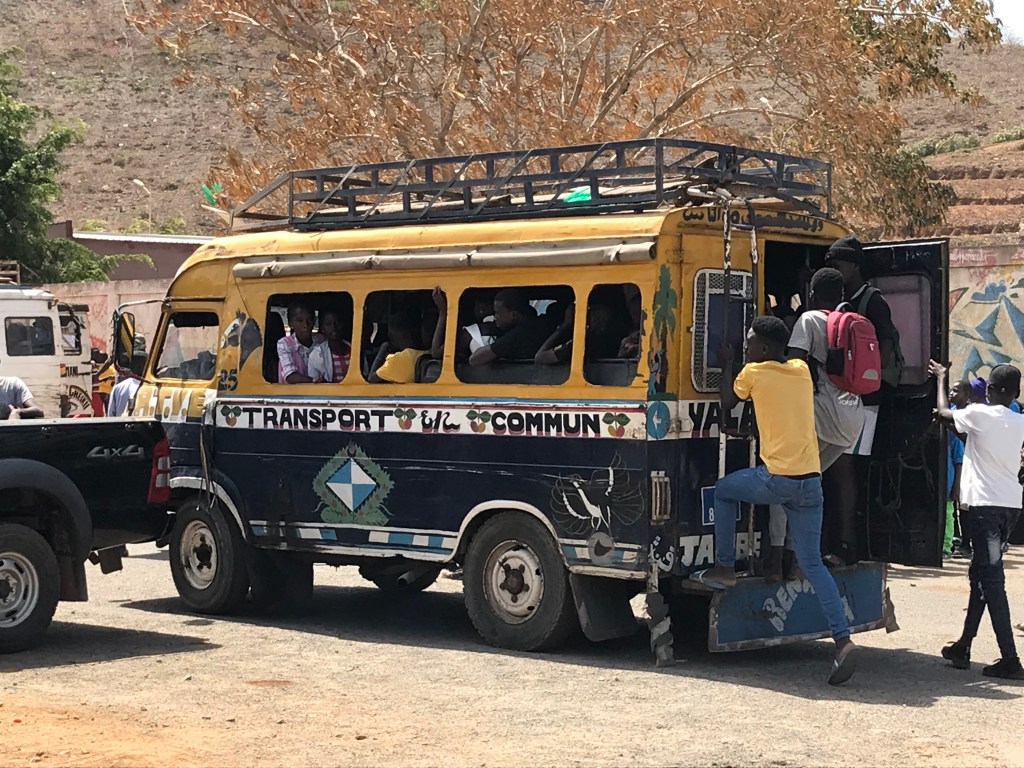
seemingly chaotic but smoothly running traffic (if there are traffic laws, they
are pretty much ignored but good-naturedly.)
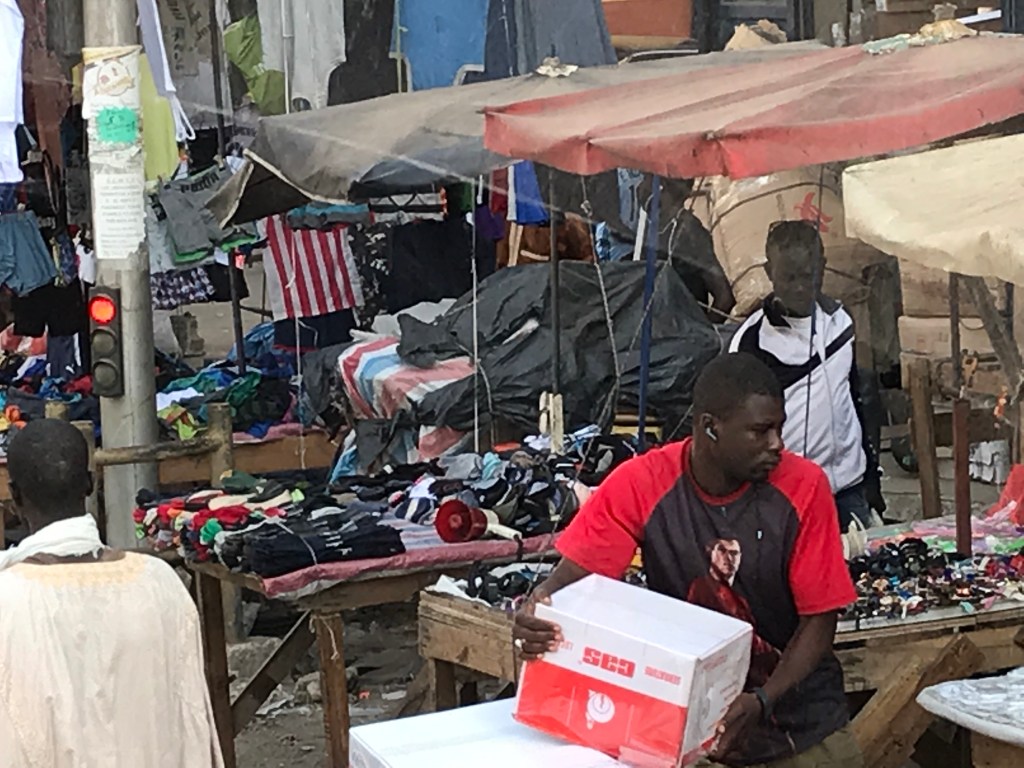
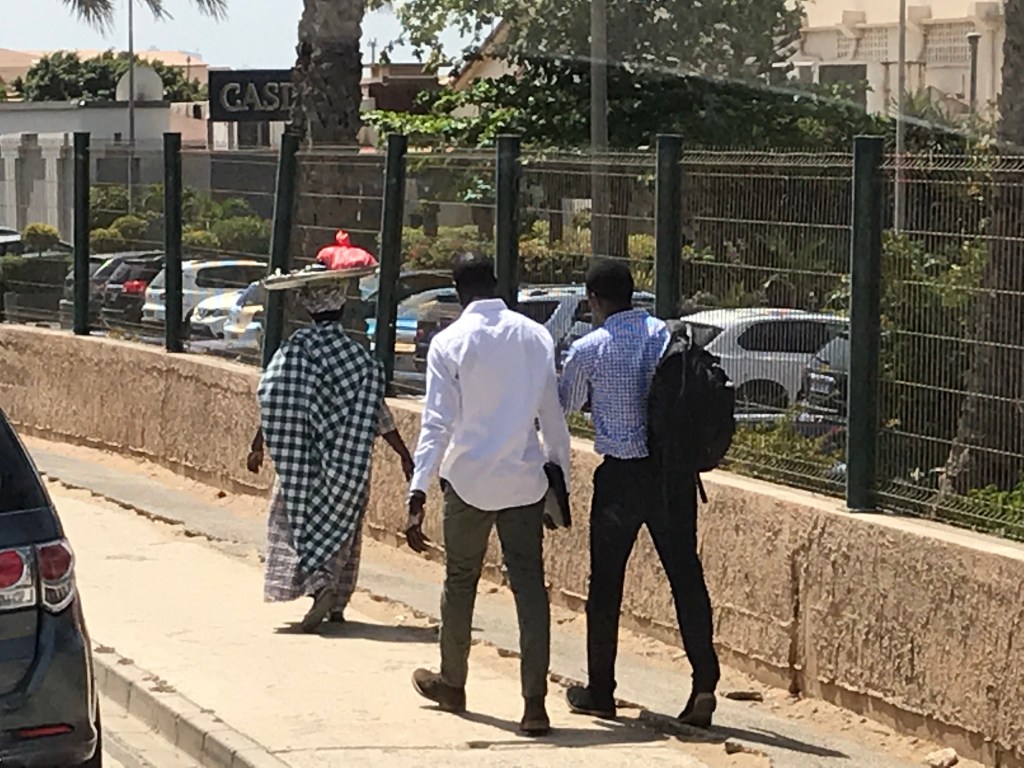
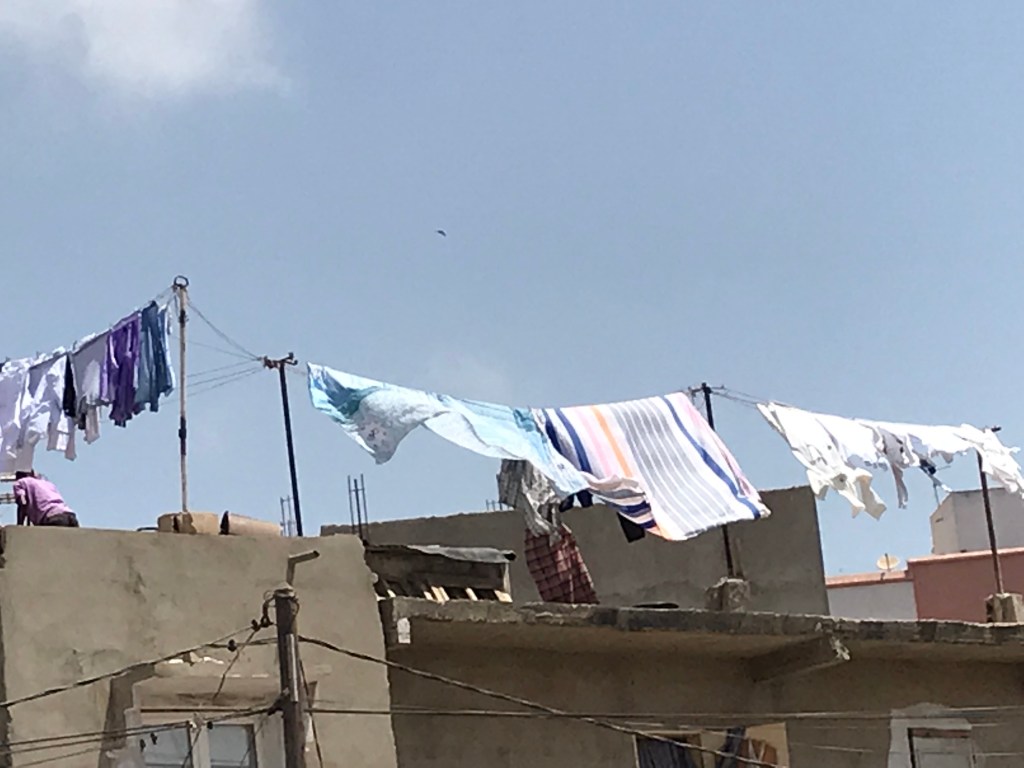
Like Maputo, Mozambique there are lots of street
vendors but, unlike Maputo, I found they seemed to take a polite ‘no, thank you’
as an answer. Others apparently
experienced more persistent vendors. Our
guide described it as a way people without jobs created their own jobs.
People on the street were very colorful in their
African garb—though there were plenty in western clothing as well.
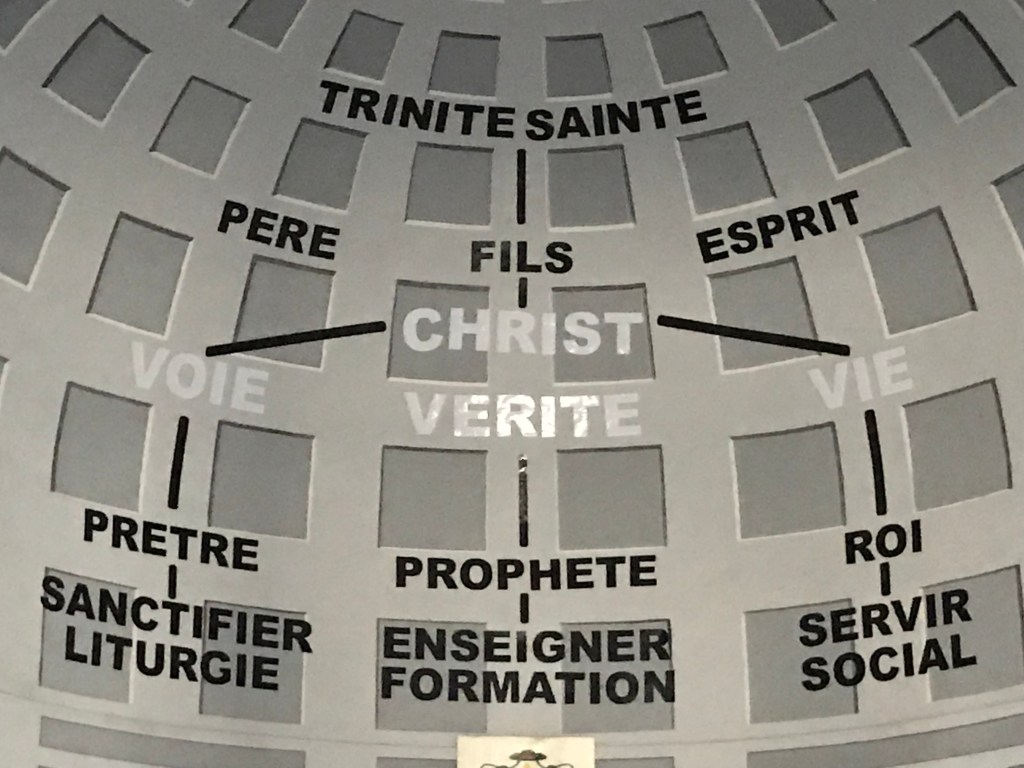
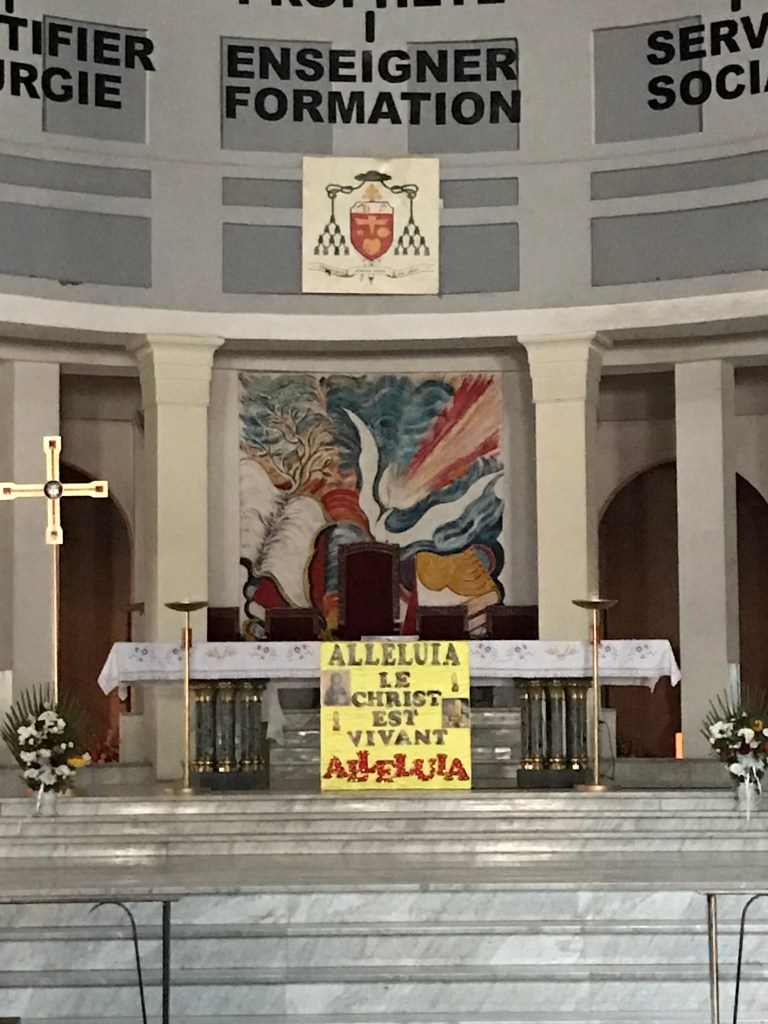
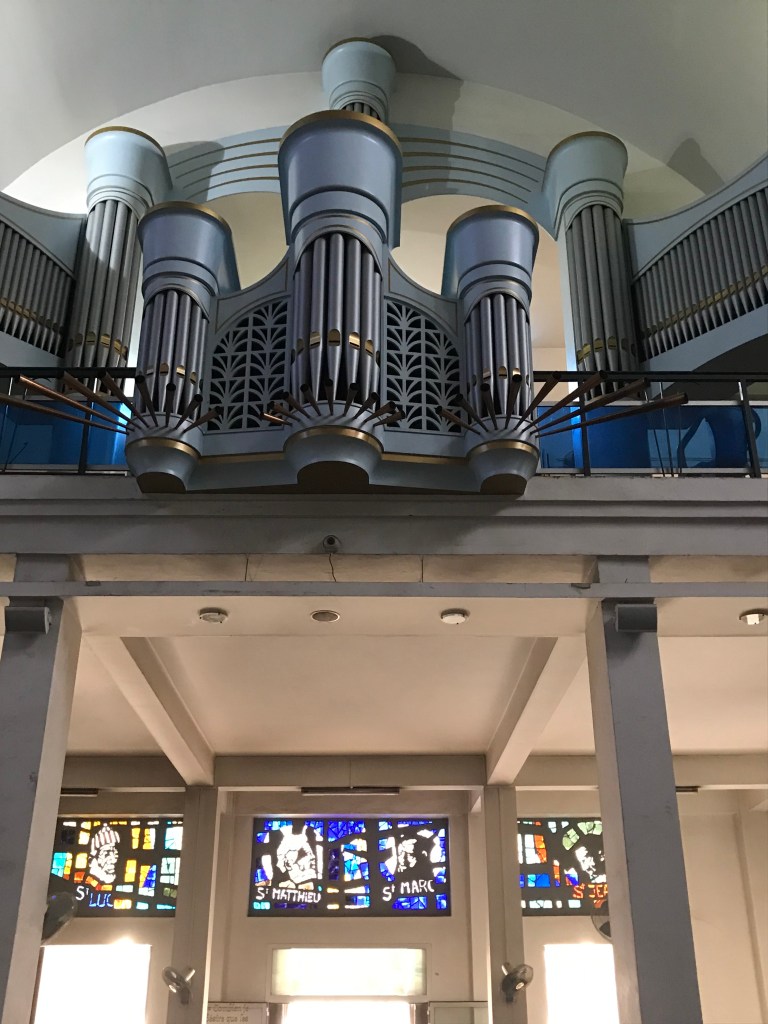
The cathedral (for the 5% Christians) is modern,
attractive, and interesting. We’re told
education is not compulsory though I gathered most go to school somehow. The best schools are, of course, private, and
the private schools are run by the Roman Catholic Church. Our guide seemed
amazed that I even asked if Muslim children attended the Catholic schools and
responded ‘of course’ since there are so few who are not Muslim. We drove through the university which he said
has 100,000 students (!) and is the best university in western Africa (unfortunately,
that may not be saying much.)
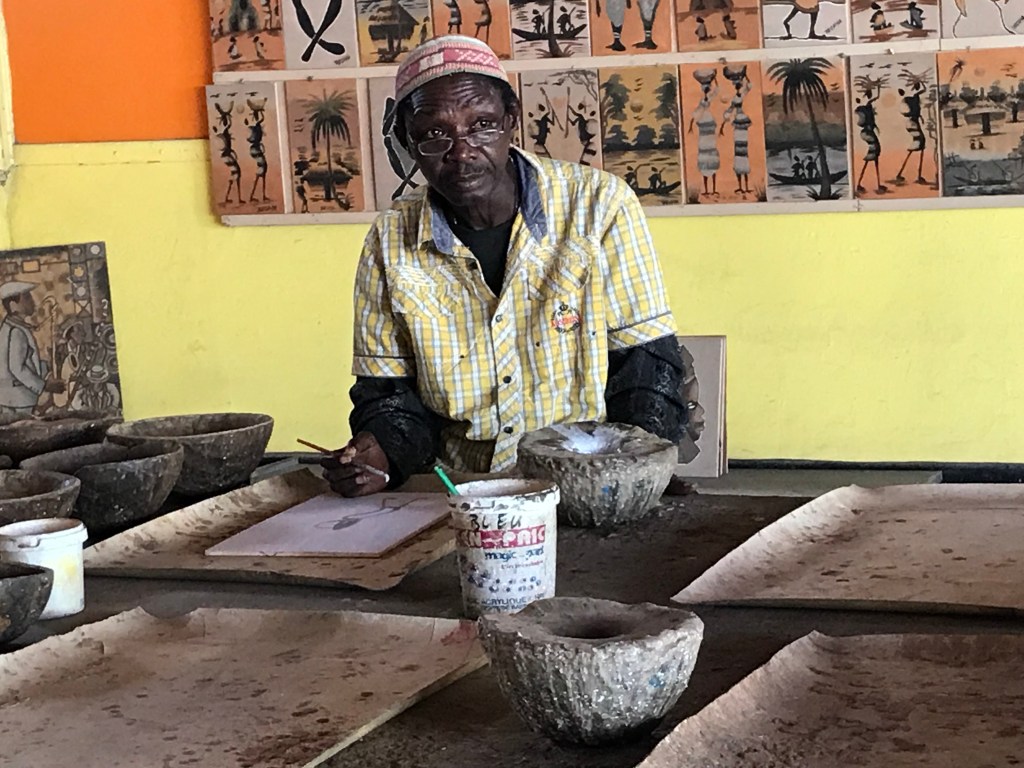
We stopped at a sand painting art gallery, which
allowed us a drink and toilets (toilets on some of these excursions are
difficult…) It was, however, also
interesting to see the artist create a sand painting. He began by drawing it on a board with a glue
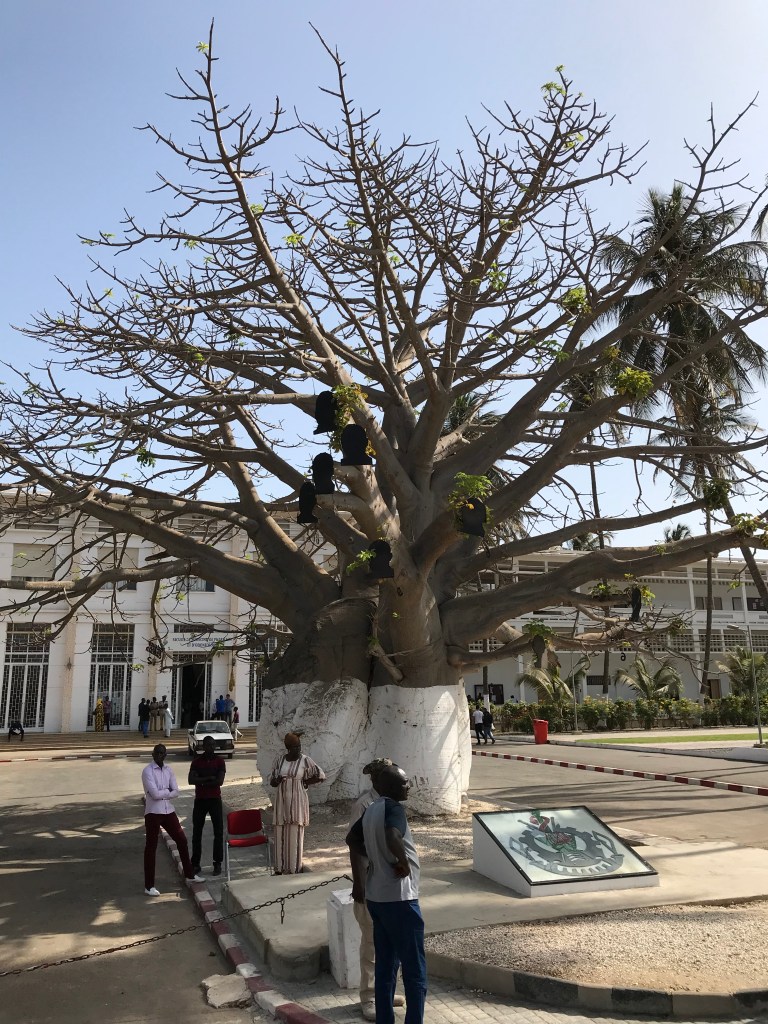
(I believe from a baobab tree—the iconic tree of this part of Africa with some
trees being over 1500 years old.) Then
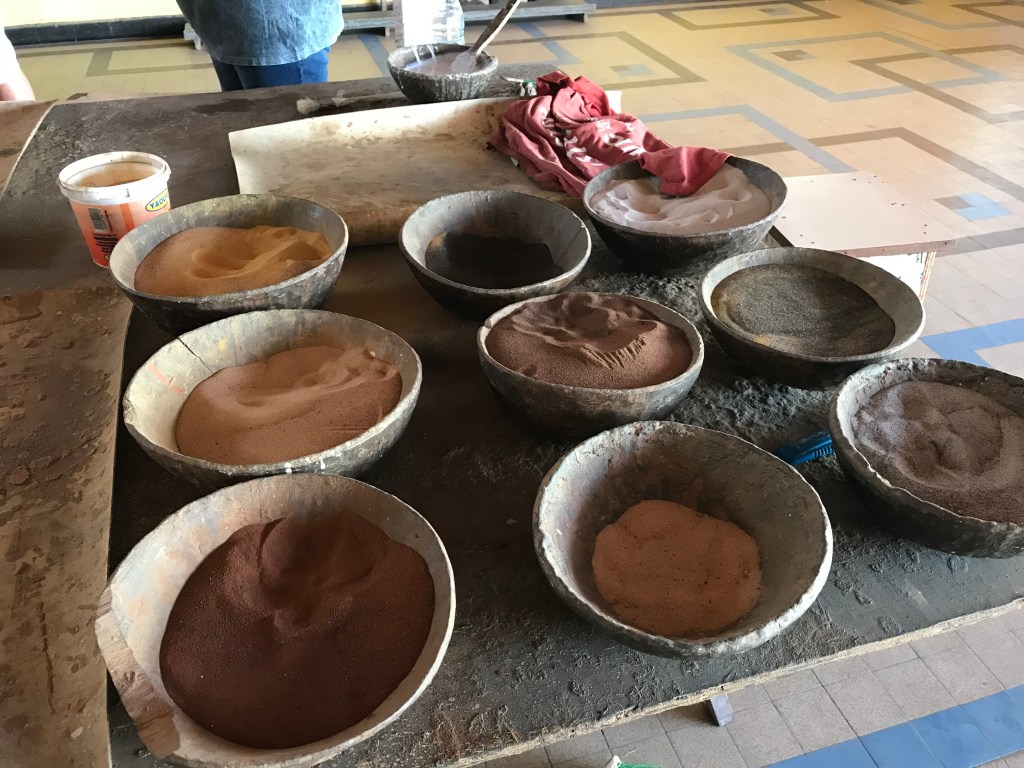
he sprinkled sand on it, choosing from several bowls of different color sand
(different colors from different places.) It seemed like he sprinkled it
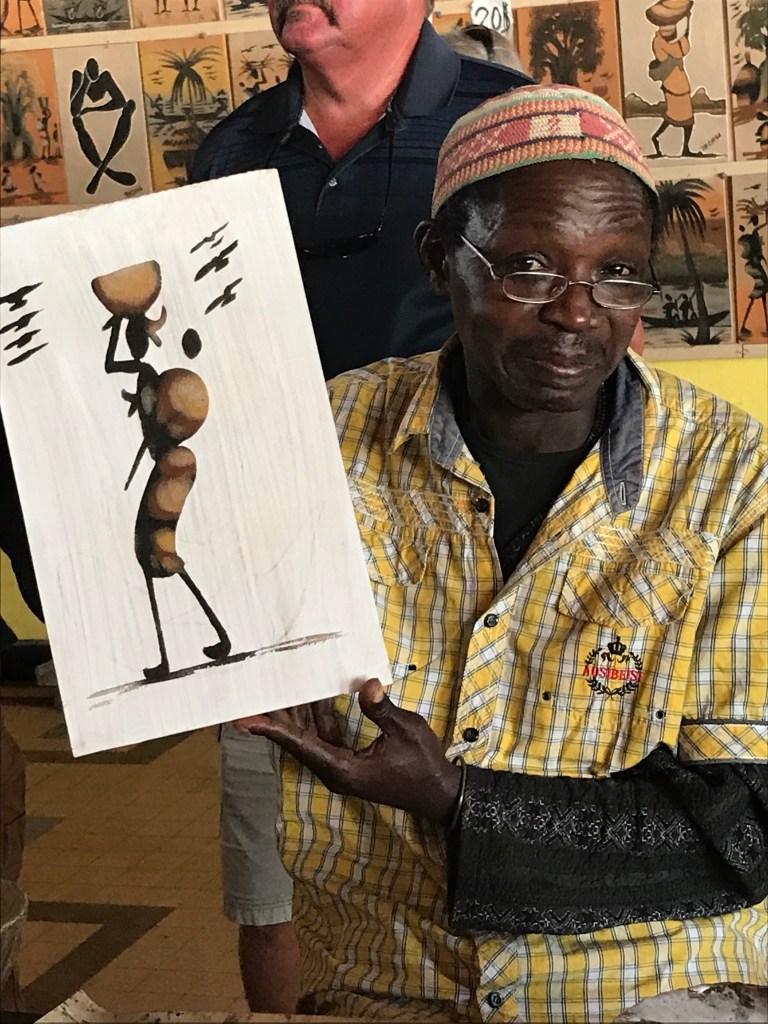
haphazardly over most of the painting, but, when he shook off the excess sand,
there was a painting with clear lines of different sands.
Our guide mentioned many times that the country is a
democracy with a parliament and a president and that the president may serve
only two consecutive 5-year terms—though he also mentioned, wryly, that the
president who commissioned the statue was free about spending taxpayers’ money.
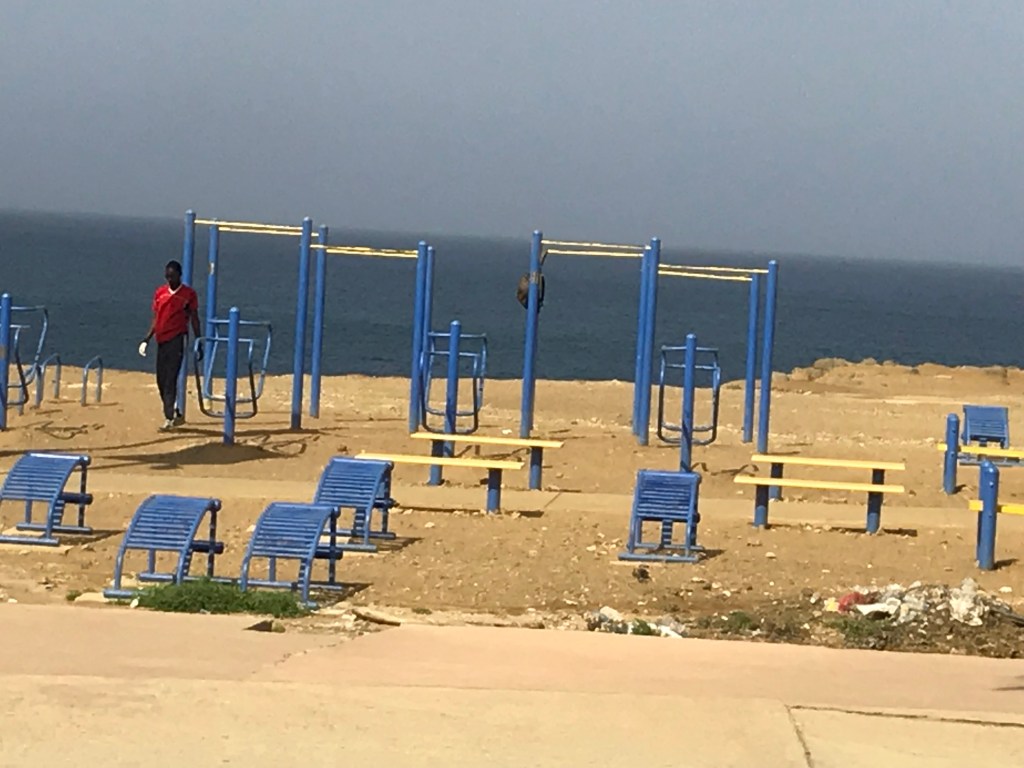
Along the coast were several sports facilities and playgrounds built, our guide said, by the Chinese. The Chinese are everywhere in Africa, investing heavily. The arrangement (at least in this country but probably in general) is that 40% of the labor in Chinese projects will be local (so it does help employment as well as creating infrastructure), but, of course, that means 60% is Chinese. We were told 15 years ago in Ethiopia that the Chinese could underbid on most projects because they paid their workers very little and provided little in facilities—in the Ethiopian road project being described, the Chinese workers were given no housing and had to sleep on the road they were constructing. Underbidding Ethiopian labor (or, I imagine Senegalese labor) takes some doing! China’s interest in Africa has to do both with influence and with natural resources, especially the metals needed for modern technology. A sign we saw said ‘Africa isn’t poor—it’s being looted.’
Back on board ship for lunch in the warm (but not too hot) sun, I added another first for this trip: I took a swim in the outdoor pool! Hard to believe the only other time I’ve been in the pool on the ship was in the main pool for aqua aerobics. It seemed about time I tried it. It was lovely and warm—I probably should have done it more often!
Highlight of My Trip… I also think Dakar reminds me of Addis Ababa, but on the basis of only a very short visit, it seems more colorful. Unlike other places we have visited on other trips – say, Rhodes – I have no desire to live here, however, but being in the city for only a little over 4 hours has been left a favorable impression I won’t soon forget.
How so? In most every city we visit we take an Included Tour, which usually involves a bus ride for a “panoramic” view of the urban scene, its visual highlights such as churches, museums, notable architecture and monuments, even cemeteries…along with requisite photo opportunities (and restroom stops). (Cynthia has described these above.)
These panoramic tours are always interesting, if often tedious: go-stop, off-on, go-stop, off-on… In our port briefing for Dakar, were emphatically warned about traffic congestion, crowds, pick-pockets, and pushy street vendors. During our bus tour, traffic was very congested; I saw only 2 sets of traffic lights in the downtown area (but 4 or 5 in Addis 15 years ago). Pedestrian crowds were everywhere, with often little distinction between narrow and even wide roads and walkways; all available space was shared by vehicles, motorcycles and scooters, and people. Whenever possible, it seemed on-coming vehicle traffic traveled two abreast on two-way thoroughfares. While intersections were usually blocked by vehicles and pedestrians wanting to cross or turn, stoppage was short-lived, and all continued to move ahead or yield in more-or-less seamless manner (easily seen from our front row vantage!).
Of course, I encountered no pick- pockets in our cloistered bus… more importantly, and most memorably, I found none of the street vendors pushy (unlike ones we encountered earlier in this trip, in Mozambique). A “No thanks!” or a negative nod was consistently respected. Many of our fellow travelers, however, were appalled by the crowds, the traffic, the dirt and building debris, and by the pushy vendors they encountered.
But, oh, the vibrantly colored garb! Many women were attired in multi-colored saris or abayas and hijabs; none I saw wore burqas or otherwise veiled their faces. Gray attire for men was relatively common; much rarer for women. No uniform clothing for persons of college age. Otherwise, colorful clothing was common and an eye fest, amidst an otherwise destitute landscape! –Chris
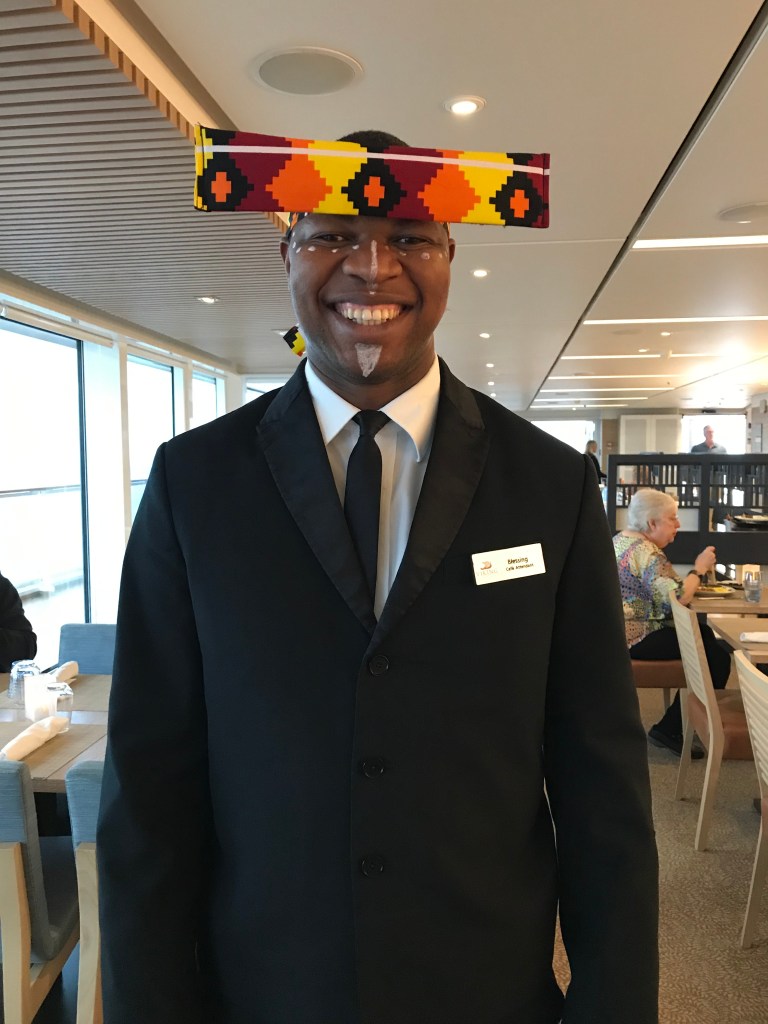
Blessing, our favorite waiter, in Namibian headdress–though he is from South Africa
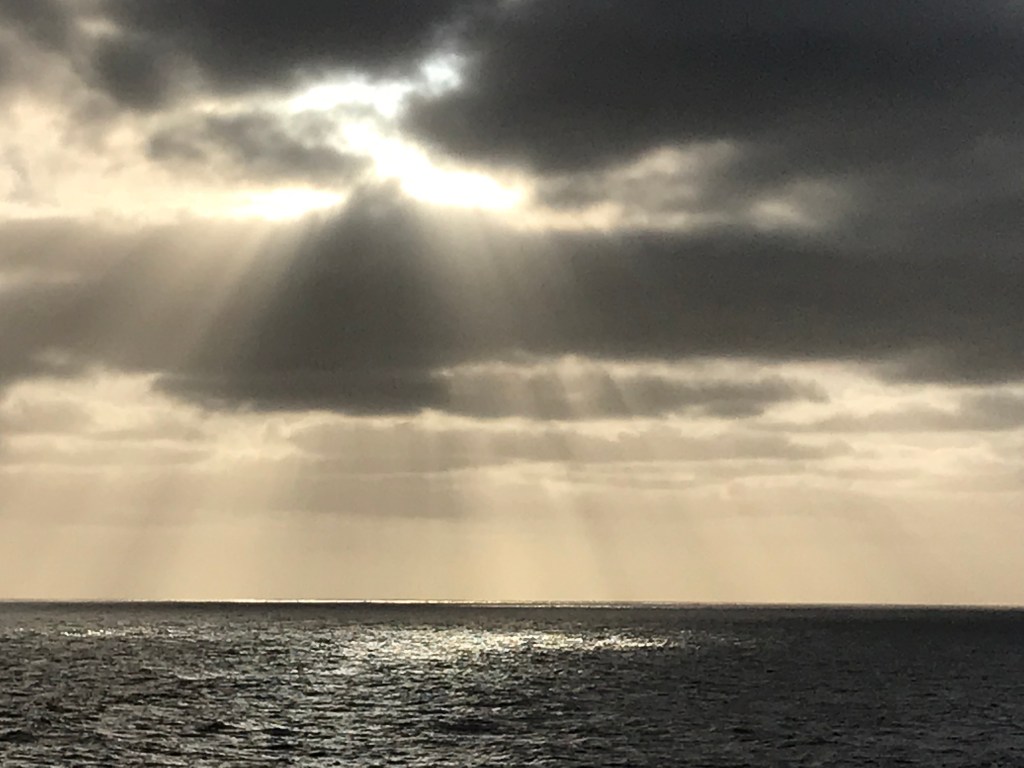
Late afternoon on the Atlantic
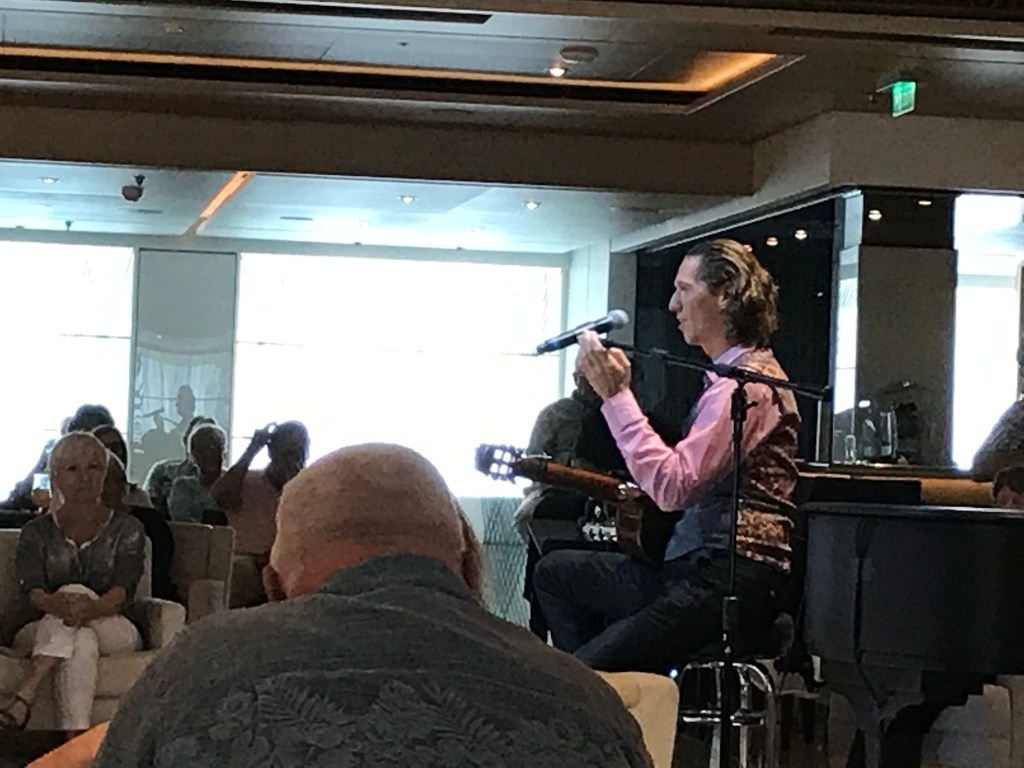
Guitarist at the Atrium concert
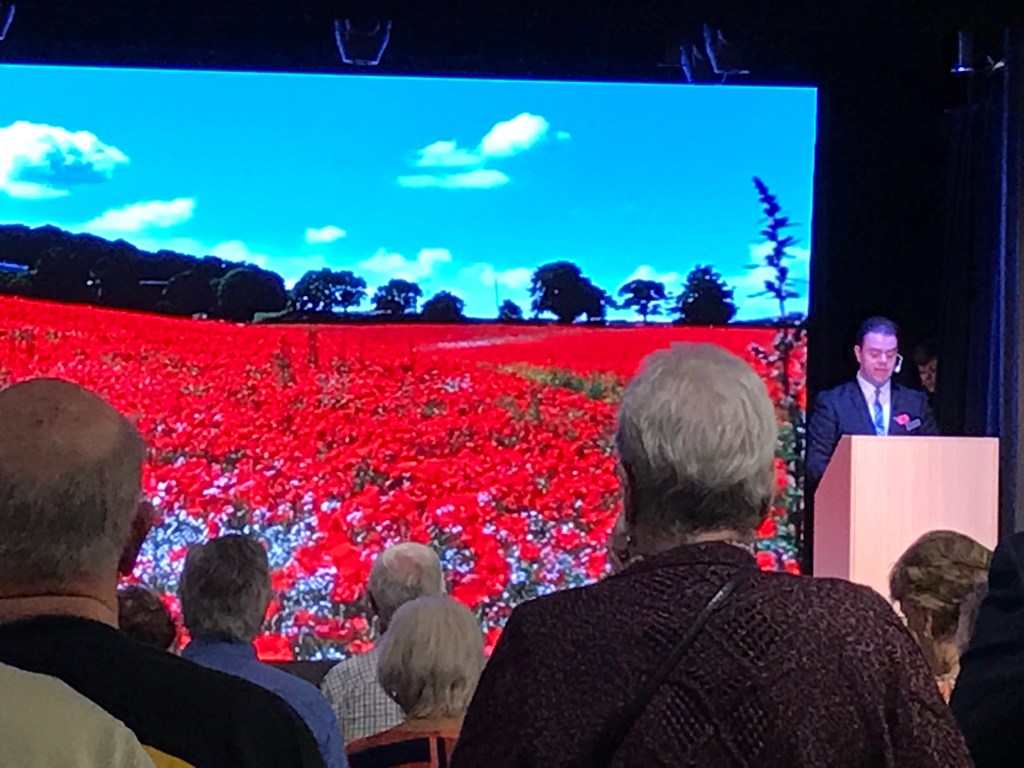
At the Anzac Day service
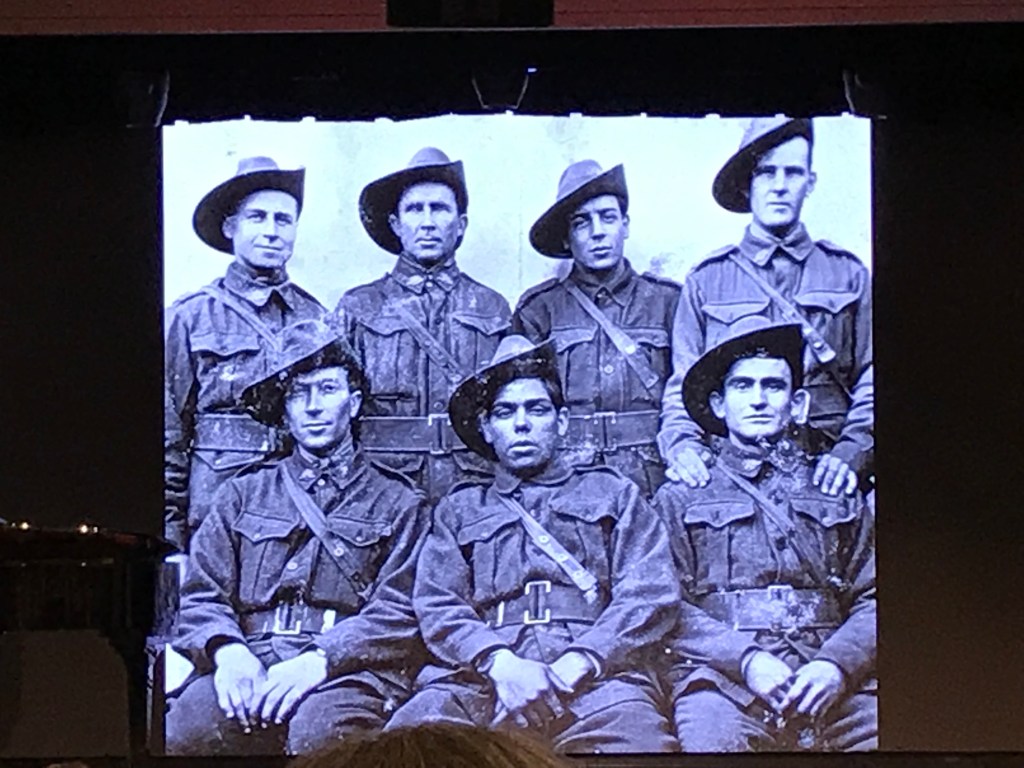
Anzac soldiers
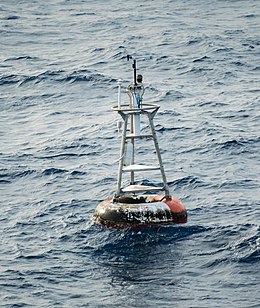
“Null” Island
I looked forward to and enjoyed seven sea days in a row—a time of relaxing before we go back to visiting ports with a sea day or two in between. It will also be our last intensive bridge lessons and playing.
Tuesday
was Africa night in the Ocean Café. The
crew and some passengers were dressed in African finery—for the passengers that
meant a lot of beaded neck pieces from South Africa; for the crew mostly
Namibian headdresses and dashikis. I
meant to wear one of the Indian tops I acquired in Durban, since, after all,
there are many Indians in South Africa (thus, Indian tops for sale), but I
forgot and didn’t feel like changing so I was in a Polynesian top. They had kudu steaks, ostrich, and many other
items. I stuck to beef and soup—unadventurous
me.
Wednesday
I went to a crafts session to make potholders, but I’d missed the first of the
three-day workshop and all the kits were gone.
I’d thought it might be something I could do with our granddaughters
this summer, but it was, of course, all hand sewing and very fiddly. I’m told the next project is glasses cases
made from men’s ties so maybe I’ll see about doing that.
A marvelous classical guitarist played for the
Atrium concert in the late afternoon.
In the evening we dined at the Chef’s Table. This restaurant serves set five-course meals,
four of which are paired with wines. The
menus have themes and they change menu every few days, rotating among 5 or so
themes. Tonight was ostensibly
California cuisine; it’s a menu we’ve had before but I like it. The ‘amuse bouche’ was a sweet potato chip
with various additions paired with a German Riesling (very nice). It was followed by a crab cake paired with
Donnafugata Anthilia from Sicily (both also very good). The ‘palate cleanser’ was called a Moscow
mule and based on the drink of the same name; all of the palate cleansers seem
to be frozen slushes and I’ve liked all of them, but this is my favorite. The main course was halibut paired with
Nederburg Pinotage from South Africa, a red I didn’t care for at all; nor would
I pair halibut with a red—but I prefer whites in general. Desert was a delightful mandarin parfait
paired with “Domaine de Montgilet, Coteaux de l’Aubance, Chinin Blanc, France”
a very nice desert wine. All in all, we
enjoy eating here—it forces us to eat slowly and savor our food and it’s good
food.
Thursday is Anzac Day (April 25) and we had a celebration service this morning. It is the 104th anniversary of the landings at Gallipoli. We have many Australians on board and some New Zealanders, but the service was intended to more broadly celebrate all who have, and continue to, serve “that the world may be a nobler place in which to live.” Heather asked those who had been in any armed forces to stand, and a majority, I think, of the men stood. It was an exceedingly moving service—complete with poppies for us to wear.
Our shipboard pianist, Joram from the Philippines
and our classical cellist, Oxana from Russia played in another wonderful Atrium
afternoon concert. We were told there
will be Atrium concerts most every afternoon.
Friday’s highlights include reaching “Null Island” and crossing the equator. They even have a silly Viking ceremony for crossing the equator that involves funny costumes and walking through the pool. And we get a certificate saying we crossed the equator…
“Null Island” — A Conundrum. Today around 3 p.m. Viking Sun passed a “National Data Buoy Centre weather buoy Station” that is located off the west coast of Africa in the Gulf of Guinea, at 0o latitude and 0o E longitude. (Actually, the ship deviated significantly from the shortest distance route between Namibia and Senegal to bring us abreast of the buoy.) The buoy is known as Null and is the geographical point where the Equator intersects the Prime Meridian, which passes through Greenwich, England. There is no terrestrial “island” at this location, which functions as a reference point from which other navigational measurements are made. Only a 1 square meter buoy. No mystery here!
The Viking Sun deliberately passed near
this location in order for those passengers and crew who had not previously
crossed the equator (so-called “pollywogs”) could be initiated in some sort of
arcane nautical ritual. No mystery
there, either! The conundrum, if one
exists, is this: because the sea floor lies about 16,000 feet beneath the buoy,
is the buoy or its very deep anchor located at true Null? And either way, how was the anchor positioned
so precisely? Or is it? —Chris
Saturday
We have been doing well in bridge—coming in first or
tied for first the past few days. Since
we’ve also been making mistakes, we haven’t quite figured out how it happens,
but we’re enjoying the moment—we’ll go back down to the bottom again I’m sure.
We’ve both enjoyed doing a lot of reading this
trip. Chris reads fiction and
non-fiction; I read mostly mysteries but have managed to branch out at least
into historical fiction and a little non-fiction. My favorite books (both sort of mysteries)
thus far, besides The Library Book by Susan Orlean which I mentioned in an
earlier post (and is non-fiction), are:
The Huntress by Kate Quinn (which takes place during
and after WWII with a main character as a female Russian pilot which is very
interesting in itself) and
Every Secret Thing by Susanna Kearsley (which takes
place in the present but involves unraveling something that began in WWII)
Both are mysteries in their own way. I’ve never read anything by either author
before, but I certainly will find more now!
I’ve also recently enjoyed two novels by Chris Bohjalian: The Sandcastle
girls (about Armenia going back and forth between today and WWI), and The Light
in the Ruins (WWII in Italy and today).
There seem to be common themes of the world wars and going back and
forth in time from then until now.
Sunday
brought
our second to last onboard church service, which makes me sad—I’d join
Heather’s church any time!
During lunch at the World Café, a large pod of dolphins appeared. People gathered at the window and clapped and cheered. Almost as if they heard us, the dolphins seemed to be putting on a performance for us, jumping high out of the water and doing acrobatics. I think that means they were spinner dolphins. I’m glad to finally see dolphins so close!
For a grand finale to the day, we had an Atrium
concert by Heather Clancy, cruise director and singer extraordinaire (as well
as preacher extraordinaire), and Adam Johnson, pianist extraordinaire (originally
from Minneapolis, an award-winning pianist, conductor, and composer). Though the ship brings many singers on board
including those with us for the entire world cruise, I don’t think any can
match Heather’s voice. That woman,
apparently, can do everything! The
program included some songs from Kiss me Kate but mostly from opera and was
fabulous.
Monday is our last of our long sequence of days at sea. I see things rapidly accelerating (I hope I can keep up with the blogging) as we approach the end. We have passed the ‘bight’ (or the Gulf of Guinea as the map says) and are closer to land, passing Liberia, Sierra Leone, and the Guineas on our way to Senegal. Of course, we’re much too far out to see any land, though I did see some fishing boats so we can’t be too far.

 C&C travel the seas