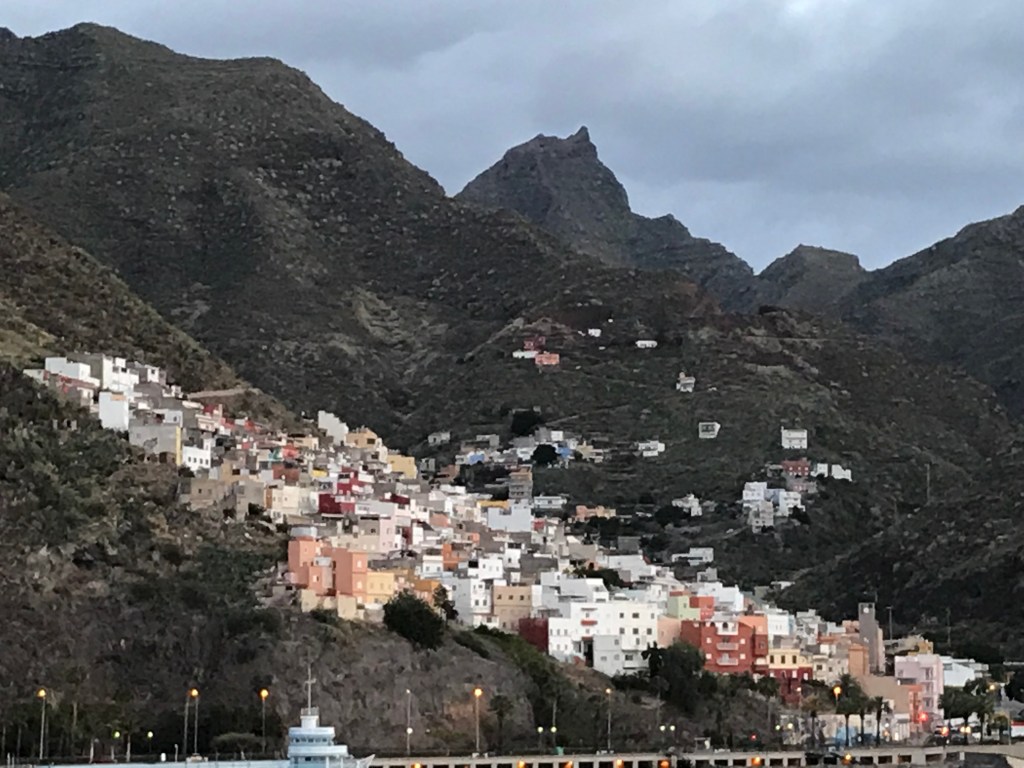
A first view of Santa Cruz 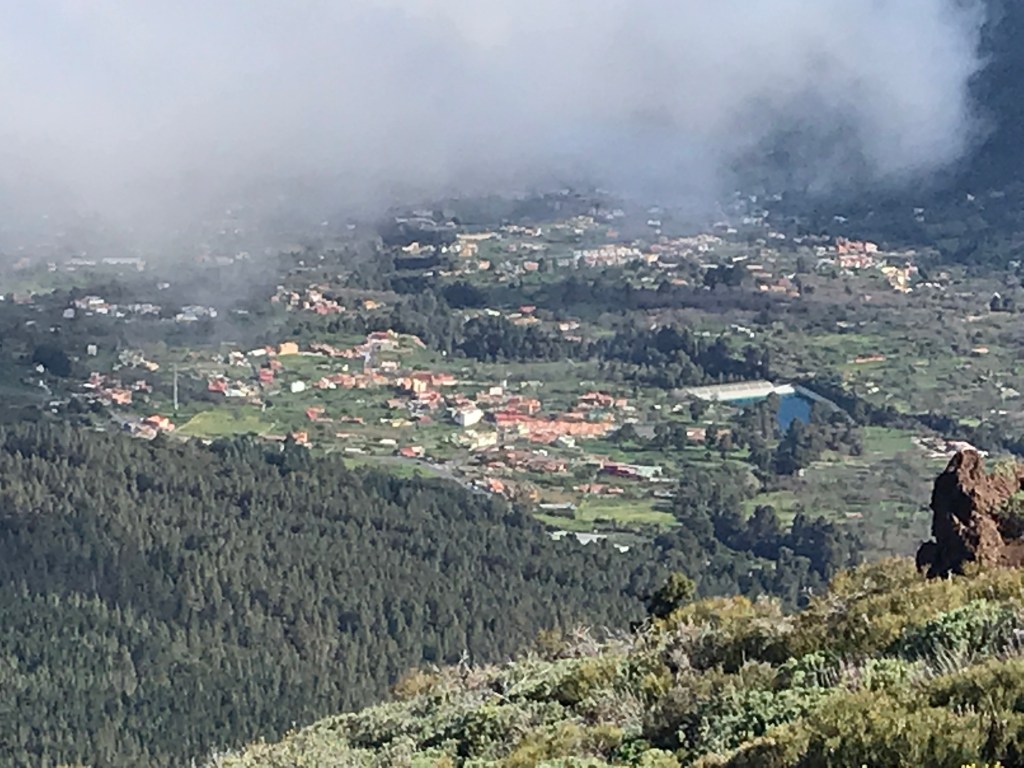
From the ridge to the valley below the clouds 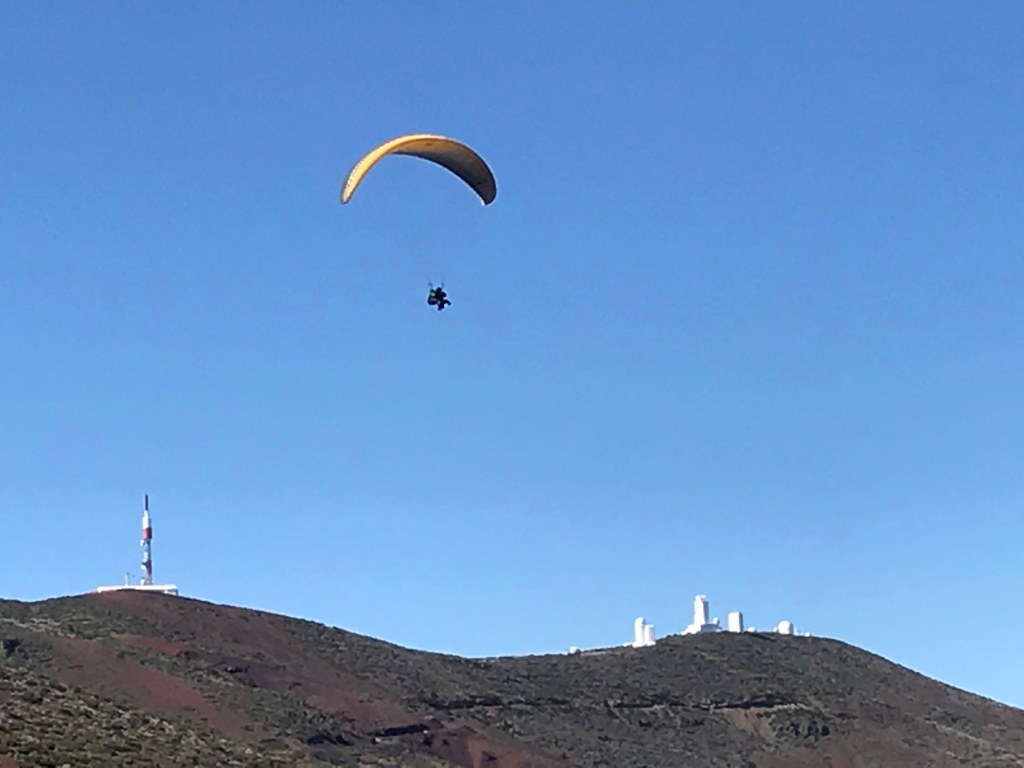
Teide Observatory and paraglider 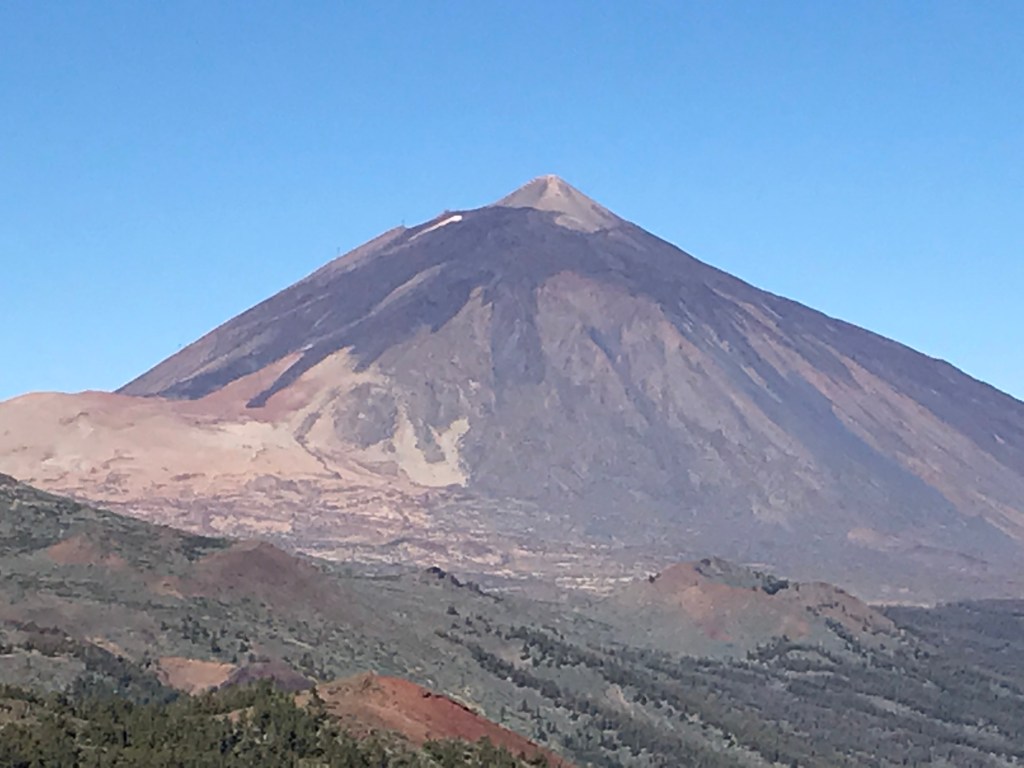
Teide Volcano 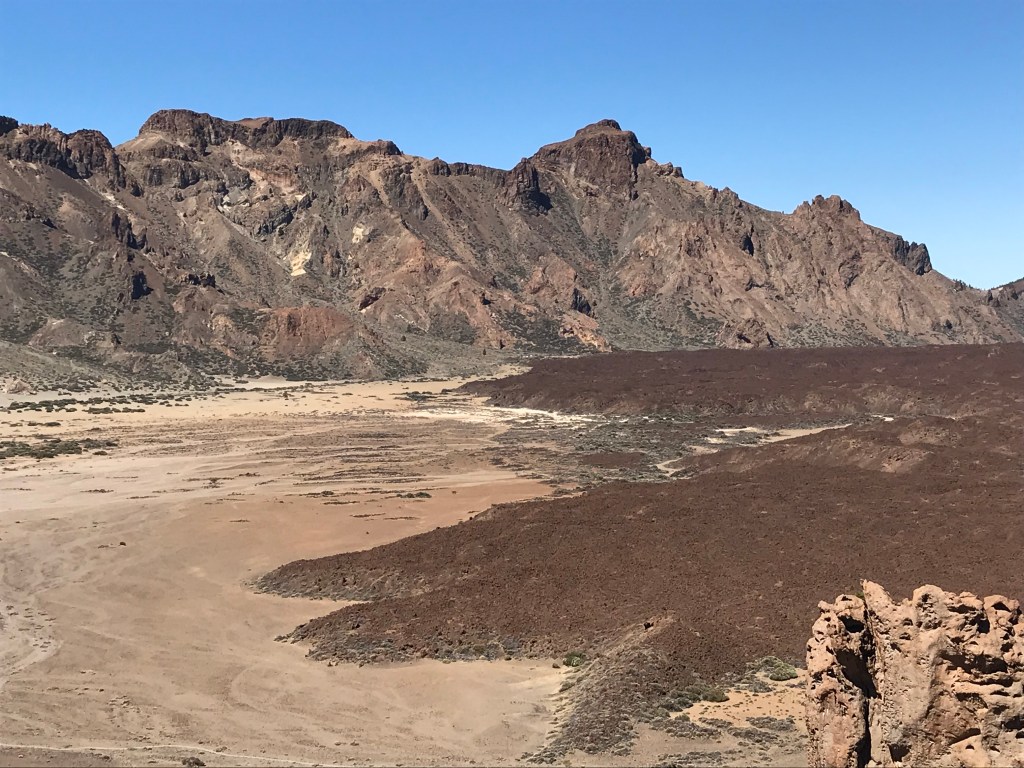
In the caldera 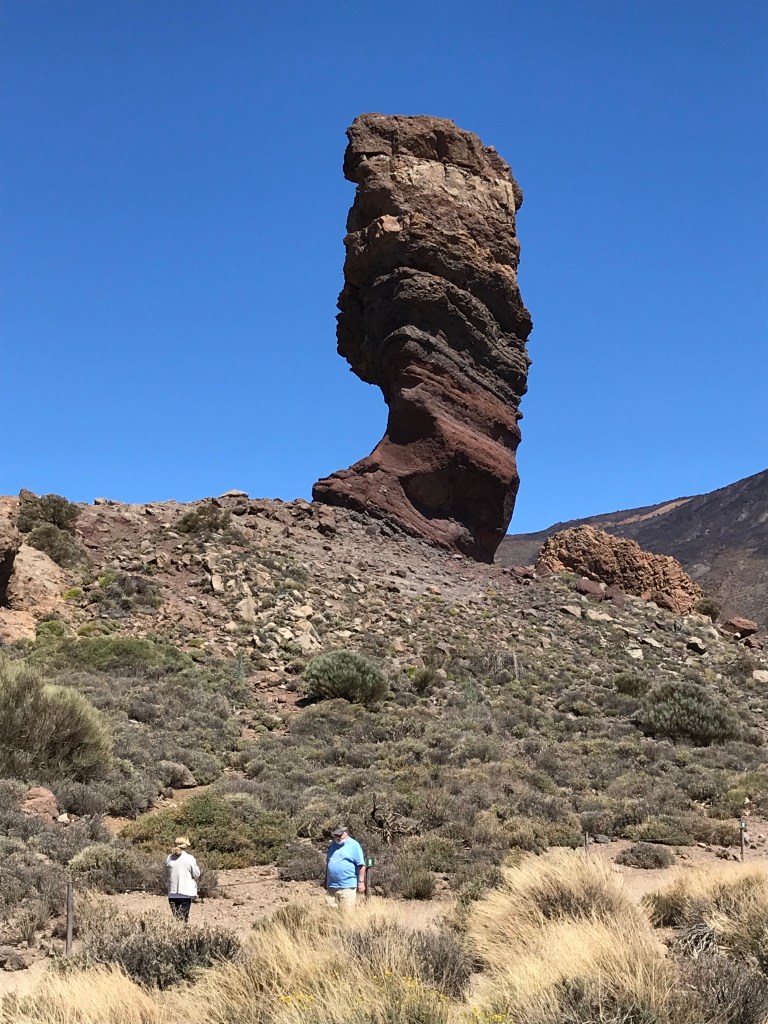
A striking formation 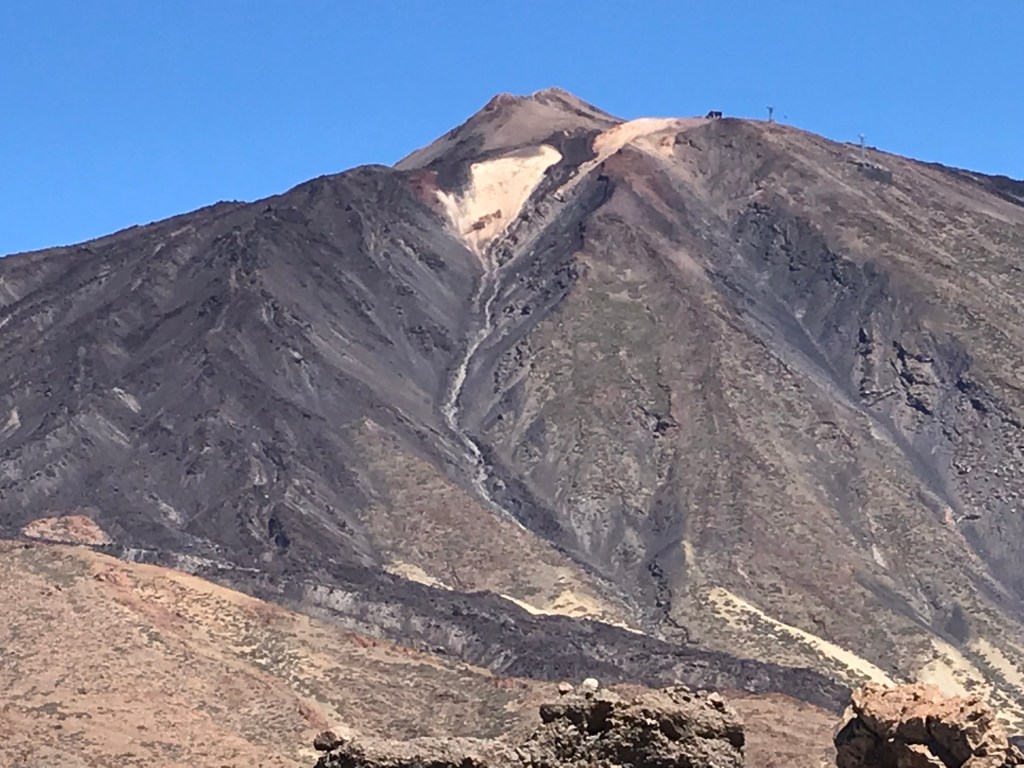
Teide Volcano 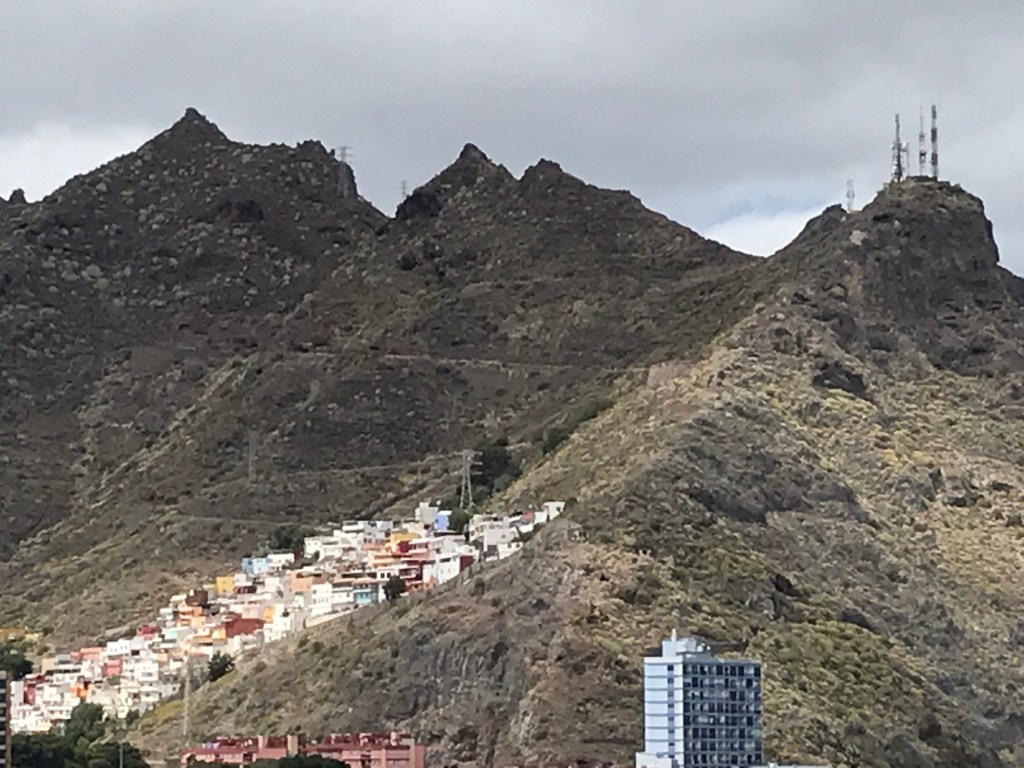
A later view of Santa Cruz 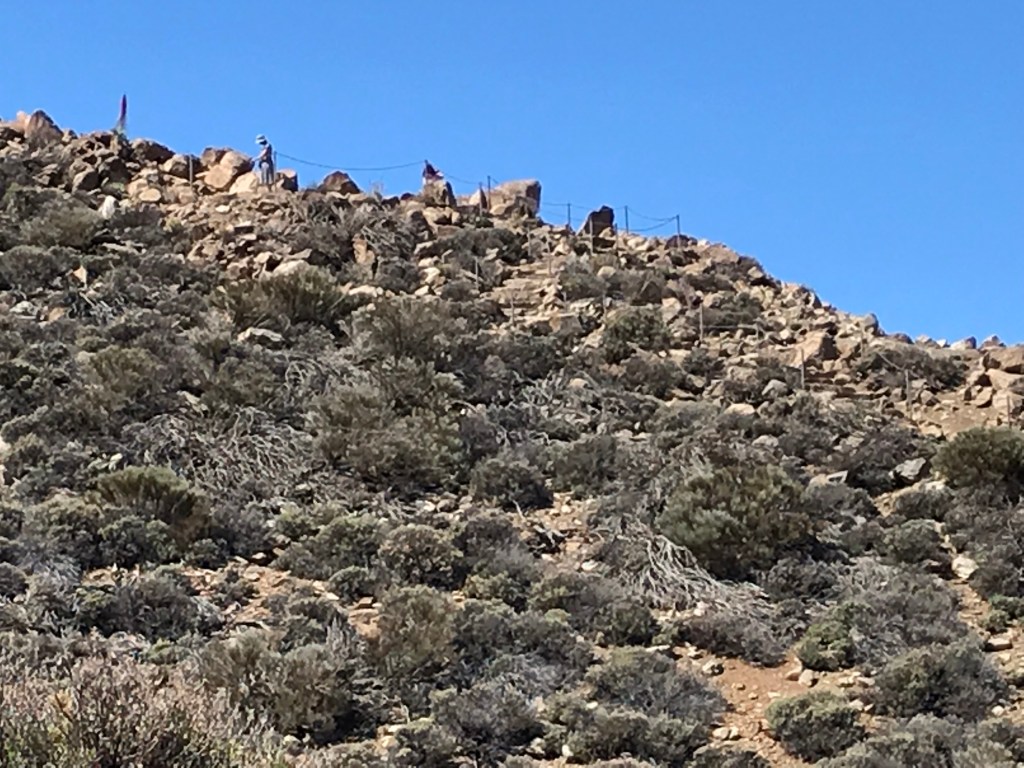
Vegetation above tree level
Tenerife is the largest of the Canary Islands, which are a region of Spain with their own parliament and seats in the Spanish senate. They are volcanic islands with those nearest Africa the oldest and the western ones the youngest geologically. The center of Tenerife is Mount Teide, the highest mountain in Spain and the third highest volcano on earth (measured from the ocean floor.)
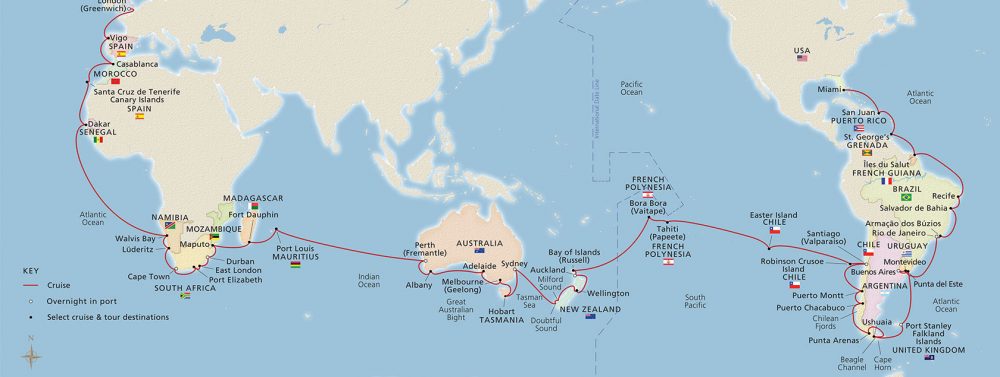
Our pre-dawn arrival meant we only gradually saw the attractive city with its white and pastel houses nestled on the slopes, reminiscent of Greek islands. What a lovely island! I can see why it’s popular with tourists as well as ex-pats from Europe desirous of a good place to live. It has abundant sunshine, lush vegetation (despite low rainfall), and temperatures in the 70s most days of the year. It is also clean and modern with excellent roads. After Africa, it looks like paradise! This may be the place I would most like to come on a holiday of all the places we’ve visited.
Our tour took us up into the Teide National Park, along a ridge where we could see each coast alternately and stopped to look down at the valley and ocean with the clouds below us—an interesting perspective,–through the caldera, and to a spot at 7200 feet where several movies have been filmed. The interesting lava formations make it an appealing landscape (apparently including for spaghetti westerns.) It is a very popular park, but despite all the buses, cars, and people, it feels remote and private. In the park, given its altitude, people train for running and bicycling, hike, and take off for paragliding. In addition, at night it’s great for star gazing, and at 2400 ft, there is an important international observatory.
Near sea level the vegetation is what you’d expect given the weather and includes lots of flowers, palms, and cactus. Next is the Canary pine forest, and a wonderful pine forest it is too—I wanted badly to get out and walk through it. When you get above tree line, you find alpine vegetation. A very beautiful landscape.
Our guide told us they always had plenty of water despite low rainfall and no rivers because snow in the mountains melted through the porous lava soil and water was available by digging into the island at various angles and altitudes. For the past 18 years, however, there has been little snow and the water ‘sacks’ have been depleted leading to problems; they are desalinating sea water, which is expensive and provides low-quality water.
A Trip to the Mountain. Teide National Park (and its mountain) our guide told us is the most frequently visited of all the World Heritage sites in Spain. Reaching the Park required a 90 minute bus trip, first along a very modern 8 lane motorway from our mooring in Santa Cruise and then along a steep, winding but exceptionally well-maintained secondary road, Coming as we had from Dakar two days ago, I marveled at our transition from 3rd world to 1st world infrastructure. We made a break in our journey at a small restaurant very near Teide Mountain, and I ruefully marveled at the lack of both toilet paper and soap in the otherwise well-appointed men’s bathroom. (The women’s facility lacked only soap.)–Chris
 C&C travel the seas