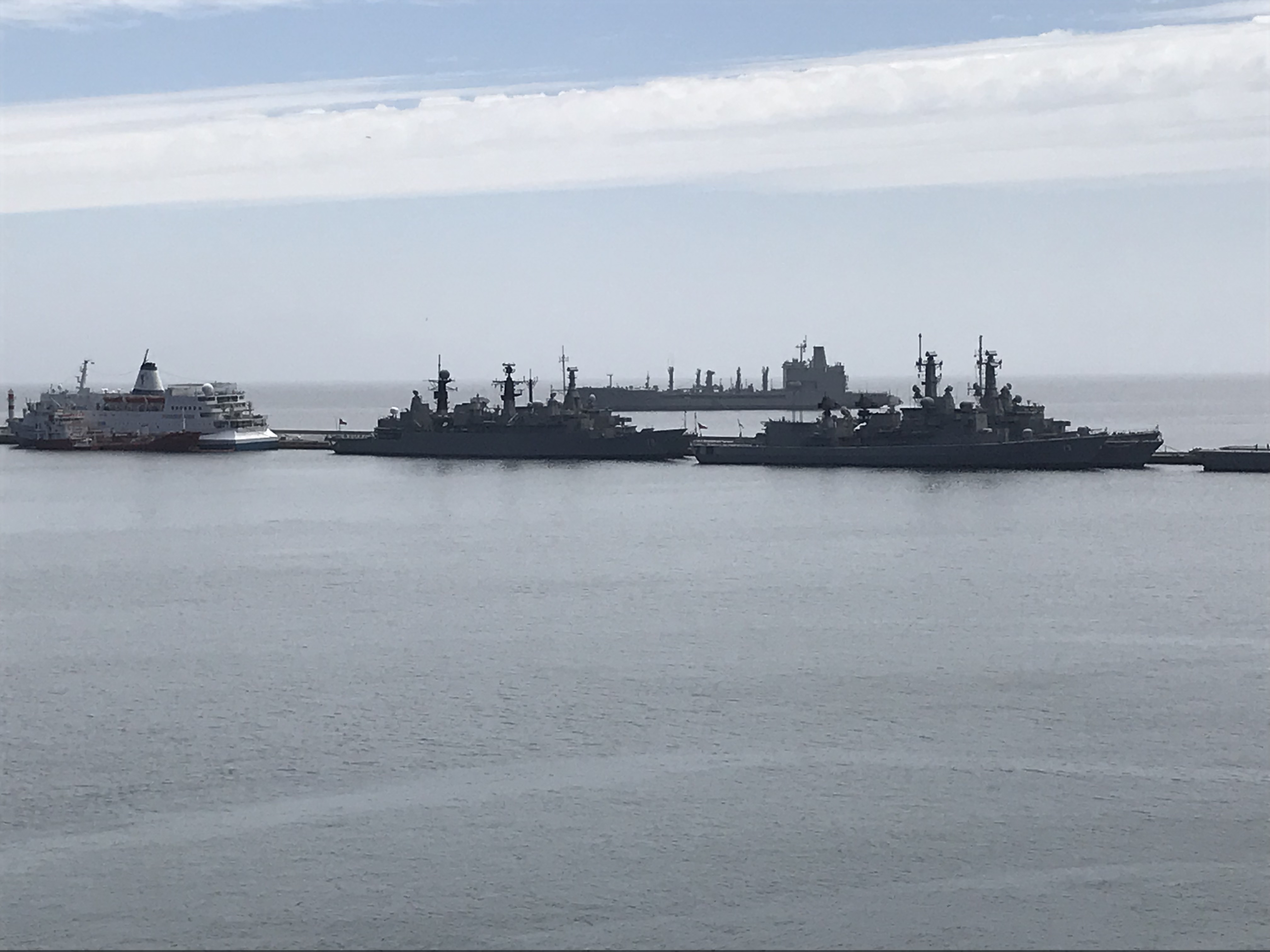
Our port neighbors 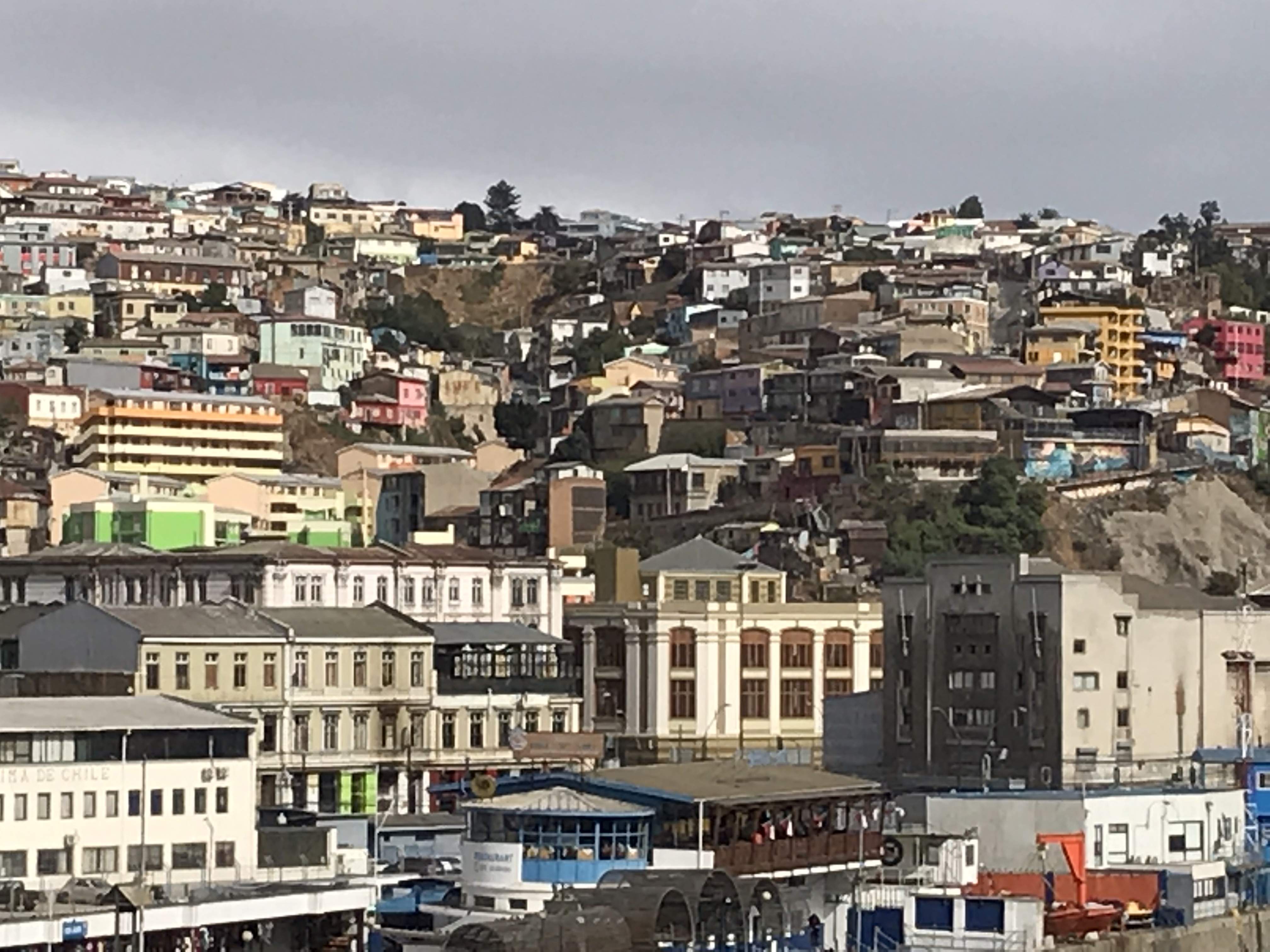
Valpariso from our balcony 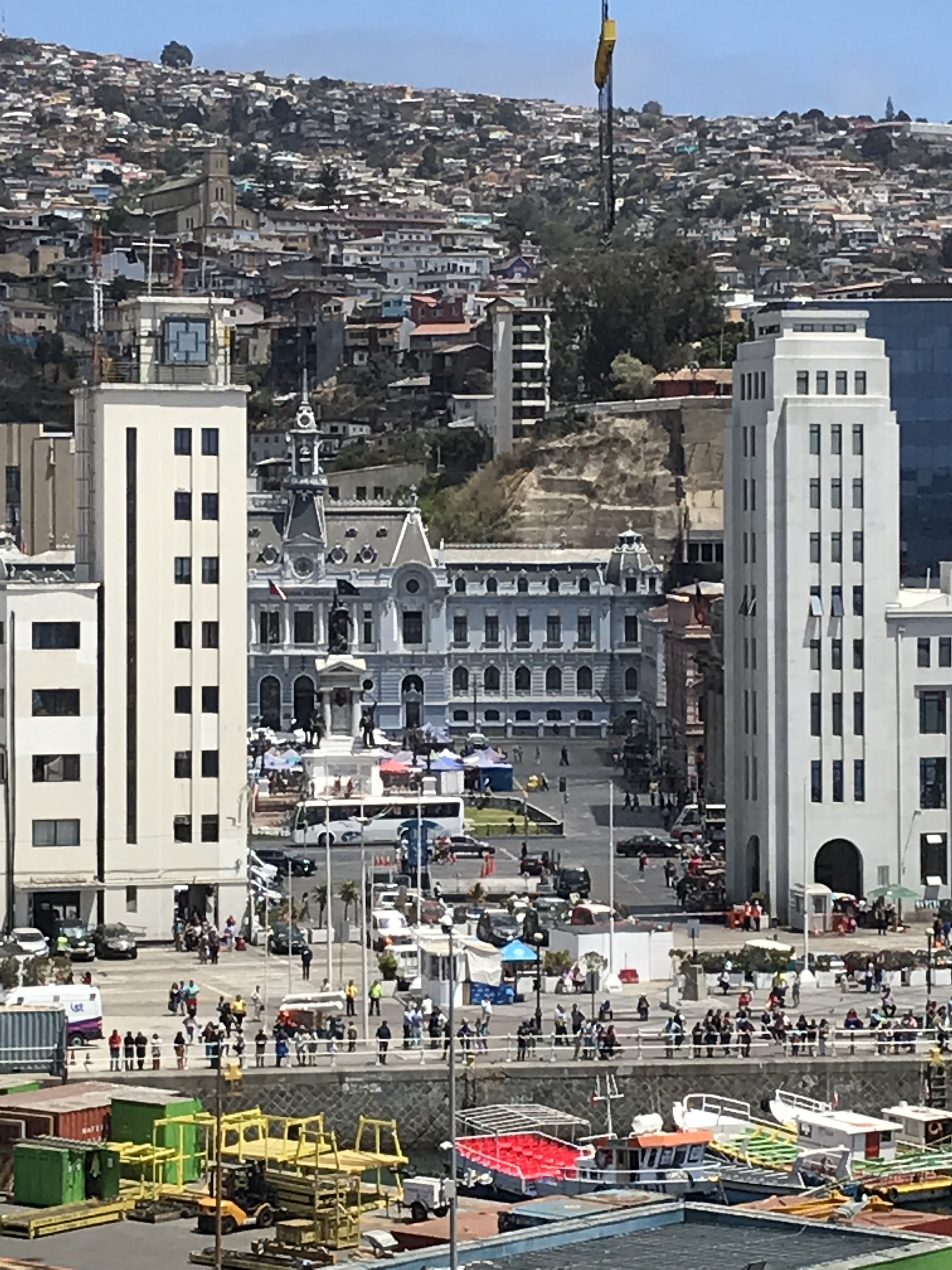
Train station tower, Customs tower, and between them the Navy headquarters & square 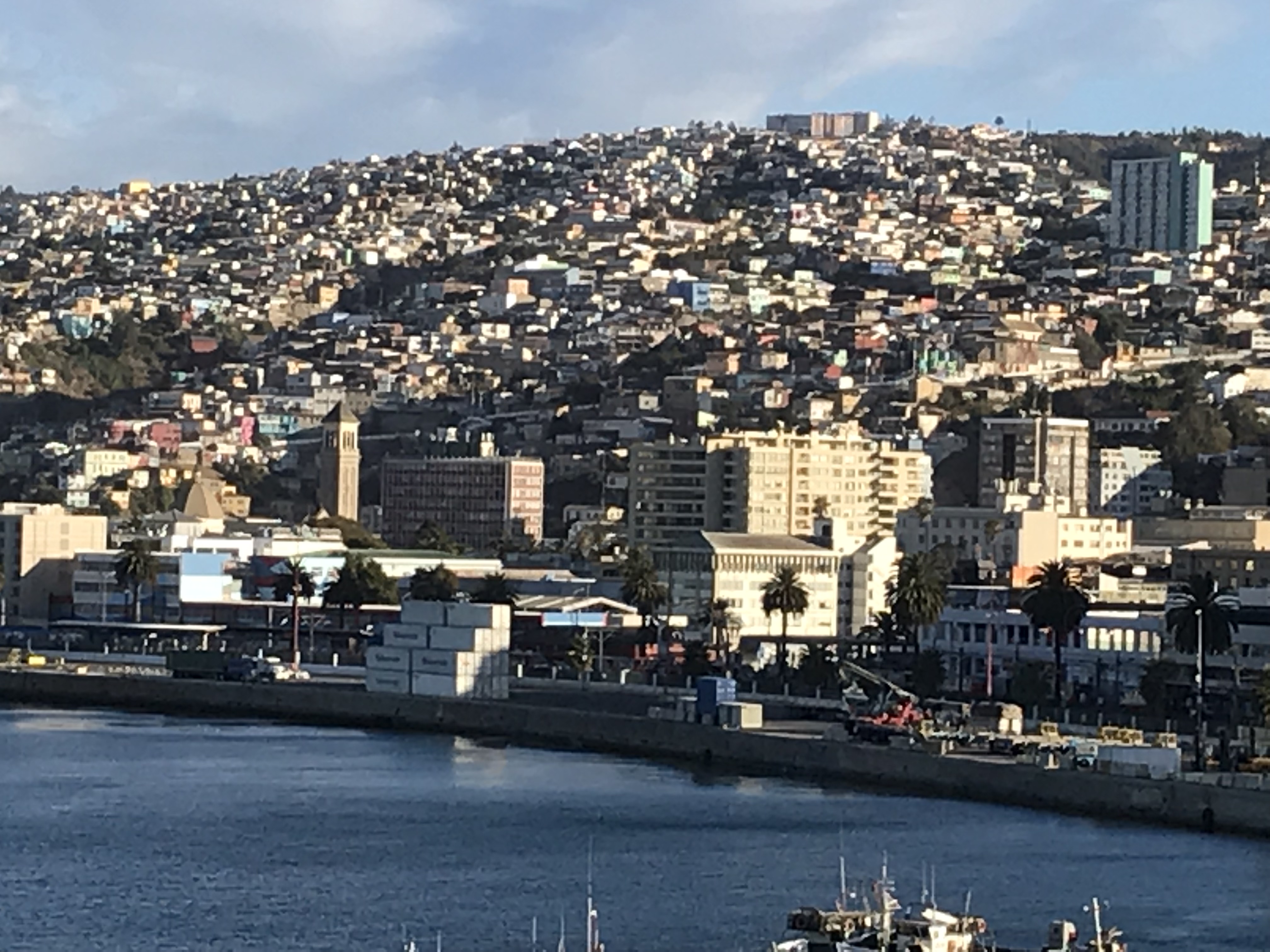
Valpariso from the ship 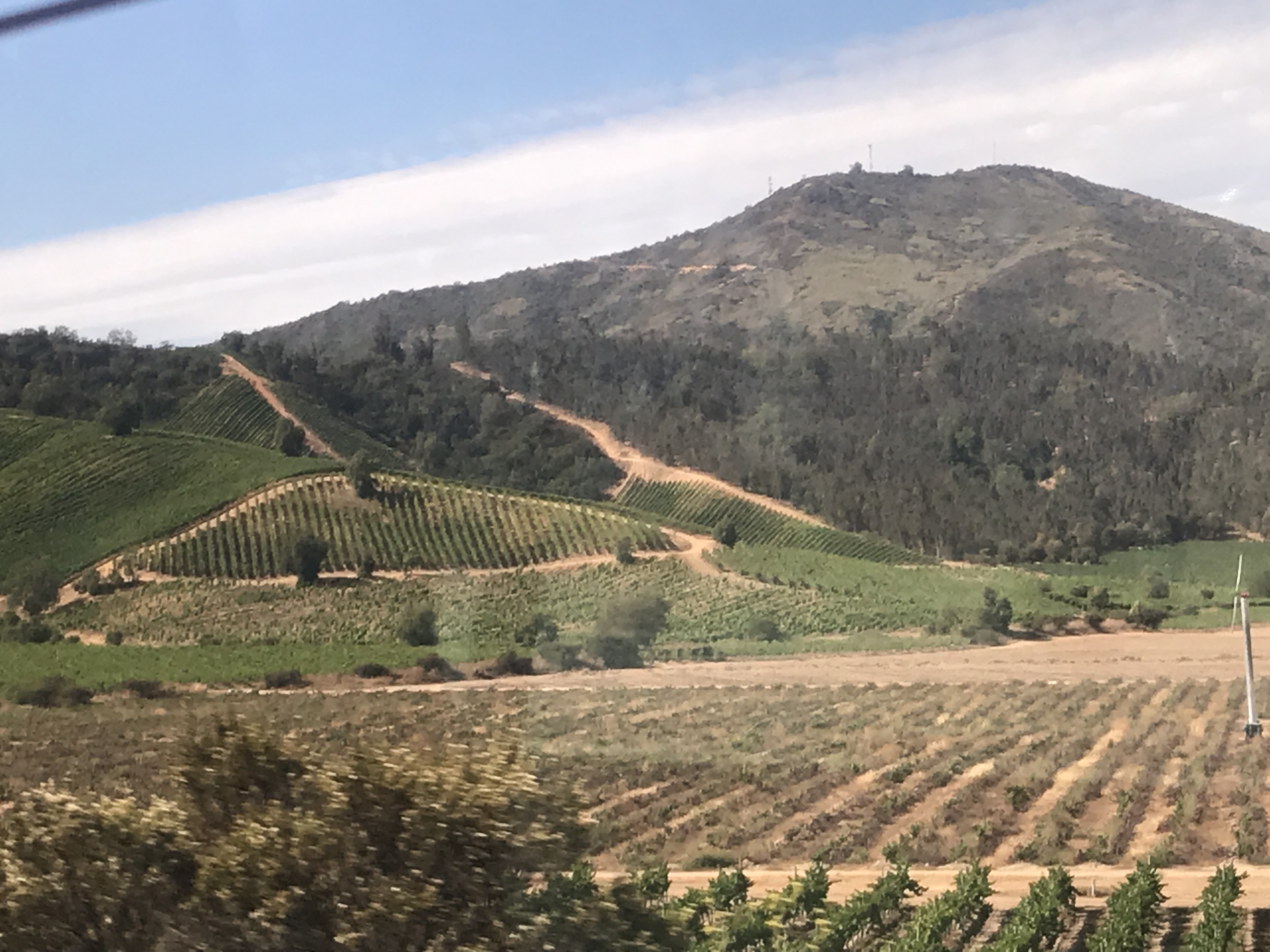
Wine country 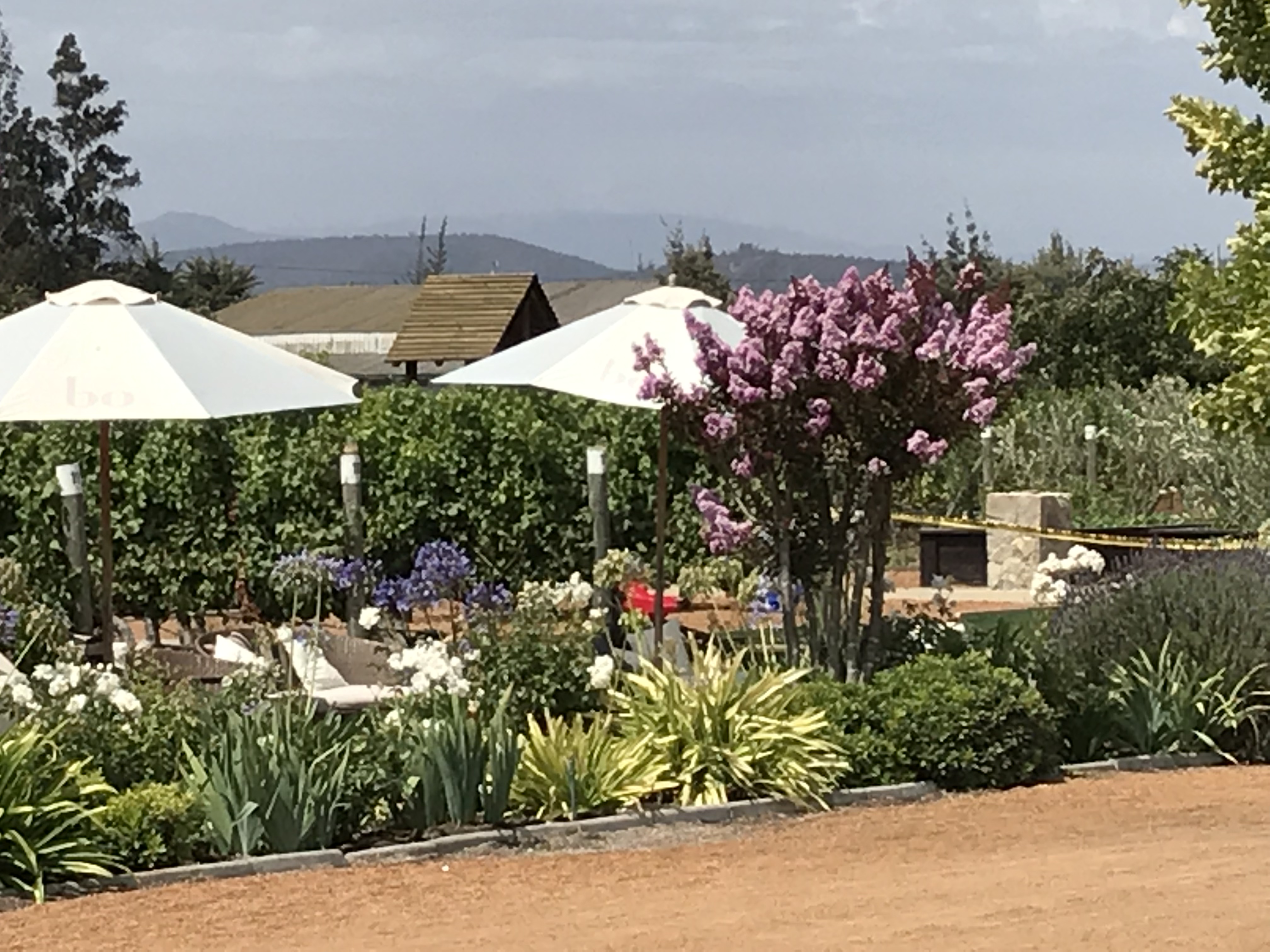
Arriving at the winery 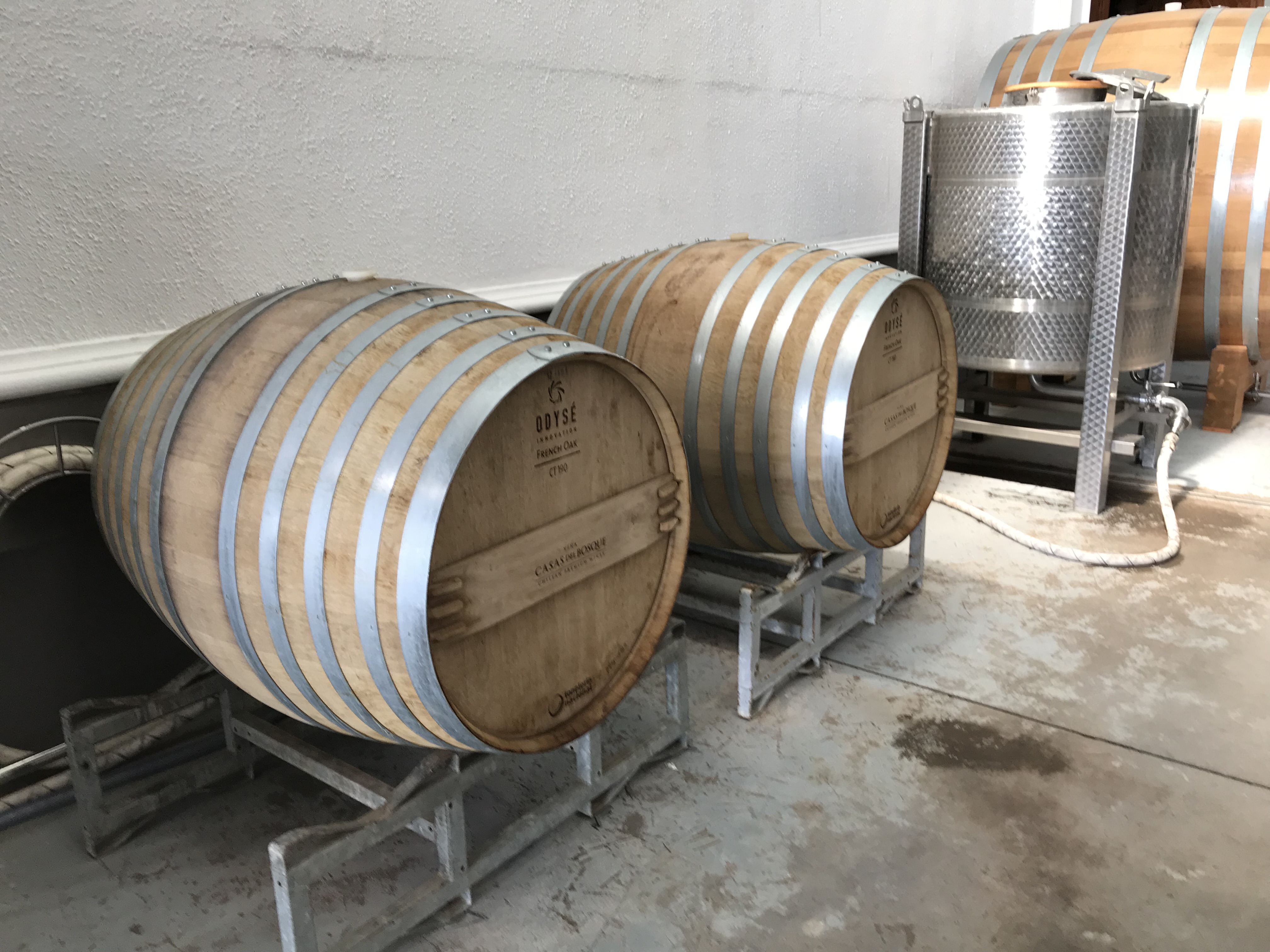
Wine barrels 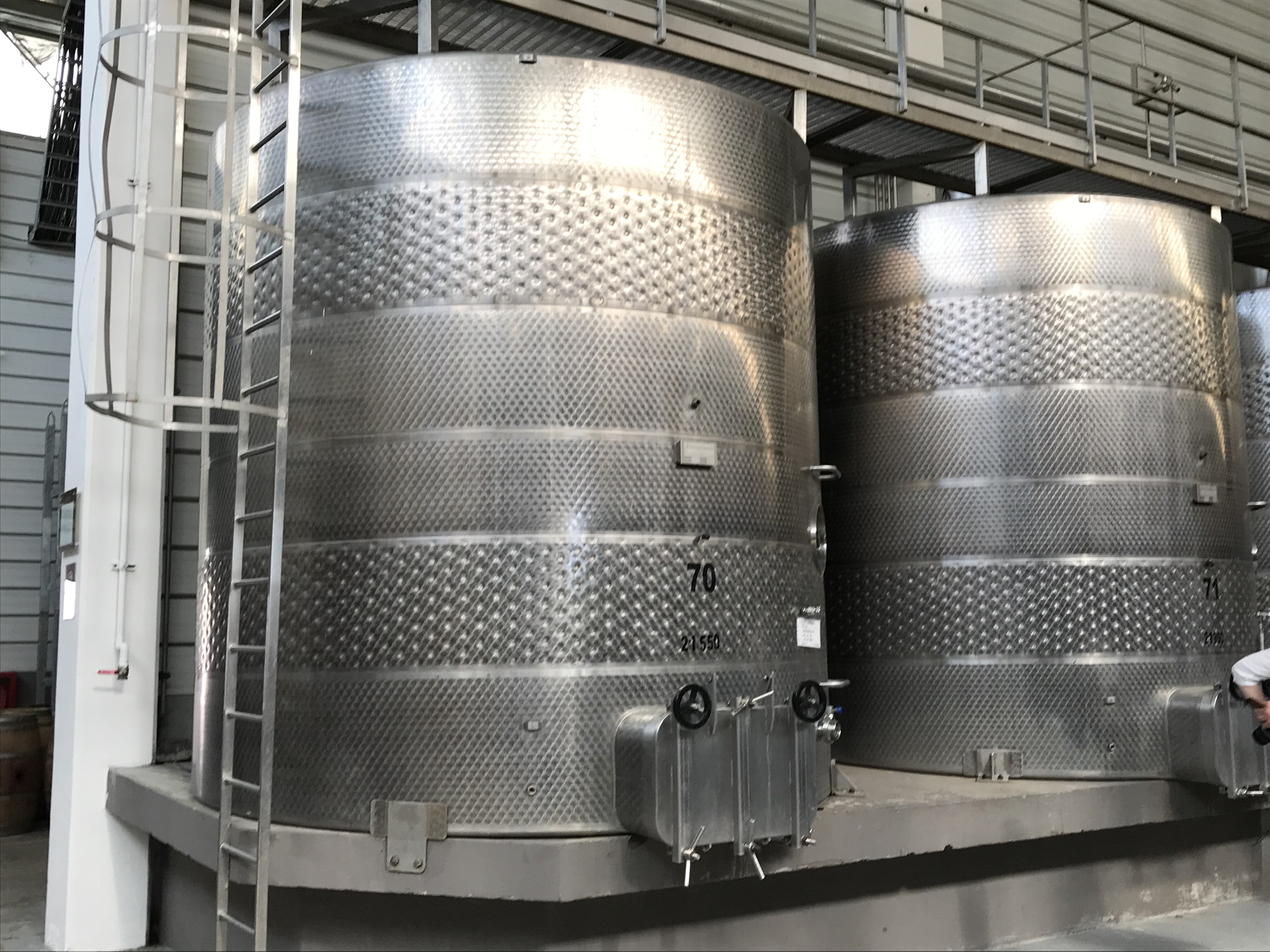
Wine storage units 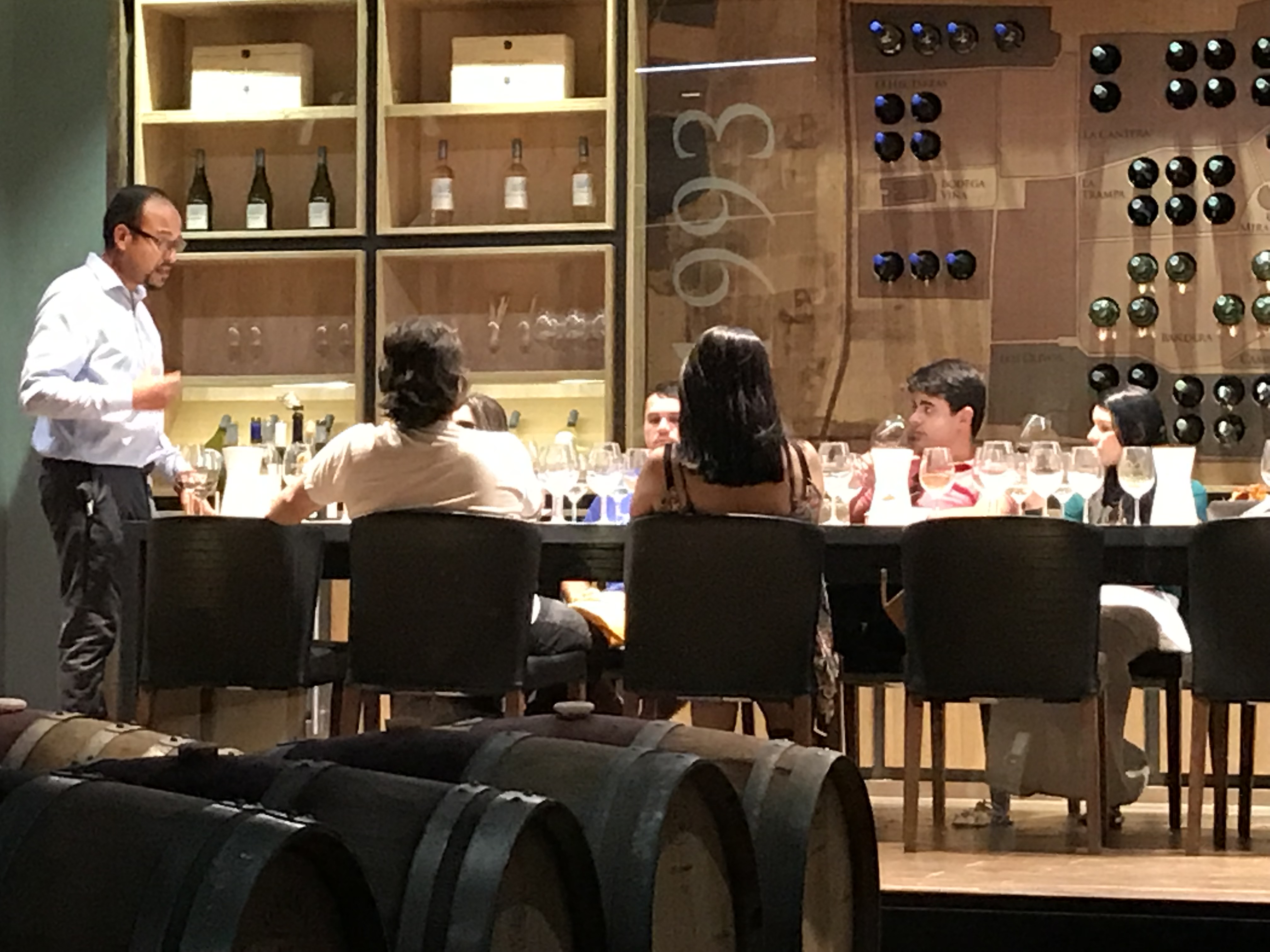
A wine lecture 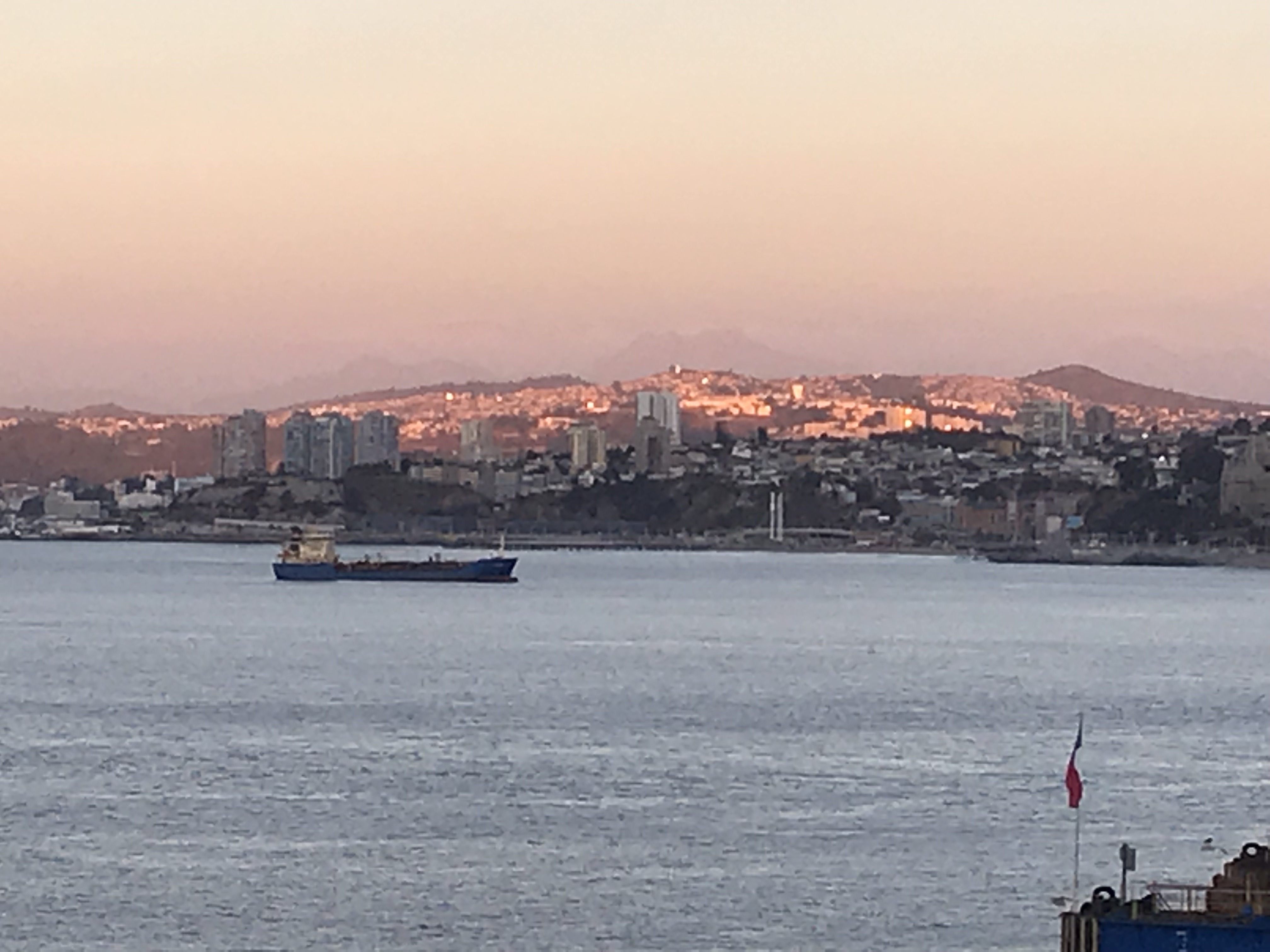
Valpariso in the evening
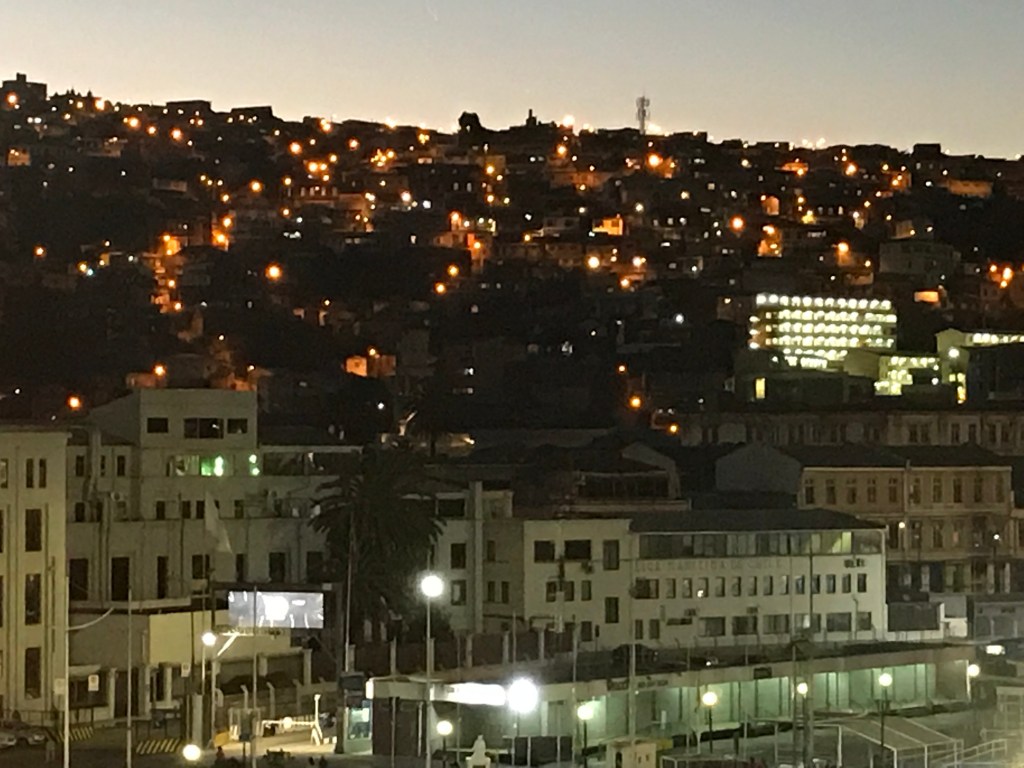
Valpariso at night 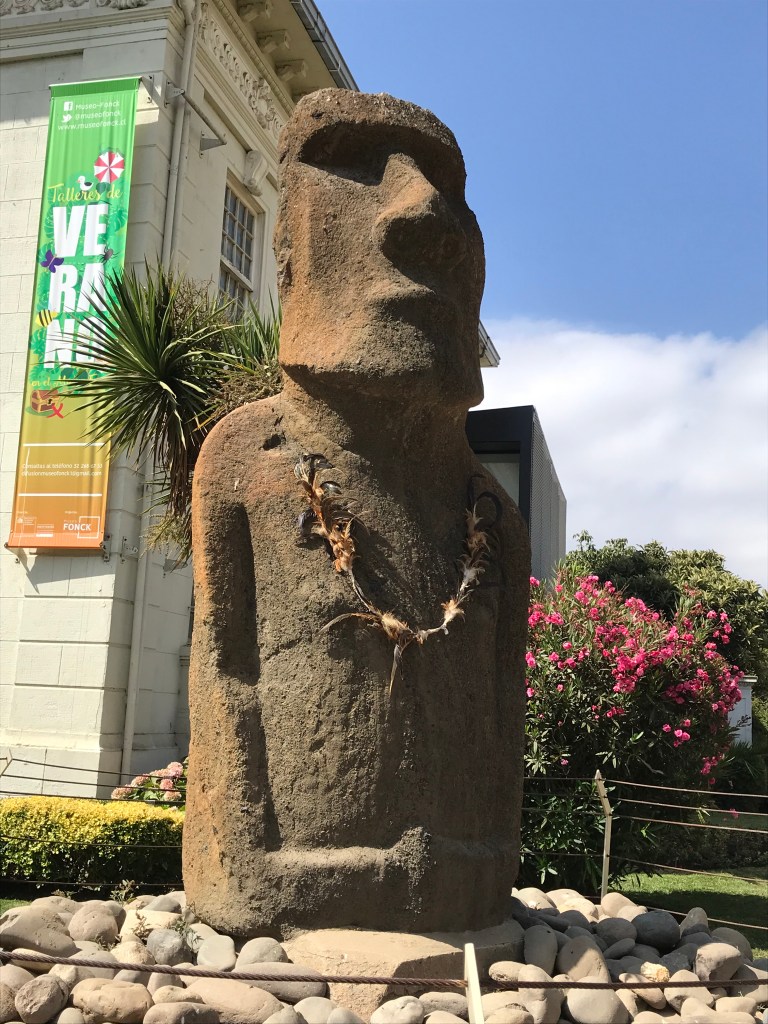
Moai outside the Fonck museum
Back to the bustle of the big city for a two-day stay! The pier is in the center of town, but you can’t walk there. A shuttle bus takes you from the ship to the port terminal—quite a distance—and then you could walk. The port area looks like a construction zone; there were plans for building a mall and whatever else, but the 6.9 mw earthquake of the coast in 2017 and its ensuing tsunami—a first for Chile, they say—caused them to rethink. Apparently they haven’t yet finished rethinking.
And look who our neighbors in port are! Valpariso is the birthplace and headquarters of the Chilean Navy and the Navy is much in evidence as you can see from the photos. It is a major port for Chile but was a major port for the world until the construction of the Panama Canal. Realizing the country needed a Navy, Chile brought in the British to develop it. Thus, they say, the Navy is still modeled on Britain in uniforms and organization while the Army is German in design.
We visited the Casas del Bosque vineyard and winery about a 45 minute drive away and had an interesting tour and some good wine as well as a look at the countryside. The end of the excursion as well as much of the following day’s excursion was bus tour around Valpariso and the adjacent Vina del Mar. Both are built on several steep hills and the city has innumerable (well, I’m sure someone has counted them) funiculars to aid in ascending and descending. The older houses were built close together higglety-pigglety (that’s a technical term…) on the hills and their ravines and, in some cases, are not accessible by roads. We wandered around the narrow roads on the hills in the care of an amazing bus driver and had some lovely views of the lower city and ocean.
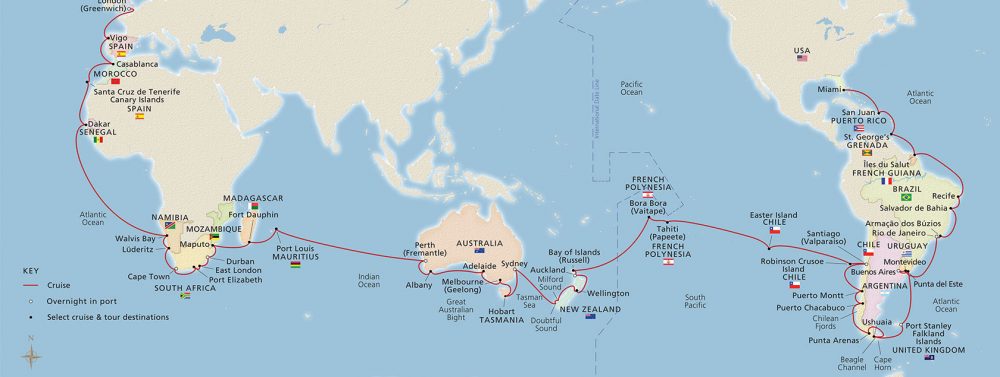
The second day’s excursion also included a visit to the Fonck Museum with exhibits on the local Mapuche Indians and Easter Island—in preparation for our visit in a few days, which was very useful.
Valpariso was an important world port until the Panama Canal was completed. Now, though still an important Chilean port, the economy has suffered. In the mid 1800s lots of people were migrating from Europe to the Americas. Almost all of my ancestors arrived around 1850 (except the Scotsman who came 75 years earlier to fight in the British army and on discharge was granted land in Nova Scotia.) Most of Chile’s immigrants were from Britain and Germany. Their hero, who led the fight for independence from Spain (achieved in 1810), was Bernardo O’Higgins; his Irish father arrived in the 1700s and married a Chilean woman. It’s initially startling to see streets, squares, etc. named ‘O’Higgins.’
In Valpariso the second leg of our world cruise ends; most of the folk who boarded in Buenos Aires disembark along with many of the people we’ve known since Miami. Two of five ‘legs’ finished but only a third of the cruise. The later ‘legs’ are longer–probably a similar number of ports but more sea days.
 C&C travel the seas