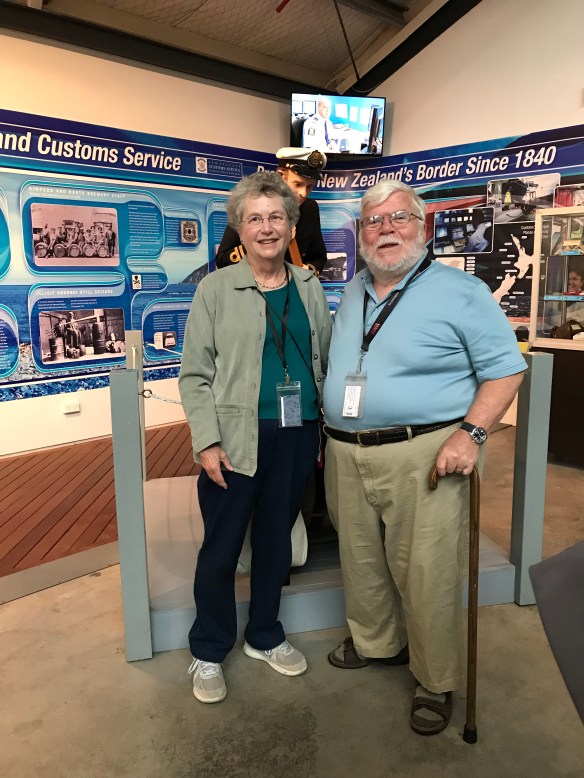
Chris & Cynthia at the Maritime Museum 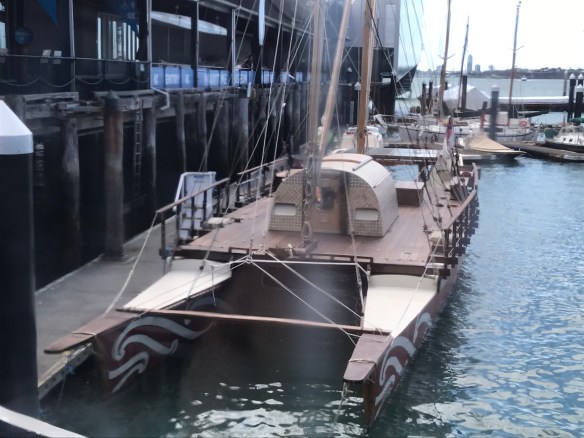
Replica of one of the original Polynesian boats 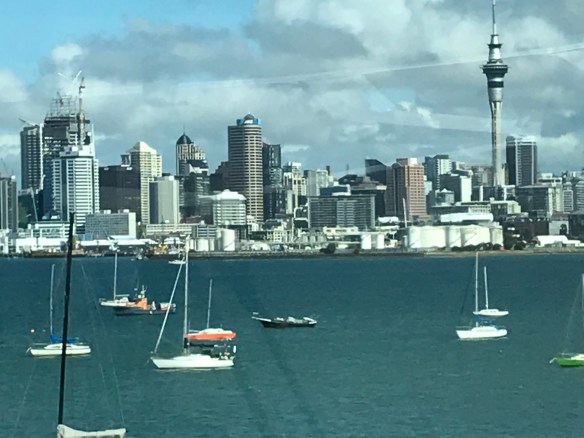
The city of sails 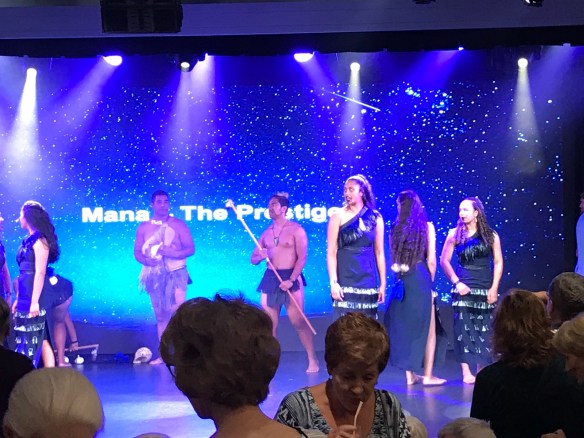
Maori dance performers 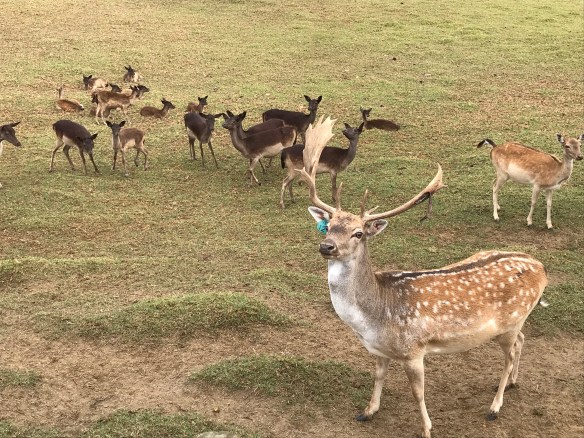
Deer on the farm 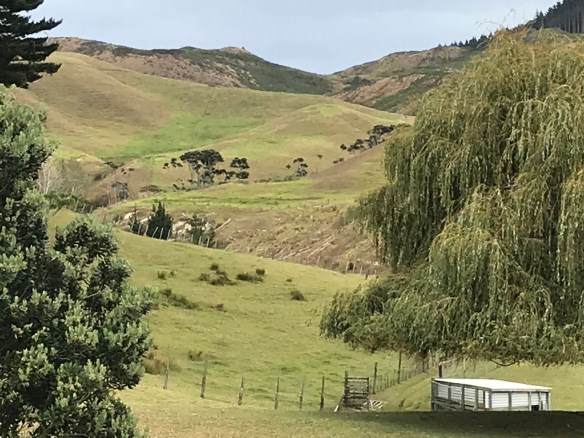
Scene from the farm 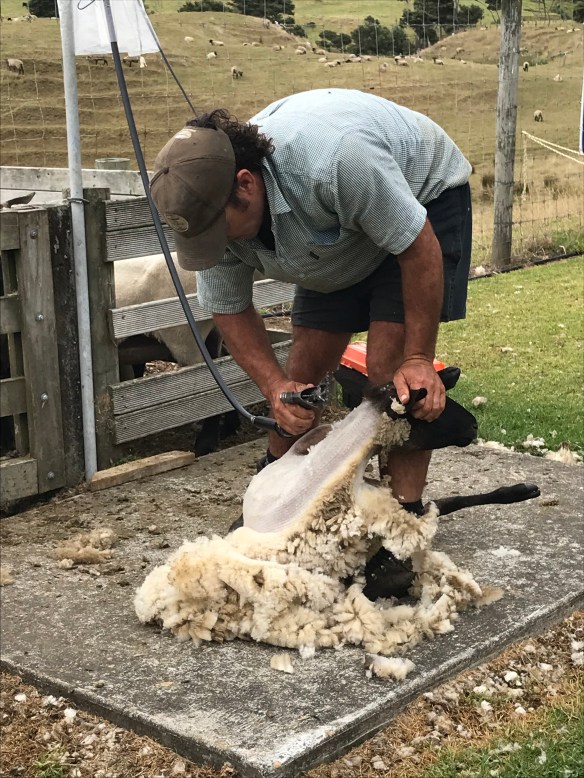
Sheering a sheep 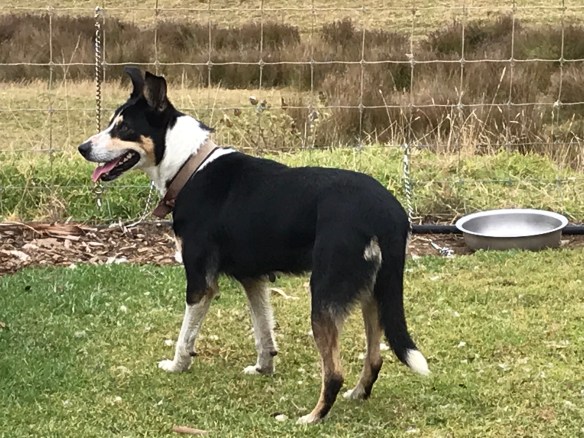
A sheep dog 
Herding the sheep 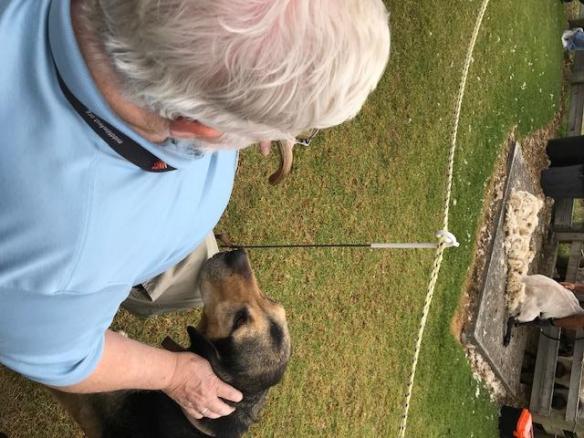
Chris & a friend 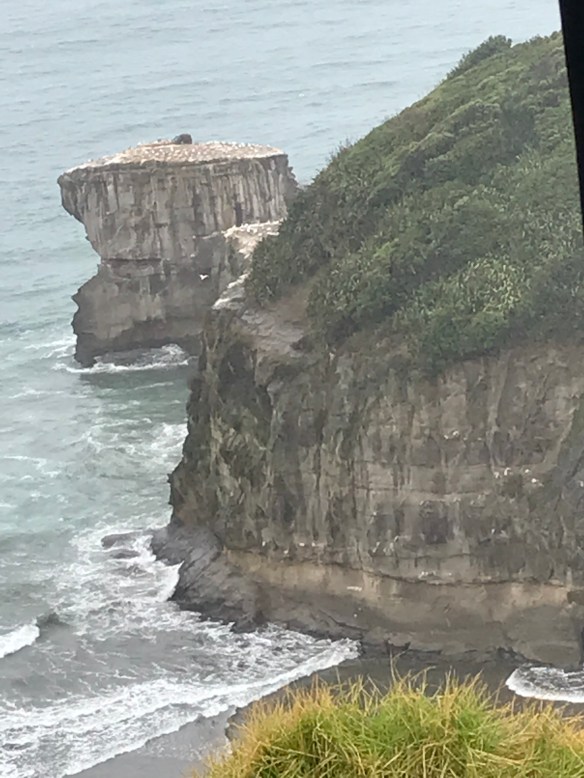
Gannet colony from a distance 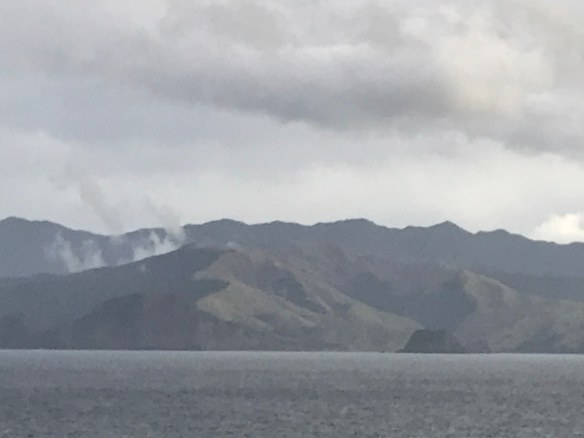
Sailing out of Auckland harbor 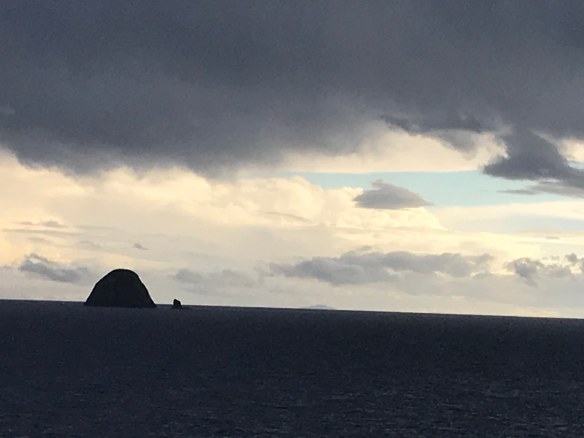
Further sail out scene 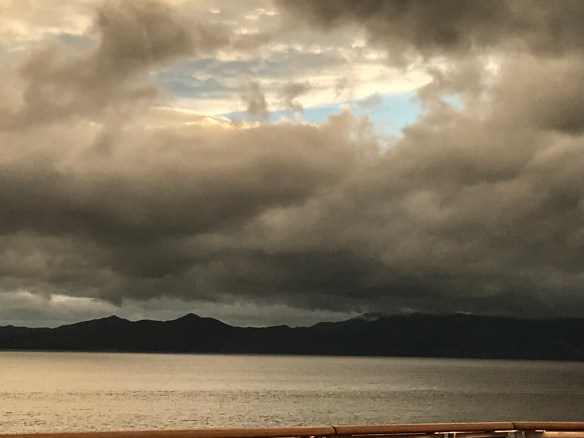
And another sail out scene
Auckland is known as the ‘city of sails,’ and they claim 1 in 3 inhabitants (1.5 million people) own a boat. (I suspect they don’t include children in their count of boat owners, but I don’t know for sure.) As with the Bay of Islands (whose population is much, much smaller), therefore, the bay is studded with impressive boats and a multiplicity of filled marinas. The one our guide was impressed by was an absolutely huge yacht said in port for maintenance; said to be owned by a very wealthy American (from Wyoming would you believe), it will require a crane to exit because it won’t fit under the rather high bridge!
An overnight port, we docked in the center of town so we could walk to shops and other attractions. Our first tour, a panoramic bus tour didn’t leave until 4 pm, so we slept in (I don’t understand how we can sleep so much and yet be tired, since, of course, we’re working so hard!), had a late breakfast, and headed to the Auckland Maritime Museum a couple of blocks away. The museum was worthwhile and covered maritime history from the boats used by the Polynesians in the 13th century to reach New Zealand and become the Maoris to the 18th & 19th century British trading and settlers’ ships to modern-day Americas Cup boats.
That the Polynesians could have sailed so many thousand miles in their primitive craft and have such awareness of currents and navigation never ceases to amaze me. But the Americas Cup vessel amazed me also. The boat itself above the water weighs 1.5 tons and that’s only 20% of the vessel’s weight! The remaining 80% is in a deep stem with a large bulb at the bottom. The plaque explained that the boat on display was real, but the bulb was a substitute since the actual bulb would be too heavy to transport to or display in the museum! New Zealand has a proud history n the America’s cup and Auckland will again be hosting the race in 2020 so much excited building of much needed new housing is occurring.
After the museum we had our first meal that we actually paid for! We went to a nearby restaurant right on the harbor and had the freshest fish in fish and chips I’ve ever tasted.
In the evening a local Maori dance group gave a performance on the ship. Beautiful dancing, and they did the traditional Maori war haka with the wide open eyes, stuck out tongue, and threatening gestures that we’ve seen in televised rugby games with the New Zealand All Black team.
The Maori arrived in the late 13th century, the British in the last half of the 17th century so the Maori are not indigenous the way the Australian Aborigines, who arrived 50,000 years ago (more or less…) are. Relations between the British and Maori were generally amicable it is said, with various times of unrest and disagreements. The several tribes of Maori also warred with each other. In 1840 the Treaty of Waitangi (where we were yesterday) was signed—multiple copies each in a different language (English and various Maori languages)–by the English representative and five Maori chiefs—the earliest treaty between a western nation and the place they colonized. This is, we’re told, due, at least in part, to New Zealand being colonized so late. By that time the British had some experience in colonizing places and some understanding of what didn’t work. They concluded that it was better to encourage mutual respect and peaceful co-existence. Of course, the treaty wasn’t really honored until over 100 years later but then (in the 1970s I believe) it did form a basis for establishing a multi-cultural government. There are still disagreements over land as it seems the various copies didn’t all say exactly the same thing… But at the present time they seem to have reached some form of (possibly grudging) respect and commitment to a united, multi-cultural nation.
The second day we took a bus to a farm in western New Zealand where they demonstrated sheep shearing and sheep dogs maneuvering the sheep. One aspect I’d never seen before was that in addition to two border collies doing the herding, there was another non-border collie designated ‘the barker’ who barked and got the sheep out of the pen. They did quite an impressive job, and ‘the barker’ was getting on in years (his handler said he’d been retiring himself for about a year now). Since he loved to be petted, he and Chris became fast friends. The scenery was lovely, the farmhouse modern and beautiful (bedroom with full windows on three sides), the setting idyllic, and the people friendly and engaging. Besides they fed us tea, coffee, sandwiches, and cakes—always enough to make me happy! They had quite nice vegetable and flower gardens as well as a hot tub and small (4 or 5 holes) golf course, and deer. Just as we finished, the heavens, with little warning, opened up and soaked us.
From the farm we travelled to the west coast to view a gannet colony. Since it was still raining hard, I contented myself with photographing long distance from the view point, but others actually walked out to the colony, and one man showed me a photo he took of a baby gannet close enough to touch (but he didn’t…)
Sailing out was again lovely and seemed later that mid-afternoon due to the dark clouds.
 C&C travel the seas