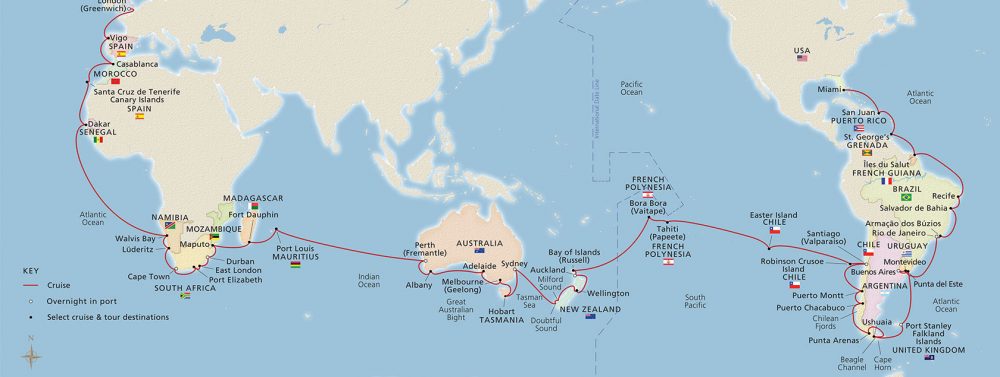
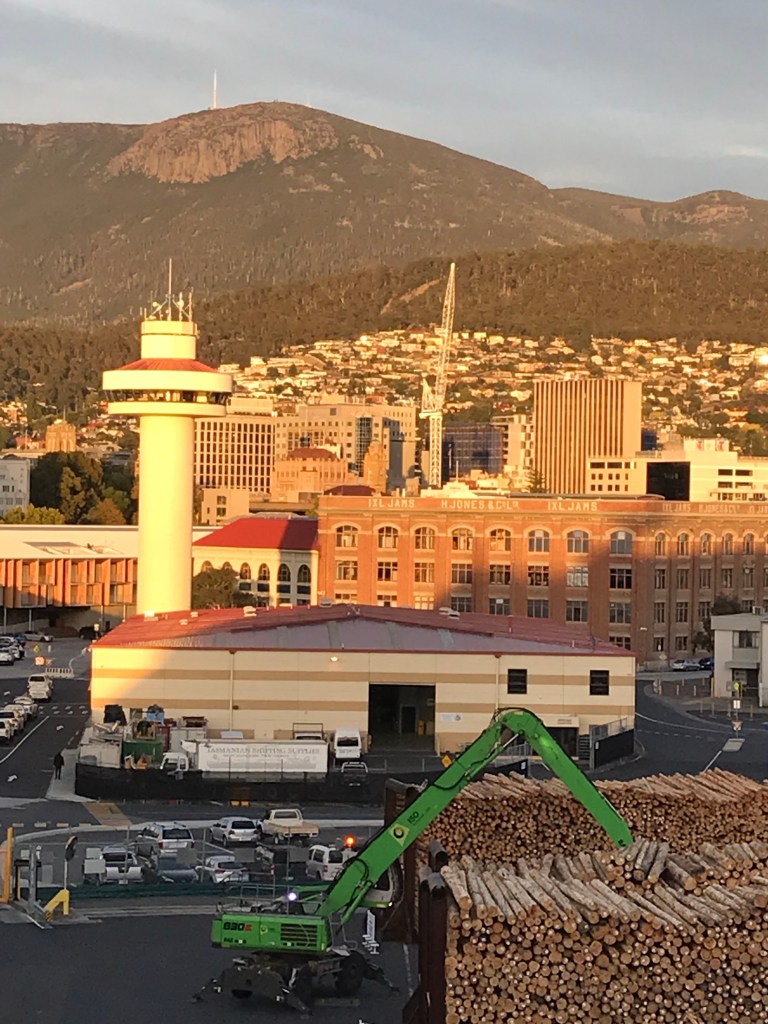
Hobart Port with crane lifting timber 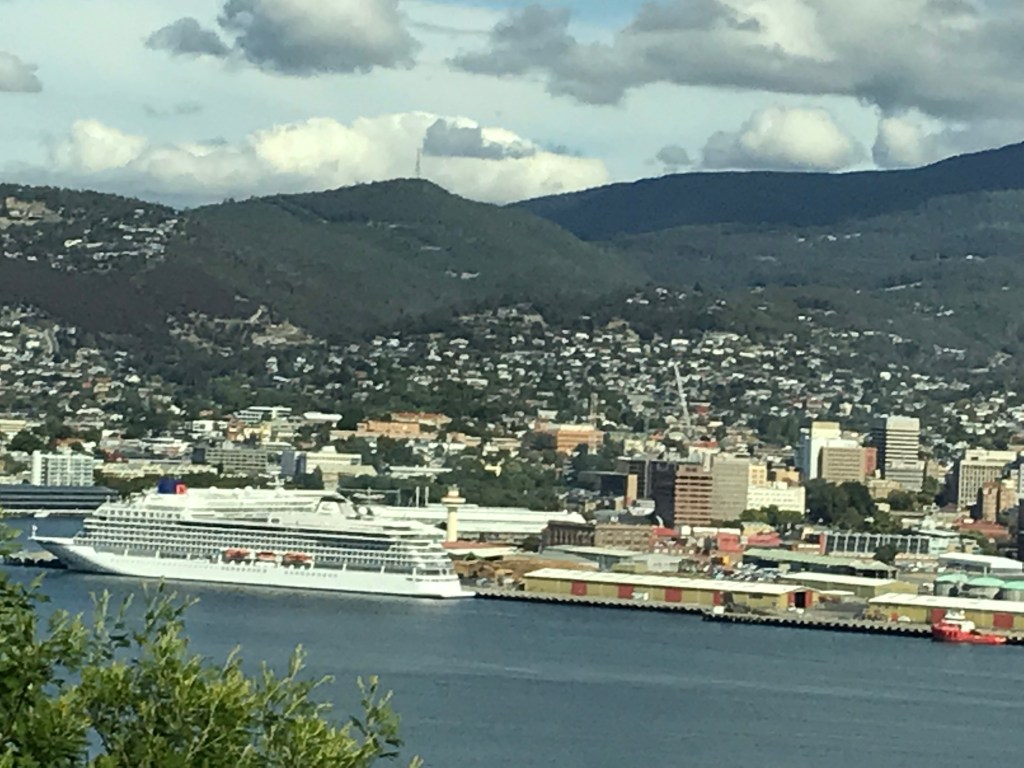
Viking Sun & Hobart 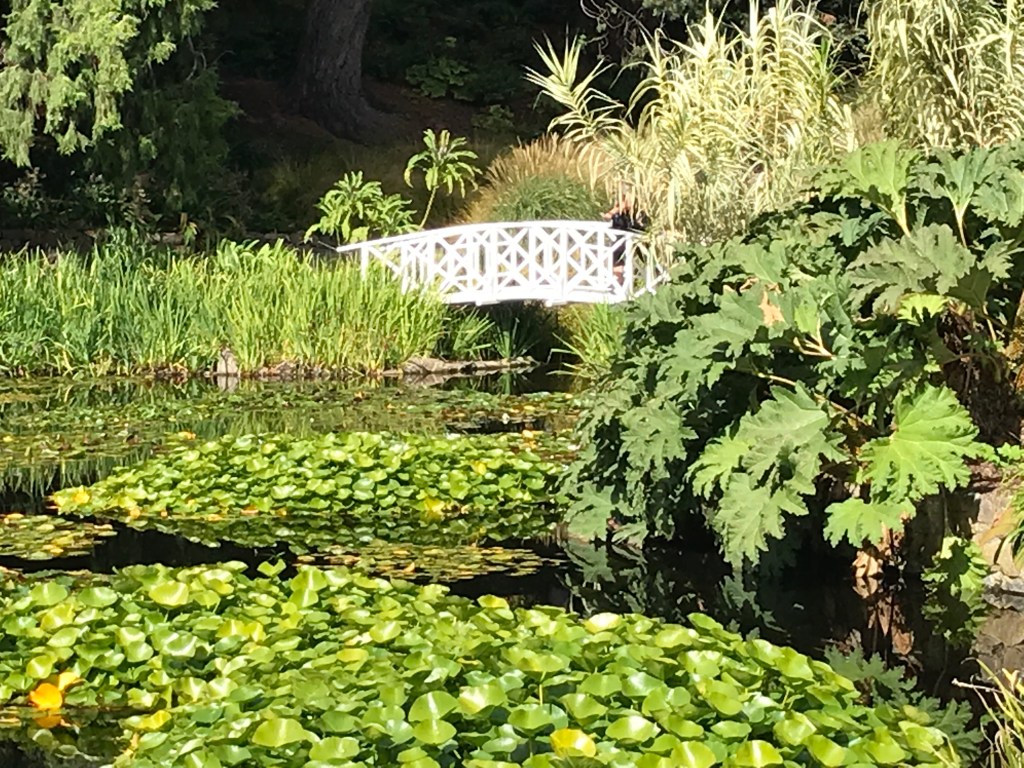
Giverny-type gardens in Botanical Garden 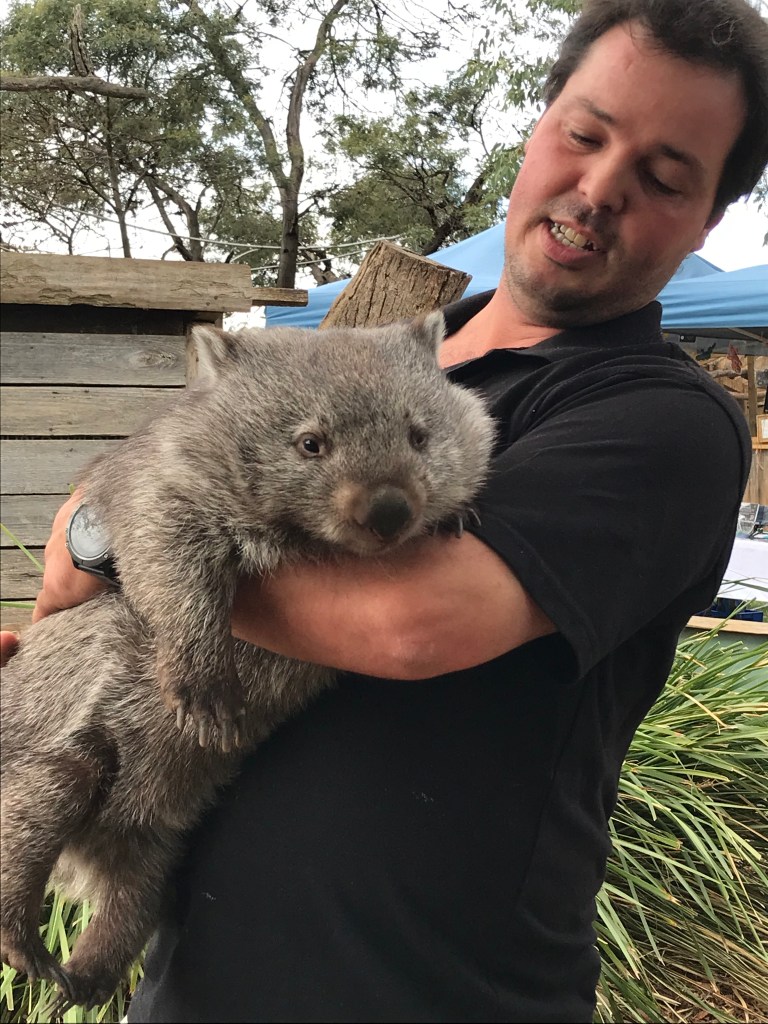
Owner of Bonorang Wildlife Sanctuary holding koala 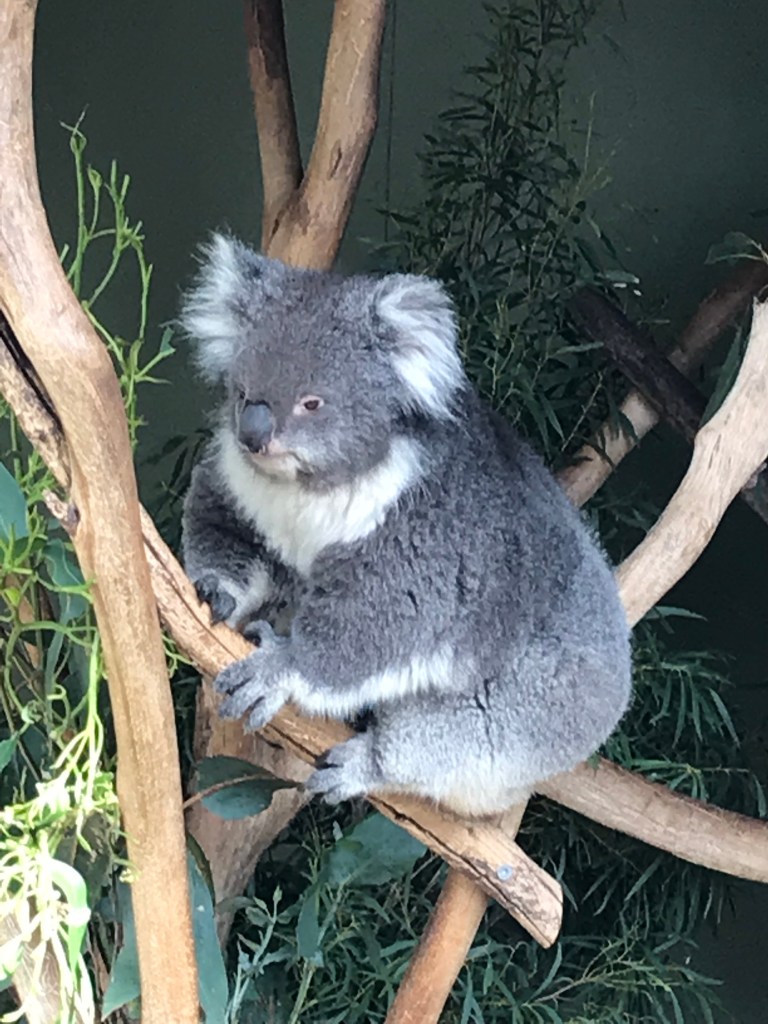
Koala 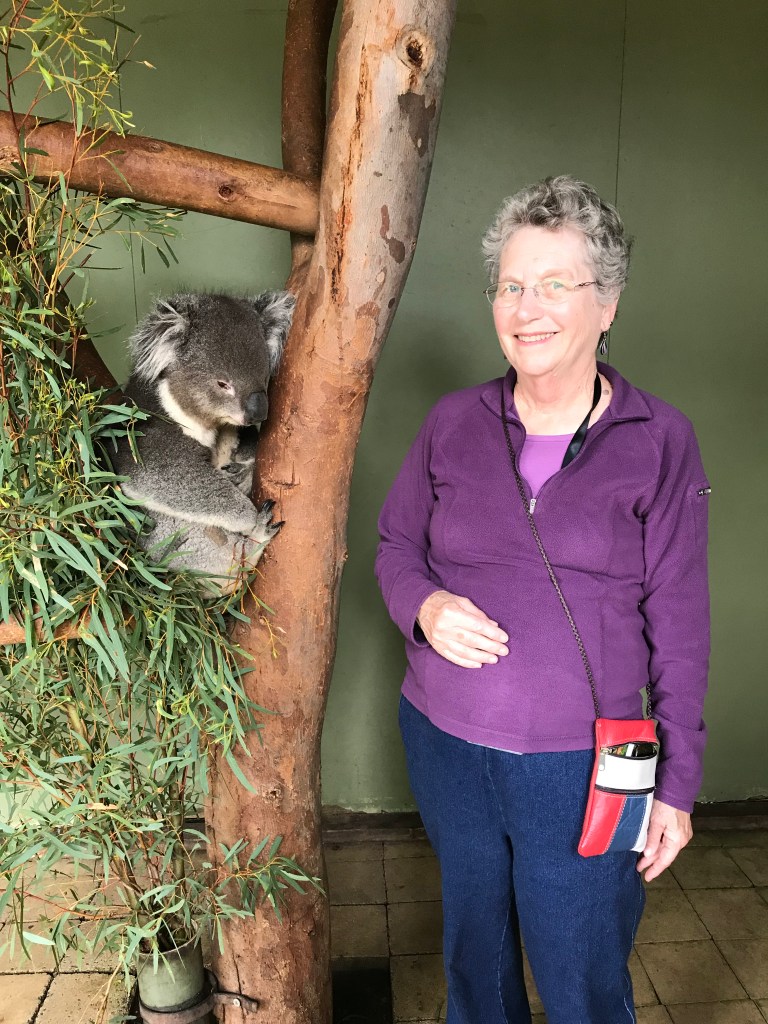
Cynthia & koala 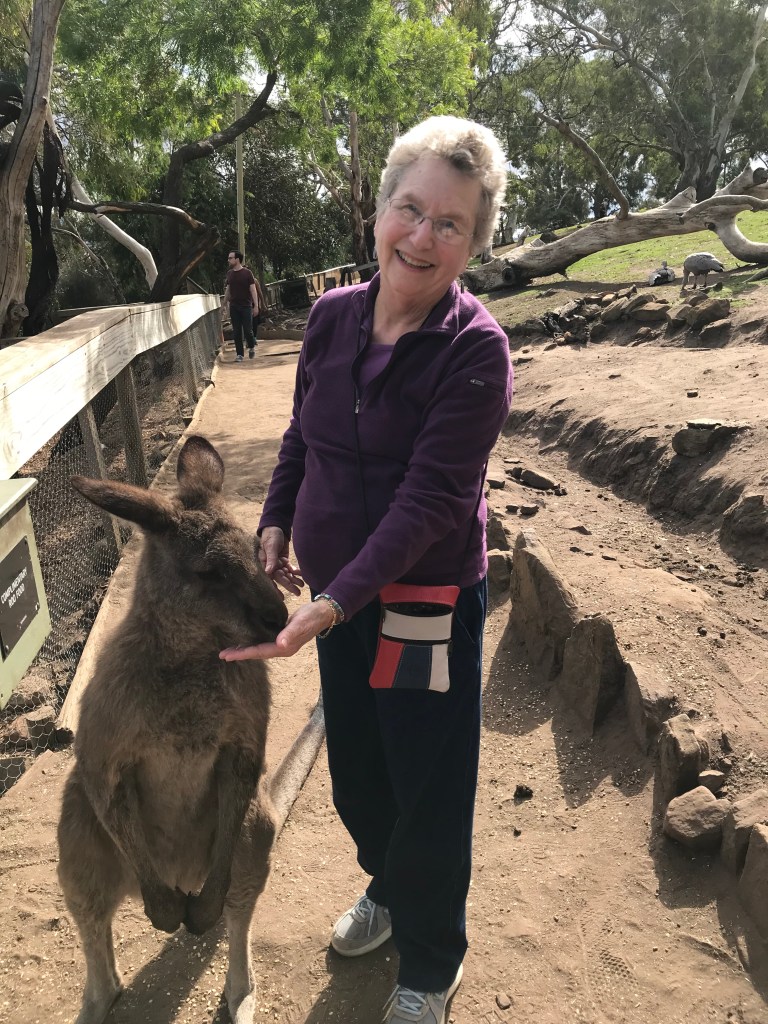
Cynthia & kangaroo 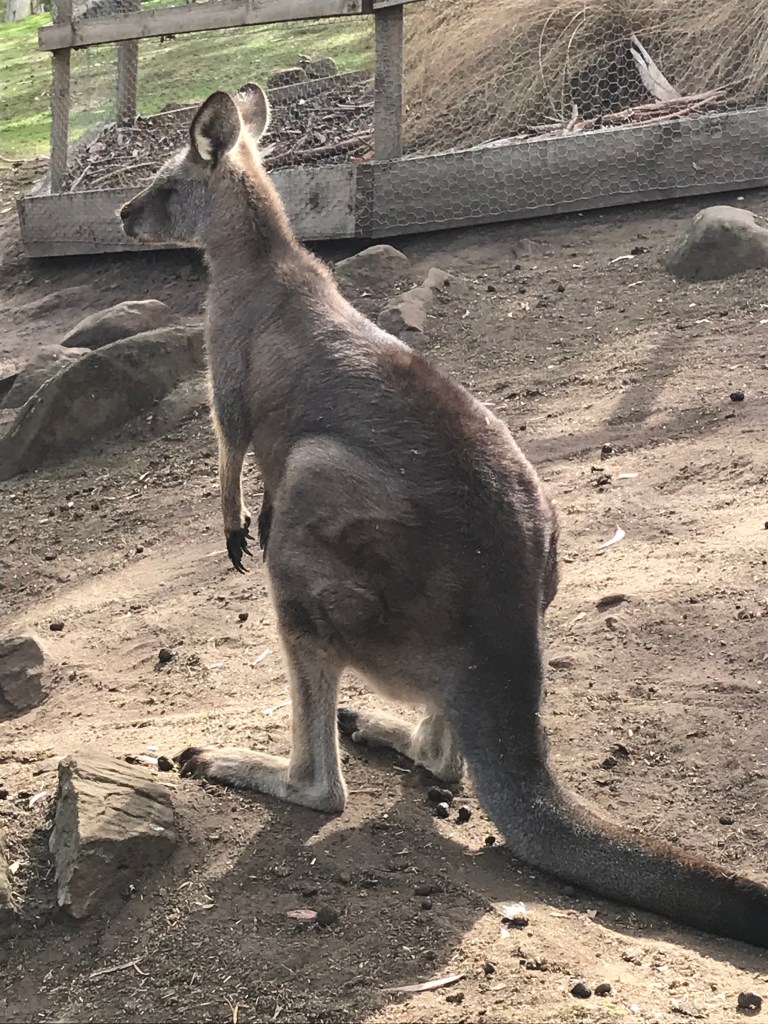
Kangaroo 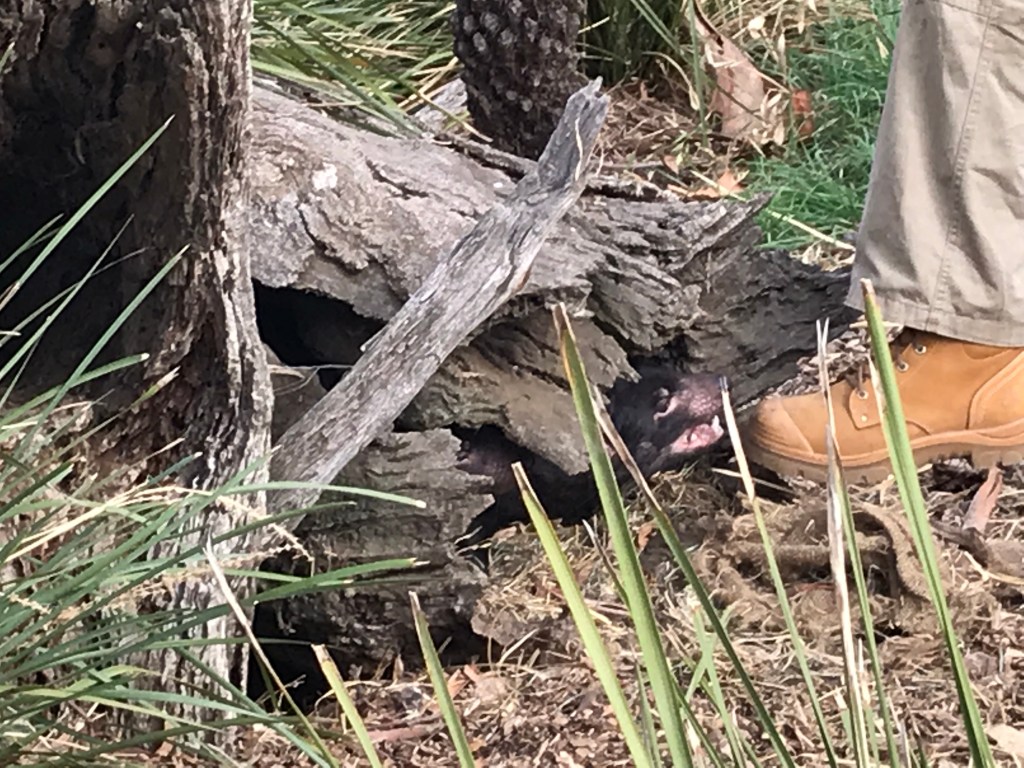
Tasmanian devil peeking out of log to bite at offending boot
Possibly of all the places we’ve visited thus far, Tasmania might be my first choice of a place to live. Physically it’s lovely with mountains, valleys, rivers, and very English villages. The economy relies a lot on agriculture (including wine) and timber, which seems to be working. Like most of the places we’ve been, housing prices are high and there seems to be a lot of construction. Tasmania has a population of about 500,000, similar to Vermont, but in land area is closer to the size of West Virginia. It is, of course, very far from ‘anything’ (a northern hemisphere prejudice) which I would find difficult. Though it did make me muse that perhaps it would be helpful if Vermont was surrounded by ocean.
Both Hobart and Sydney—as well as Ushuaia, Argentina and Punta Arenas, Chile, not to mention the Iles des Salut, French Guiana—were originally established as penal colonies. Clearly it was popular to transport your prisoners somewhere far away. 19th century prisons, wherever they were, were no joke. We would find normal living conditions at that time to be quite uncomfortable, and their prisons were much worse. Moreover, most transported prisoners were there for minor offenses—like stealing a loaf of bread (major offenses like murder got the offender hung)—and the minimum term seemed to be 7 years.
In Hobart the pride in convict ancestors became more personal. Both of our guides gave some version of the story that 20 or so years ago if you asked someone if he or she had convicts among their ancestors, they would say no, of course not—not in our family. Now people actively search their heritage (also much easier now than in the past) hoping to find a convict because they admire the convicts’ courage, resilience, and great contributions. One said her son did the searches and called, excited, to say he’d found ‘their’ convict—a 12 year old girl transported for the crime of ‘receiving stolen goods’—some ribbons! She was placed as a maid in the home of free settlers and, ultimately, married the son of the house and had many children.
When I was probably in junior and senior high school, I had a Scottish pen pal, and she migrated to Australia when she finished school. There were government incentives for women because even in the early ’60s there were so many more men in Australia than women. I forget where she went–or what her name was or really anything useful, but I recall being startled at the idea of moving halfway around the world on your own at probably age 17.
About half the population of Tasmania lives in Hobart, but there are other towns and even cities as well. As we could see from our included bus tour, it is a handsome city with many Georgian and Victorian buildings and various attractive homes. The city seems very clean—even government provided houses were neat and well-kept though without the lovely flower gardens of the other houses.
We did an excursion out of town to a village with the oldest bridge in Australia and to the Bonorong Wildlife Sanctuary and wildlife rescue. The bridge is a lovely stone viaduct and the village had nice shops—with two charming sweets shops.
The wildlife sanctuary was created by a young man some 15 years ago and is definitely not the same as a preserve where there are lots of acres and animals roam wild within probably a very long perimeter fence. Instead, it’s a little like a zoo with each species in its own enclosure, the individual animals pretty used to humans, and feeding by visitors allowed. Nonetheless, it was wonderful to see animals you couldn’t see otherwise. The kangaroos remind me of giraffes in Africa—everywhere and happy to see you. You could feed them and someone offered to take my picture if I wanted to feed one so I agreed. Koalas are very difficult to see in a preserve because they are at the top of trees and pretty nocturnal. These were close up and accustomed to their caretakers who could take pictures of a visitor (one at a time, please) next to the koala. Tasmanian devils are very shy and definitely nocturnal; one emerged part way from its hollow log when one of the keepers stuck his boot in. He said they were not particularly aggressive, but he’d put his boot in her home and she was telling him to go away. The sanctuary rescued 40,000 animals last year and 20,000 already this year. Some can be returned to the wild; some cannot.
A traffic jam made us a little late returning, but the ship waited—the real advantage of being on a ship sponsored excursion. Sailing away, the Tasman Sea was very calm and we were grateful. d
 C&C travel the seas