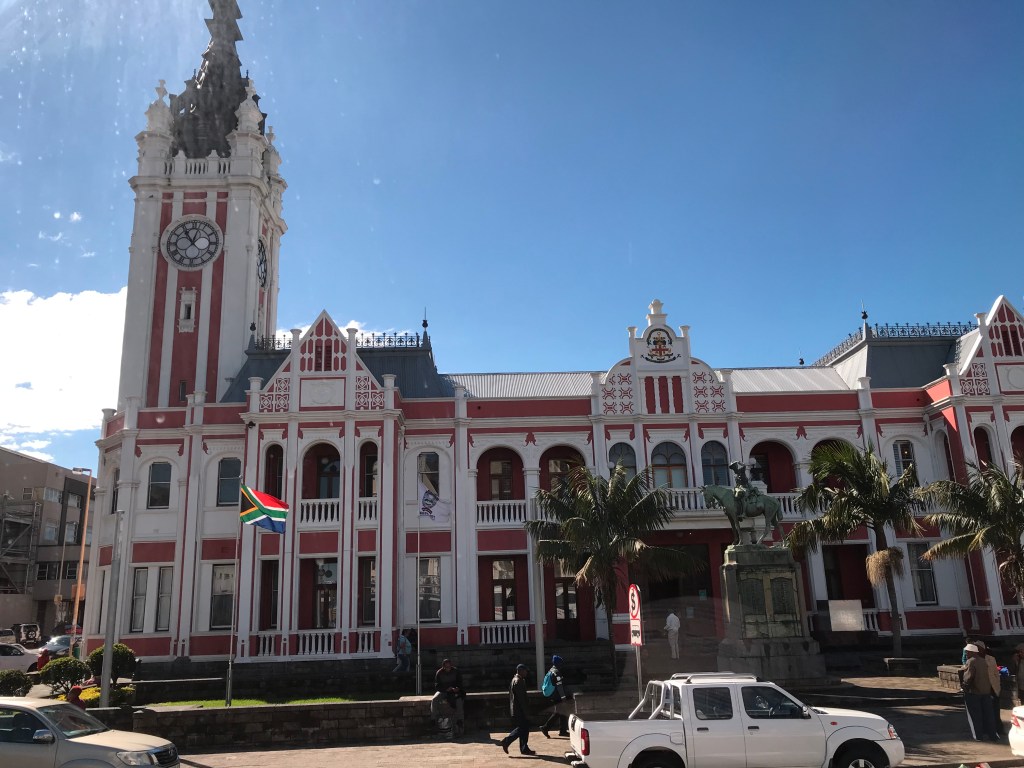
East London City Hall 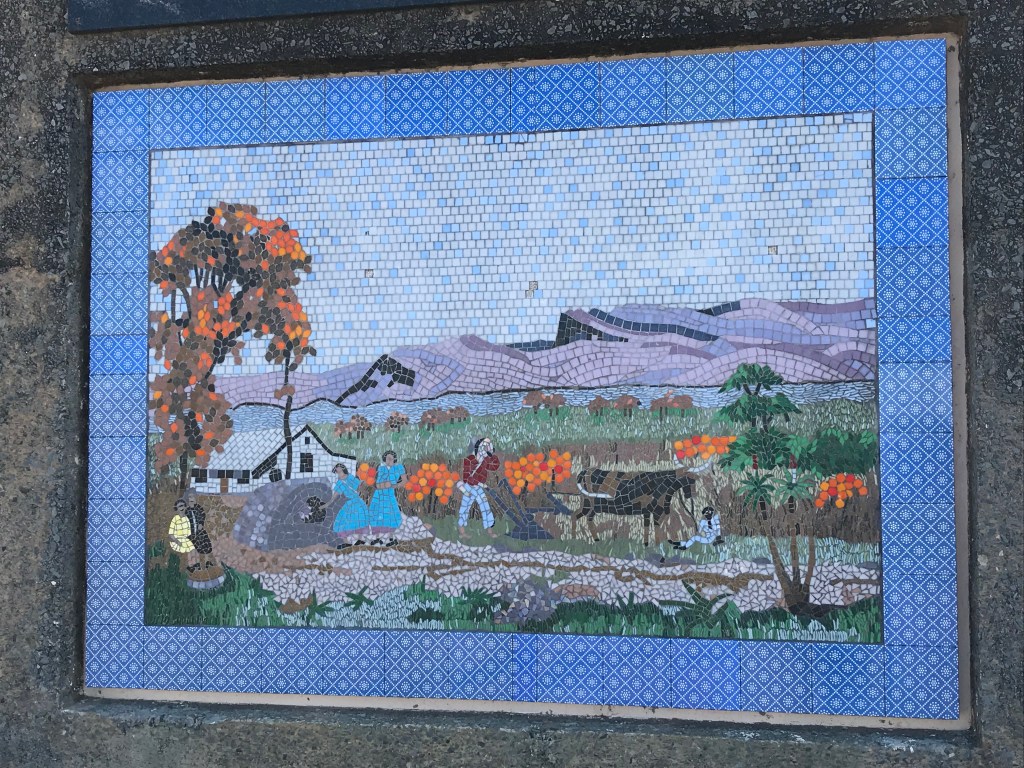
Mosaic depicting German immigrants 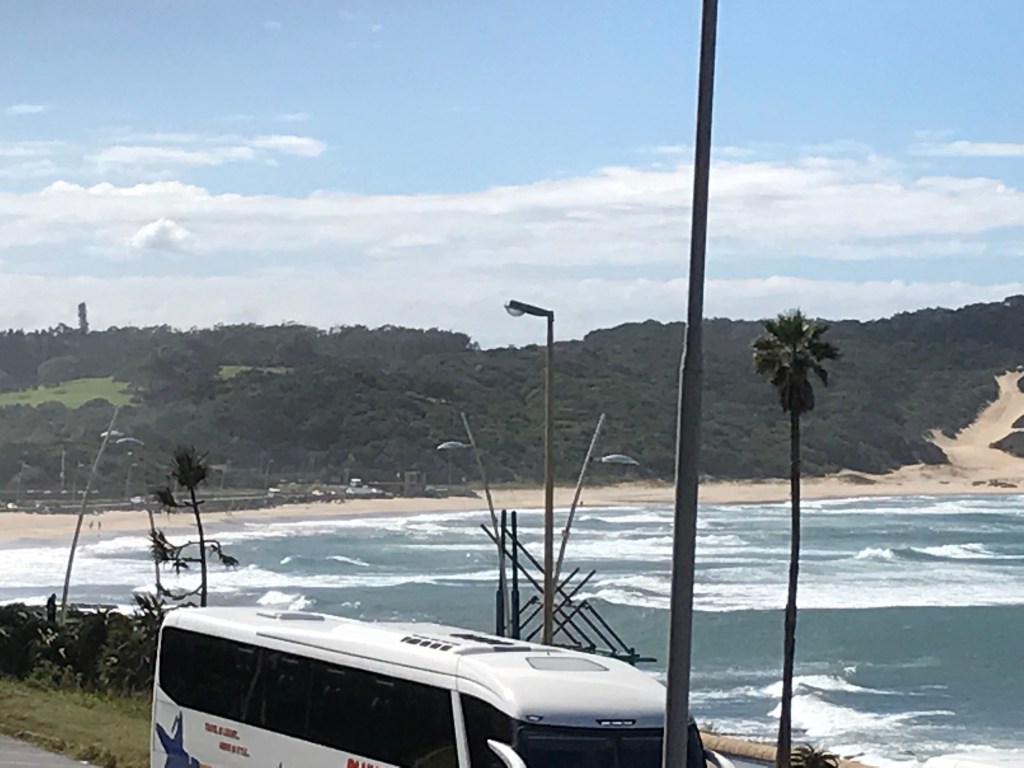
The coast at East London
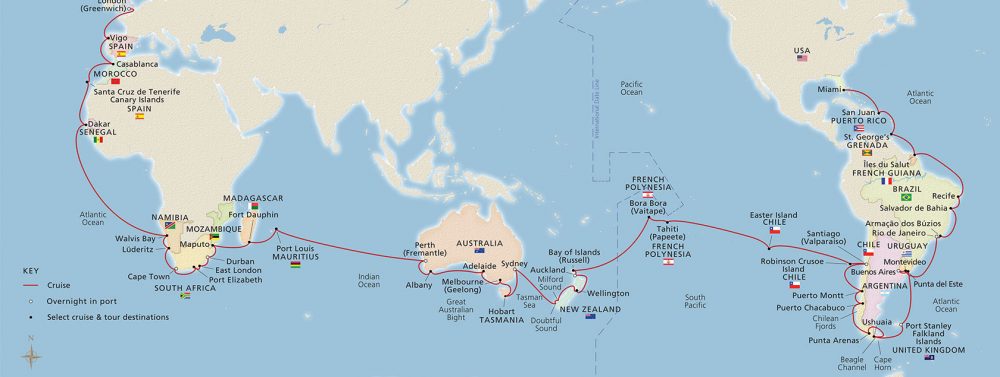
East London and Port Elizabeth (where we will be tomorrow) are in the East Cape, south of Kwa-Zulu Natal where Durban is located. While Durban has the largest population of Indians in the world outside of India, the East Cape has the highest percentage of blacks of any South African state because, unlike the West Cape (where Capetown is) the tribes were not pushed out; it is also the poorest state—and one of the most beautiful. Though the Indian Ocean is warmer than the Atlantic, at least where we’ve seen it, the surf is pretty fierce for swimming.
A large portion of the early white settlers were Germans, whom the British government recruited to settle and farm so many of the town names are German. East London is a city of a million with a catchment region of about 5 million, but it seems small. I think, as in Ethiopia, poor people live in such small spaces, the density is much greater than that of a western city.
Our included tour was led by a pleasant woman who worked for an international electrical engineering company in Johannesburg and decided, in retirement, to go back to school for her tour guide certification (she said she’d put together and guided tours for friends and the international visitors to her company) and move away from the city.
We spent most of our time at the local museum of culture and natural history. Not only is there the preserved body of a fish caught in 1939 and previously thought to have been extinct for 65,000 years (which Chris discusses in his section below), but also possibly the earliest human footprints which were found locally preserved in the shale, and a replica of a dodo and the very real dodo egg owned by the museum. The dodo is the national bird of Mauritius although it has been extinct for a few centuries because the large, flightless bird, unafraid since it was previously lacking predators, was easy dinner for the early European explorers.
As outlined by our speaker yesterday, new finds are happening all the time and a new theory suggests that the ‘cradle of humanity’ might actually have been around here rather than much farther north in Africa as previously supposed. He said, in fact, that with the great ice age (either 100,000 or 200,000 years ago—I’ve forgotten) humans may have come close to being extinct, down to about 10,000 people and saved by those living on the southern coast of Africa where they were protected by a marine environment and the rich food source of the ocean. Then from here they migrated out of Africa. It was a very interesting museum and tour.
The weather continues to be lovely—low 70s, but it’s a warm low 70s, and we sat around on the outside deck reading long after lunch.
I should mention that various safari trips have been going out–some for 4 hours, some for several days. We chose not to do any safaris since we were on a week-long safari north of Durban in June. The single-day trips often involve long rides to the preserve and the multiple-day tours are, of course, expensive—and, on principle, I avoid paying additional money for nights when we’ve already paid for food and lodging on board ship. But, those who have gone have reported excitedly on their experiences.
As of Maputo, I also realize our gaining an hour of sleep every few days is over. We are now on European continental time—6 hours ahead of the US Eastern time. We’ll gain an hour when we reach England but no more until we fly across the Atlantic—which certainly doesn’t give us extra hours of sleep. Actually I suspect as we head toward Senegal in another week or so we will both gain and then lose a couple of hours. Ah, well, it was nice while it lasted… –Cynthia
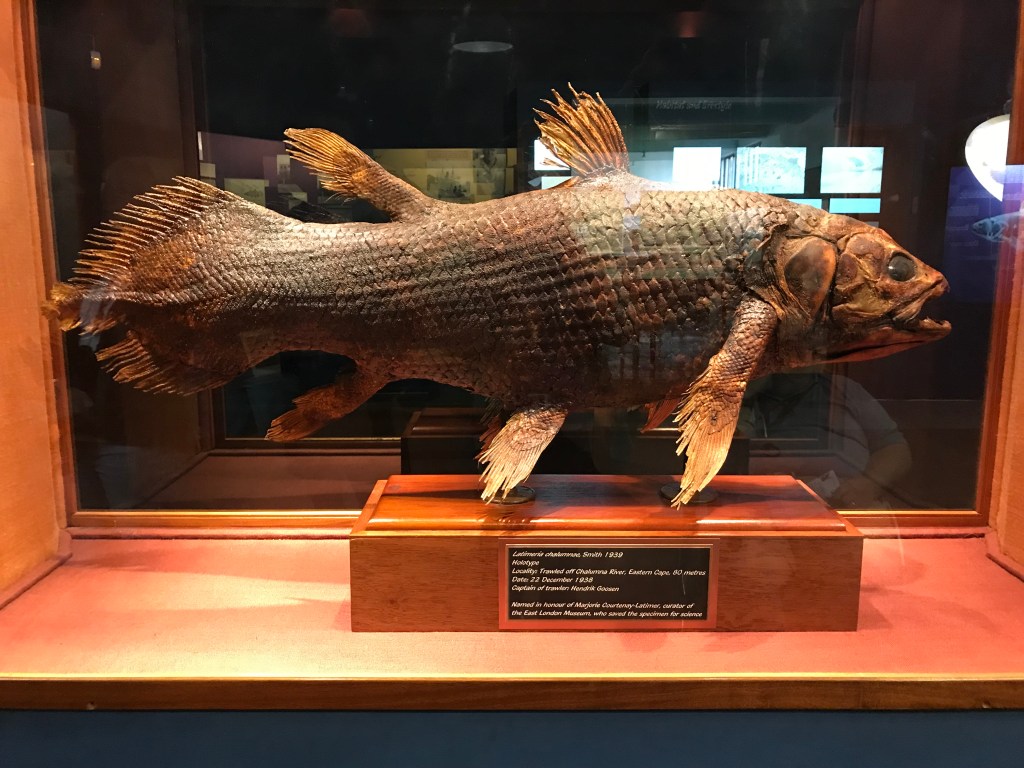
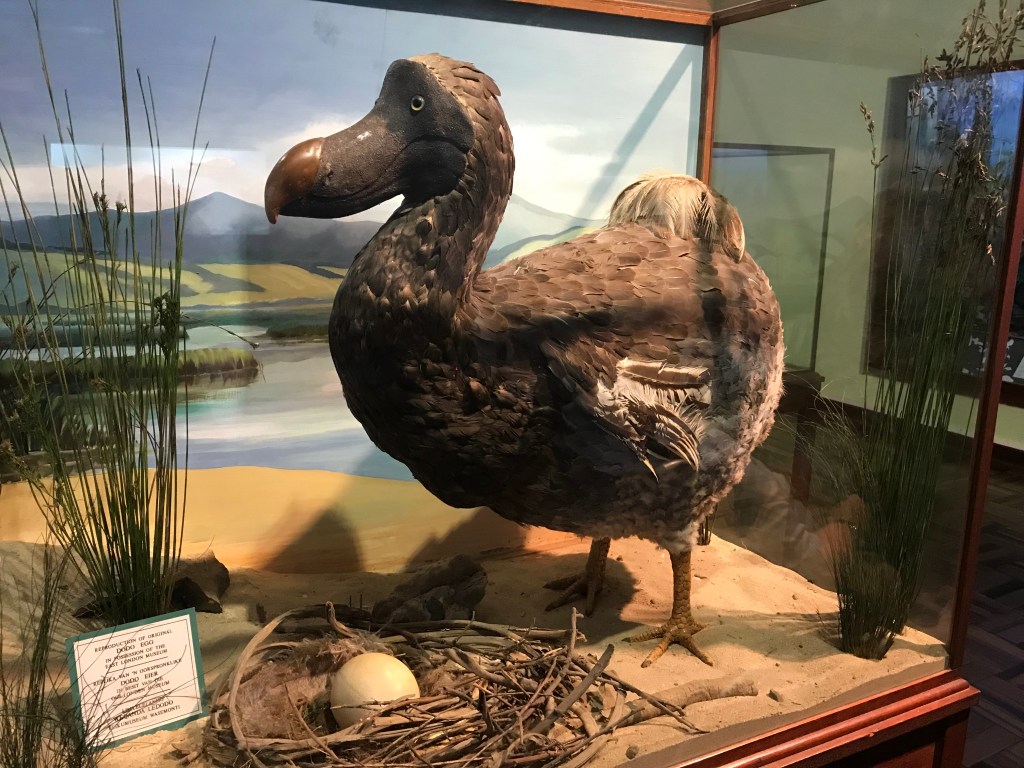
Coelacanths. We usually take the bus tour the Viking Sun offers in each port-of-call, which inevitably includes stops at a museum, a scenic viewpoint or two, and possibly a local food and craft market. In East London, South Africa, where Nelson Mandela grew up, we visited the East London Museum. a small jewel containing well-executed dioramas and artifact exhibits; and located out of the way, in a cul de sac adjacent to a a private boy’s college (high school} just off Oxford St.
In addition to a recently discovered fossil foot-print attributed to a human pedestrian 120,000 years ago and a more recent, equally rare Dodo egg, the museum features a taxidermically preserved specimen of a coelacanth; in fact the first of its kind to be caught but unfortunately not preserved. Until 1939 coelacanths were only known from their fossil remains and were thought to have been extinct for 70 million years.
Since then several more specimens have been caught off the east coast of Africa and near Indonesia, preserved and dissected, and the results indicate the species gave birth to living, fully formed fry, possessed a curious semi-circular tail fin and a fluid-filled (non-bony, non-cartilaginous) notochord (similar to what all vertebrates exhibit transiently during their development). Characterization of coelacanth genomics appeared in a recent Nature article (https://www.nature.com/articles/nature12027.pdf).–Chris
 C&C travel the seas