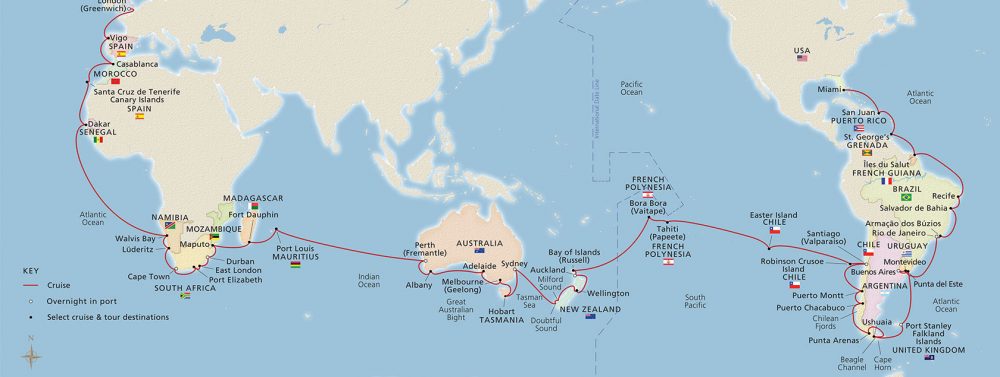
At 7:30 the Captain and Heather announced over the loudspeaker (the Captain because he’s in charge; Heather repeating because we can understand her…) that the sea was too rough for us to attempt our tendering ashore operation and was expected to get worse over the day (so, if we actually succeeded in getting ashore, we might not get back—not appealing). The officials who were to board at 7:30 to process all passengers and crew for immigration had been unable to get aboard. So our time in Luderitz was cancelled.
So we moved, as Heather said, from plan A to plan B to plan Sea. Therefore, we had bridge lessons, games, and lectures. I am always amazed at the flexibility of the lecturers (and instructors) because they never know what they are doing the next day until the Viking Daily arrives in their rooms after dinner. And today, they didn’t know until the ‘revised’ Daily arrived after breakfast! So they really need to be prepared ahead of time.
Namibia was German West Africa, and Luderitz is reported to be a town with some lovely German architecture. Founded in the late 1800s as a trading post, the shallow rock-bottomed bay is, says Wikipedia, unsuitable for modern ships (Viking ships have very shallow drafts) on the least hospitable coast of Africa (known as the skeleton coast and populated with shipwrecks.) When diamonds were discovered in 1909 the town’s population and prosperity expanded, but after World War I the administration of the country came under the auspices of first the British Commonwealth and then South Africa, and many were deported.
 C&C travel the seas