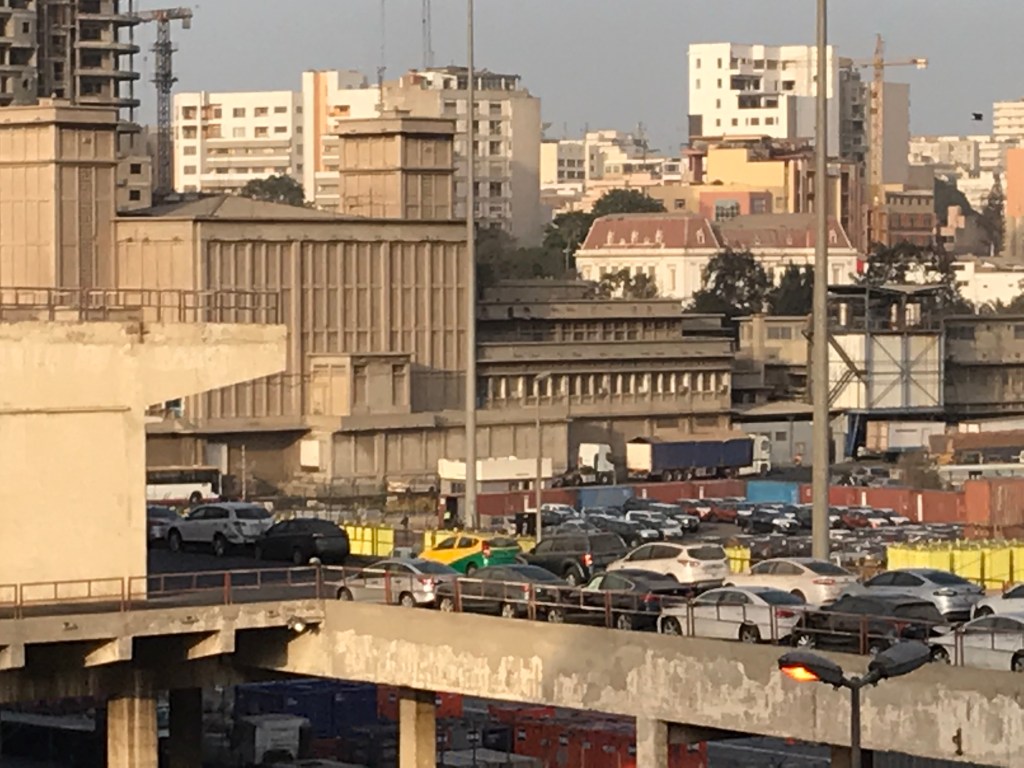
Our first view of Dakar from the ship 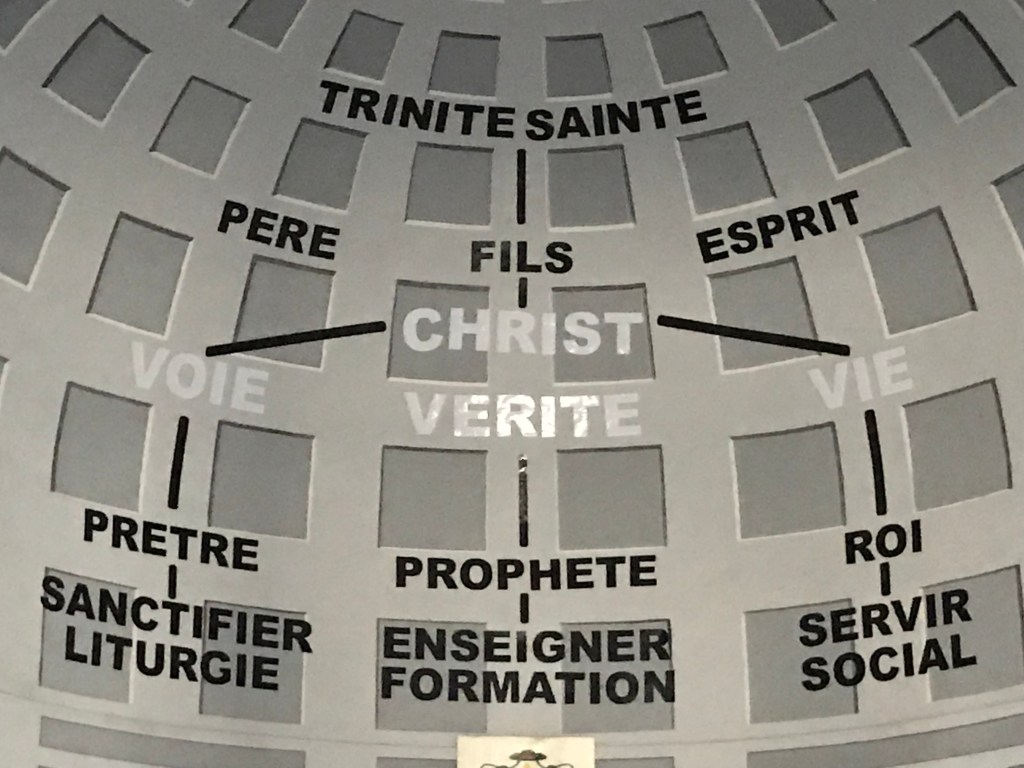
The apse above the altar of the cathedral 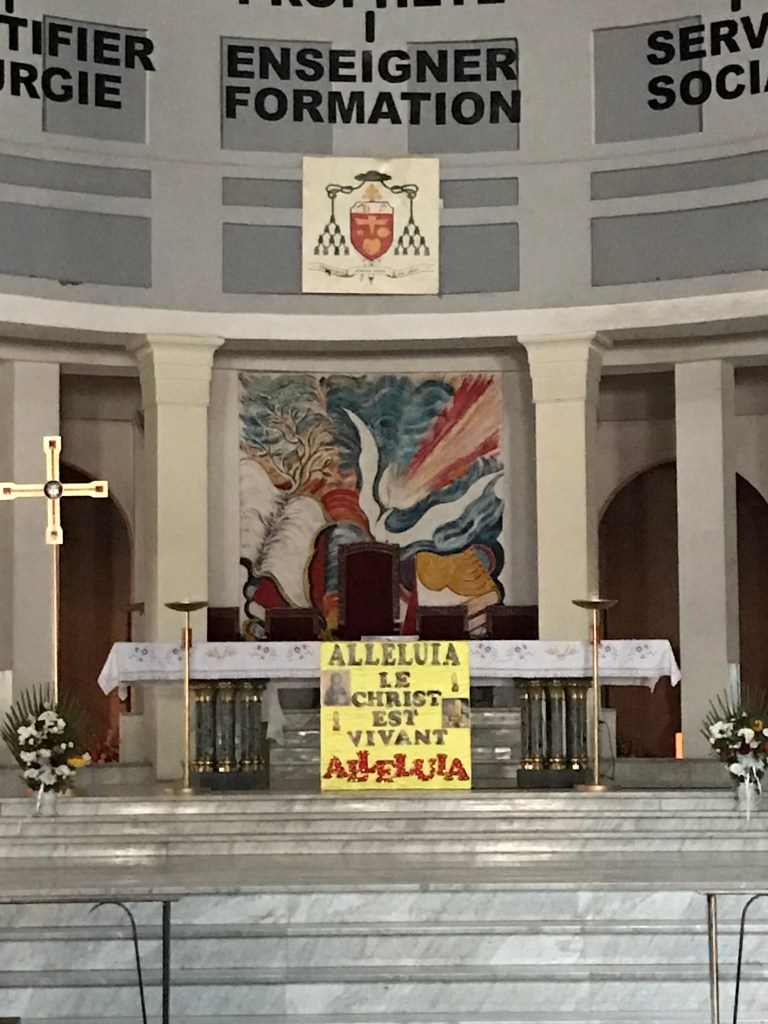
Cathedral altar and beginning of apse 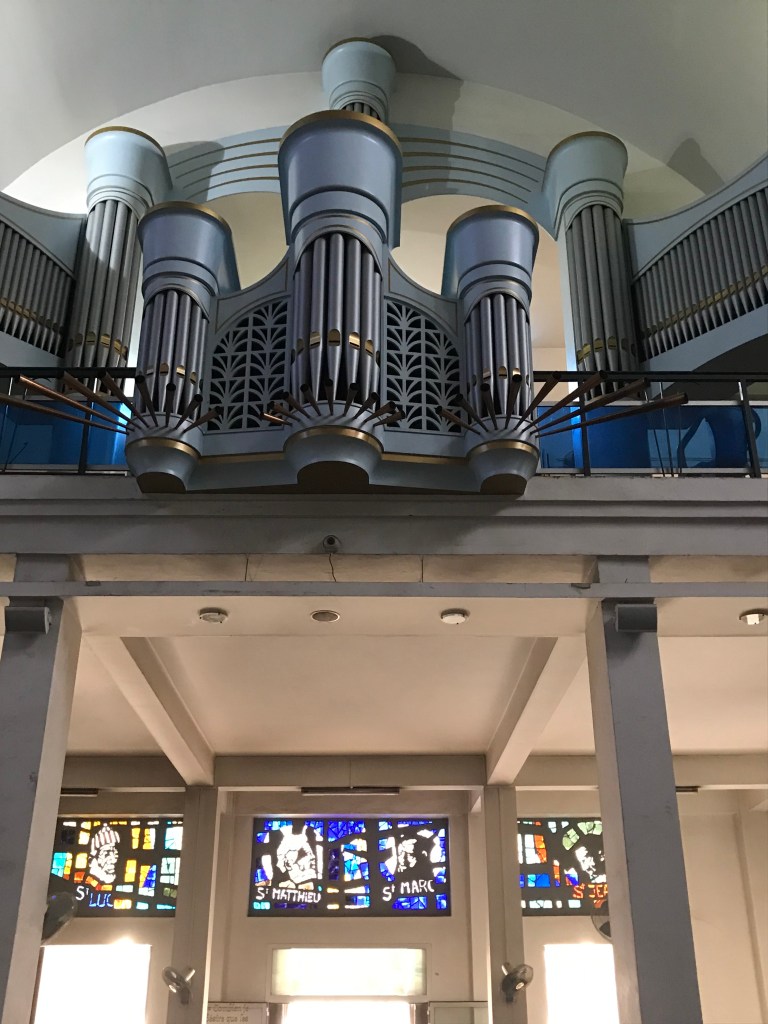
Cathedral organ & windows 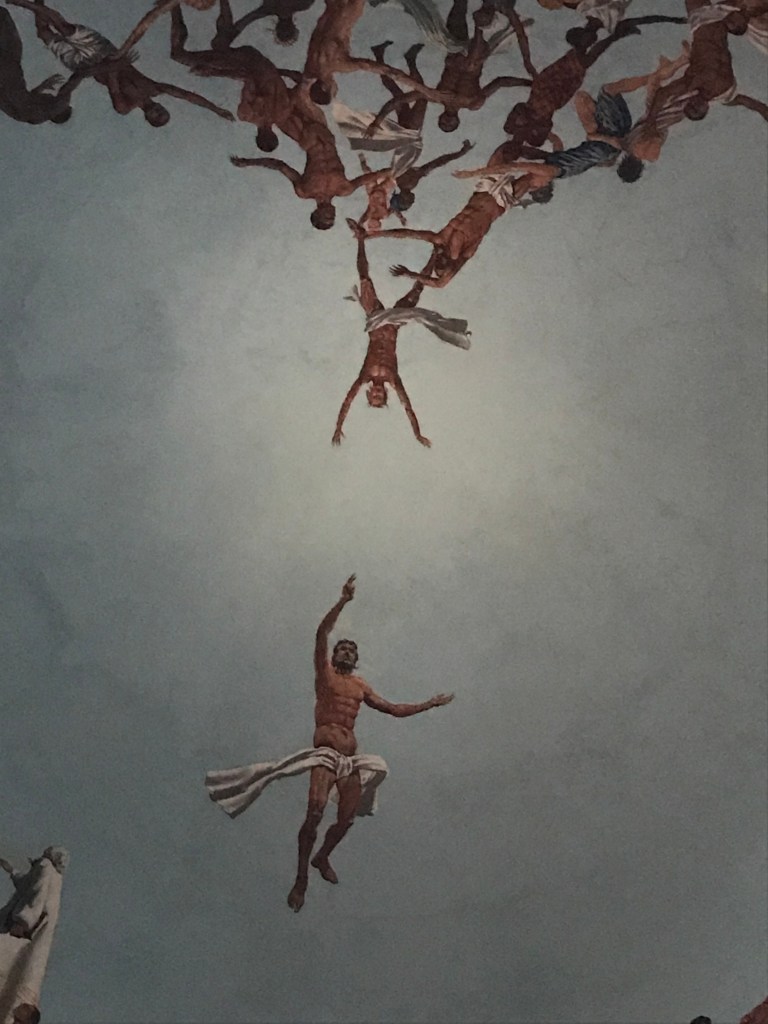
Cathedral dome 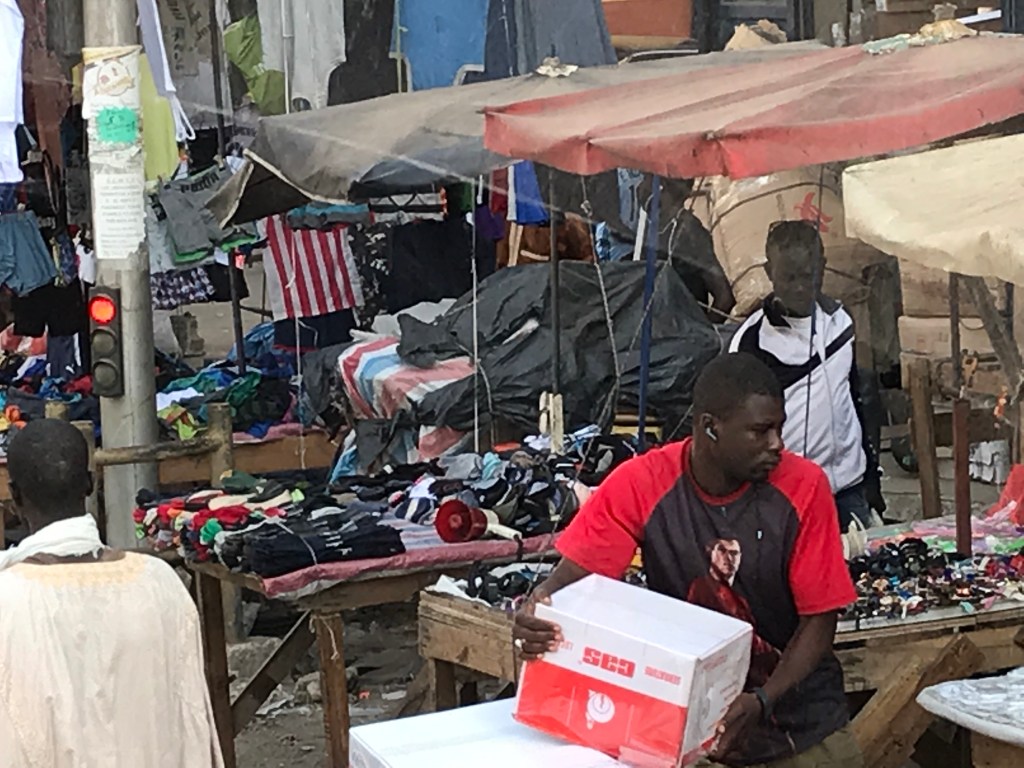
In the market 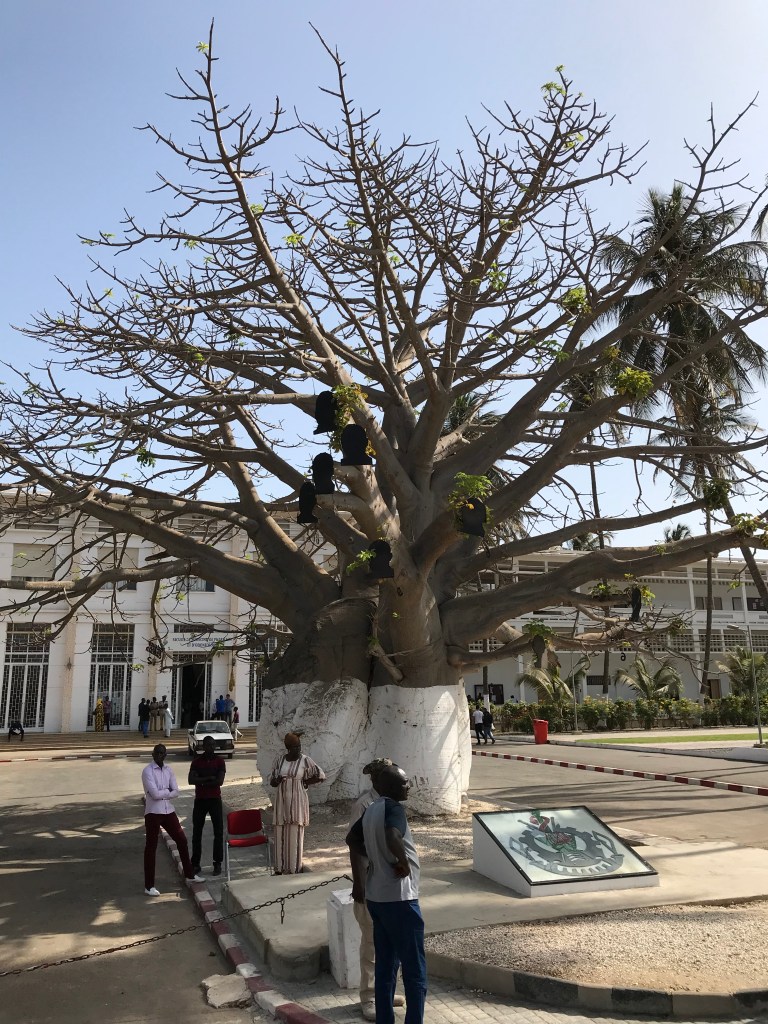
Baobab tree at the University 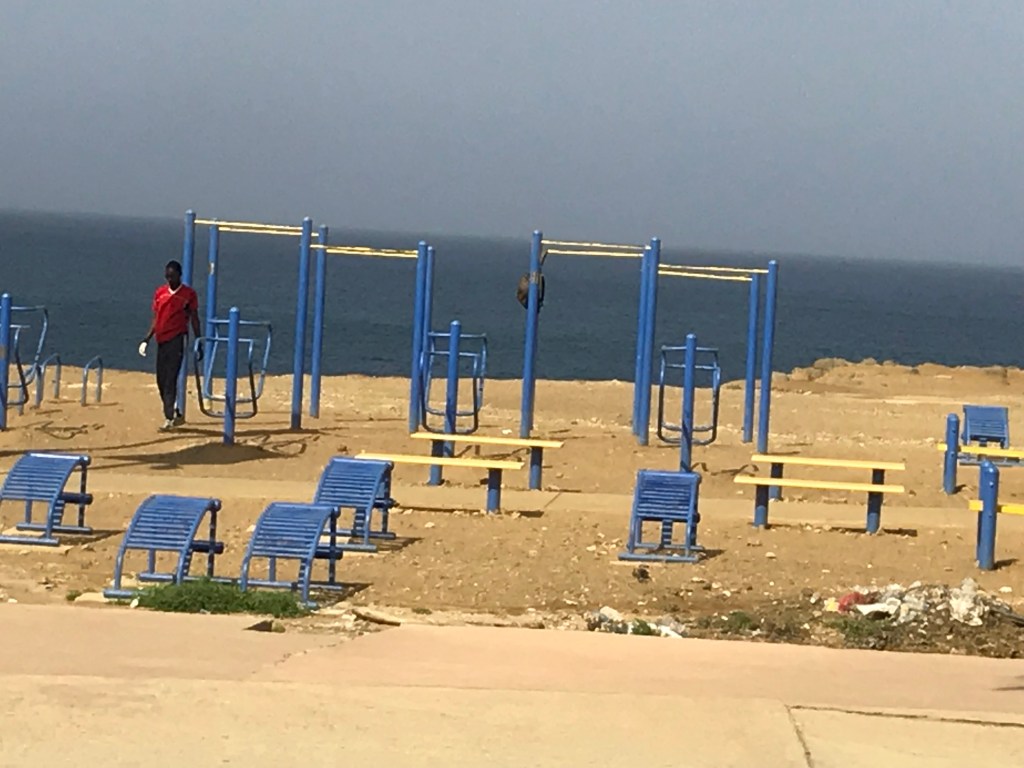
Play & exercise equipment along the coast 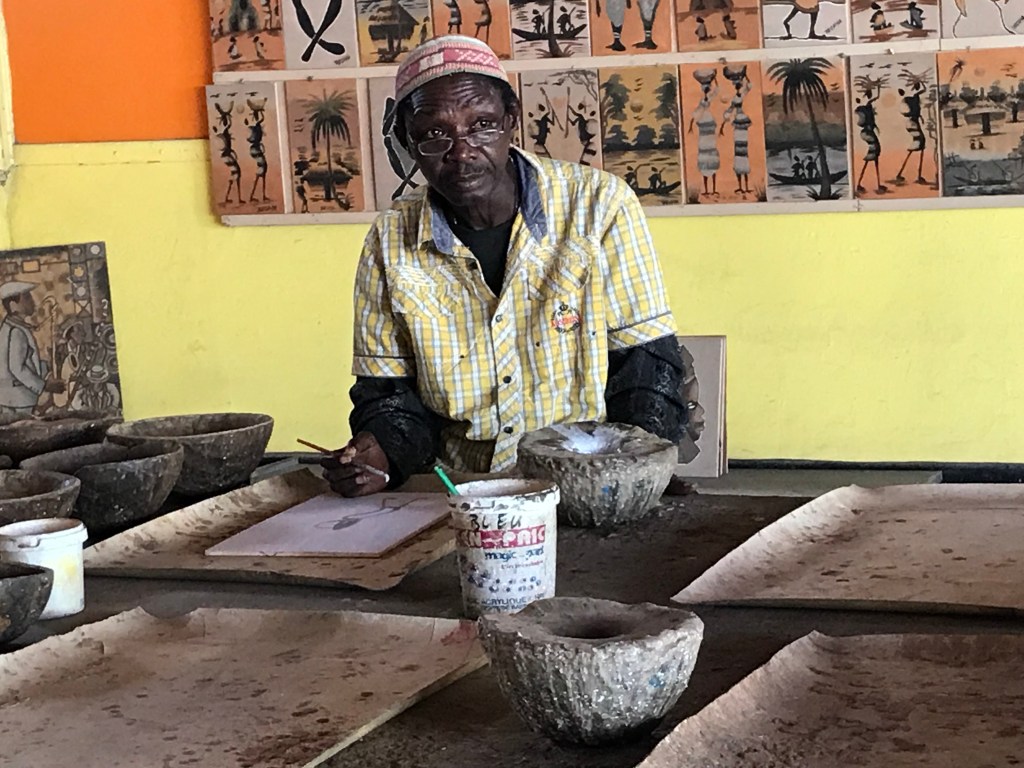
The artist at work 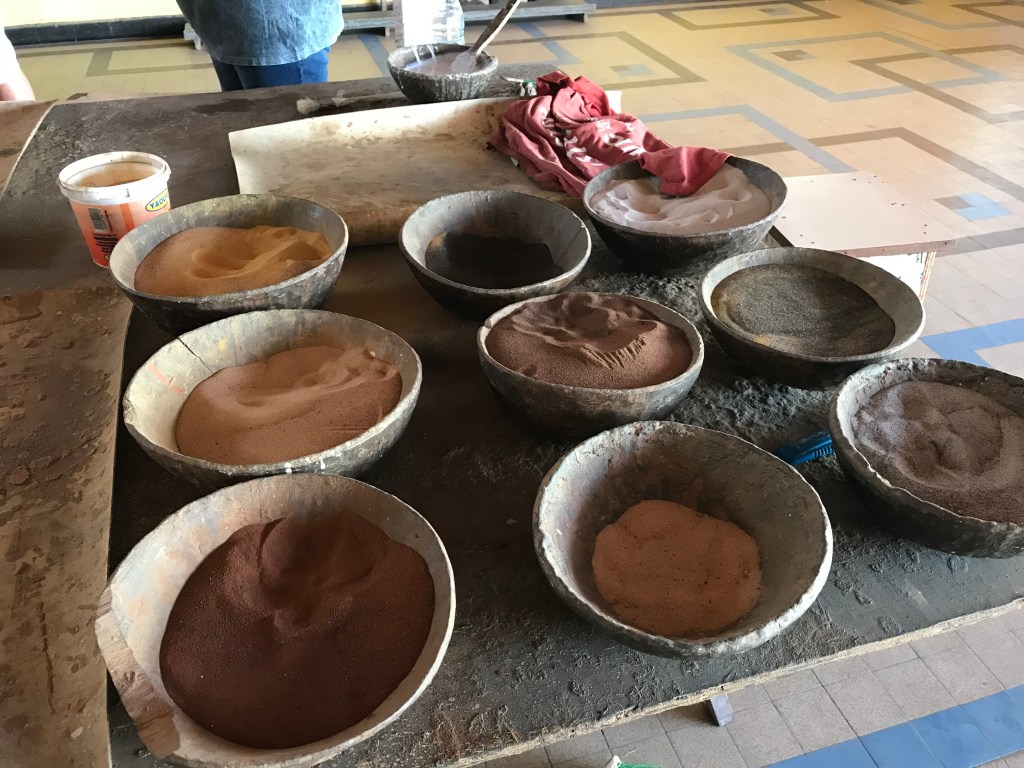
His materials 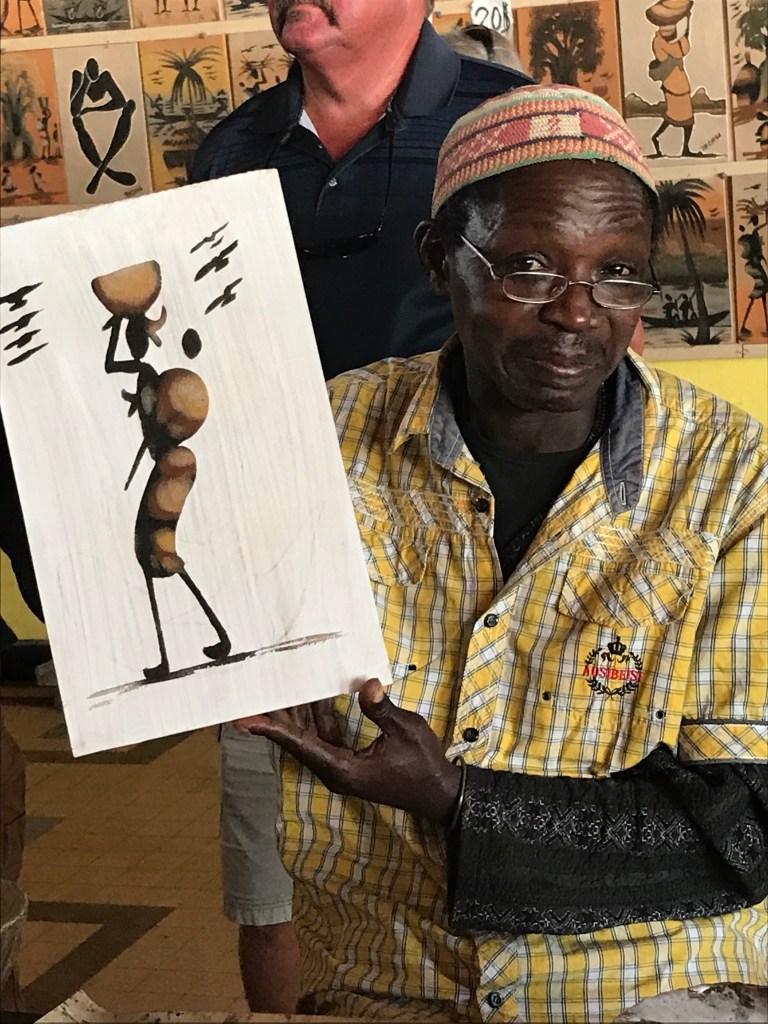
The finished product 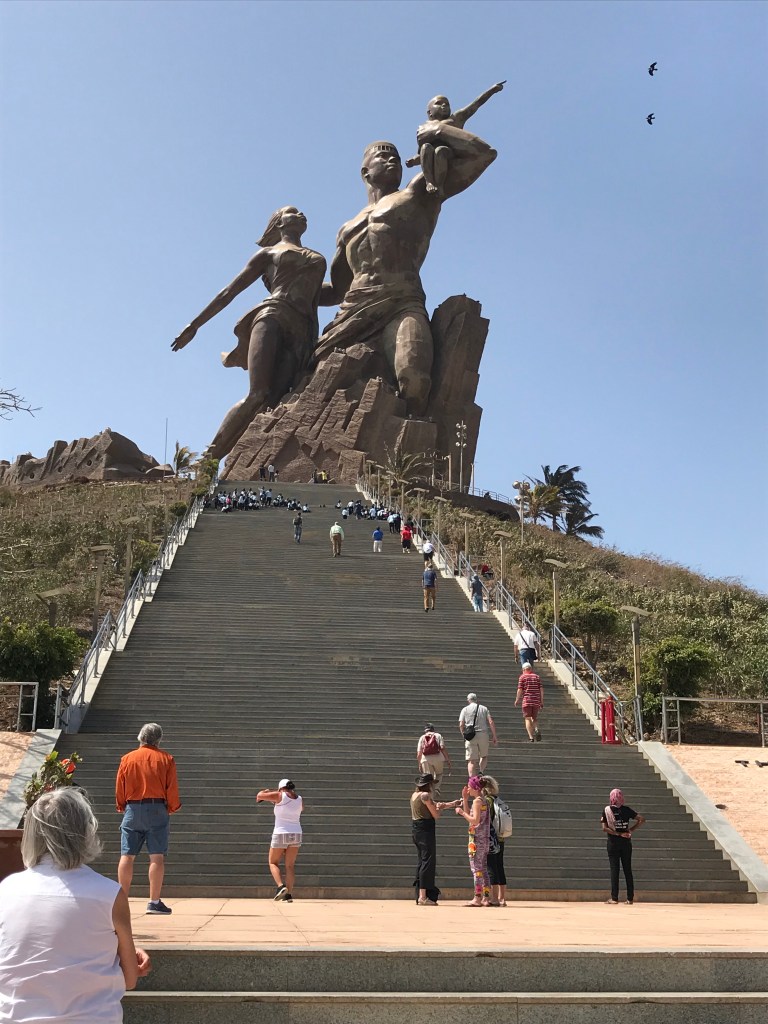
The Renaissance of Africa statue 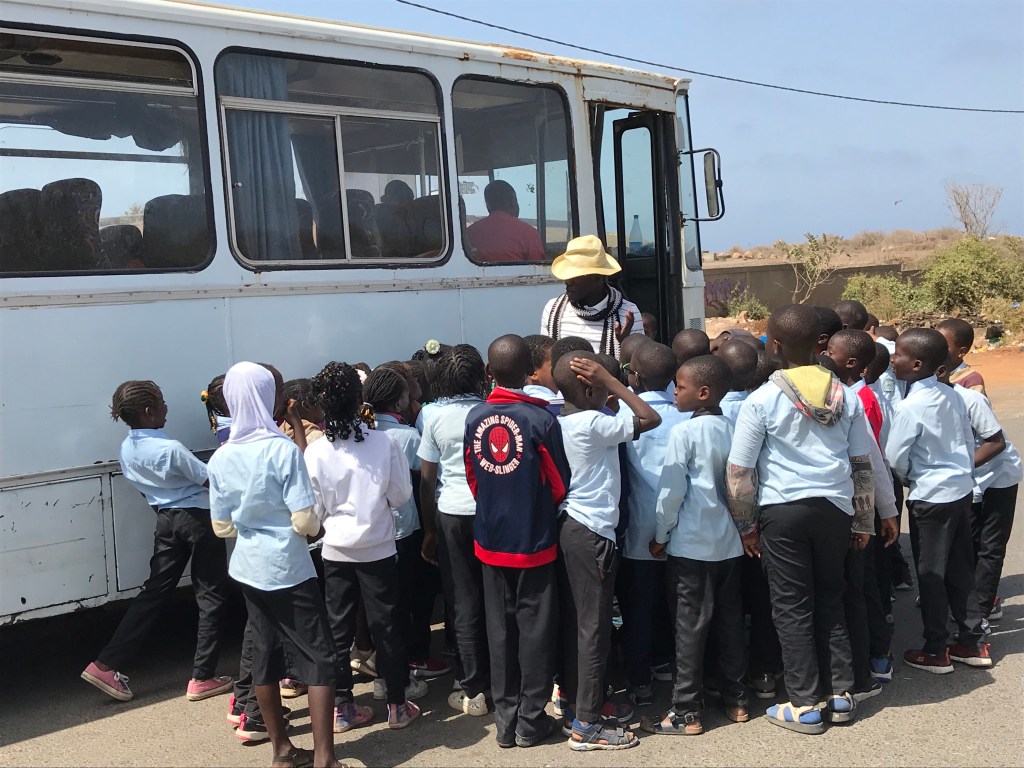
School boys visiting the statue 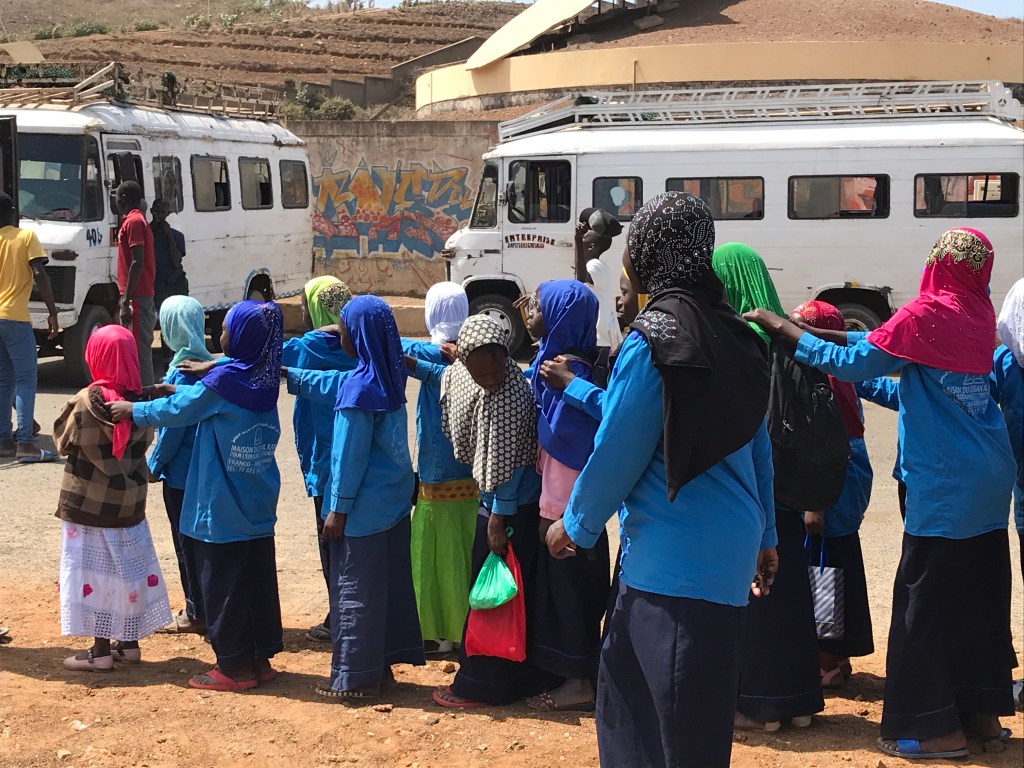
School girls visiting the statue 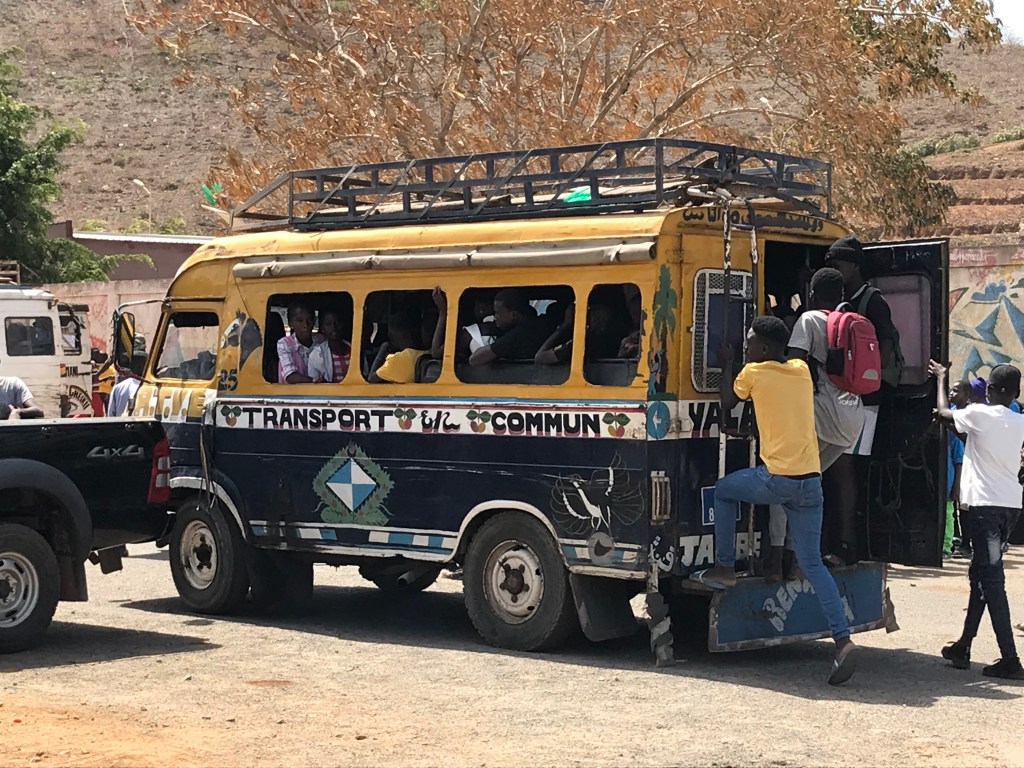
Public transportation 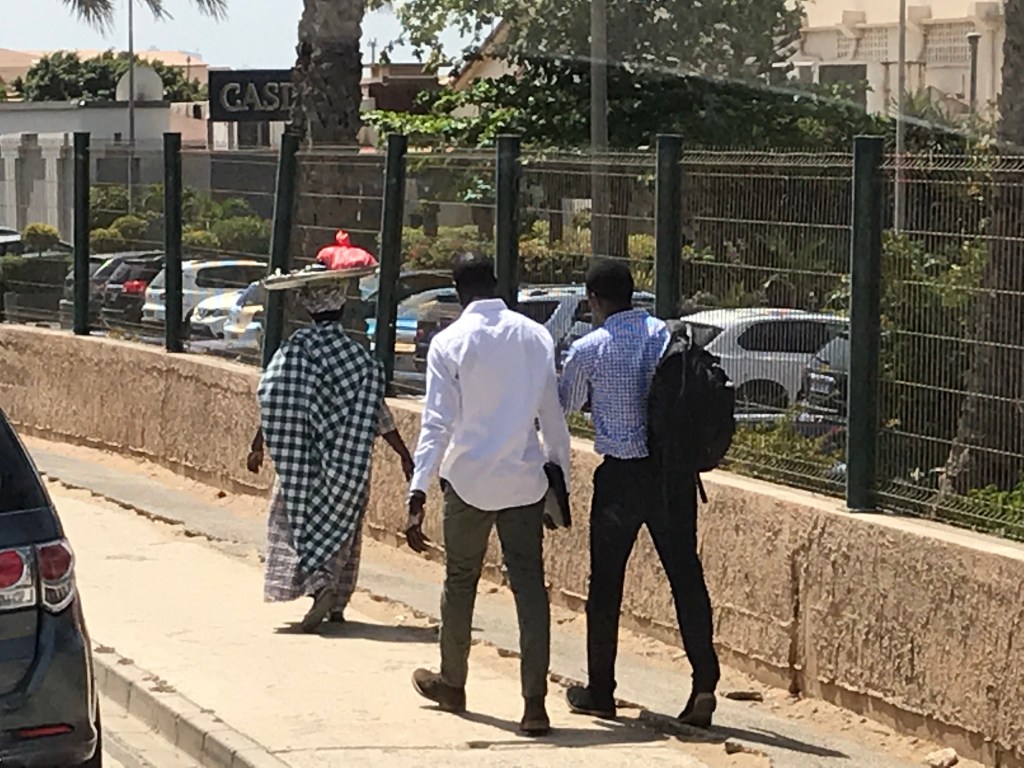
Traditional & western dress coexist 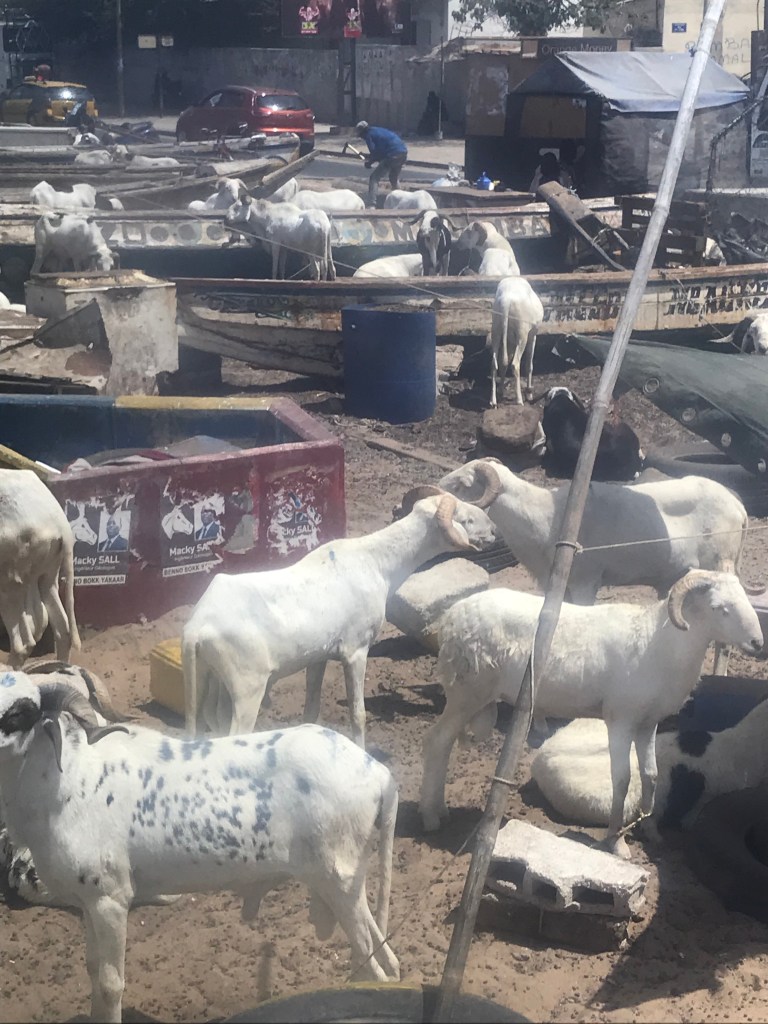
Goats in the market 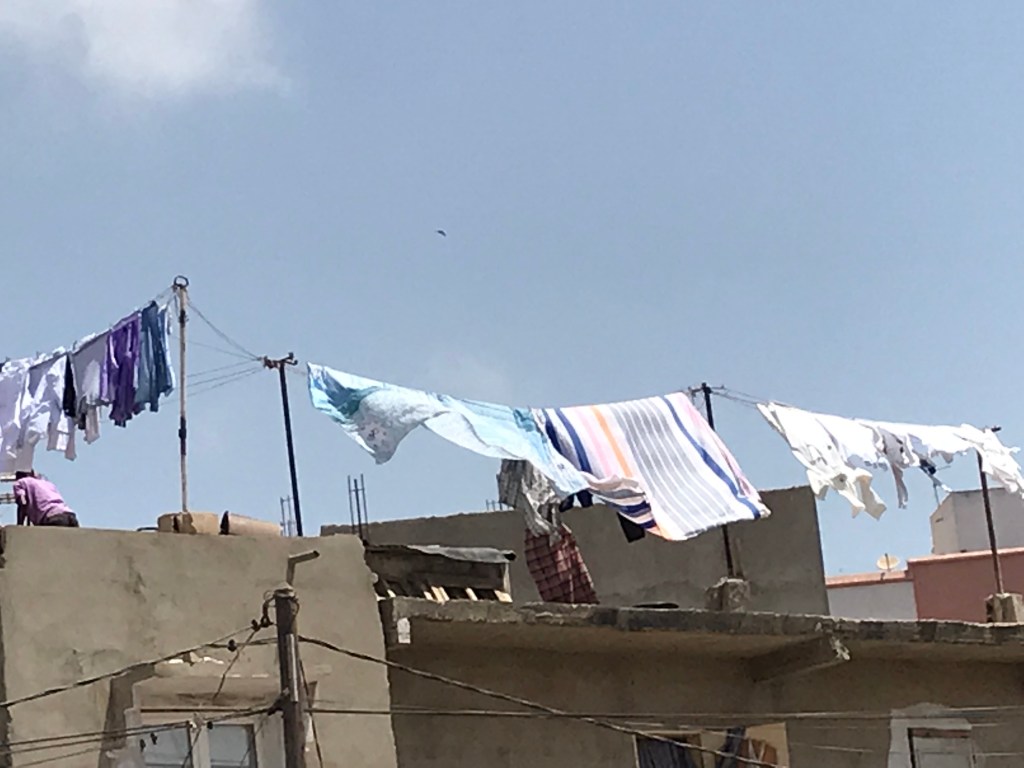
Man & woman hanging laundry on roof
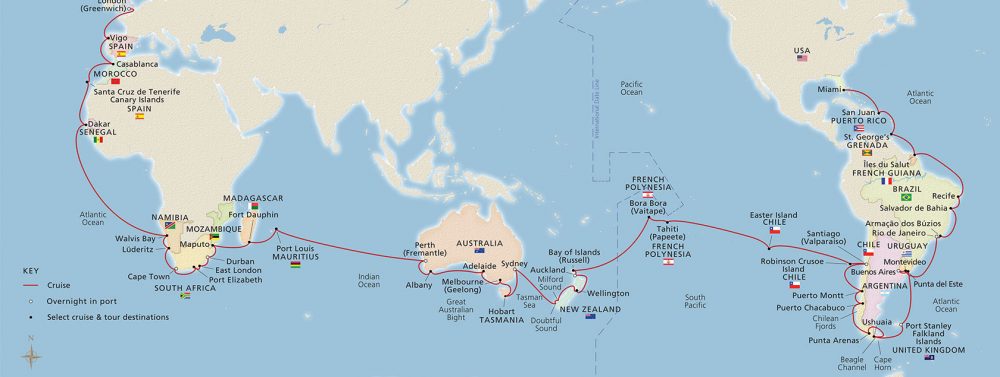
Senegal, like the three Ms (Mauritius, Madagascar, Mozambique) is really poor. It was colonized by the French in the late 1800s and the official language is French, though what most people speak is Senegalese. It has been independent only since 1960. 95% of the population is Muslim (though not the burqa kind.)
Emblematic of the city (and country) it seemed to me, after we boarded the bus for the included tour, we were told we needed to change buses because ours had a flat tire. We moved to a different—and seemingly brand new—bus, but the guide and driver couldn’t get the PA system to work!
We saw the city plus some landmarks including the huge statue commissioned by a former president and unveiled in 2010 to celebrate the 50th year of independence and ‘the renaissance of Africa.’ Hugely controversial because it cost an enormous amount of money, the features on the statues are only vaguely African, Muslim imams objected to the lack of clothing on the figures, it is quite macho, it is variously claimed to have been designed by a Senegalese artist or by a Romanian artist (and, if the latter, not really African), and perhaps most offensively it was constructed by a North Korean firm! It is, however, impressive. Several school busses of children were visiting the statue as well. They climbed to the top (more than 200 steps); we didn’t…
The city reminds me a bit of Addis Ababa with seemingly chaotic but smoothly running traffic (if there are traffic laws, they are pretty much ignored but good-naturedly.)
Like Maputo, Mozambique there are lots of street vendors but, unlike Maputo, I found they seemed to take a polite ‘no, thank you’ as an answer. Others apparently experienced more persistent vendors. Our guide described it as a way people without jobs created their own jobs.
People on the street were very colorful in their African garb—though there were plenty in western clothing as well.
The cathedral (for the 5% Christians) is modern, attractive, and interesting. We’re told education is not compulsory though I gathered most go to school somehow. The best schools are, of course, private, and the private schools are run by the Roman Catholic Church. Our guide seemed amazed that I even asked if Muslim children attended the Catholic schools and responded ‘of course’ since there are so few who are not Muslim. We drove through the university which he said has 100,000 students (!) and is the best university in western Africa (unfortunately, that may not be saying much.)
We stopped at a sand painting art gallery, which allowed us a drink and toilets (toilets on some of these excursions are difficult…) It was, however, also interesting to see the artist create a sand painting. He began by drawing it on a board with a glue (I believe from a baobab tree—the iconic tree of this part of Africa with some trees being over 1500 years old.) Then he sprinkled sand on it, choosing from several bowls of different color sand (different colors from different places.) It seemed like he sprinkled it haphazardly over most of the painting, but, when he shook off the excess sand, there was a painting with clear lines of different sands.
Our guide mentioned many times that the country is a democracy with a parliament and a president and that the president may serve only two consecutive 5-year terms—though he also mentioned, wryly, that the president who commissioned the statue was free about spending taxpayers’ money.
Along the coast were several sports facilities and playgrounds built, our guide said, by the Chinese. The Chinese are everywhere in Africa, investing heavily. The arrangement (at least in this country but probably in general) is that 40% of the labor in Chinese projects will be local (so it does help employment as well as creating infrastructure), but, of course, that means 60% is Chinese. We were told 15 years ago in Ethiopia that the Chinese could underbid on most projects because they paid their workers very little and provided little in facilities—in the Ethiopian road project being described, the Chinese workers were given no housing and had to sleep on the road they were constructing. Underbidding Ethiopian labor (or, I imagine Senegalese labor) takes some doing! China’s interest in Africa has to do both with influence and with natural resources, especially the metals needed for modern technology. A sign we saw said ‘Africa isn’t poor—it’s being looted.’
Back on board ship for lunch in the warm (but not too hot) sun, I added another first for this trip: I took a swim in the outdoor pool! Hard to believe the only other time I’ve been in the pool on the ship was in the main pool for aqua aerobics. It seemed about time I tried it. It was lovely and warm—I probably should have done it more often!
Highlight of My Trip… I also think Dakar reminds me of Addis Ababa, but on the basis of only a very short visit, it seems more colorful. Unlike other places we have visited on other trips – say, Rhodes – I have no desire to live here, however, but being in the city for only a little over 4 hours has been left a favorable impression I won’t soon forget.
How so? In most every city we visit we take an Included Tour, which usually involves a bus ride for a “panoramic” view of the urban scene, its visual highlights such as churches, museums, notable architecture and monuments, even cemeteries…along with requisite photo opportunities (and restroom stops). (Cynthia has described these above.)
These panoramic tours are always interesting, if often tedious: go-stop, off-on, go-stop, off-on… In our port briefing for Dakar, were emphatically warned about traffic congestion, crowds, pick-pockets, and pushy street vendors. During our bus tour, traffic was very congested; I saw only 2 sets of traffic lights in the downtown area (but 4 or 5 in Addis 15 years ago). Pedestrian crowds were everywhere, with often little distinction between narrow and even wide roads and walkways; all available space was shared by vehicles, motorcycles and scooters, and people. Whenever possible, it seemed on-coming vehicle traffic traveled two abreast on two-way thoroughfares. While intersections were usually blocked by vehicles and pedestrians wanting to cross or turn, stoppage was short-lived, and all continued to move ahead or yield in more-or-less seamless manner (easily seen from our front row vantage!).
Of course, I encountered no pick- pockets in our cloistered bus… more importantly, and most memorably, I found none of the street vendors pushy (unlike ones we encountered earlier in this trip, in Mozambique). A “No thanks!” or a negative nod was consistently respected. Many of our fellow travelers, however, were appalled by the crowds, the traffic, the dirt and building debris, and by the pushy vendors they encountered.
But, oh, the vibrantly colored garb! Many women were attired in multi-colored saris or abayas and hijabs; none I saw wore burqas or otherwise veiled their faces. Gray attire for men was relatively common; much rarer for women. No uniform clothing for persons of college age. Otherwise, colorful clothing was common and an eye fest, amidst an otherwise destitute landscape! –Chris
 C&C travel the seas