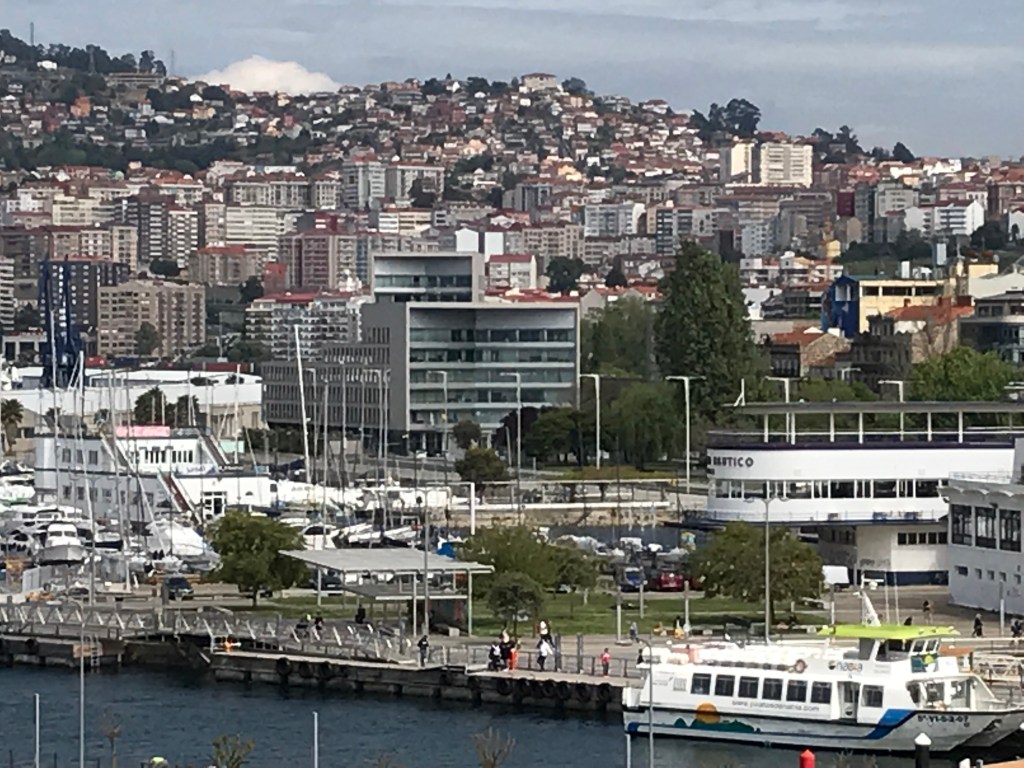
Vigo from the ship 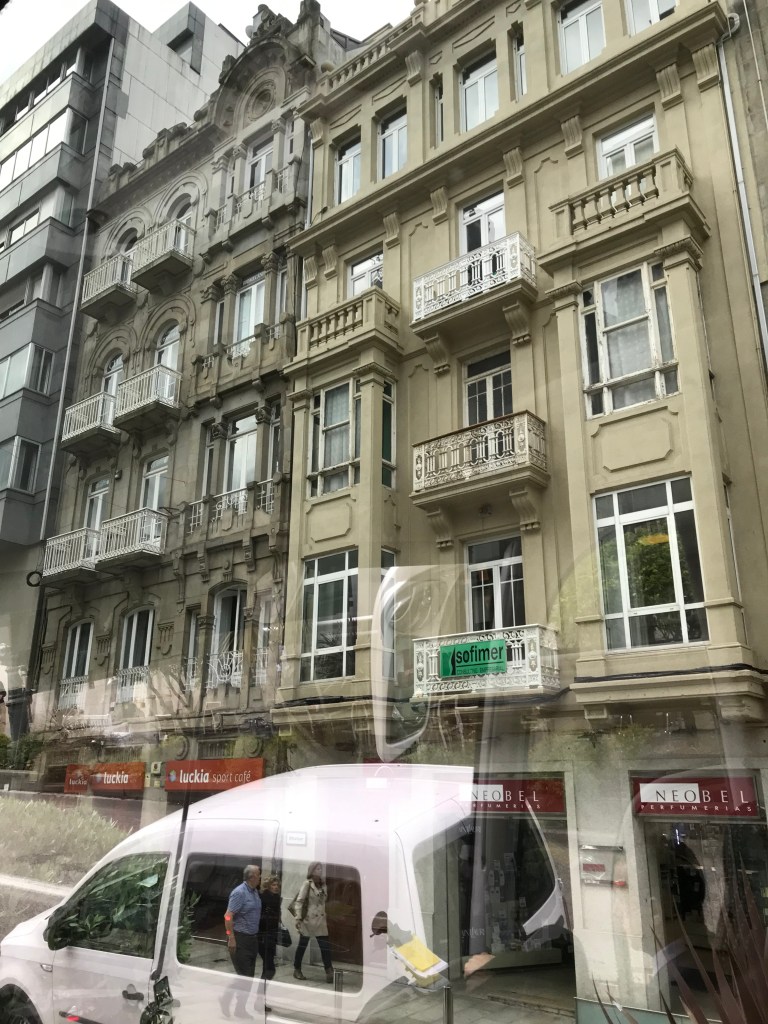
19th century facades (through bus window) 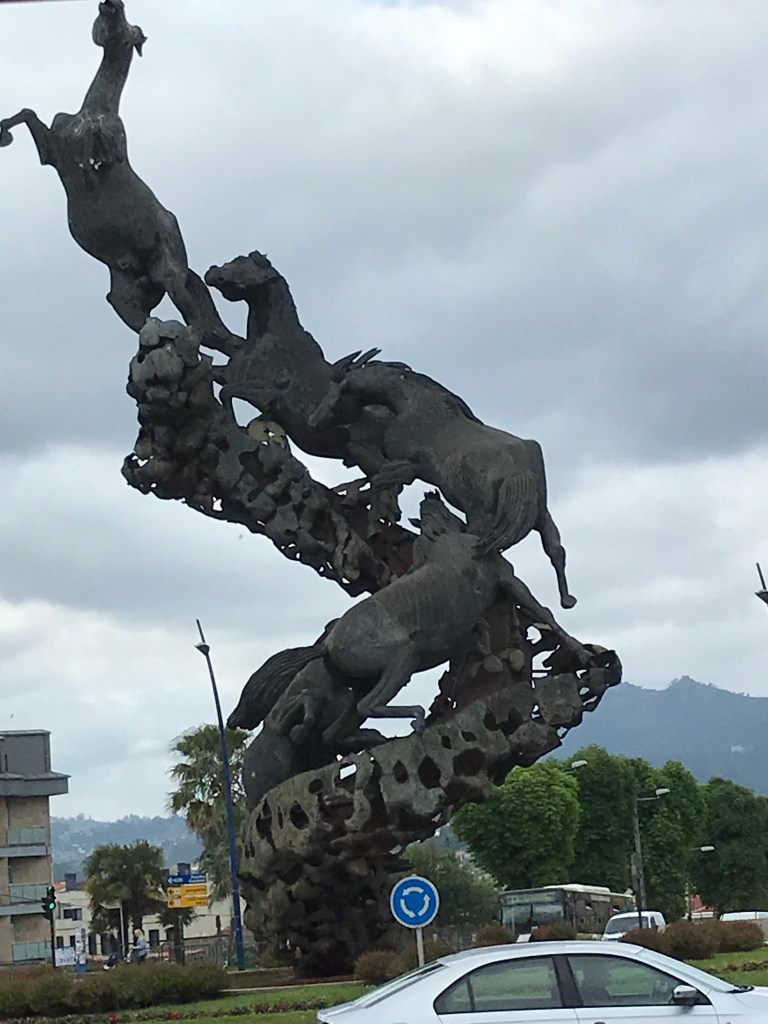
Horse sculpture in traffic circle 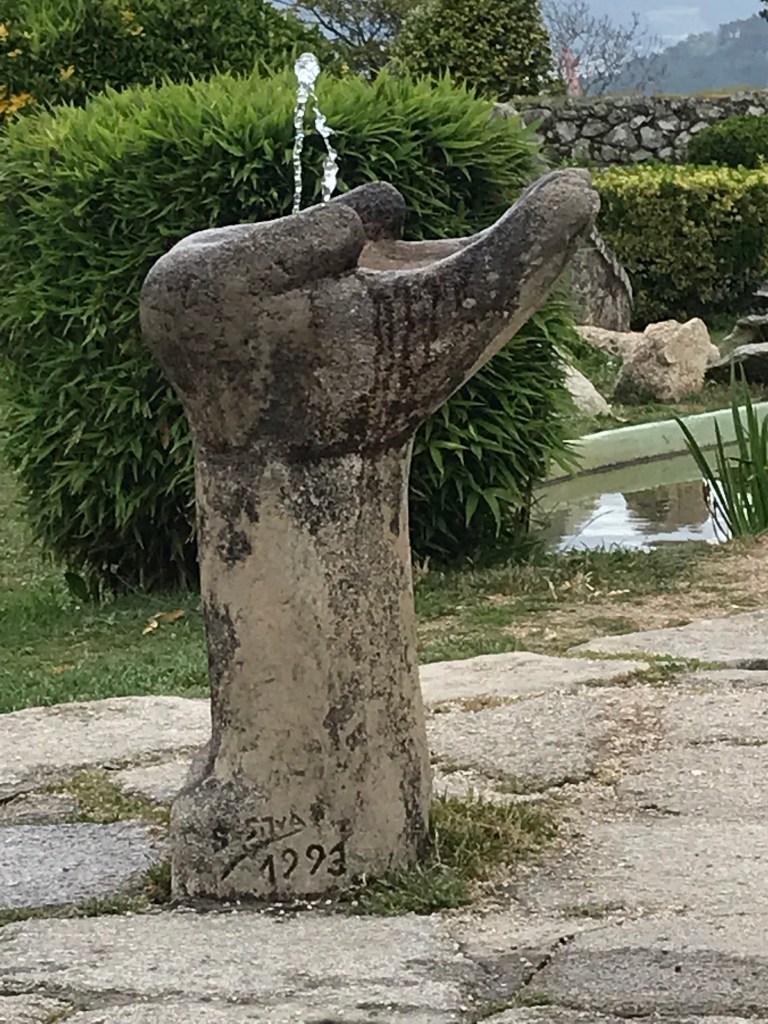
Drinking fountain shaped like open hands in the castle park 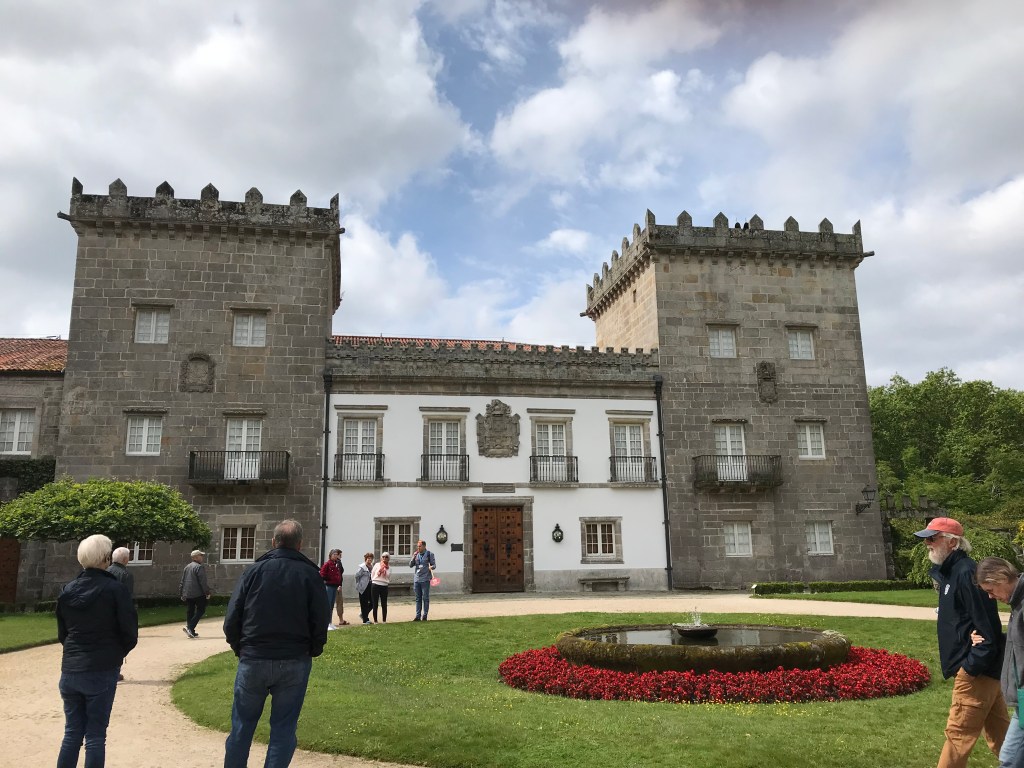
The 17th century manor with added wings 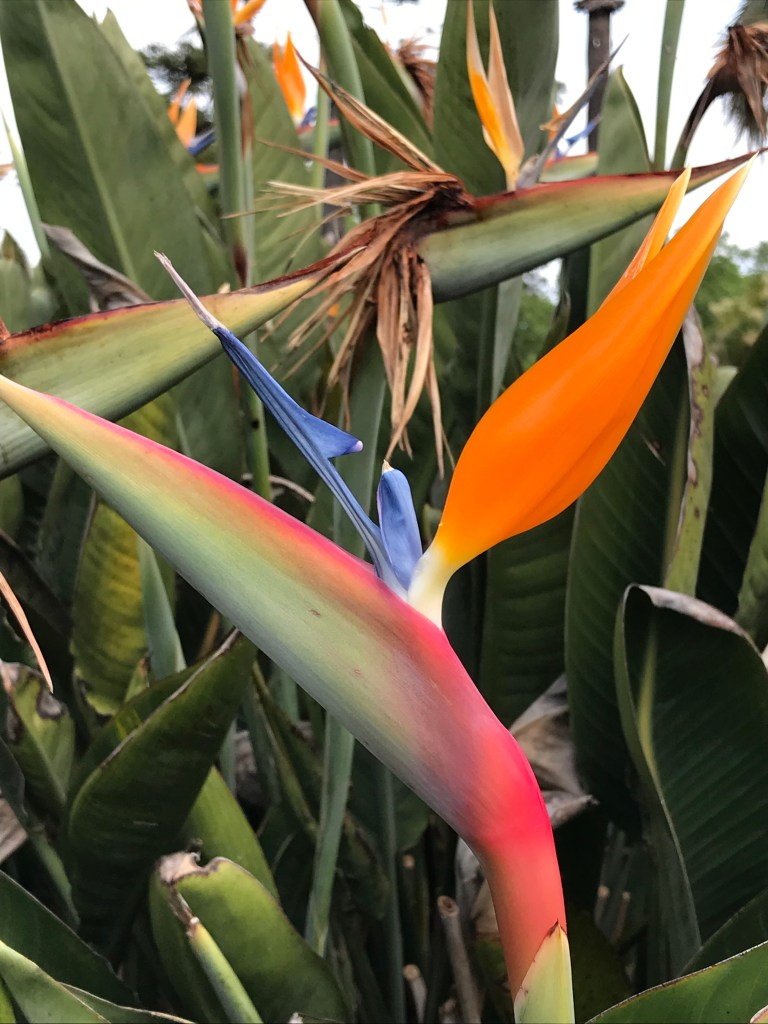
Bird of paradise in the gardens 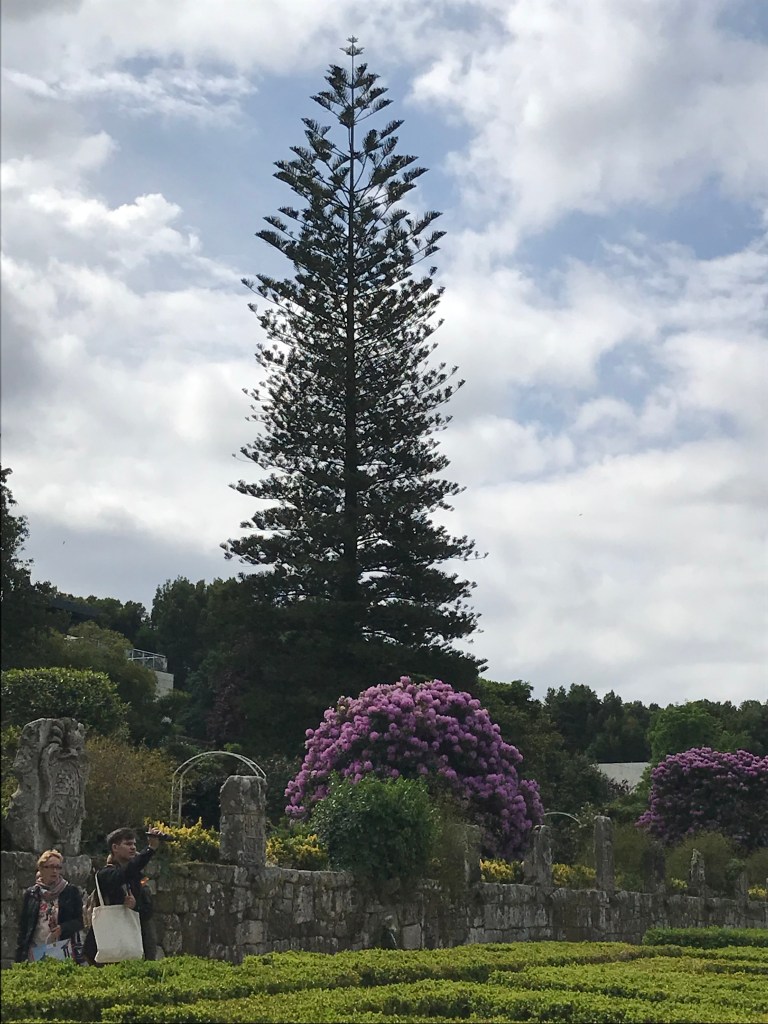
Norfolk Island pine and rhododendron 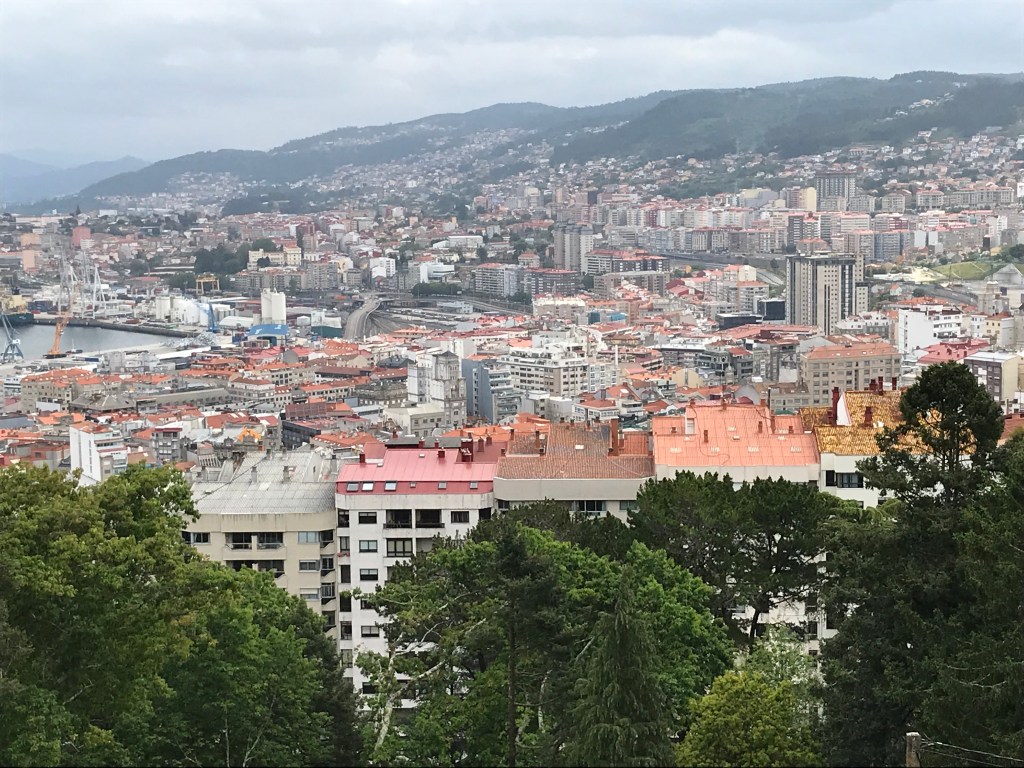
Vigo from the hill 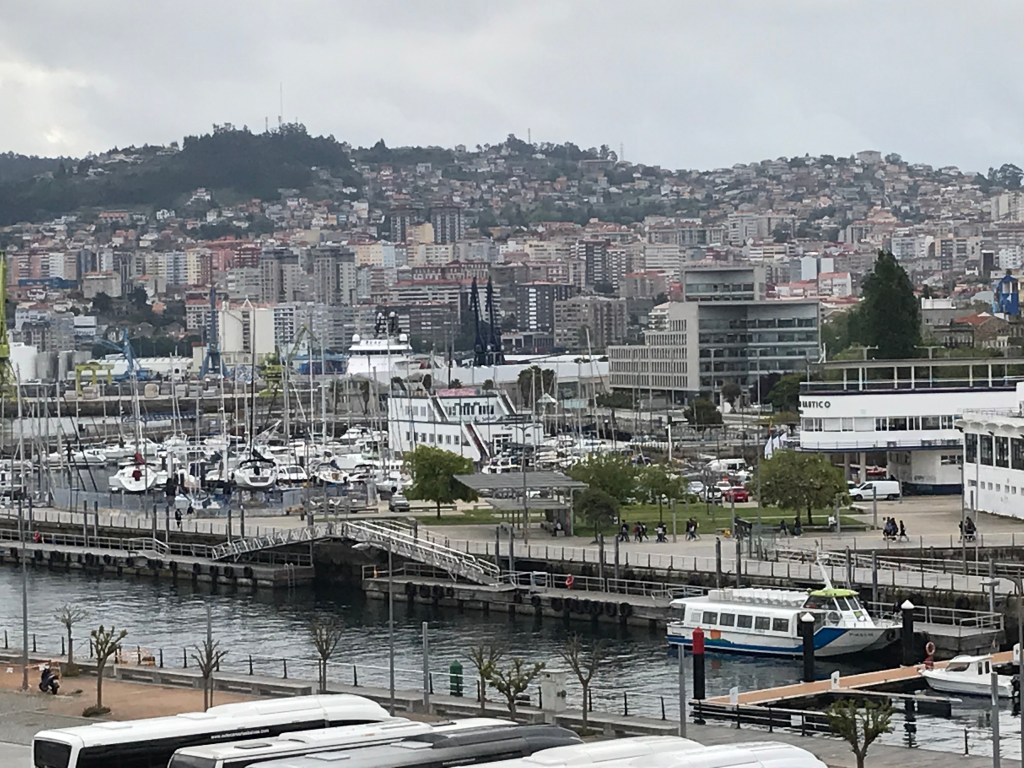
Vigo with tour buses in foreground
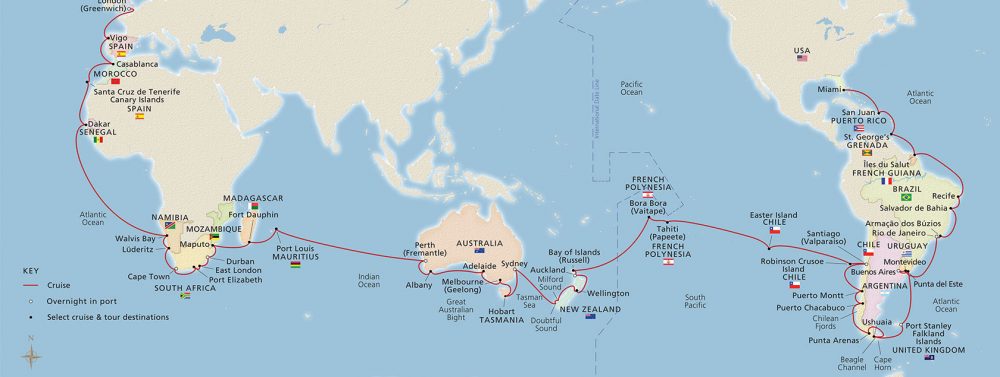
It was cold and cloudy this morning—we must have arrived in Europe! Actually, the sun came out while we were on our excursion and by noon it was in the high 50s. Our guide informed us we were lucky because the area gets a lot of rain. It also has a temperate climate and, thus, vegetation is green and profuse.
Our bus and guide took us through the attractive city with streets lined with handsome 19th century facades, many with narrow balconies, and lots of traffic circles (he said ‘cycles’) with large sculptures in the middle of most and also along the coastal beaches. The ocean is cold enough to require a wetsuit, but it’s attractive as well. Galacia is rather separate from the rest of Spain and used to be united with Portugal in the Kingdom of Galicia; the Galacian language (which, along with Spanish, is an official language) is more closely related to Portuguese than to Spanish.
Galicia was settled in the Iron Age by the Celts (hence the Galician bagpipes which are still part of their music), and we visited the remains of a medieval castle built on the hilltop site of the original Celtic settlement; the castle was demolished in the 17th century, the walls renovated, and the whole area turned into an attractive park.
We also visited the Quiñones de León Manor House built in the 17th century and donated to the town by the owners in the 20th century. The manor is now an art museum but was closed since today is Monday, so we only visited the gardens which are extensive full of very happy camellias, rhododendron, roses, and other flowers, bushes, and trees.
Our guide pointed out the Norfolk Island pine. I’m not sure why he did so, but it reminded me that the most ubiquitous plant on our trip is the Norfolk Island pine—I think we saw them in every country we visited. They are endemic to Norfolk Island, a small island belonging to Australia and somewhere in the Pacific between Australia, New Zealand, and New Caledonia. From there they have spread far and wide. They are very distinctive looking trees—they almost look like the old fake Christmas trees because each branch is so distinct from each other. How close together they are depends, I suppose, on how much the tree grows in a year so vary from country to country.
 C&C travel the seas