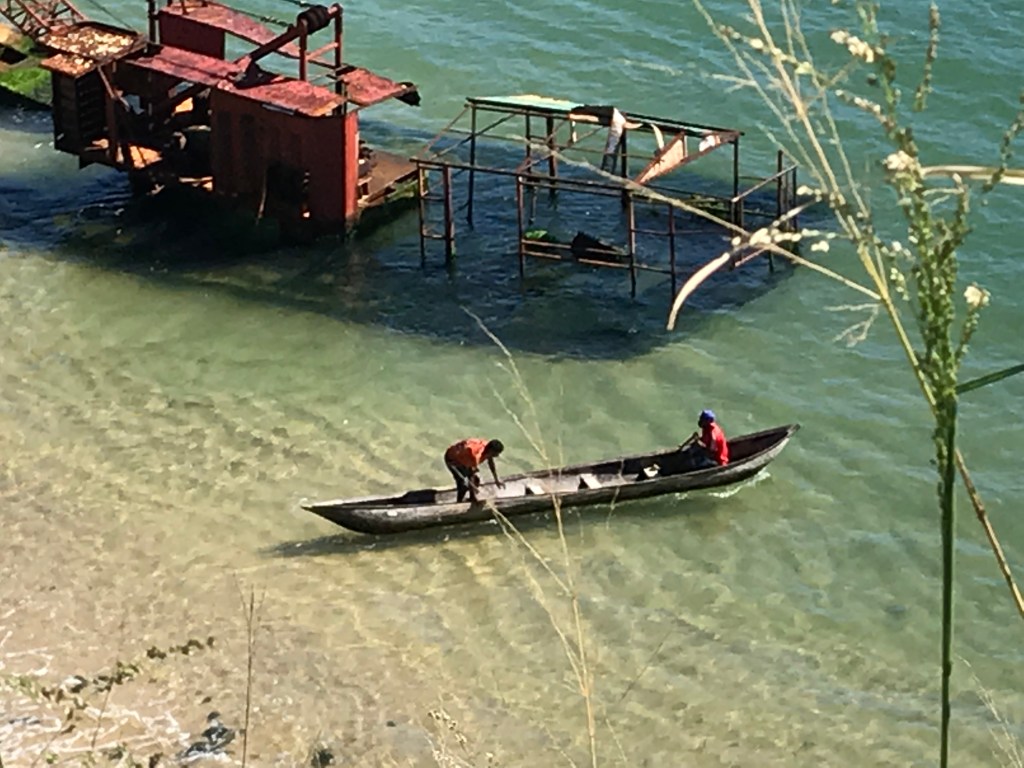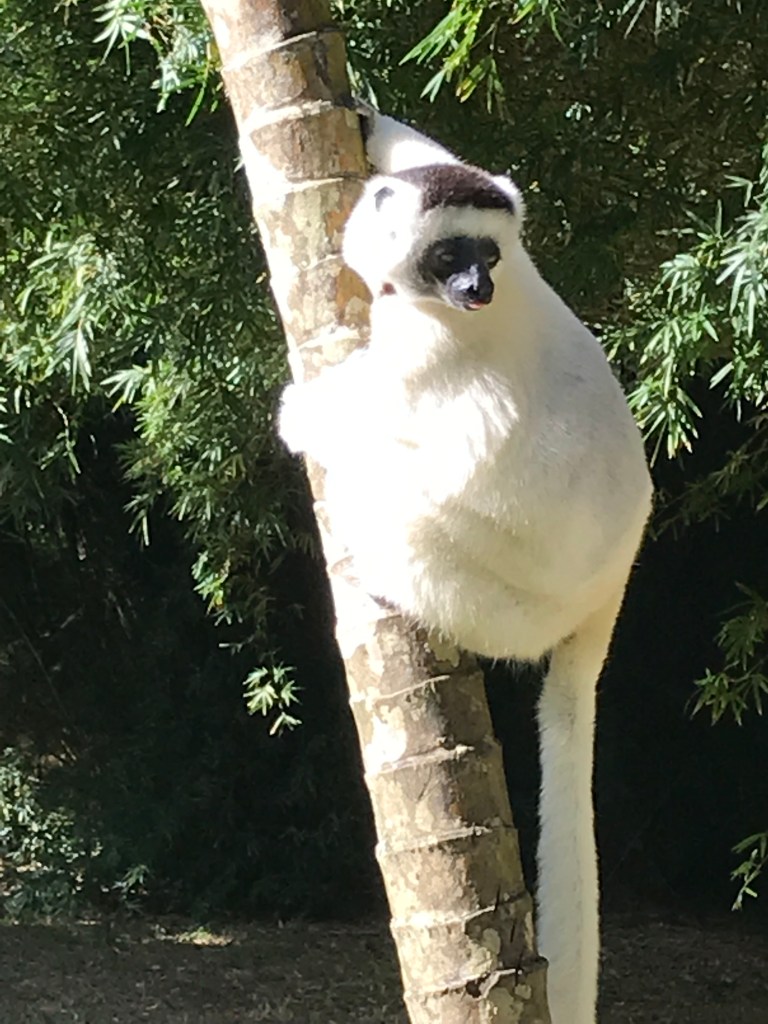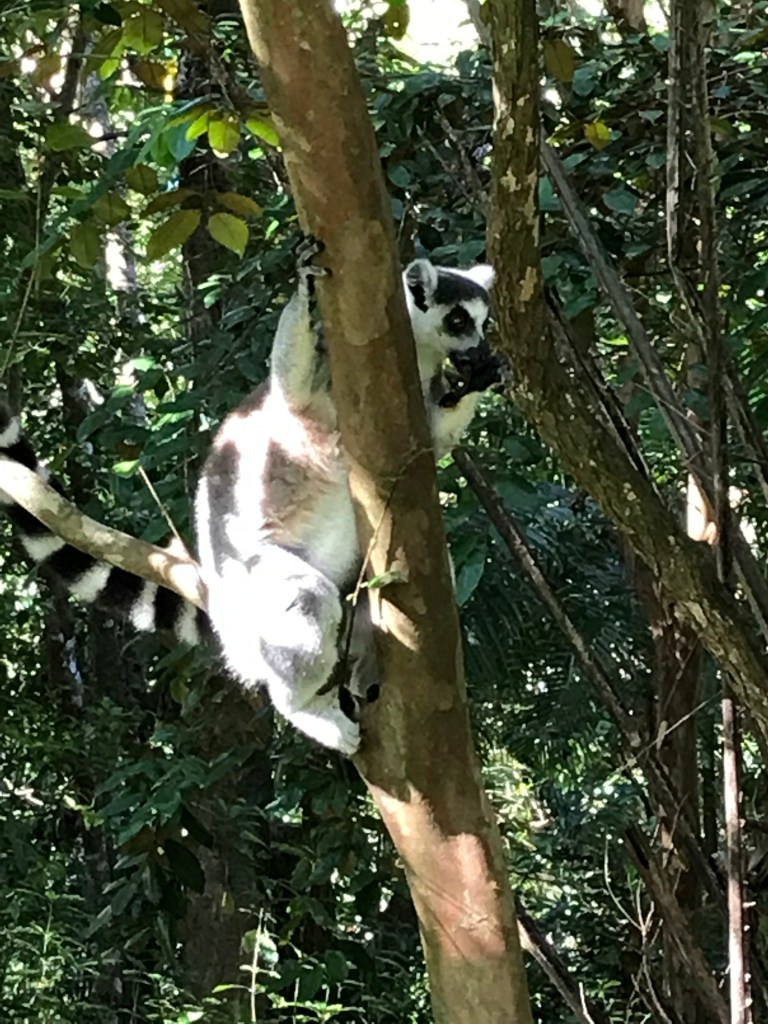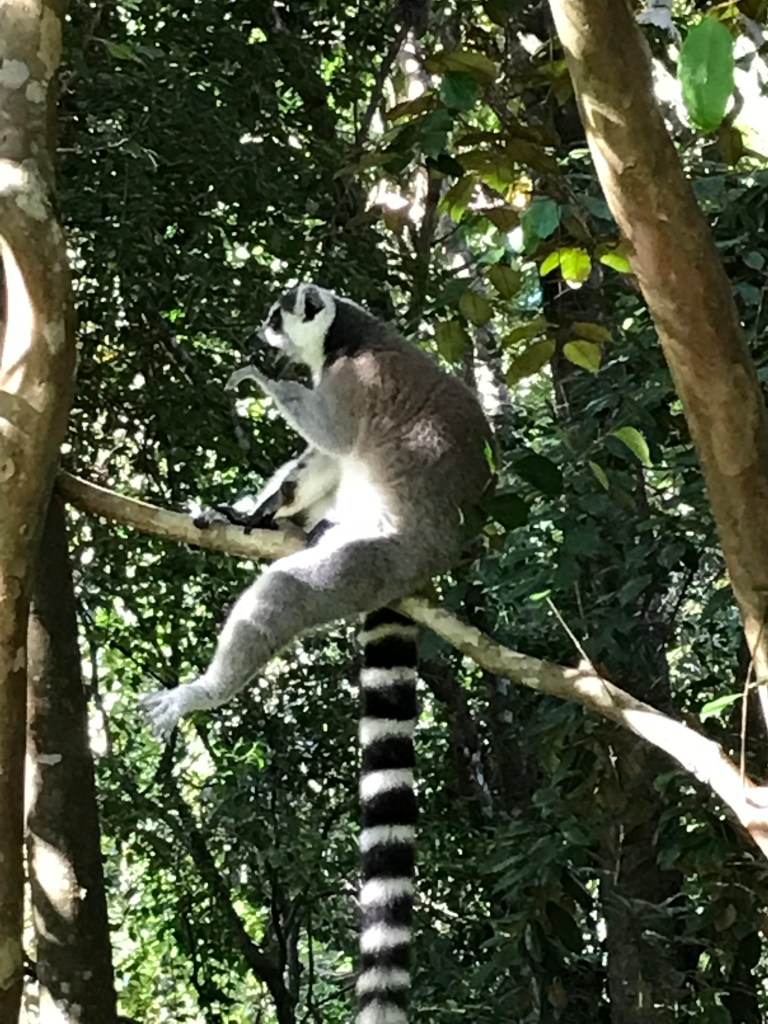
April 8 Fort Dauphin/Tolanaro, Madagascar

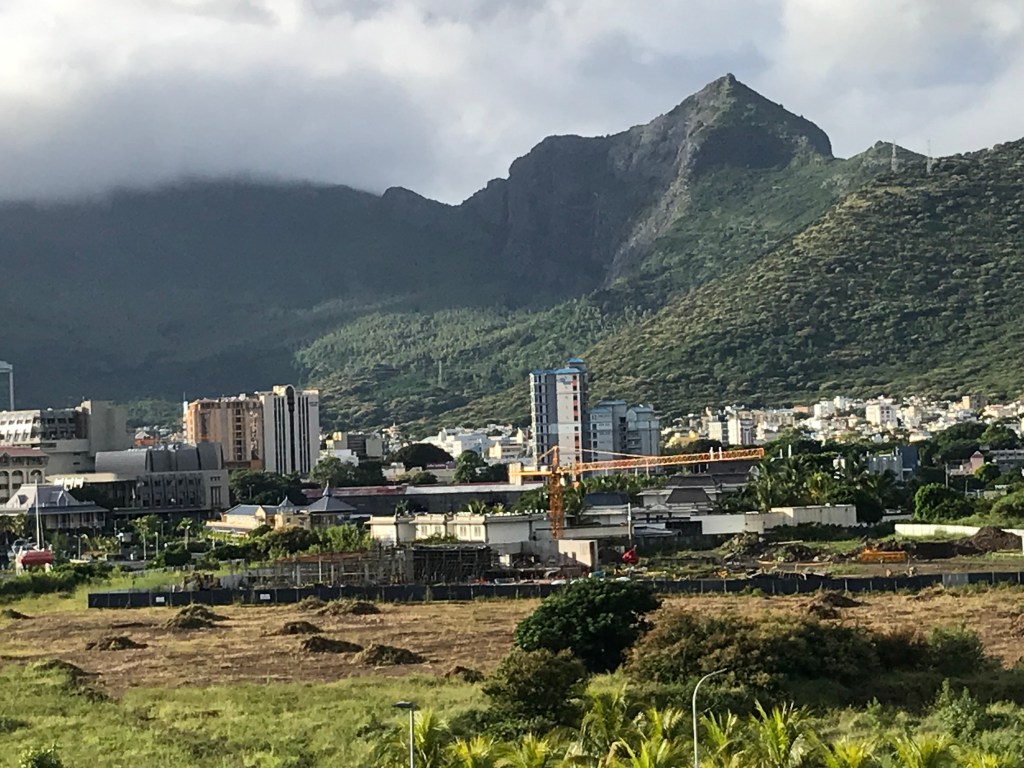
Madagascar, with tales of its many exotic species of plants and animals, has always fascinated me.  We can only see a very small piece of it in a day because it is larger than Germany!  And mostly there are very poor roads.  Fort Dauphin or Tolanaro, near which we docked, is in the southeast of the island.  The capital is approximately in the middle, and our guide told us it is a 2 hour flight from Tolanaro to the capital or a 3-day (and 3-night) bus ride.  That says something both about distance and, I suspect, about the roads.

The rather new port is in a rural area with good roads; it and the roads, we are told, were built (and owned) 20% by the government and 80% by Rio Tinto, the company (which as nearly as I can tell is headquartered in Australia) that mines the area for black sand, which is exported to Canada and used for titanium (and maybe  minerals). 

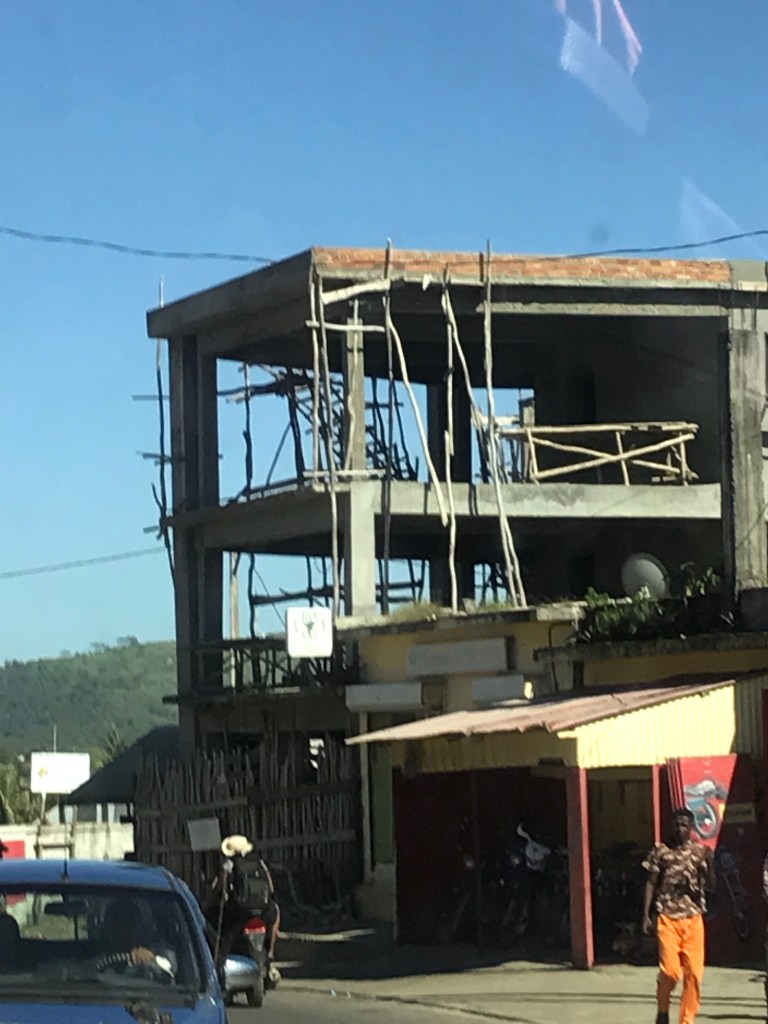
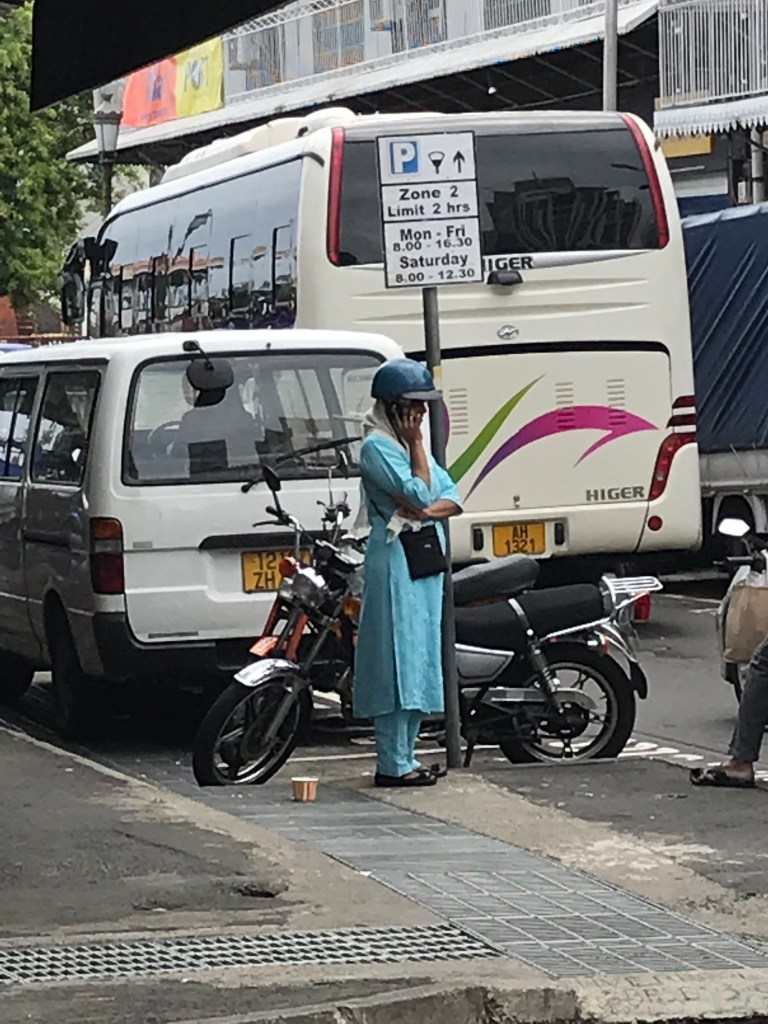
The area reminded me of rural Ethiopia with a dash of Dominica—Dominica because of the mountains and forms of houses (or shacks), Ethiopia because of the bad roads, roadside trash, extreme poverty, using eucalyptus poles for scaffolding in construction, and people everywhere along the road.  Many, we were told, walked 15 or more kilometers from their village to jobs in Tolanaro (if they had jobs).  Some children (and adults) were happy to wave to us passing; others had their hands out (and sometimes through the windows) for money; a few turned and shook their fannies at us.

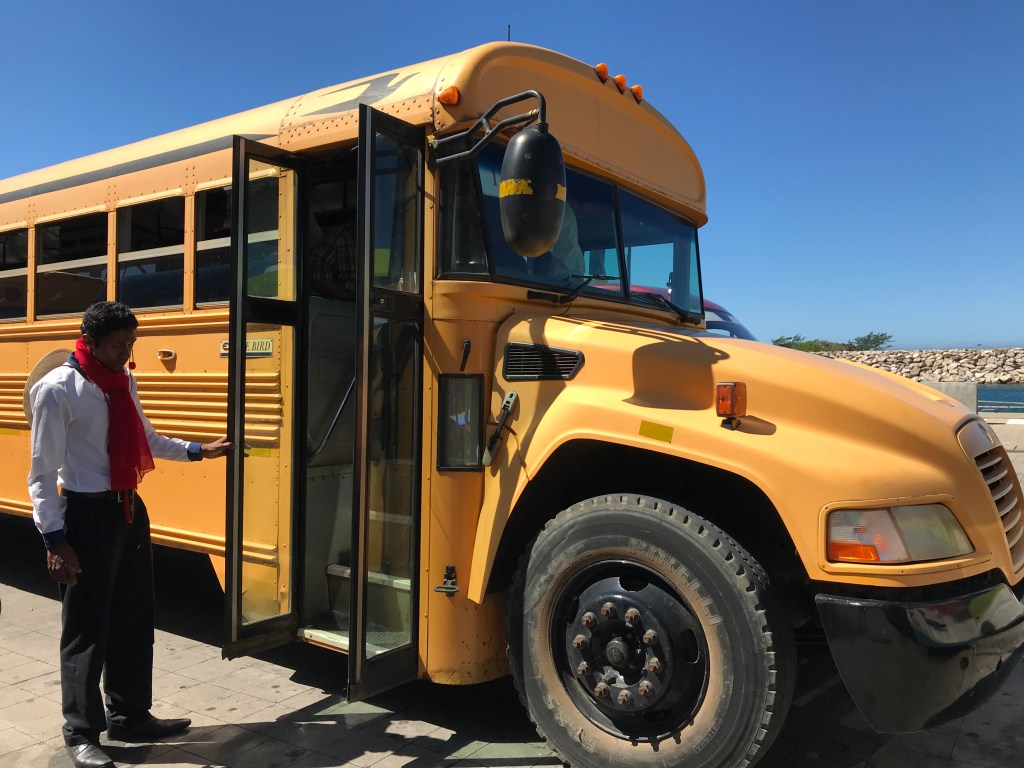
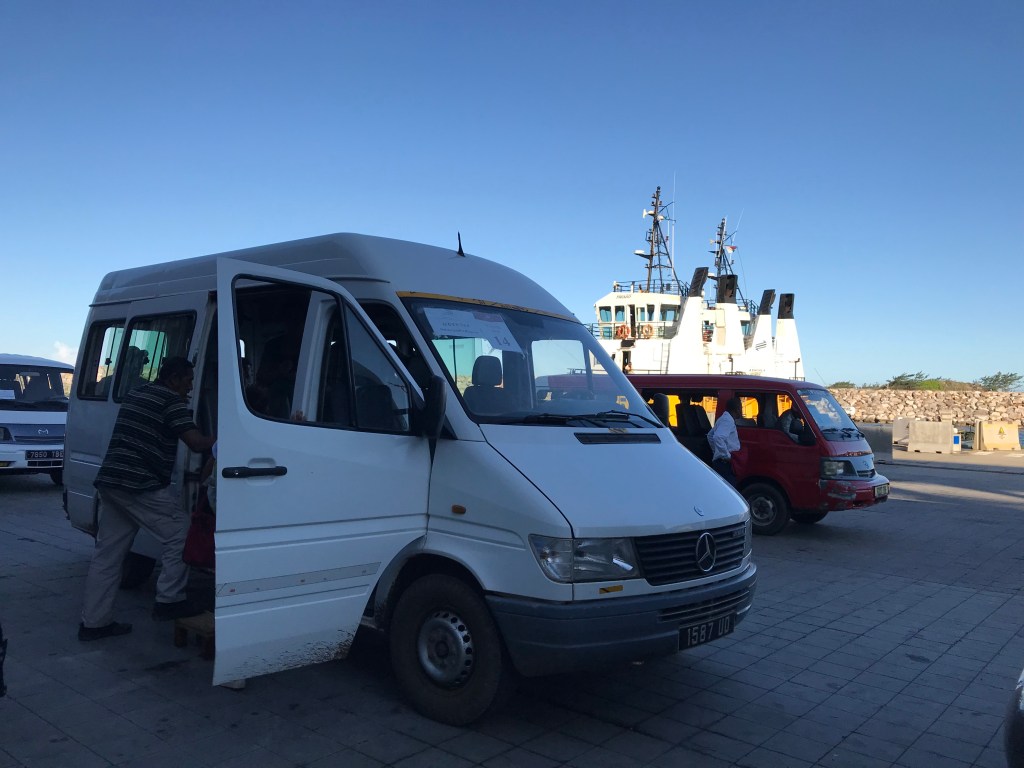
The ship had recruited all buses available for our tours and they were a motley assortment of school buses and mini-vans in various ages.  All the seats seemed designed to hold 1 ½ people.  Sometimes we could have one large seat apiece, other times 2 tried to squeeze in.  Heather had warned us that this was a real third world country (especially after, I gather, getting some negative feedback after Mauritius) and to expect few bathrooms, old buses, and guides with varying amounts of  English; but, she stressed, they need our business badly and anything you can do to help is appreciated.

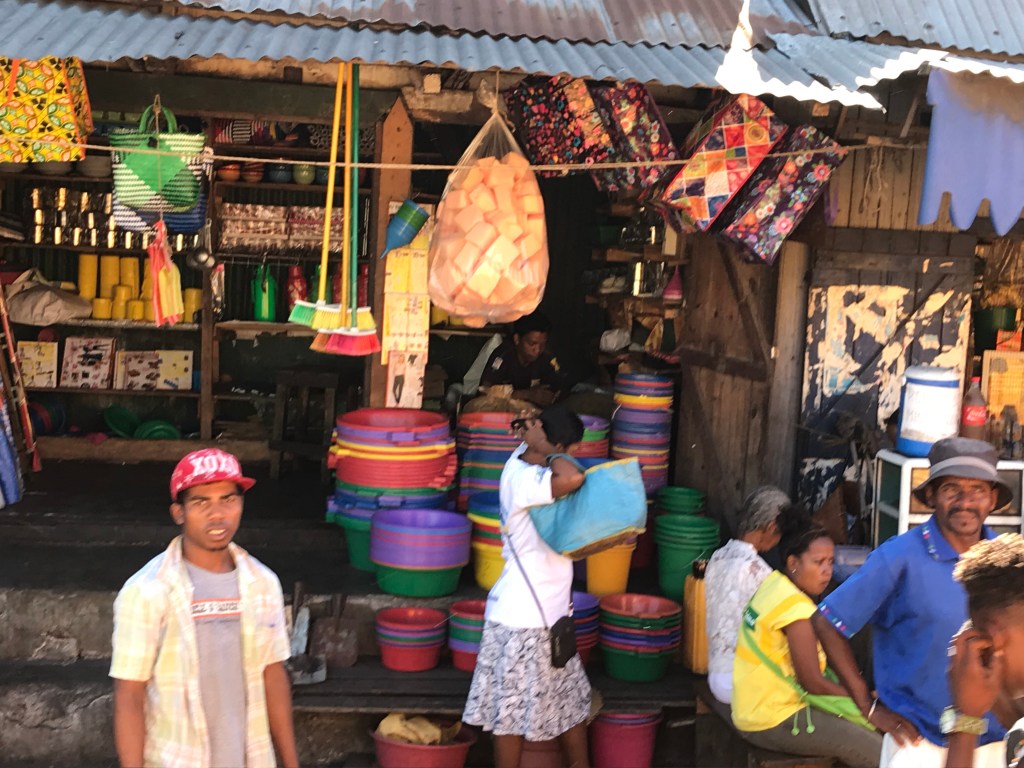
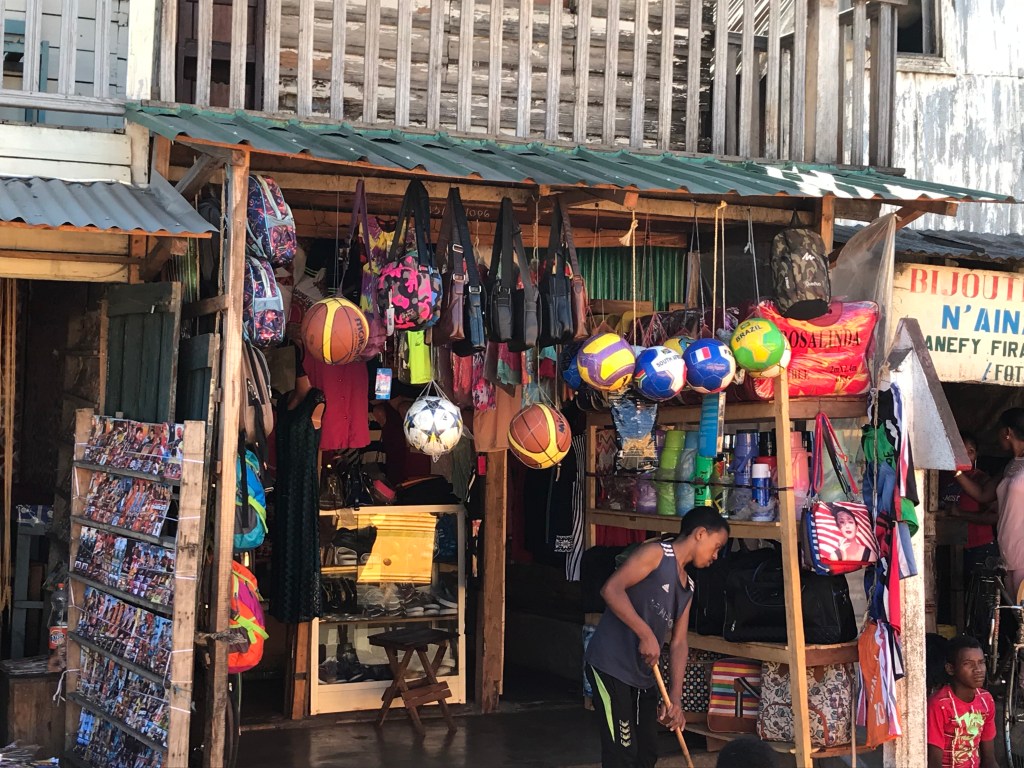
We were treated to a bus tour through the very long and large market and to various viewpoints (including a house in the country, built by ‘the richest man around’ as a sort of replica of the U.S. White House).  Our guide spoke excellent English and was knowledgeable and funny besides; he said he spent some time in Montana—and I think it was doing a course in bible study, but I may have misheard that.

The Nahampoana Reserve was our destination in the afternoon—primarily to see lemurs.  On a very bumpy dirt and potholed and mud road we drove slowly through forest and villages and people in a minivan with a dozen of us jammed into seats not made for 2 westerners to sit together—it was not a comfortable ride. 

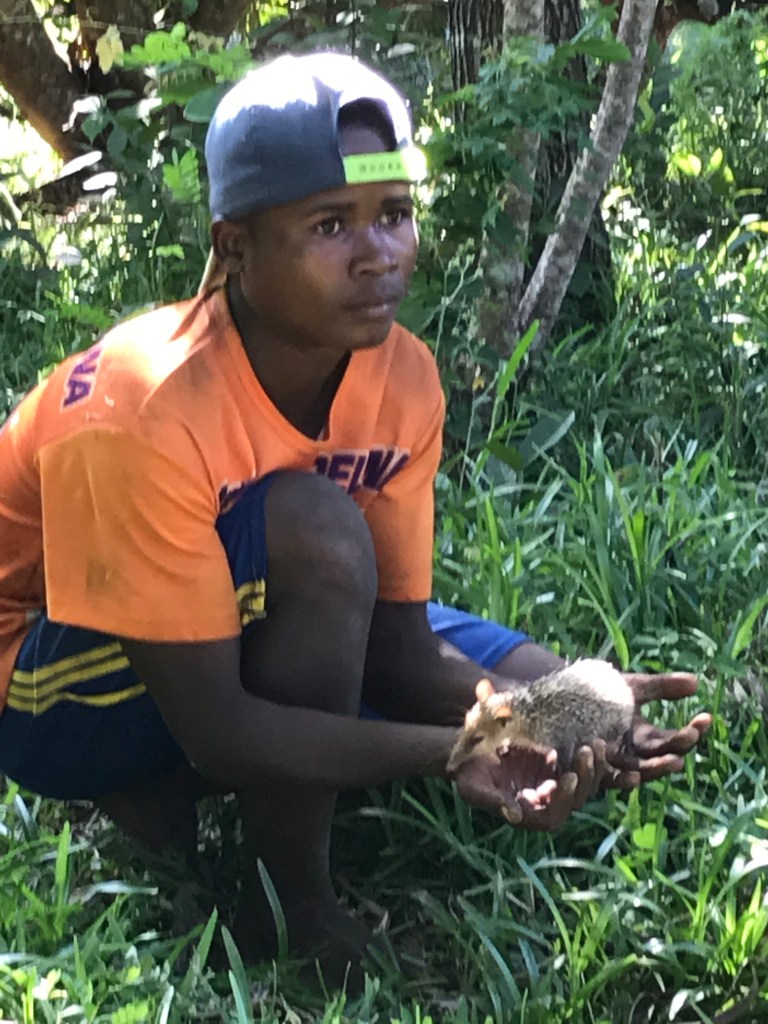
We saw white, bamboo, brown, and ring-tailed lemurs as well as a few large tortoises.  The white lemurs were happy to cavort in trees near us; the bamboo lemurs mostly hid in the bamboo, and the ring-tailed and brown lemurs let us see them but not too close.  One of them peed on the head of a woman which surprised her considerably! 

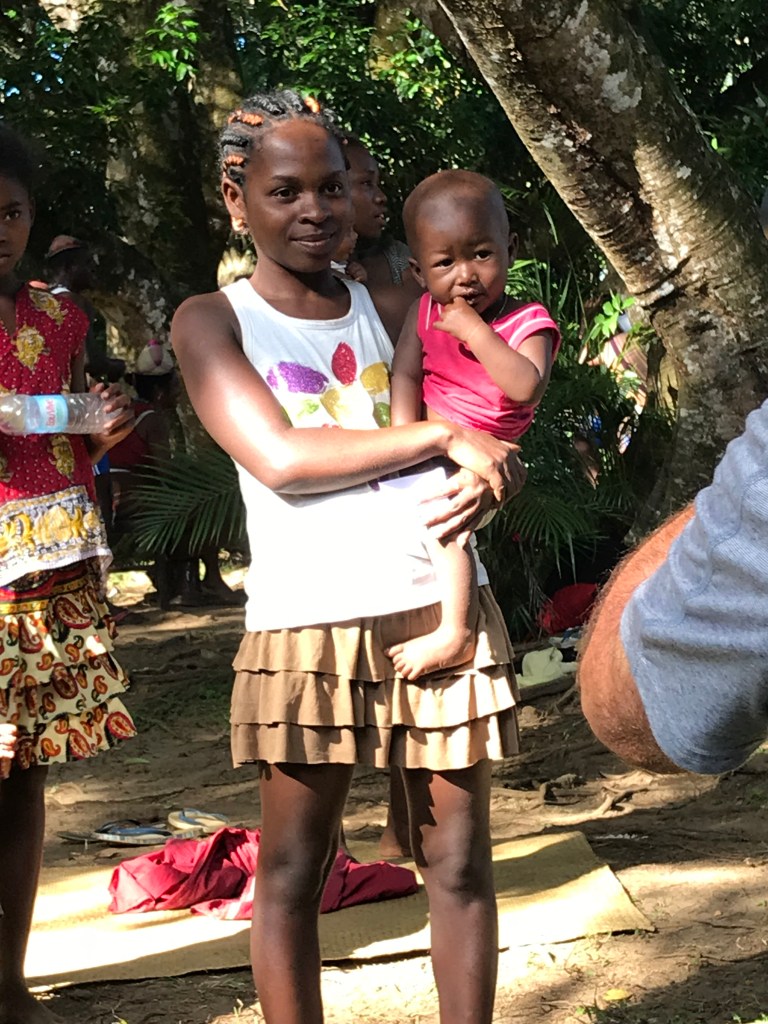
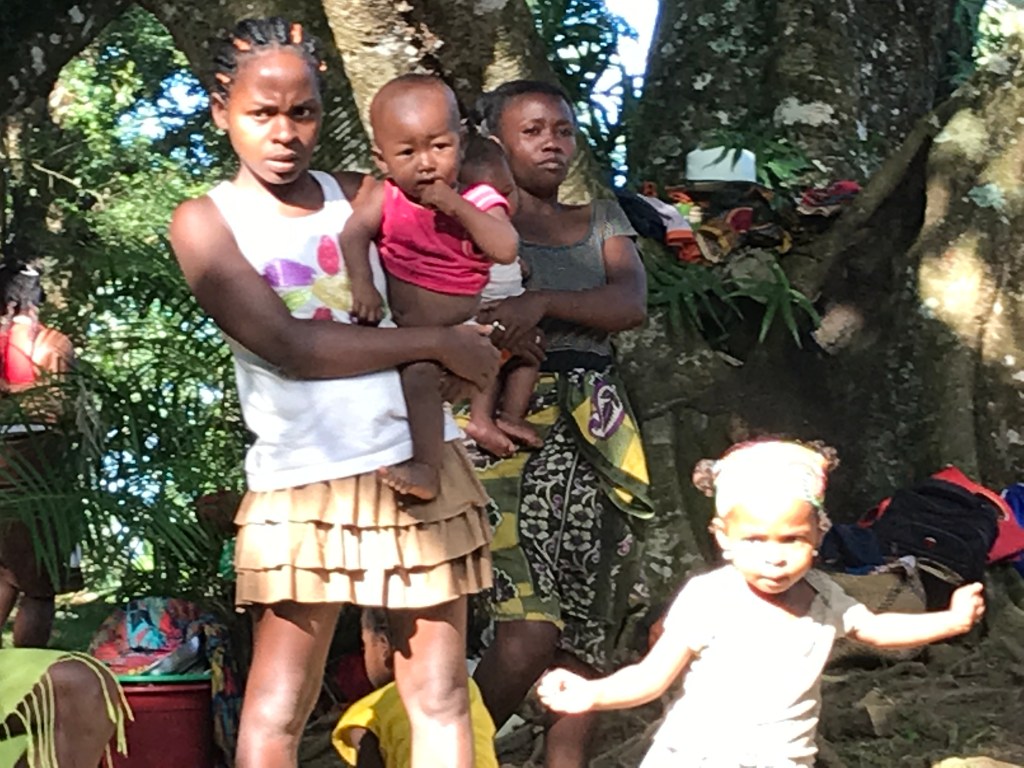
At the gathering place where they sold bottled drinks, I traded our ‘coupons’ for a drink each to children in exchange for taking their pictures.  They had crafts booths, one selling some nice palm raffia placemats among other things and the other hand-embroidered pillow covers, glasses cases, and other bags.  An organization was teaching local women embroidery and they were beautiful! We all agreed the trip was worth the ride.
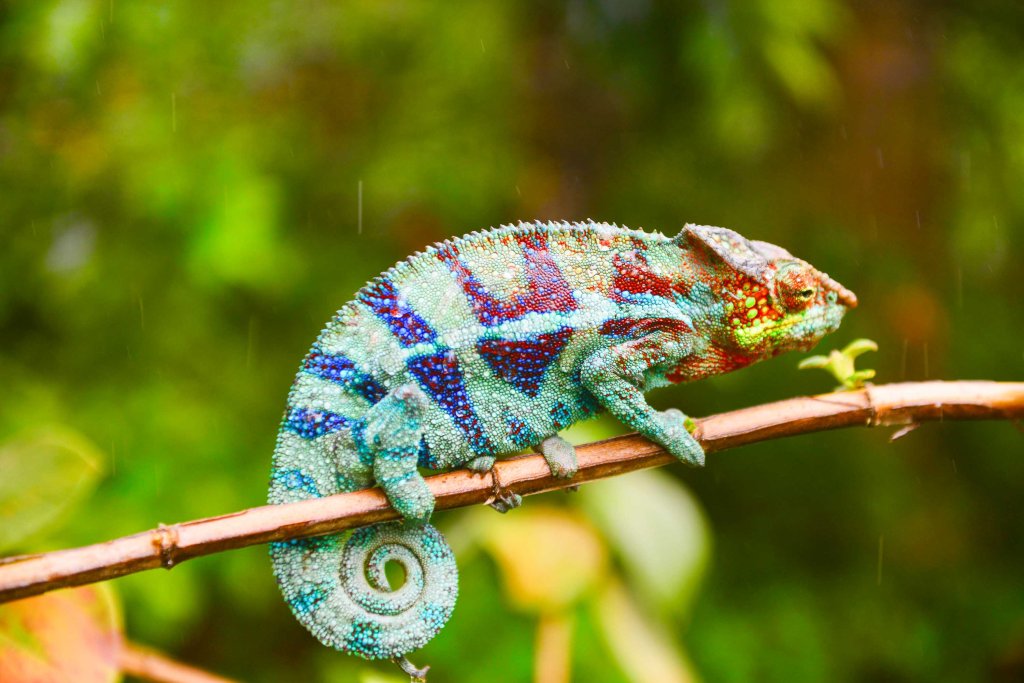
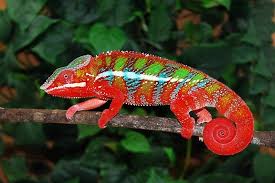
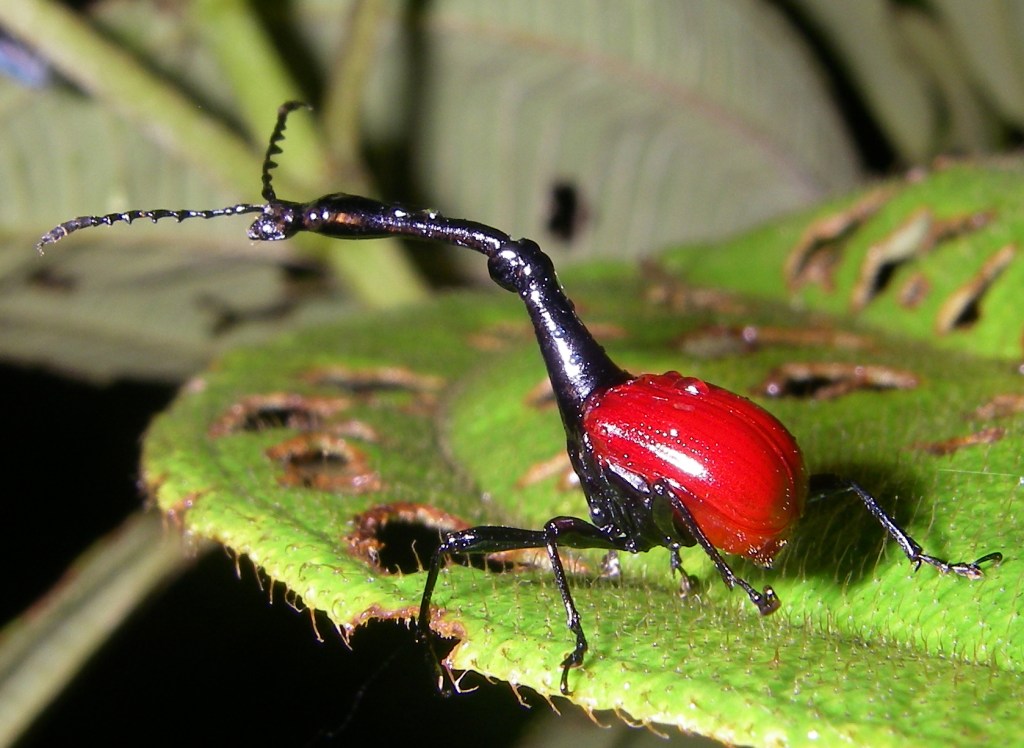
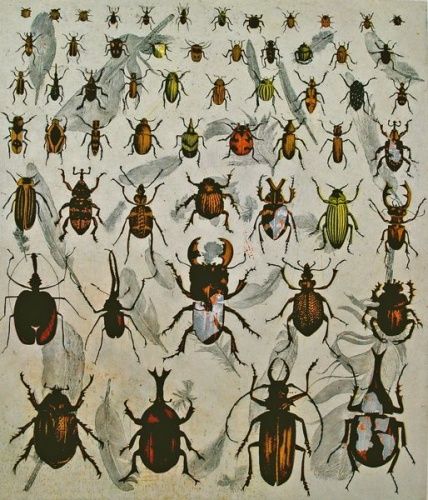
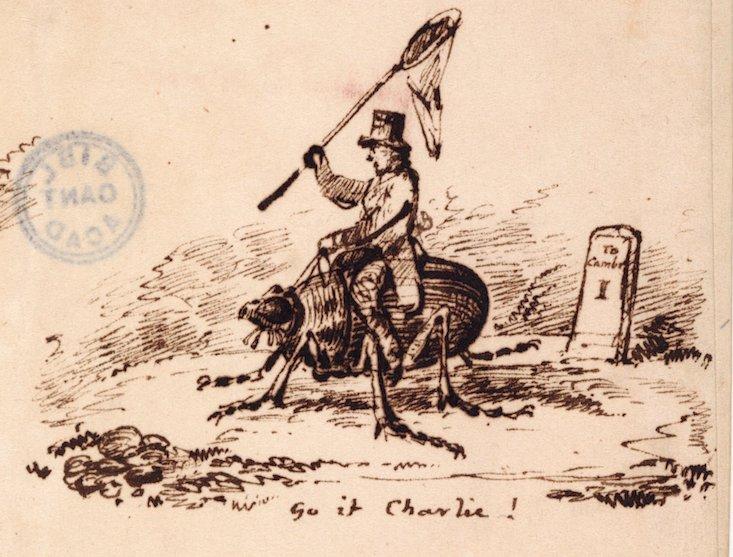
Darwin and Madagascar: what if…?  Lemurs apparently are found only in Madagascar, a large island off the coast of SE Africa, where a diverse group of 100 different species (in 15 genera and 8 families) occupy a variety of habitats. During our visit recently we saw several of the arboreal types, including white and ring-tailed lemurs. Madagascar is also home to about half the world’s species of chameleons, including the colorful Aye Aye and Panther chameleons. Beetles – the most numerous and diverse group of animals – are unusual on Madagascar as well, as exemplified by the giraffe weevil, which unfortunately we did not see.  Nor, even more unfortunately, given his keen undergraduate interest in these insects, neither did Darwin!  (So avid a collector was he, that a Cambridge classmate sketched a caricature of him riding a beetle!) 

   During his historical voyage on the Beagle Darwin explored many islands, notably the Falkland, and Galapagos groups, New Zealand, Australia, and Mauritius.  As the voyage progressed he collected specimens at each location for the British Museum and Cambridge University, and his observations progressively became crucially important in shaping his thinking about evolution and the origin of species; especially the origin and evolution of Galapagos finches and their adaptation to the various island habitats.  What might Darwin had made of the variety of Madagascar lemurs, chameleons, and beetles; and how might he have speculated concerning origin and evolution of lemurs?

    Following Australia, the Beagle visited the Cocos (Keeling) Islands and then Mauritius, en route to Cape Town, and Darwin’s journal documents his preoccupation with how various kinds of reefs – barrier, fringe and atolls — are formed, with little or no mention of resident animals or plants.  Darwin apparently saw few or none of these Although Mauritius lies only 700 miles east of Madagascar, the Beagle by-passed the larger island entirely on its way to Cape Town!  –Chris
April 7 at sea

A beautiful warm, sunny day around the ship.

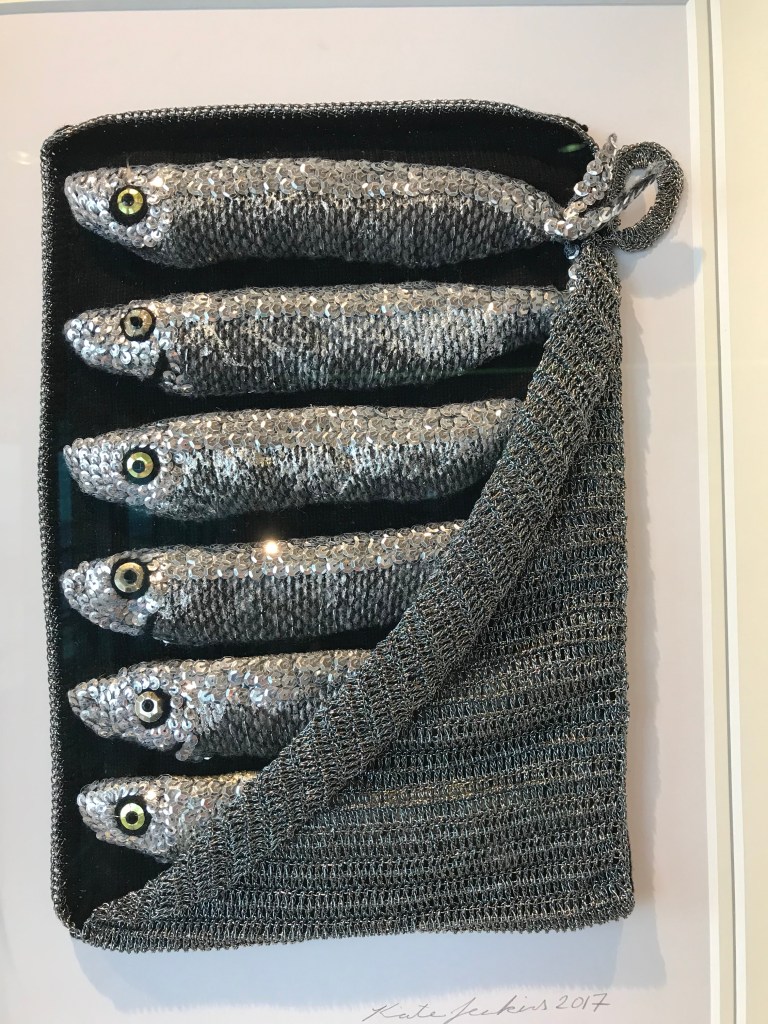
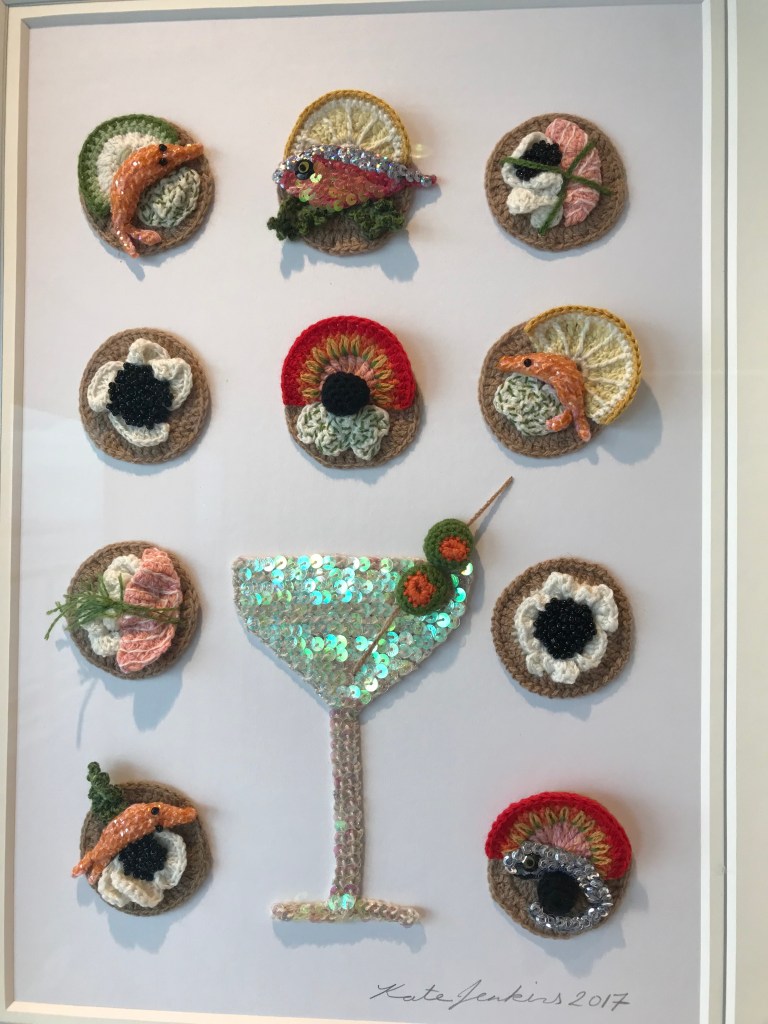
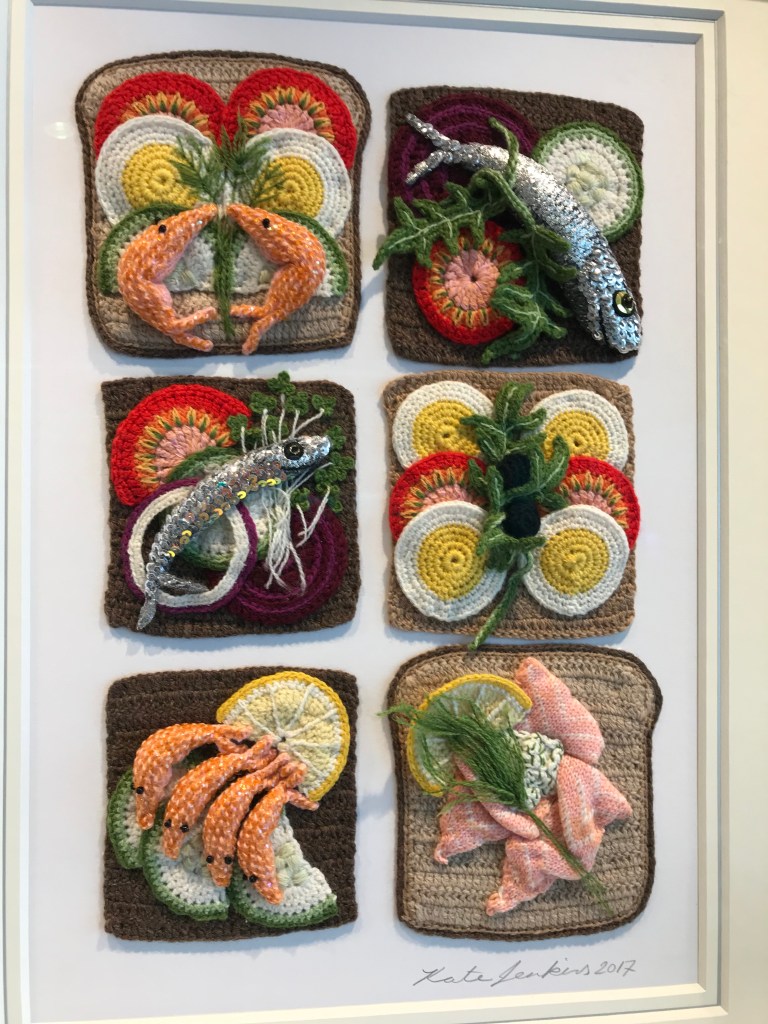
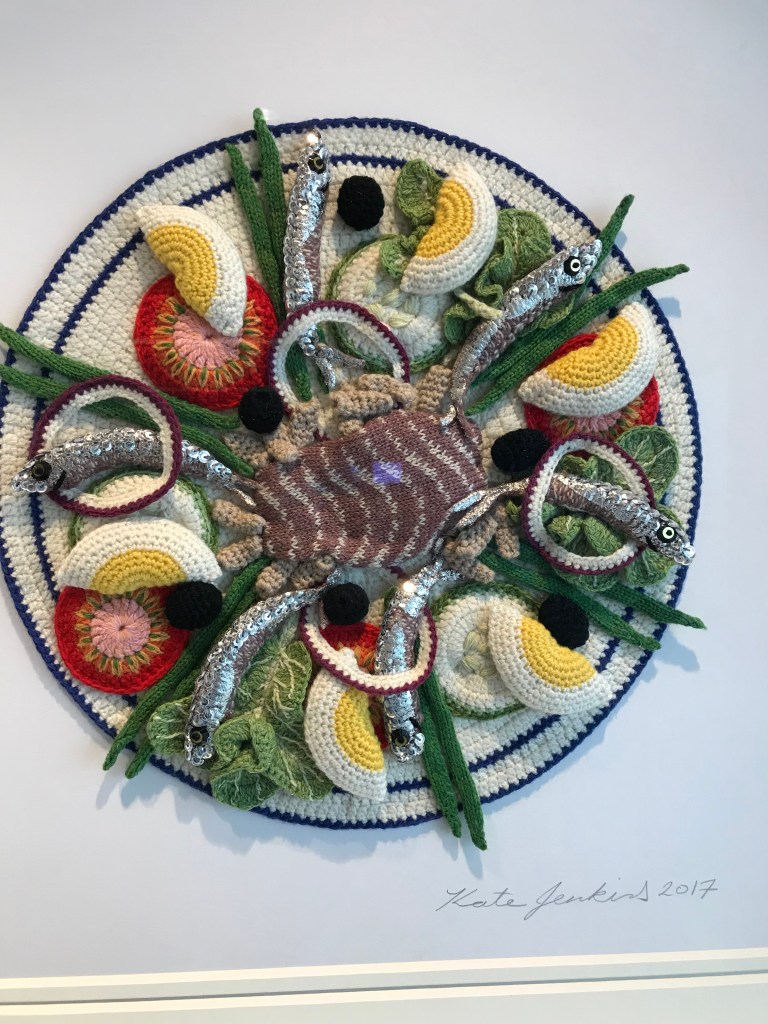
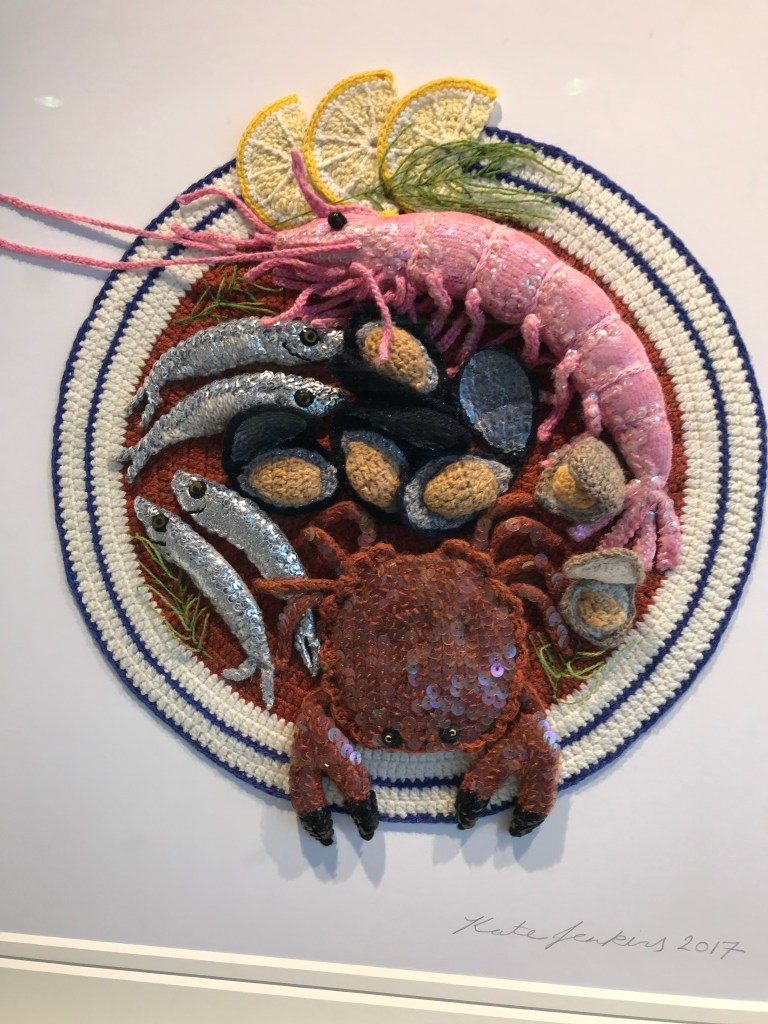
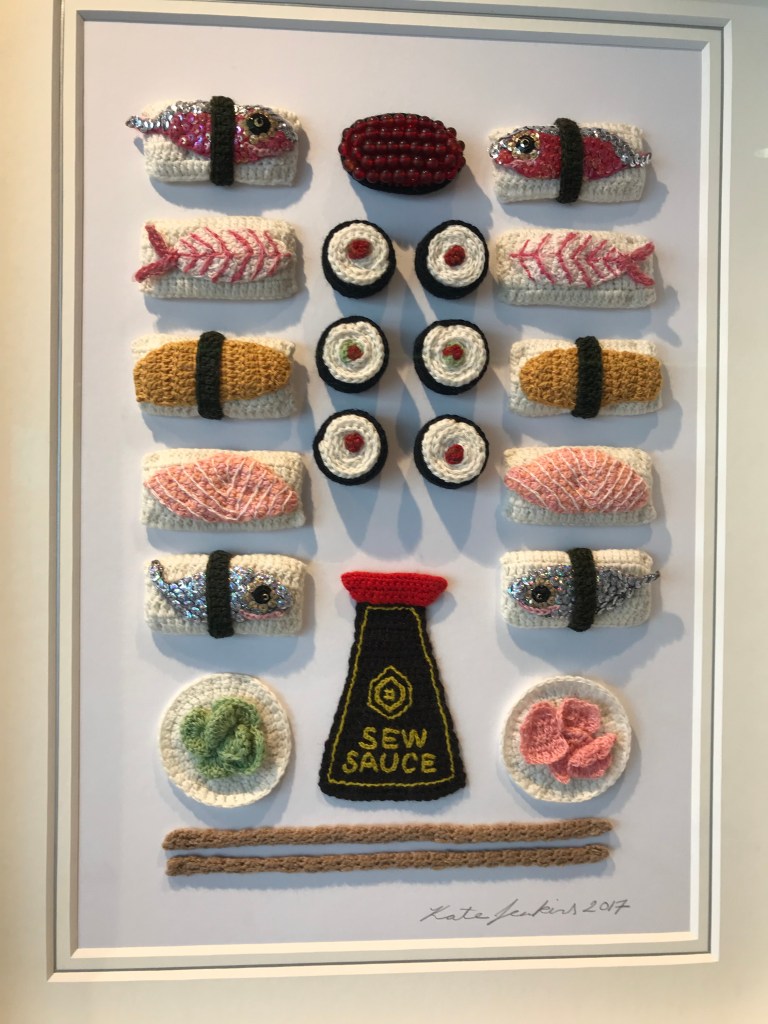
I mentioned meals in the World Café, so I thought I’d include photos of some of the crocheted food pictures that decorate the walls.  I don’t care for them, but they are certainly interesting and, presumably a lot of work by someone.

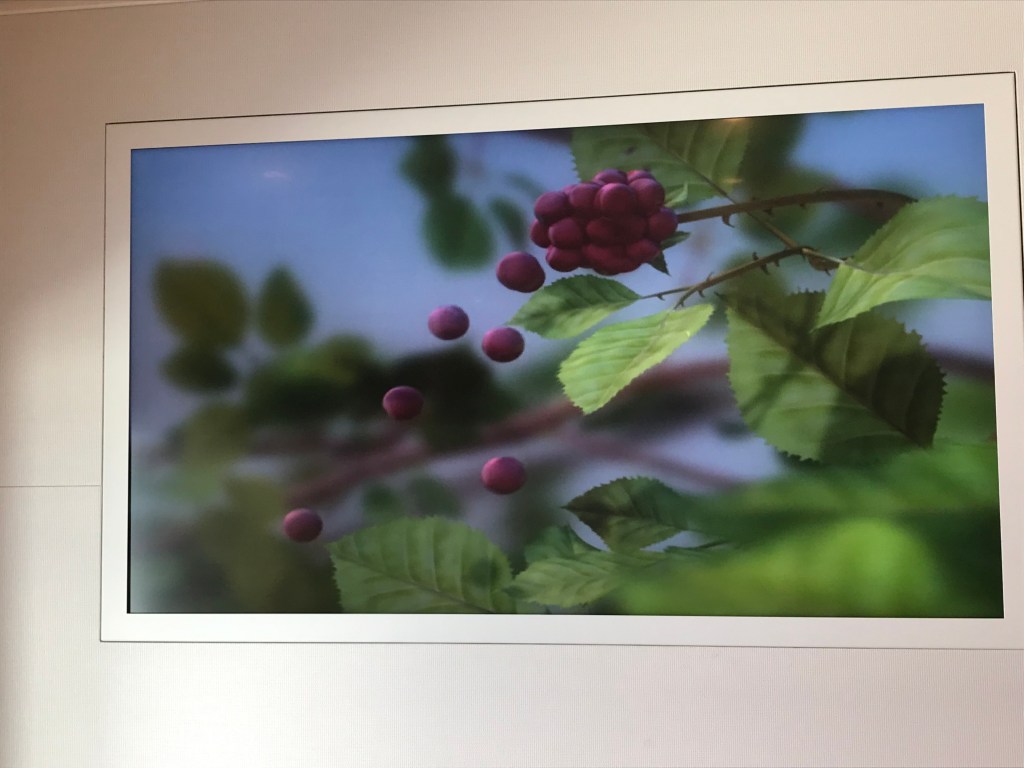
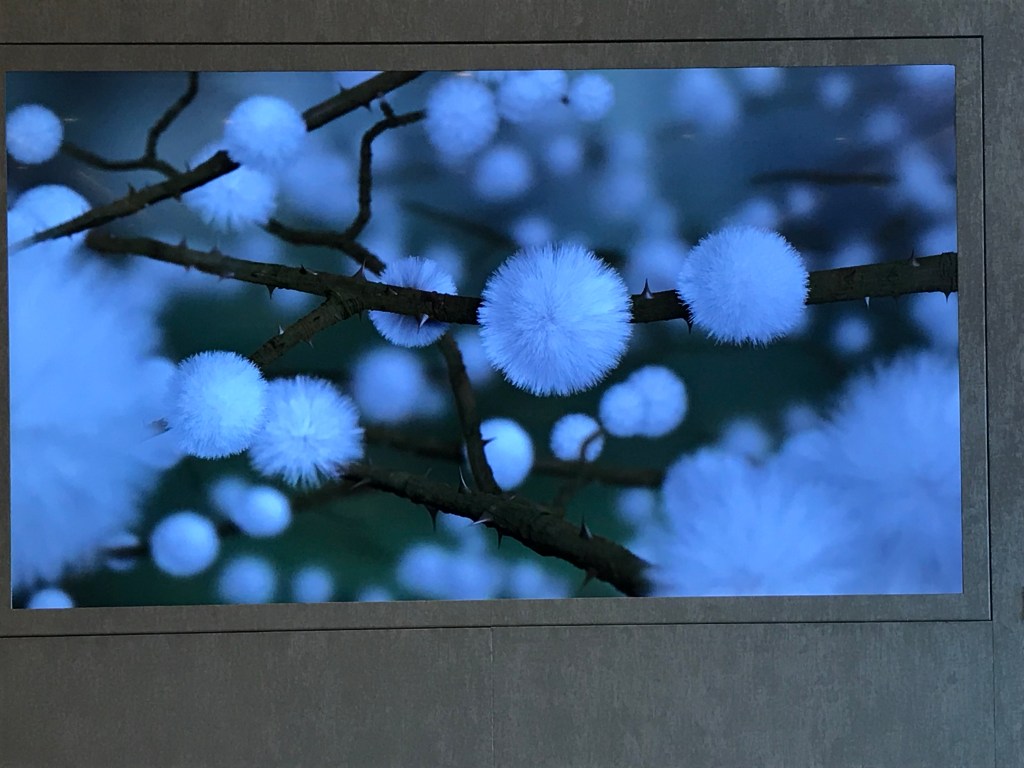
While I’m at it, I include photos of two pictures in the Chef’s Table (where we eat occasionally but play bridge in every sea day).  These pictures are moving (Harry Potter anyone?) which doesn’t show much in photos, but the berries in one constantly fall and the things that look like dandelion seed puffs in the other are always in the process of increasing or decreasing in size.  I can’t imagine who thought these were a good idea for wall decoration, and I find it extremely distracting to sit facing the berry one.

The ship is collecting clothing and other useful items for distribution in Madagascar.  The home office has also decided to donate $50,000 in food, linens, shoes (from the shoes they provide for staff), and other materials to Mozambique through the Red Cross.  The knitters on board have created 75 baby caps to go to a hospital in Madigascar and another 75 for Mozamibique. 

Mauritius is poor (with enclaves of beach resorts—I’m told it’s becoming ‘the’ place to go), but Madagascar, which we visit tomorrow, is poorer.  It should be very rudimentary.  Next stop is Mozambique which is trying to deal with the effects of the cyclone a little while ago that has caused about a million and a half people to be displaced.  That is in the north of the country and we visit the south, but the country as a whole is poor and not equipped to deal with the costs.

I must say visiting three third world countries whose names begin with ‘M’ consecutively gets me very confused sometimes!

April 6 Port Louis, Mauritius

Mauritius is a wild blend of cultures.  Originally a French colony, it became a British colony.  Thus, they drive on the left, kept French law (the Napoleonic code), speak English officially but also French and a creole that is, I’m informed, 80% French but words are spelled more like the English would spell them.  For example the French ‘moi’ is used with the same pronunciation and meaning but spelled ‘mwa.’ 

Black slaves were brought in for labor, but when slavery was abolished in 1835, indentured servants were brought in, mostly from India but also China and other countries.  They all live together now, apparently in harmony, and have created a composite but distinctive culture of their own.  We were in port on a national holiday—one of the Hindu sects’ New Year—so most shops were closed.

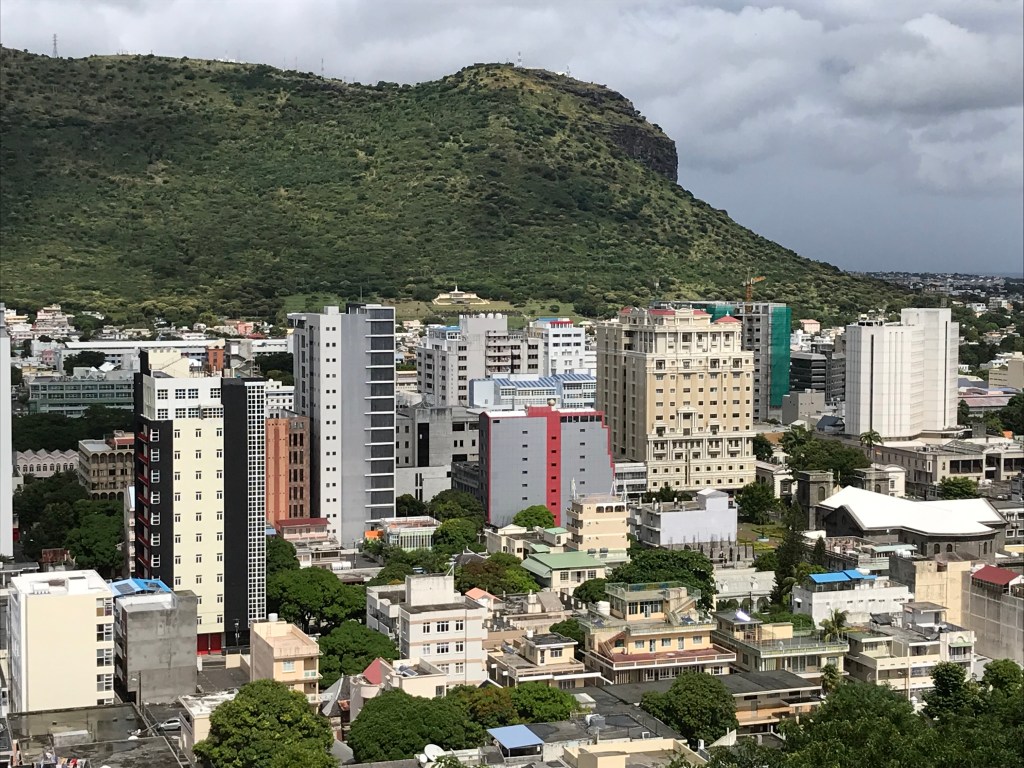
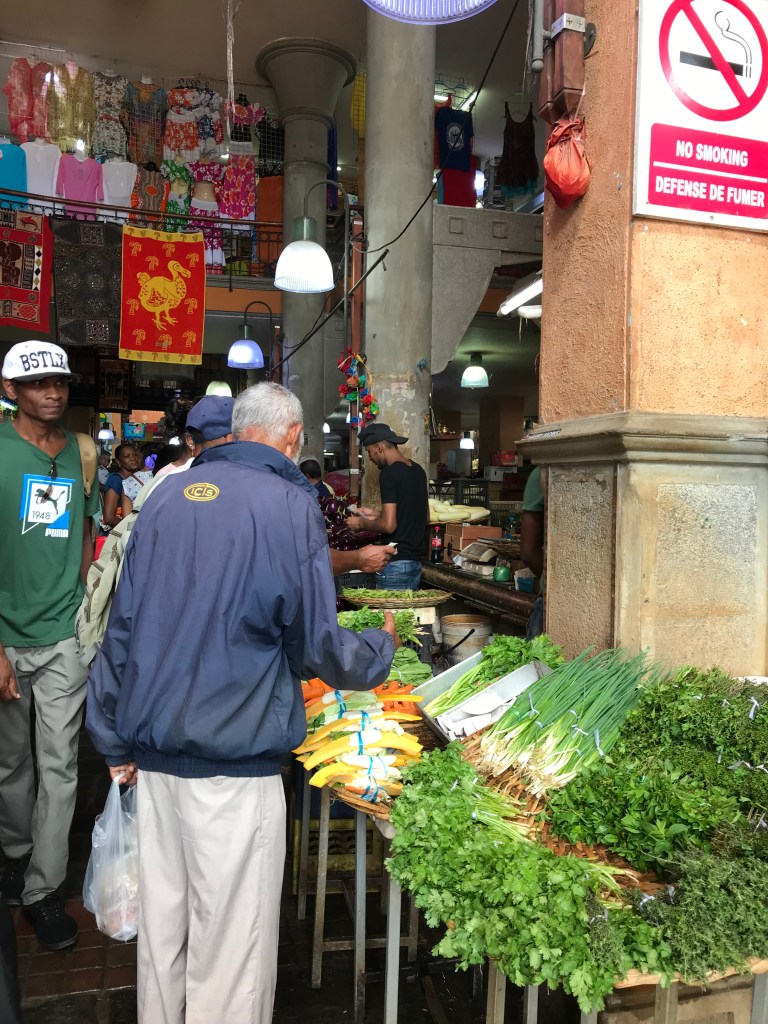
Our bus tour took us to a view point—Mauritius is volcanic and has several interestingly shaped peaks,—to the market (open on the holiday until 1 pm), and to the Botanical Garden.  The market was both produce and souvenirs or crafts and we were collared and bought t-shirts…  The Botanical Garden was large and peaceful.  Driving through the city reminded us of Addis Ababa with a lot of trash and mostly torn-down buildings. 

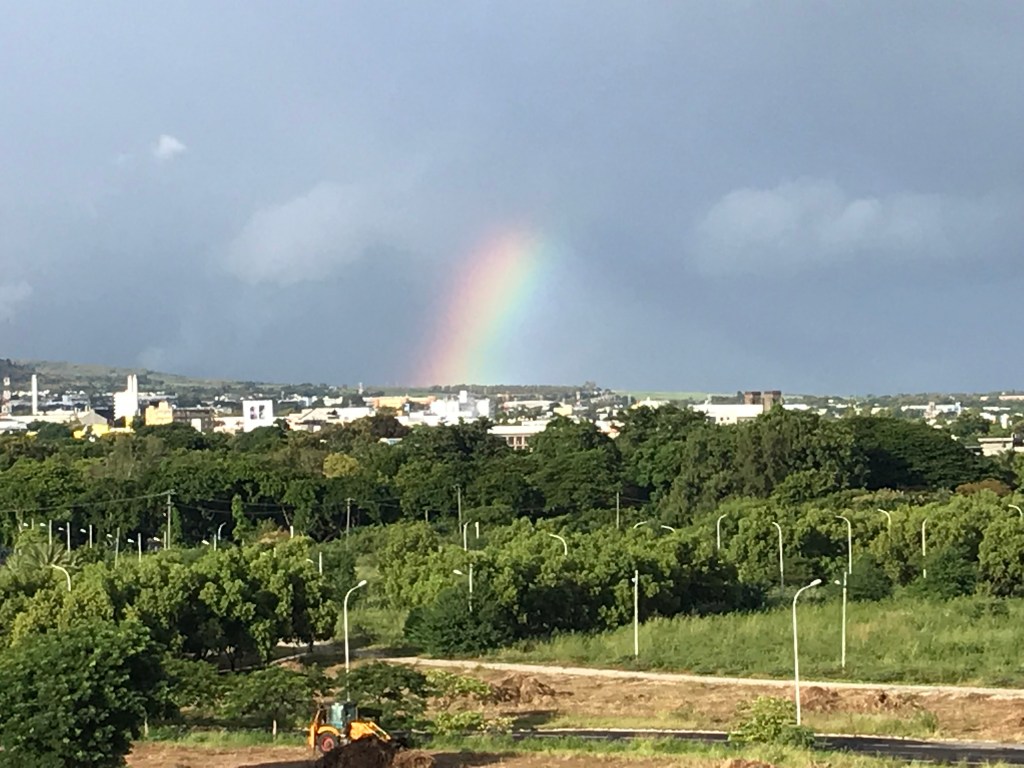
A hot, cloudy day spit out some hardly noticeable rain during our tour which turned to actual rain as we re-boarded the ship about 1:30, and then it became socked in and rainy for the rest of the afternoon.  I was glad we had not joined the passengers who went to nearby resorts for a beach day.  On the other hand I somewhat envied those who visited the underwater world either scuba diving or in a ‘submarine.’  I recall that my only previous acquaintance with Mauritius was that some people with the U.S. State Department in Ethiopia when we were there headed to Mauritius for a diving vacation.

At dinner we met a couple who had decided they weren’t up to 8 days at sea so they left the ship at Perth, flew to Singapore for a few days, and rejoined us today in Mauritius!

March 29-April 5 at sea in the Indian Ocean

After three days of very calm seas (being in port or along the coast), we embark on a full 8 sea days crossing the Indian Ocean to Mauritius, and begin with a rather tumultuous sea, but it calmed down after the first day.

Sunday was church with a backdrop of St. George’s Cathedral, Perth, Australia.  Heather mentioned that we will be in port on Easter Sunday (in Namibia) and she’s leaning to us celebrating on Saturday.  She said we’re a day ahead of those of you in the Americas and Europe, which I would think would be a reason to celebrate on Monday (which would be Sunday at home), but whatever…

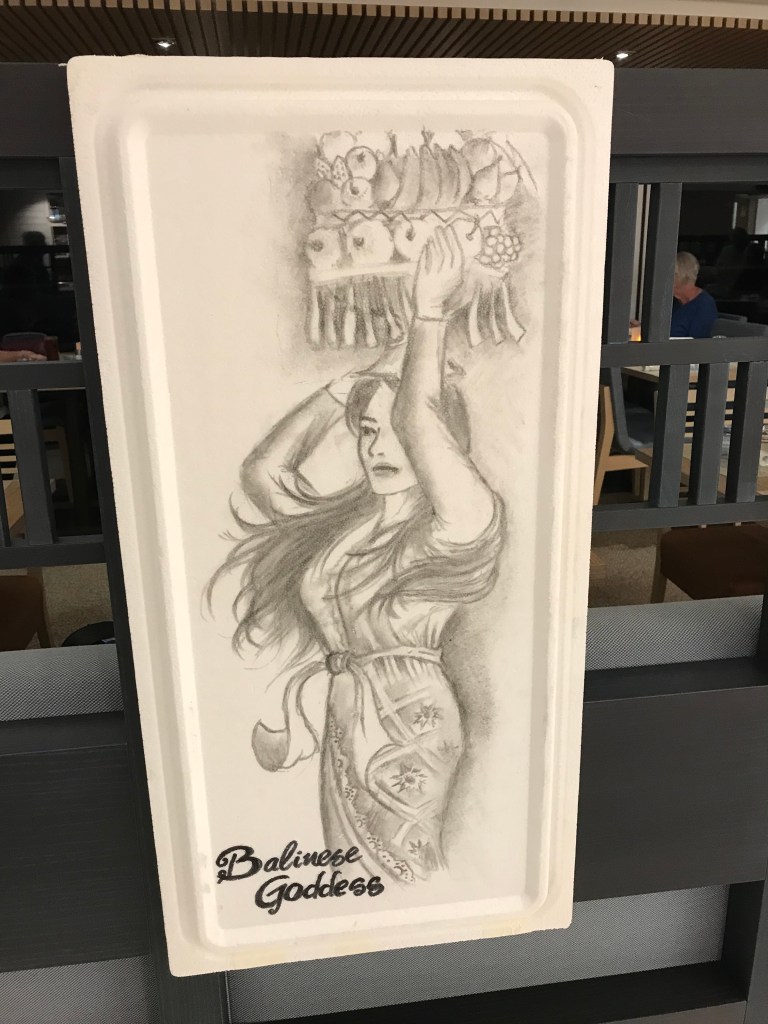
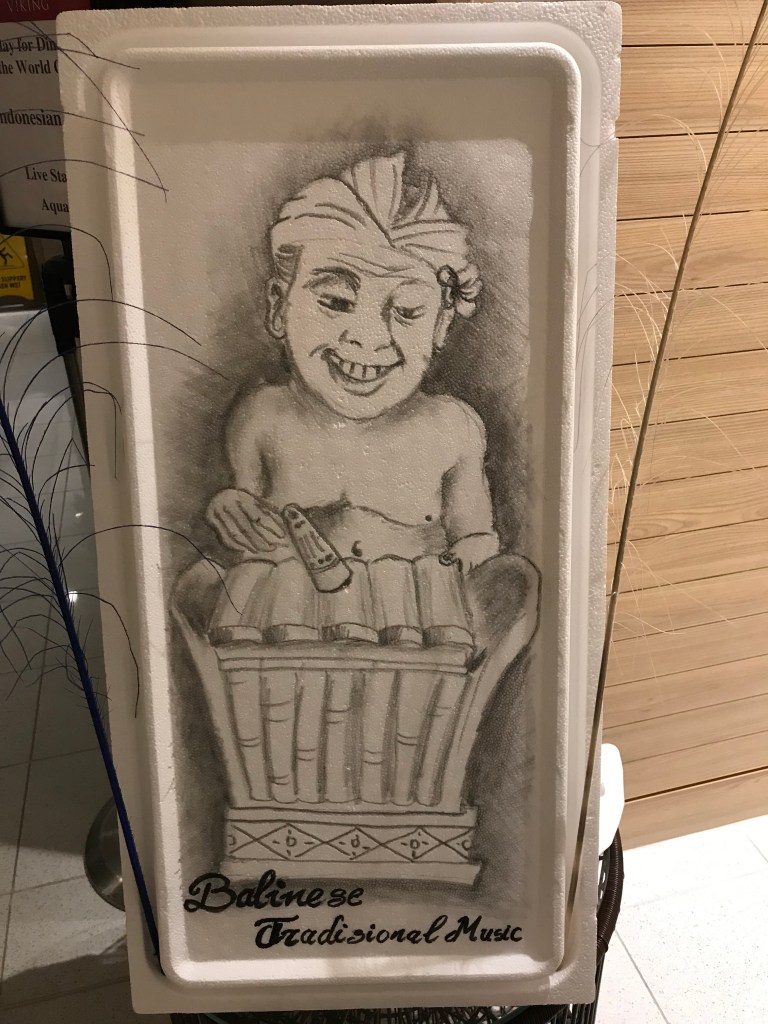
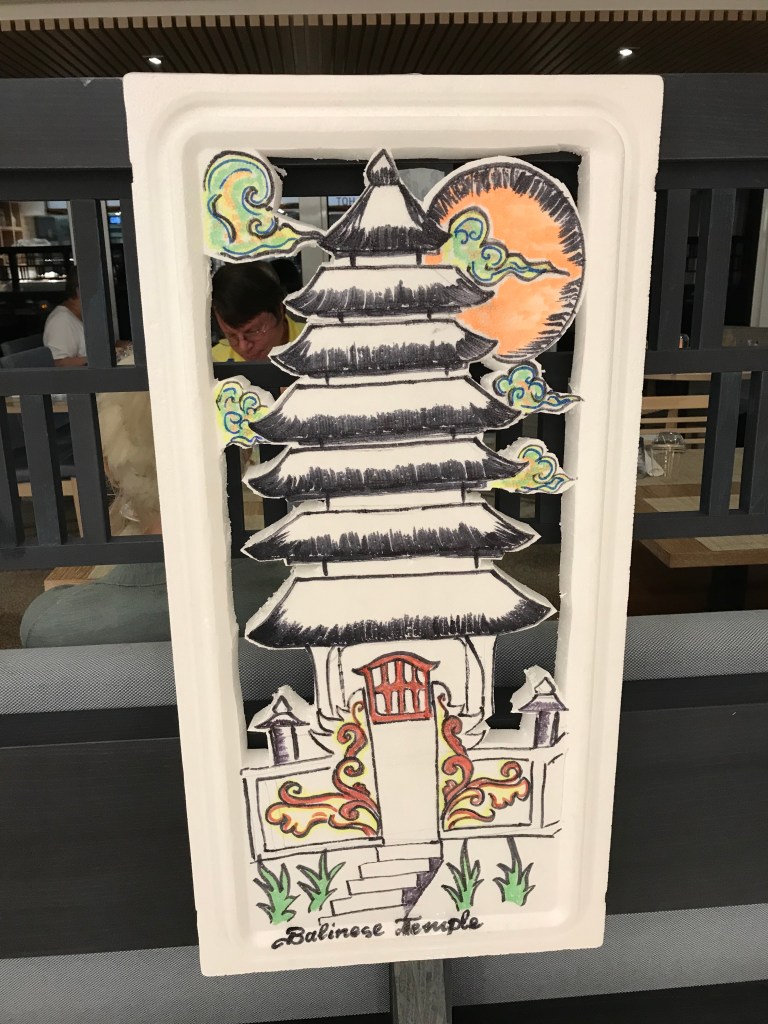
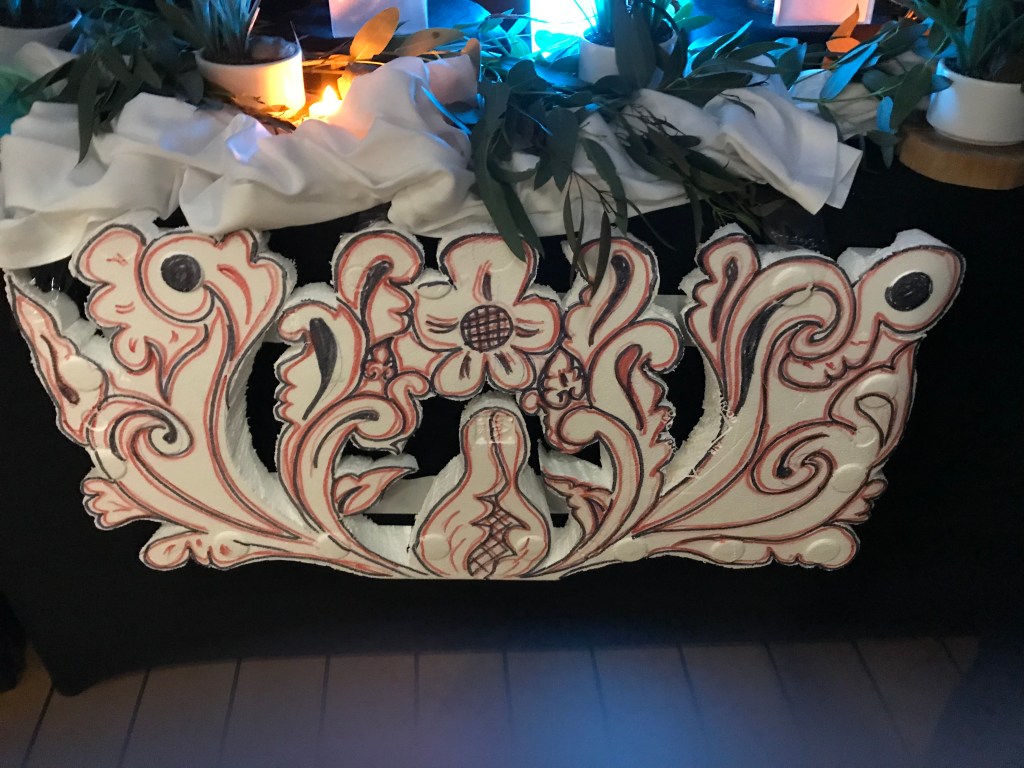
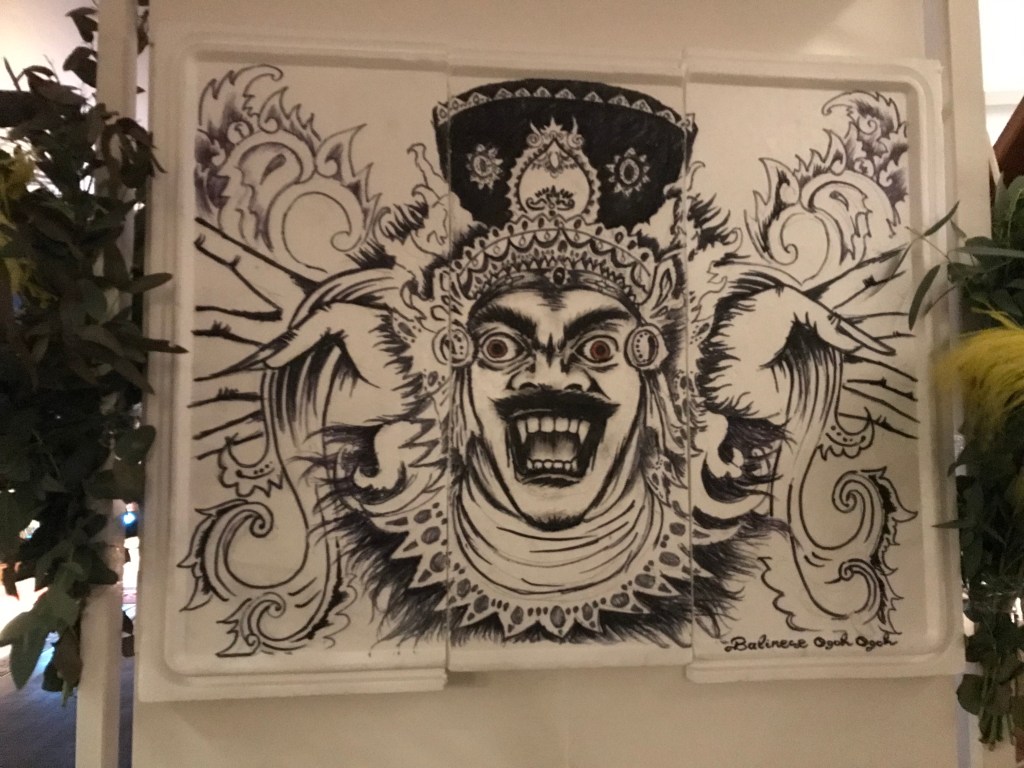
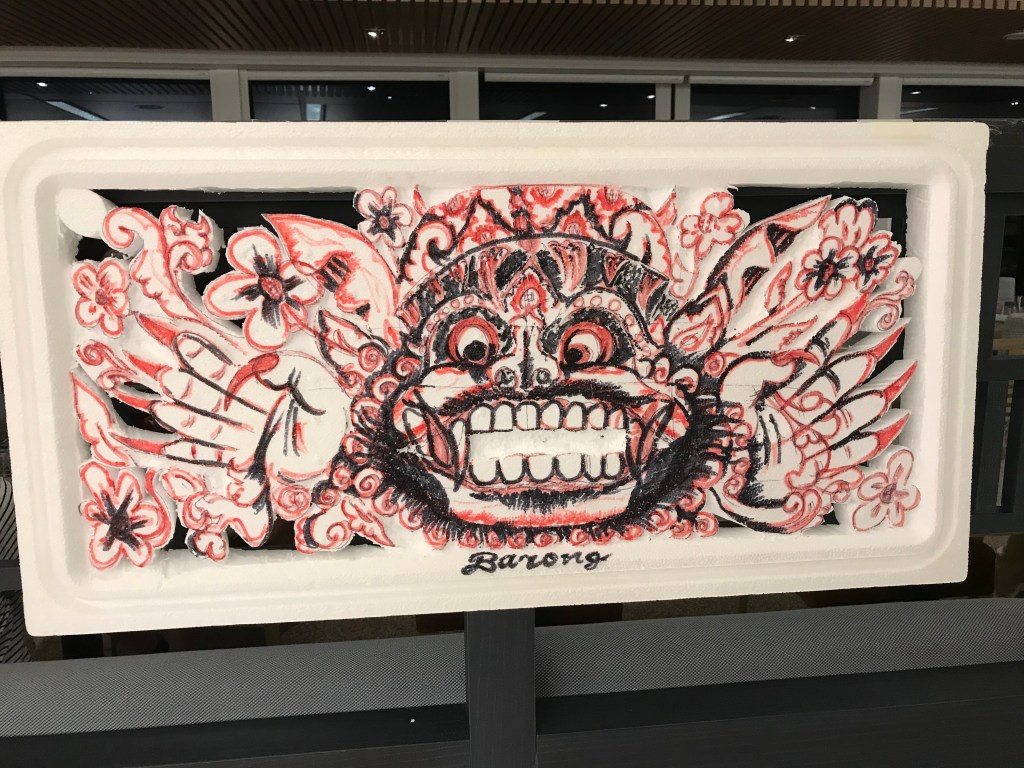
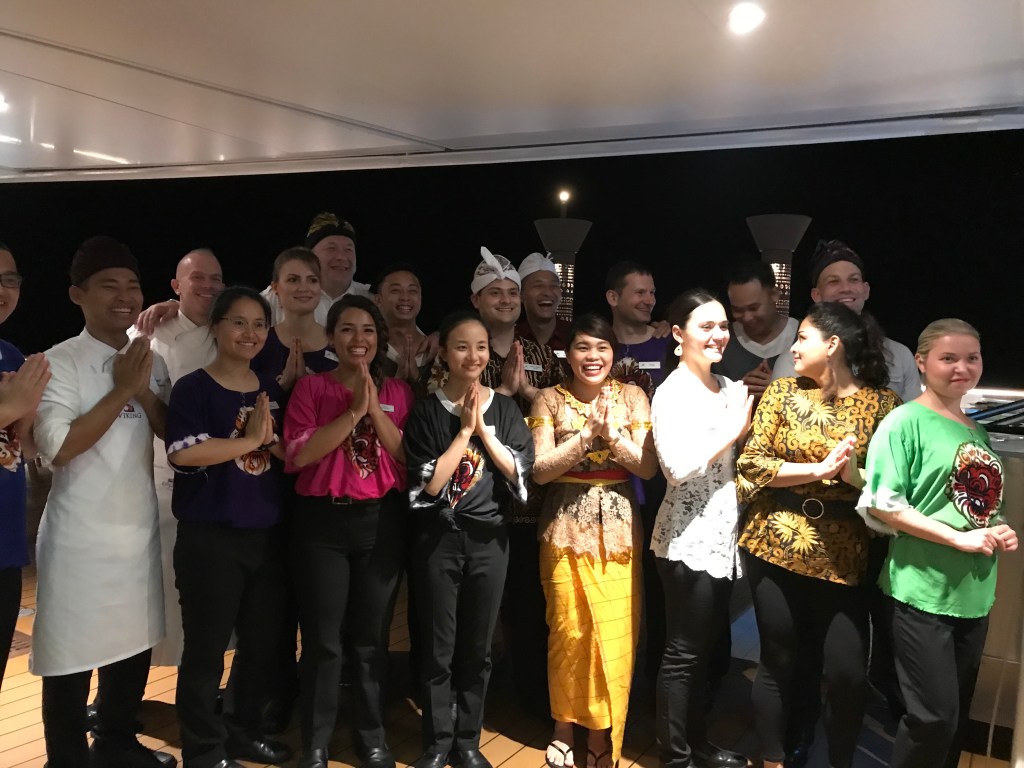
One night was Indonesian night in the World Café with various Indonesian food and waiters in costume.  One of the chefs turned out also to be an artist and made wonderful pictures to decorate the café using the styrofoam tops from the coolers in which the ship purchased fish.  They were amazing.  It was a lovely night out on the deck so the evening was a success.

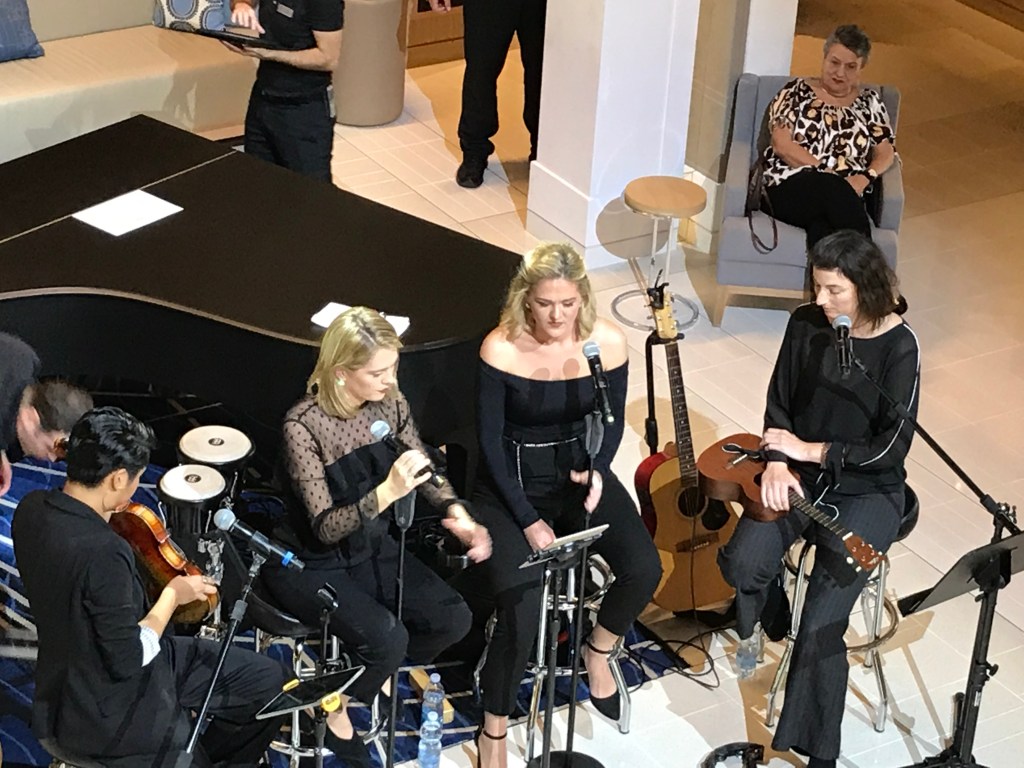
The last day at a 5:30 Atrium concert we were entertained by an amazing young singer from New Zealand named Will Martin.  He is also proud that he is one of those who sings the national anthem at the All Blacks rugby games.  There seems to be a YouTube video of  him singing the New Zealand, Australian, and U.S national anthems.

We continued to gain hours of sleep as we head west. Those are welcome and, oddly enough, I enjoyed the sea days and was not quite ready to go into port again.

March 27-28 Fremantle/Perth, Western Australia

We spent most of the first day en route, arriving in port in late afternoon.  Freemantle is the port, located near the mouth of the Swan River, and Perth is farther upstream, but by now they are contiguous. 

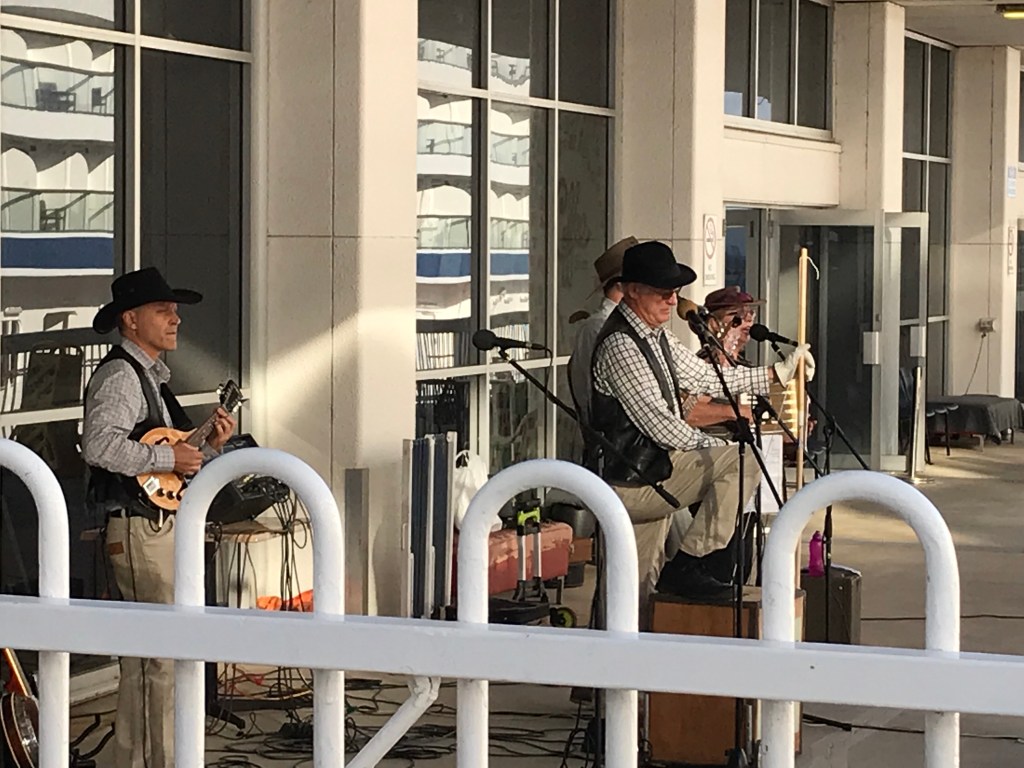
Our resident guitarist for much of the trip, called ‘Minky G’ (see photo from yesterday), is from Fremantle and disembarking; some of the passengers went hear her and her band in Fremantle the first evening.  There was a performance of local Aboriginal dancers and musicians on board as well, but we went to bed early because–

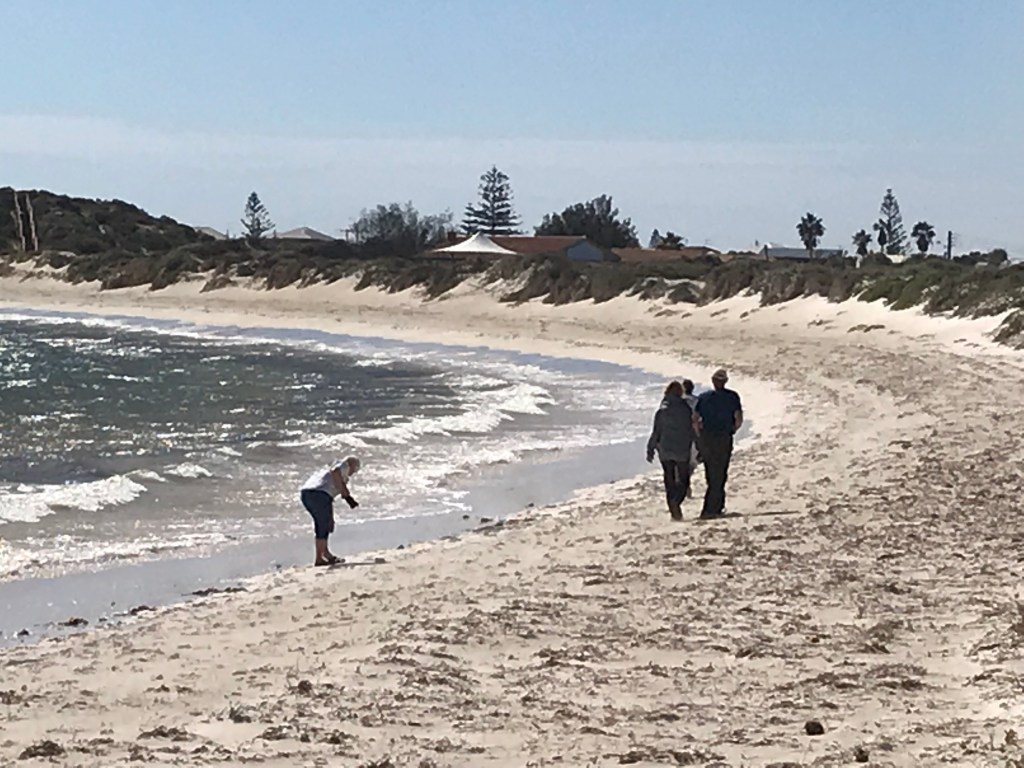
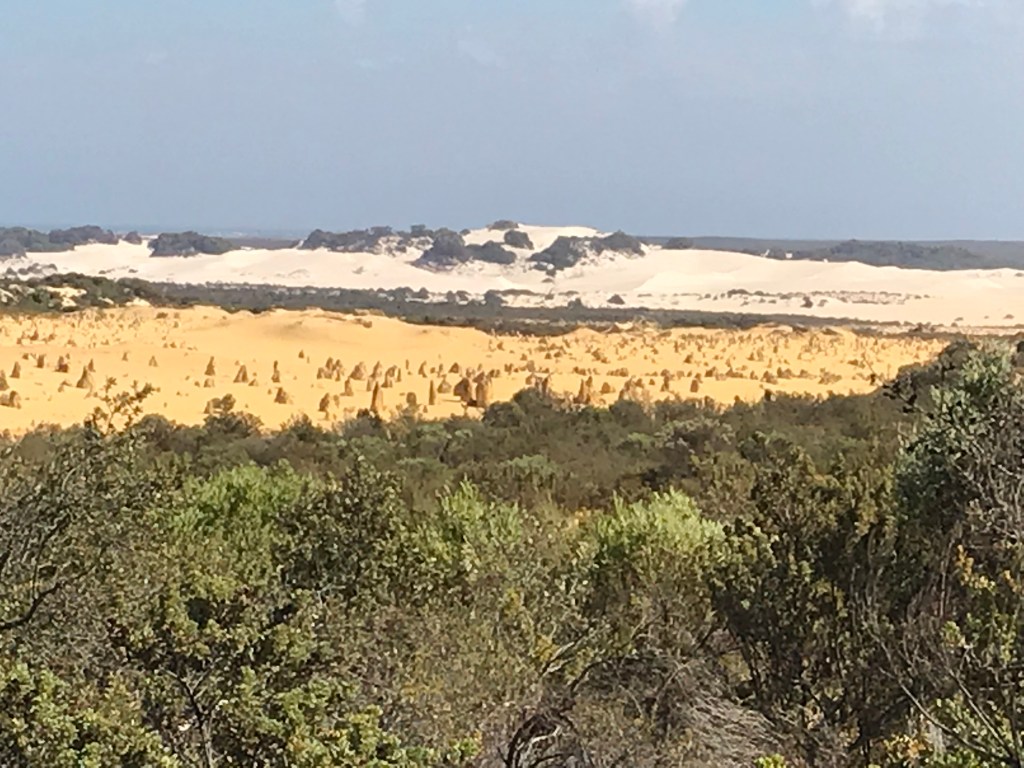
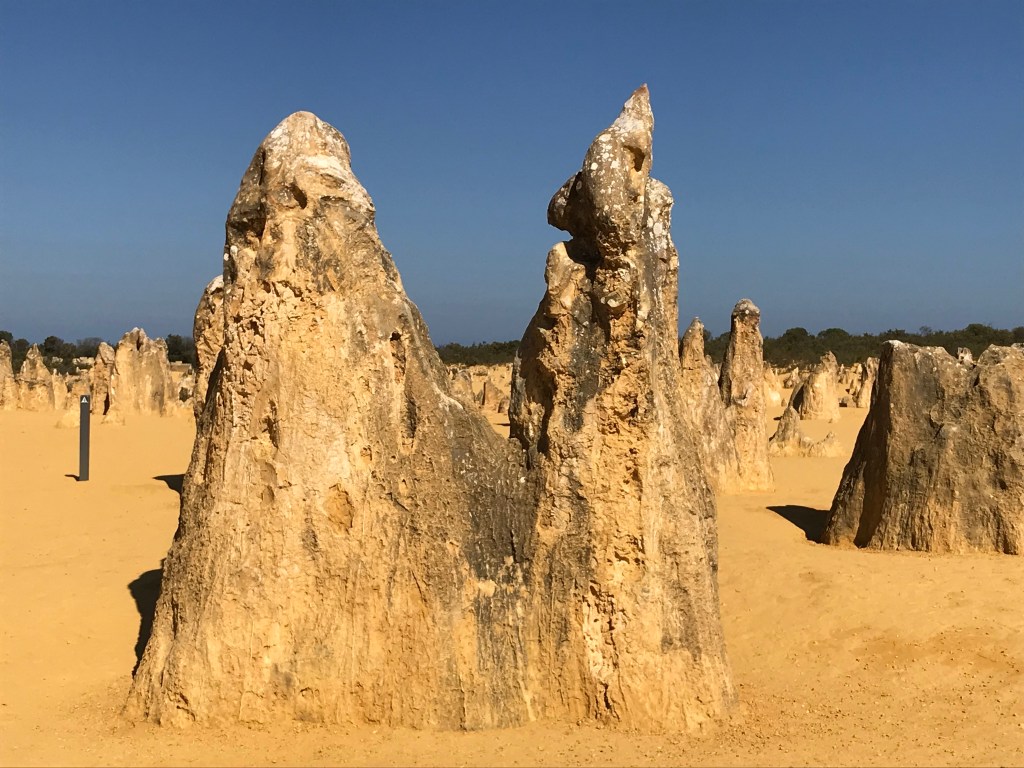
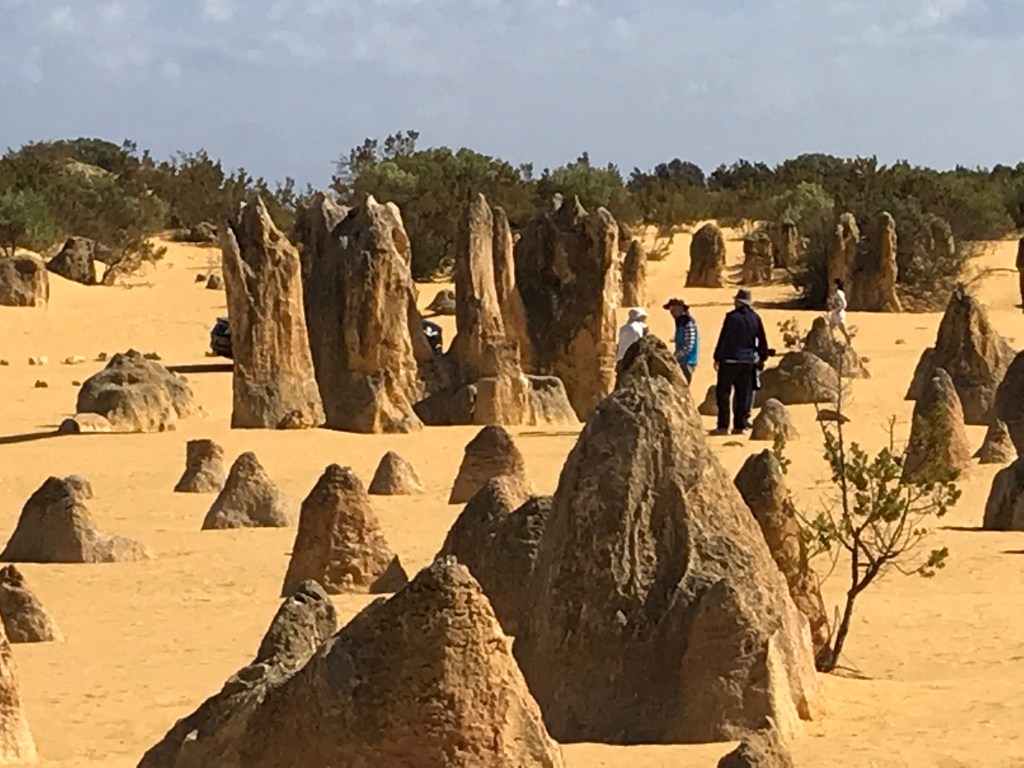
Our excursion began at 5:45 am (! Not my favorite time of day…) and journeyed a couple of hours north along the coast to the Nambung National Park, home of interesting rock pinnacles.  Though they don’t rival those in the Utah national parks, they were interesting and it was fun to walk across a bit of desert.

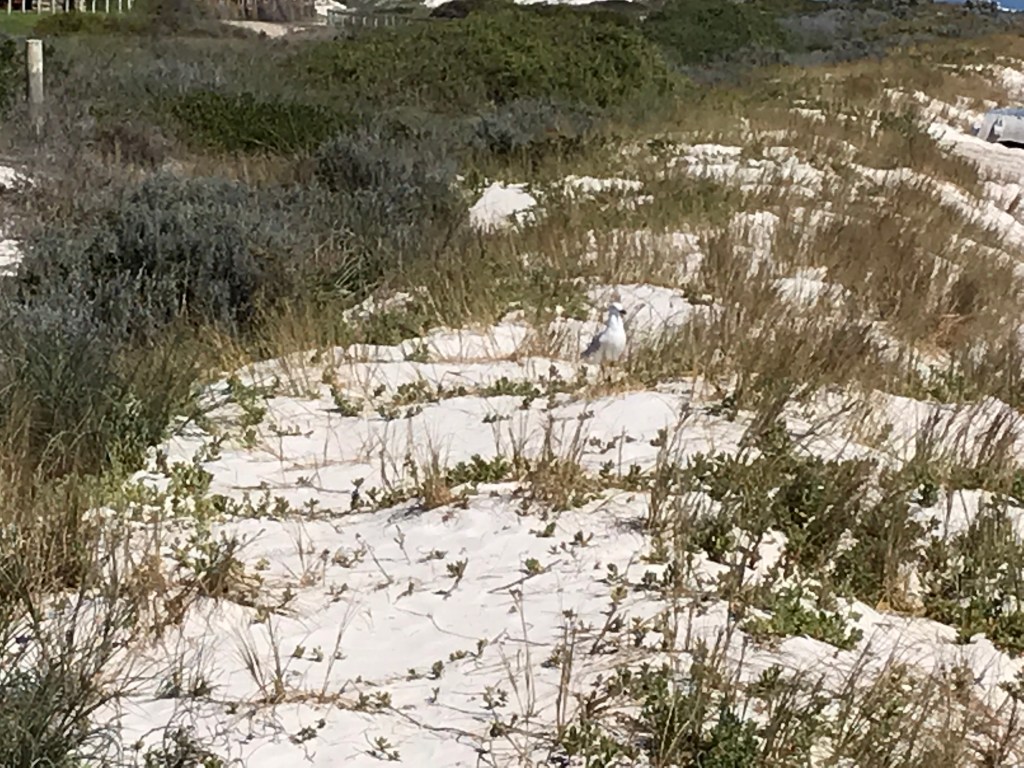
The land near the coast is all sand underneath the vegetation with large, very white sand dunes along the sea—and sometimes, surprisingly, huge dunes of white sand a few miles inland. 

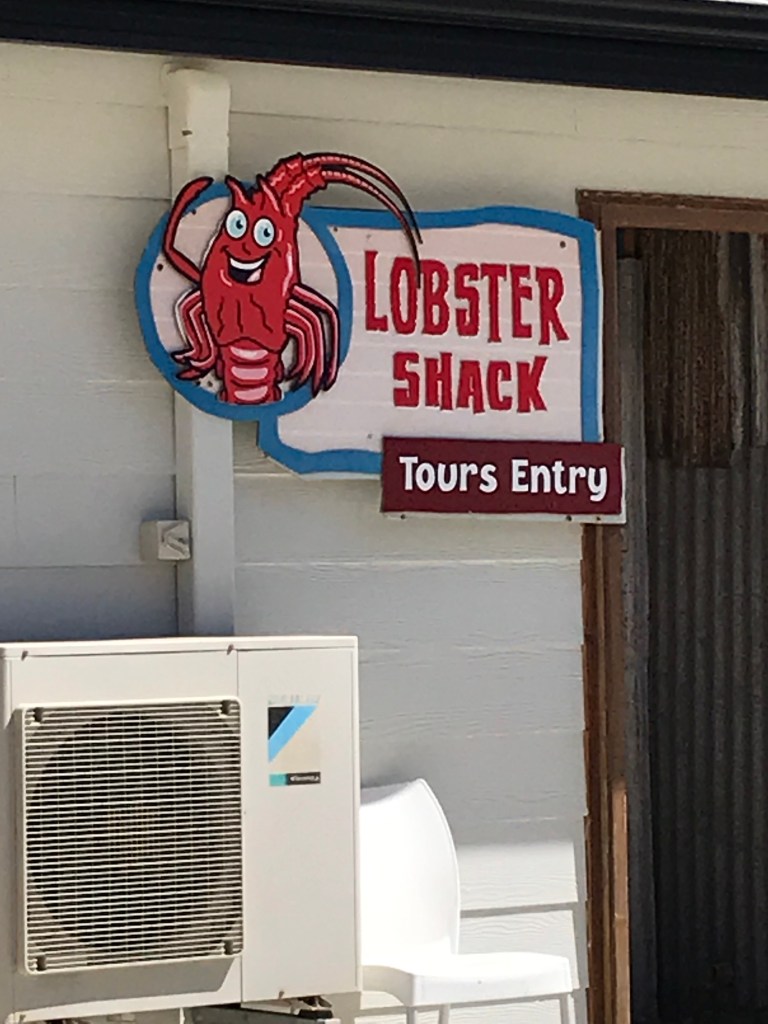
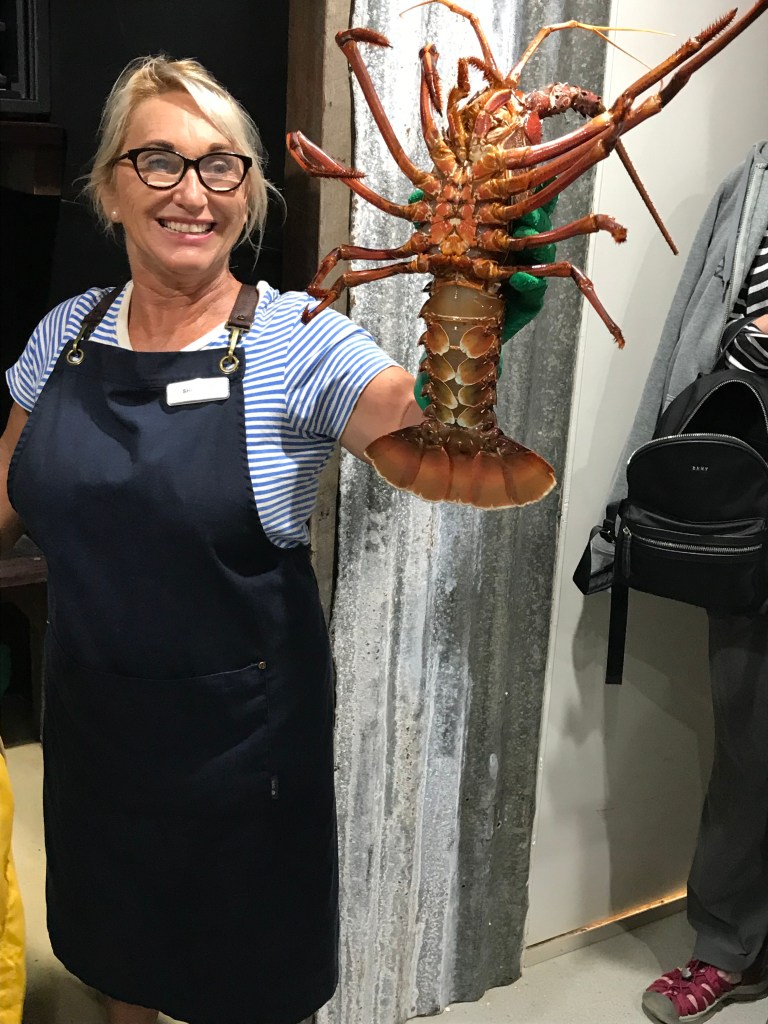
Lunch was, what is known locally as crayfish but exported live as Australian rock lobster, at the Lobster Shack, which is not only a restaurant but also a huge lobster fishery and processing plant.  We were given a tour, complete with video and audio commentary to accompany our movement through the plant, and shown a large live ‘crayfish’ by our hostess. 

Several fishing boats go out each morning at 3 am (and I thought 5:45 was early…) operated by the third generation of the man who founded the operation.  The lobster are sorted by size before being exported live by plane, mostly to Dubai, Japan, and China.  Interestingly, Dubai and Japan prefer the smallest size and thus pay a premium for those, while China prefers the largest size and pays a premium for them!  I’m always a little squeamish about new tastes and it doesn’t taste exactly like Maine lobster so I didn’t eat much of mine—something that was appreciated by one of our lecturers who accompanied the tour because apparently he ‘didn’t rate a lobster’, something I thought quite inexcusable, and ate mine gladly.

It was a good trip all in all, but when I heard from friends who had gone on a tour of  the Perth Mint and Bell Tower, I thought maybe I should have stayed closer to port (and slept in…)  At the Mint, they were, among other things, shown gold being smelted down and cast.  At the Bell Tower they were allowed to ring the large bells (I’ve forgotten what they are called, but those you ring by rope from a floor below because your ears couldn’t take the loudness if you were next to them.)

Upstream from Perth, the Swan Valley is a major (and wine producing) area—watch for Swan Valley wines. 

I found it interesting when two of our guides during our time in Australia mentioned that voting is compulsory in Australia.  If you don’t vote, you are assessed a fine.  The amount of the fine increases each subsequent election in which you fail to vote.

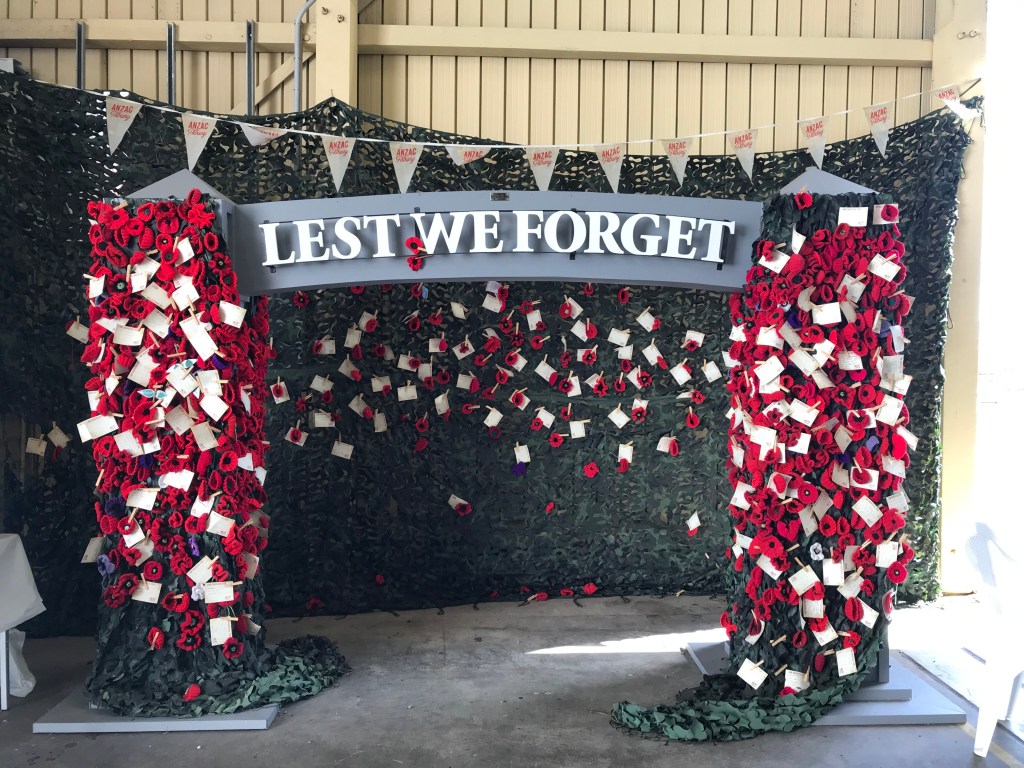
In the Albany post I included a photo of an ANZAC day tribute. ANZAC was the name for the Australian and New Zealand Army Corps fighting in the world wars, and April 25 was designated as ANZAC day to commemorate the soldiers in the Gallipoli campaign in World War I. Now it is to remember all who served in all wars, conflicts, or peacekeeping missions. People in both countries take it very seriously. The photo I included shows a display in the Albany cruise terminal and is covered with handwritten messages of remembrance.

March 26 Albany, Western Australia

I forgot to mention that, while crossing the Bight, we had an afternoon concert by the ‘Viking Vixens’, an ad hoc group of the ship’s female musicians.

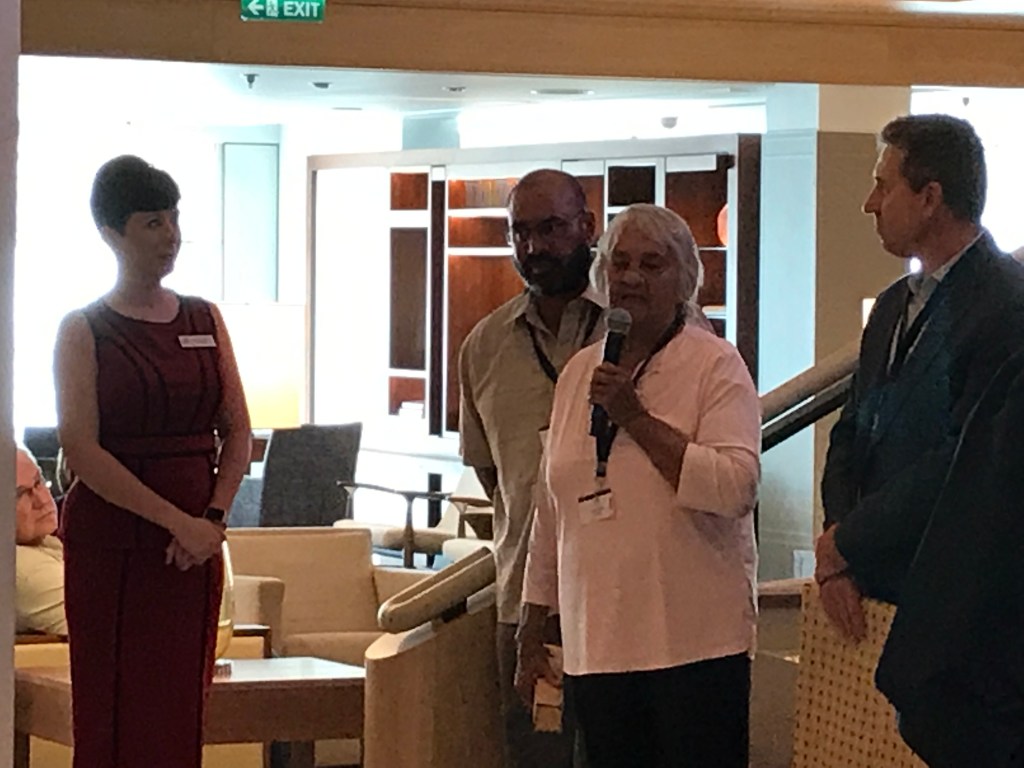
Western Australia is far from the Australia most of us have visited and also from the homes of most Australians.  In 1933, I’m told, Western Australia voted overwhelmingly to secede from the Australian Federation; there was no communication whatsoever except by ship and there seemed no point in ‘belonging.’  By the time the bureaucracy (aided by the lack of communication) in Britain concluded they had no jurisdiction, the railway connecting Perth to Sydney had been built and the issue receded.  They are quite proud of Western Australia which has 1/3 the land mass of Australia although a much, much smaller fraction of the population.  This is Viking’s first visit to the state, and, on our landing in Albany, the ship was boarded by a delegation led by the Mayor for a ceremonial welcome.  On our sail out from Perth, each of us was presented with a postcard, and commemorative coin, printed especially for us by the Perth Mint ‘to mark the maiden visit by Viking Sun to Western Australia.’  I expect we’ll be in the local newspapers as well.  They are definitely trying to boost tourism to add to an economy based on mining, wool, timber, wheat and other agriculture, fishing, and now wine production.  Their beautiful sand beaches boast big waves making it a surfing destination and the site of world surfing competitions.  With a temperate climate (they describe it as ‘Mediterranean’) it is attractive.

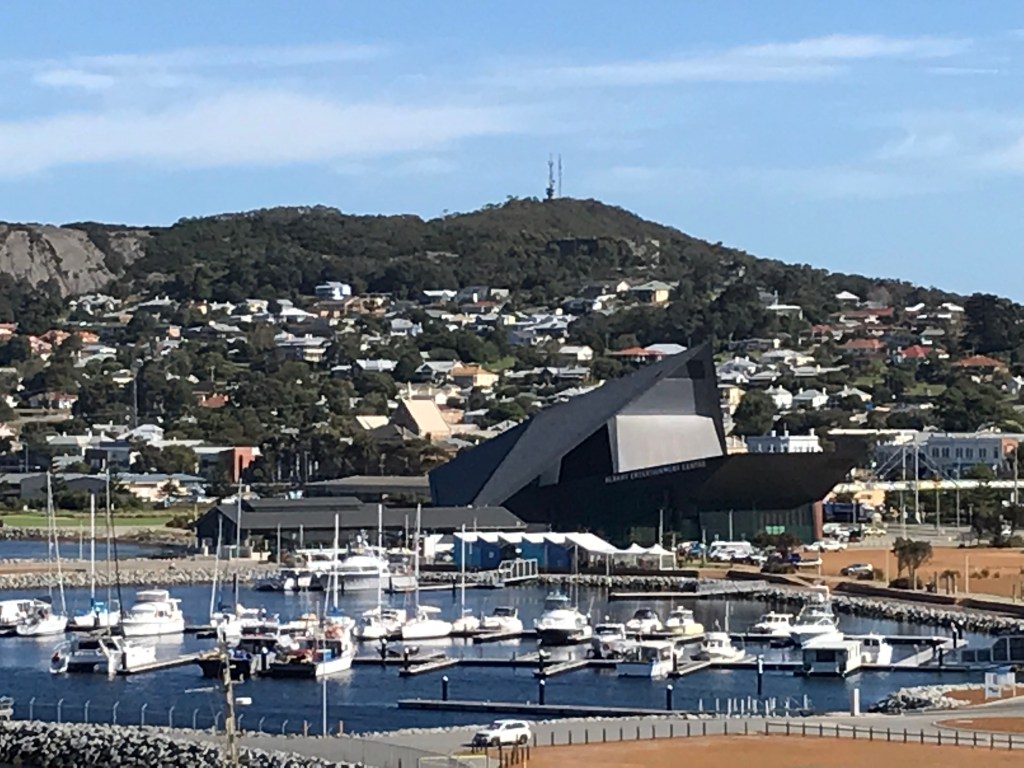
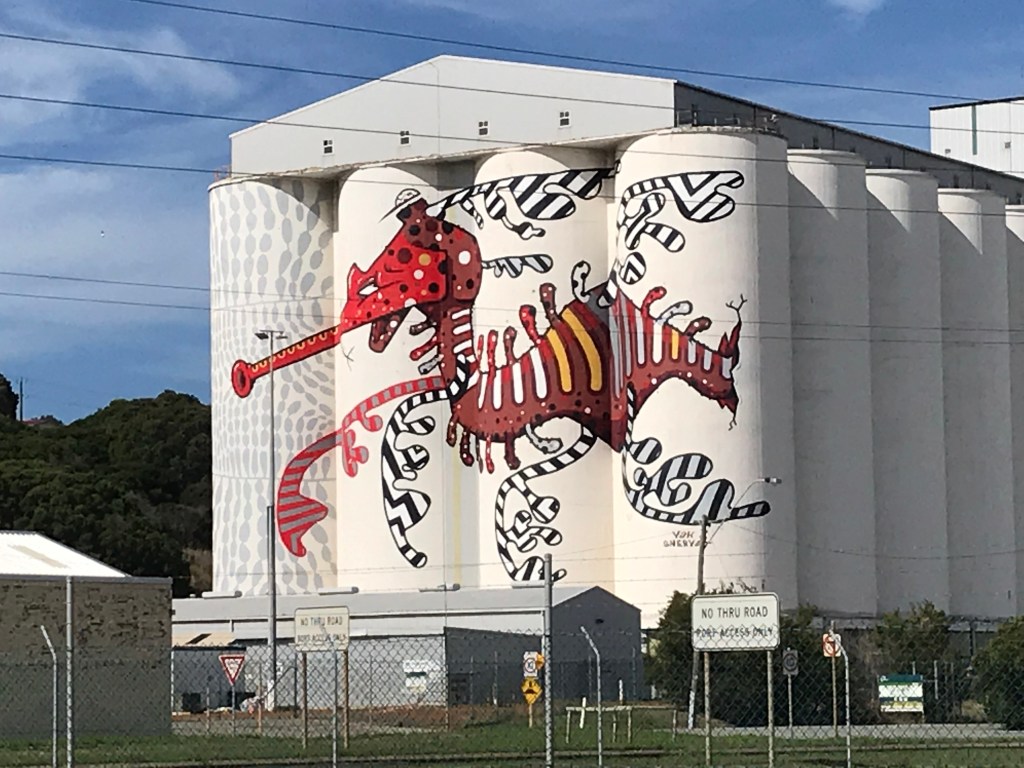
Albany (that’s ‘al’ as in the name ‘Al’ not as in ‘all’ or the way we pronounce the city in New York) has a pretty harbor surrounded by hills.  One of the first sights along the commercial port was huge piles of sand.  Having no idea what they were for and not finding them terribly photogenic without context, I didn’t photograph them.  Later I was told they were awaiting shipment to Japan for the beach volleyball venue of the coming Olympics, and then I wished I’d taken a photo.  Also in the port were large grain elevators decorated with a huge painting of what I was told was a leafy sea dragon, a rare species of seahorse found in Western Australia; painting of old grain elevators as wall art is becoming popular.

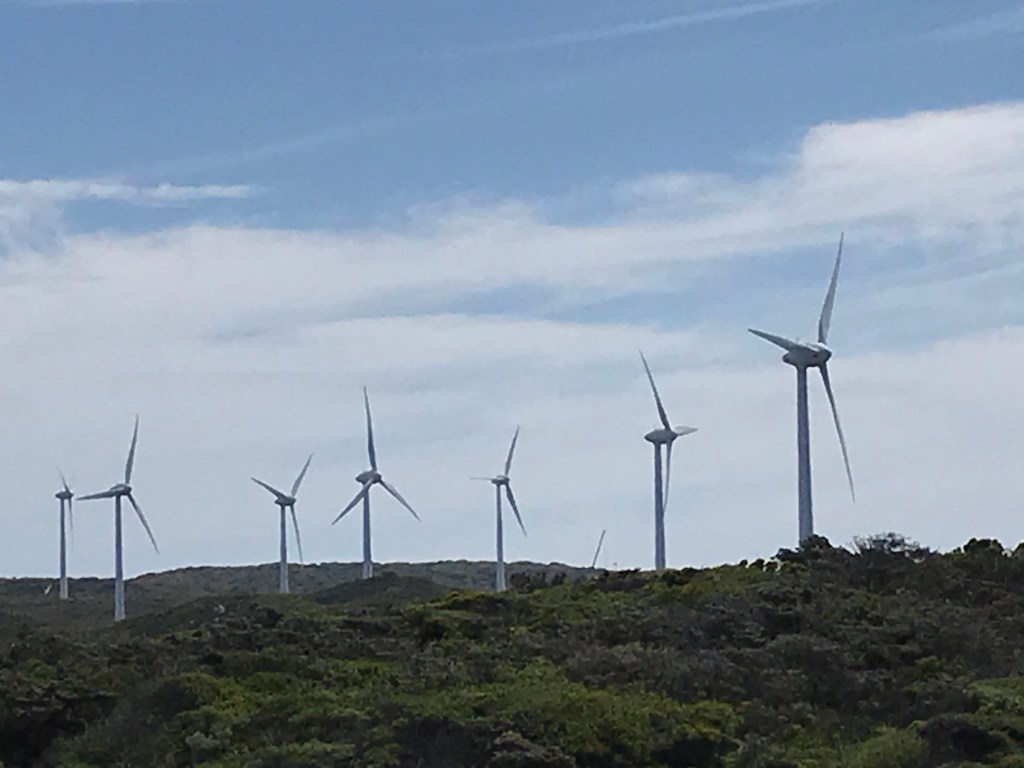
Our tour took us to a wind farm on the headland mostly for the view of the bay and then to the old jail. The Albany area (maybe all of Western Australia, I’m not sure) gets 80% of its power from wind—it’s a very windy area. Albany was established in 1826 as a military garrison to prevent the French from gaining a foothold.  Convicts were also sent here because the locals needed help working the land.  They mostly stayed in the prison only at night and the focus was on rehabilitation rather than incarceration.

March 24-25 at sea in the Great Australian Bight

The news this morning was of our sister ship, the Viking Sky (the ship in which we travelled the Baltic & Scandinavia last year) had lost engine power off the coast of Norway.  You may well have seen this on the news as well.  For their safety (since it’s a dangerous place to drift) the passengers and crew were evacuated via 11 helicopters carrying 30 people each. 

We speak of the ships in terms of their passenger capacity (930) but there are approximately 1 crew member for every 2 passengers so we are talking about well over 1300 people.  There were, we were told, a few minor injuries but nothing serious; everyone was evacuated and put up in hotels; and they managed to dock the ship. 

However, passengers are being sent home and the next scheduled cruise cancelled.  As Heather spoke of the incident during the church service and asked us to pray for all passengers and crew, she pointed out that the crew were trained to handle such events.  The passengers are required by maritime law to attend a safety briefing at the beginning of the cruise (in our case, since it is 5 segments, that means 5 times,) but the crew have safety drills every week so that their responses will come naturally and automatically.

The Bight is supposed to be very scenic with ‘towering seaside cliffs and rock outcroppings lashed by roiling surf,’ but, of course, we can’t see land so that aspect is lost on us. 

Instead, we have possibly the worst seas we’ve had so far making getting around the ship really interesting…  After dinner an enterprising young waiter procured a wheelchair and wheeled Chris back to our stateroom; he was definitely having more balance issues than usual with the rocking and rolling.
The captain told us the weather causing the rough seas is 500 mile to our south.  As mentioned earlier, whitecaps and surface waves are caused by local weather, but the swells (long period waves) and deep movement are caused by happenings sometimes thousands of miles away.

And we gained another two hours of sleep over two days–useful because it’s tiring to navigate around the ship in these conditions.

I have read many books (27 so far) during our cruise–reading is our most frequent after-dinner activity. All have been fiction, mostly mysteries. However, I am now reading The library book by Susan Orlean (which Chris discovered and recommended to me), centered on the Los Angeles Public Library and its destruction by fire in 1986, but it also treats libraries as a much broader theme. She is a wonderful writer (one reviewer said the only non-fiction writer they knew of as good or better than her is John McPhee (I intend to read some of his books on the cruise as well)), and I am enjoying it greatly. –Cynthia
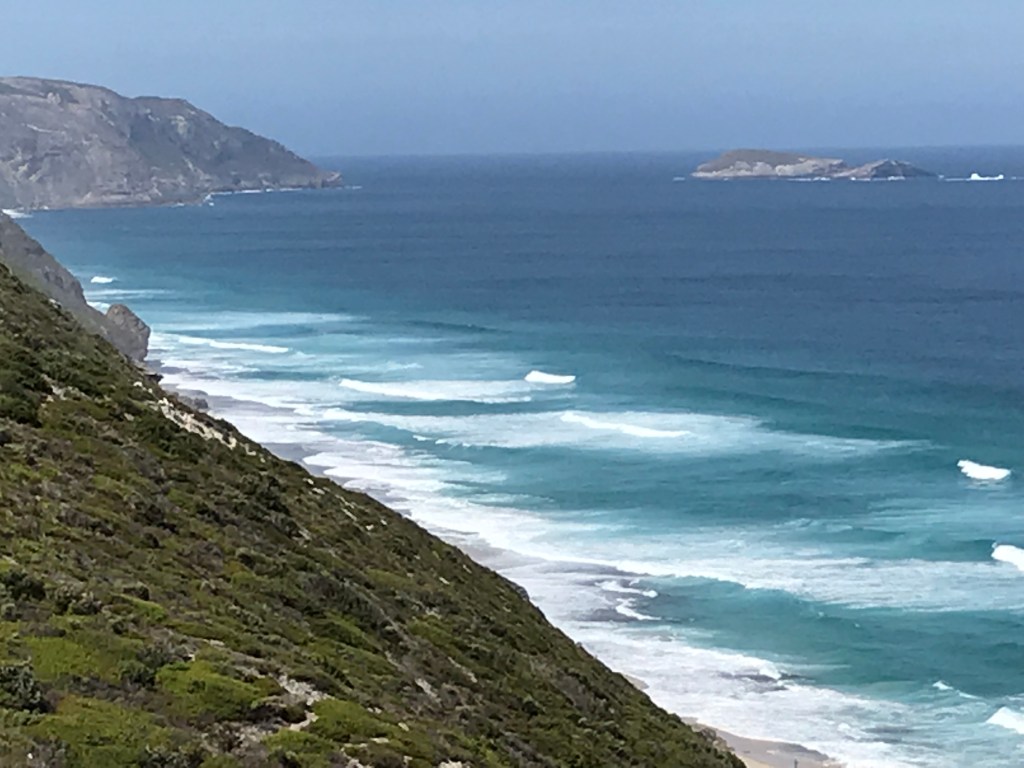
Fjords, Sounds, Bays and Bights; and nary a bite to eat. The Viking Sun has spent about 2 days crossing the Great Australian Bight, so-called because that stretch of the Indian Ocean off the southern Australian coast is much wider and less land-bound than a Bay.  Much, much less land-bound than a fjord and much less bound than a sound.  Not however as subtle an expanse as the New Jersey-New York Bight that extends from Cape May to Montauk Point at the eastern end of Long Island.

     With a map of Australia and appropriate imagination, one could consider the Great Australian Bight resembles a wide, shallow “bite” out of the southern coast of Australia, but Wikimedia assures us there is no etymological relationship between the homophones. —Chris
March 23 Adelaide, South Australia

Adelaide is unusual in that, although it was established in the early 1800s, it was not established as a penal colony, but a town of only free settlers.  It was founded on religious tolerance, attracting both British Calvinists and Prussian Protestants and is known for a history of progressive politics, contribute to its oft-cited standing as Australia’s most livable city.  Adelaide is not on the ocean but situated several miles inland where the British Colonel charged with designing it found a river and springs for a fresh water supply.
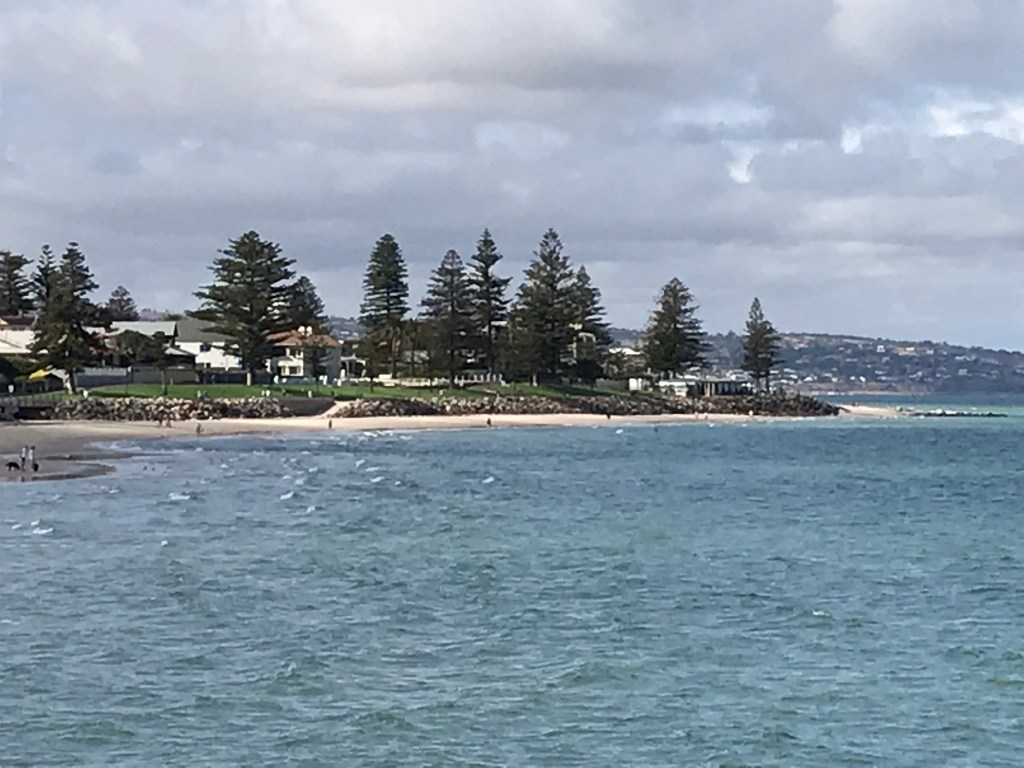
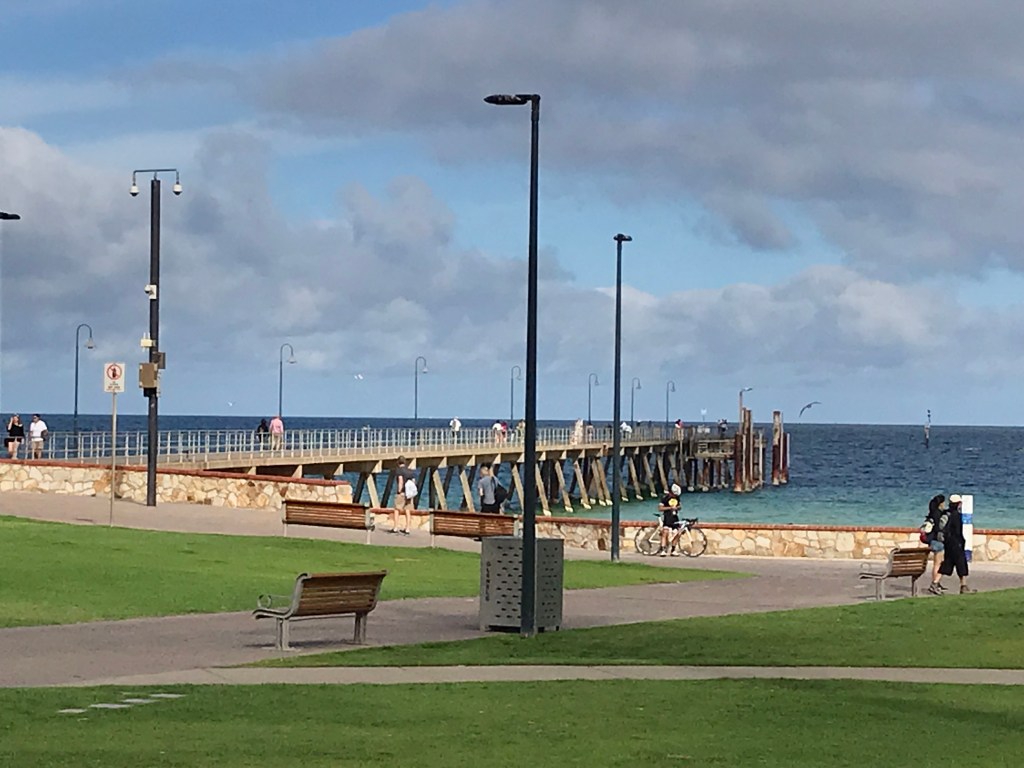
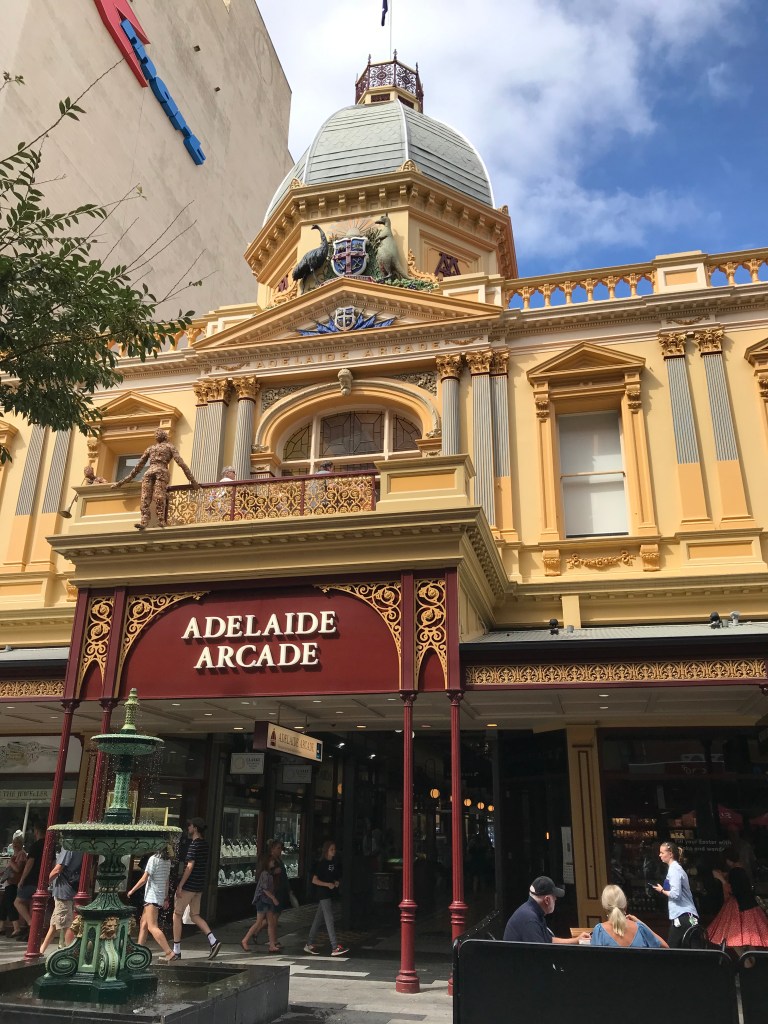
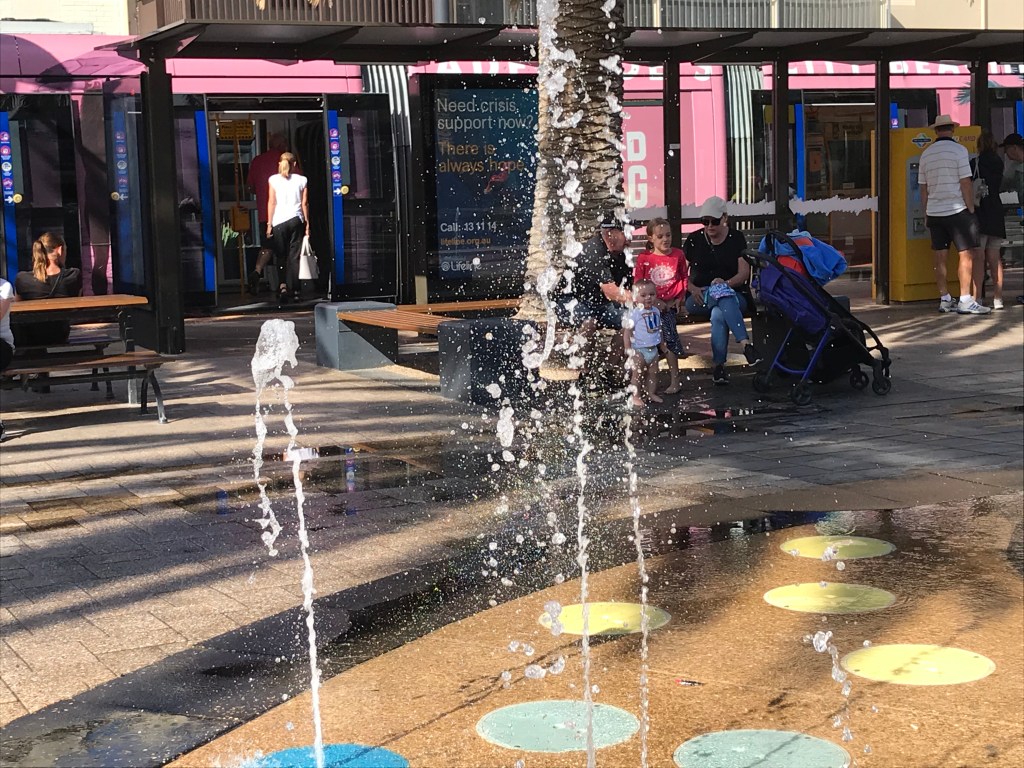
Our port was, therefore, not in the city itself and, instead of a bus shuttle, the ship arranged for transport on the public trains.  We began the morning with a bus tour that took us to the beach community of Glenelg and into the center of the city where we were turned loose at the pedestrian mall.  We could either return with the bus after an hour or so or, as most of us chose, stay as long as we wished and return to the port by train. 

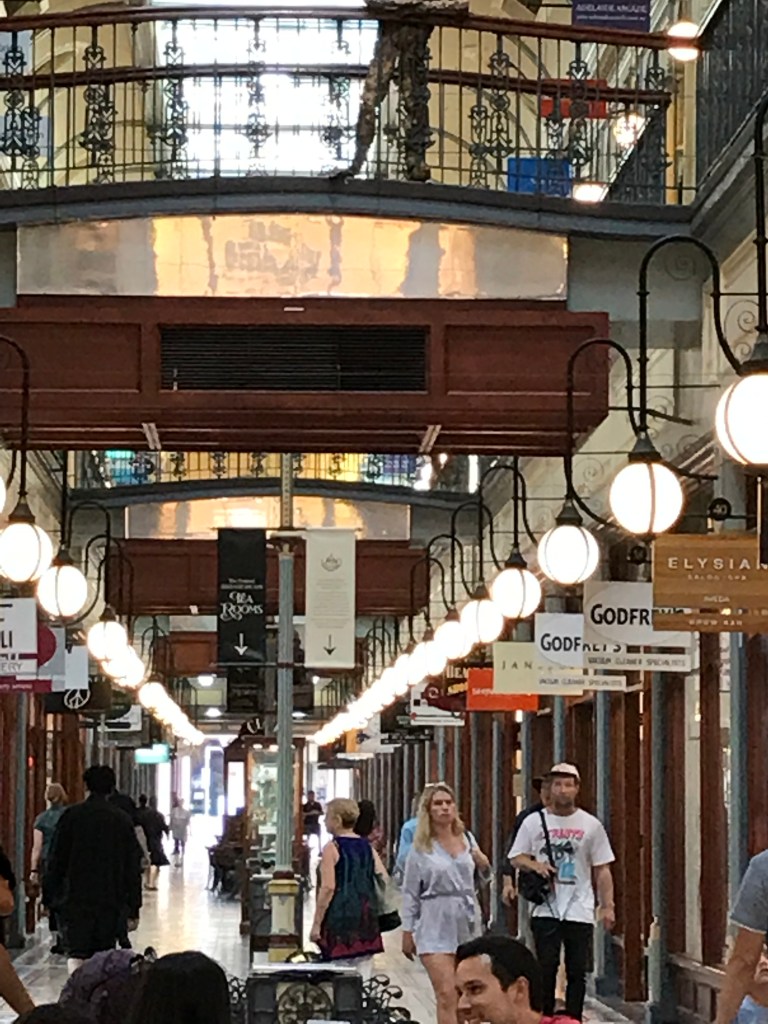
We visited the Southern Australian Museum to see the Aborigine exhibits, did some shopping, had meat pie for lunch (our hankering back to our time in Scotland, and managed to find the train station and our train.  Handily, Viking had arranged a local representative to stand at the station and help us navigate.  It was an uneventful 45 minute trip back to the ship through multiple suburbs, mostly with Scottish names, full of what looked to me like 1940s bungalows, but I believe most were older.  It made us feel good to make our own way around the city successfully—we get so spoiled on a cruise with the ship staff taking care of everything and us just following directions.

We gained ½ hour last night because Adelaide—and indeed all of South Australia as well as Darwin and all of the Northern Territory are one half hour behind eastern Australia.  Some places in Australia are actually ¼ hour off.  This evening after leaving Adelaide we gained another ½ hour. 

March 22 at sea

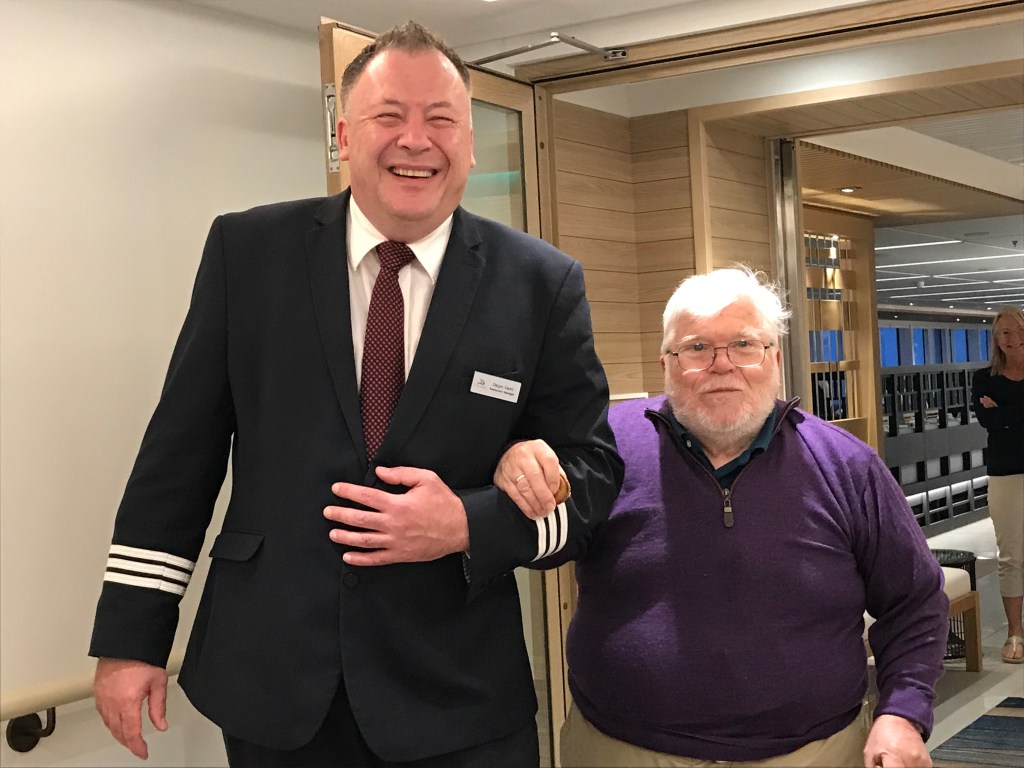
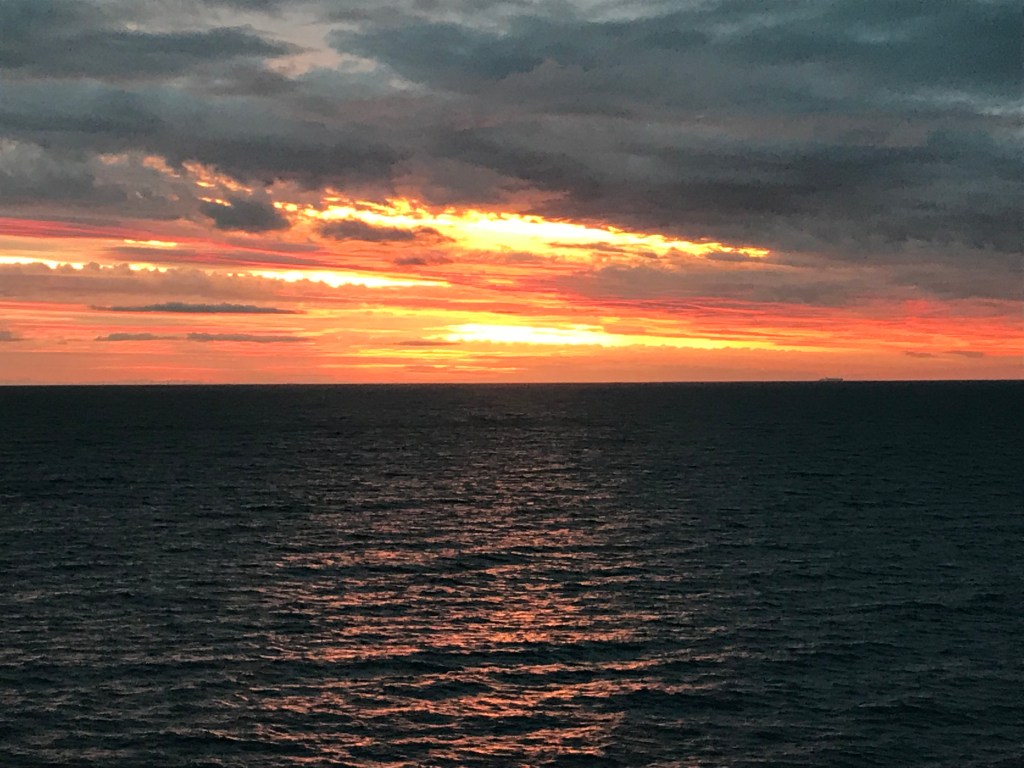
South of Australia is considered part of the Indian Ocean so we have left the Pacific behind.  I thought it was the Southern Ocean, but apparently that begins farther south.  At any rate, we’re experiencing somewhat rough seas (but a nice sunset).  The other photo shows Gami, our Restaurant Supervisor (and very large man) escorting Chris from the Ocean Café to the elevators.

March 21 Geelong, Victoria, Australia

Tasmania has been replaced in my affections by Geelong!  The second largest city in Victoria, Geelong has its own bay/harbor at the mouth of the bay Melbourne (the largest city) is on.  The economy used to be based on wool—they produce the best merino wool in the world—as well as Alcoa aluminum (or aluminium) and other manufacturing.  Now they are transitioning—and expanding tourism.  I wanted to give an indication of how to pronounce ‘Geelong’, but I don’t know the proper marks to use so I’ll just say, pretend it has only one ‘e’ and put the stress on the second syllable.

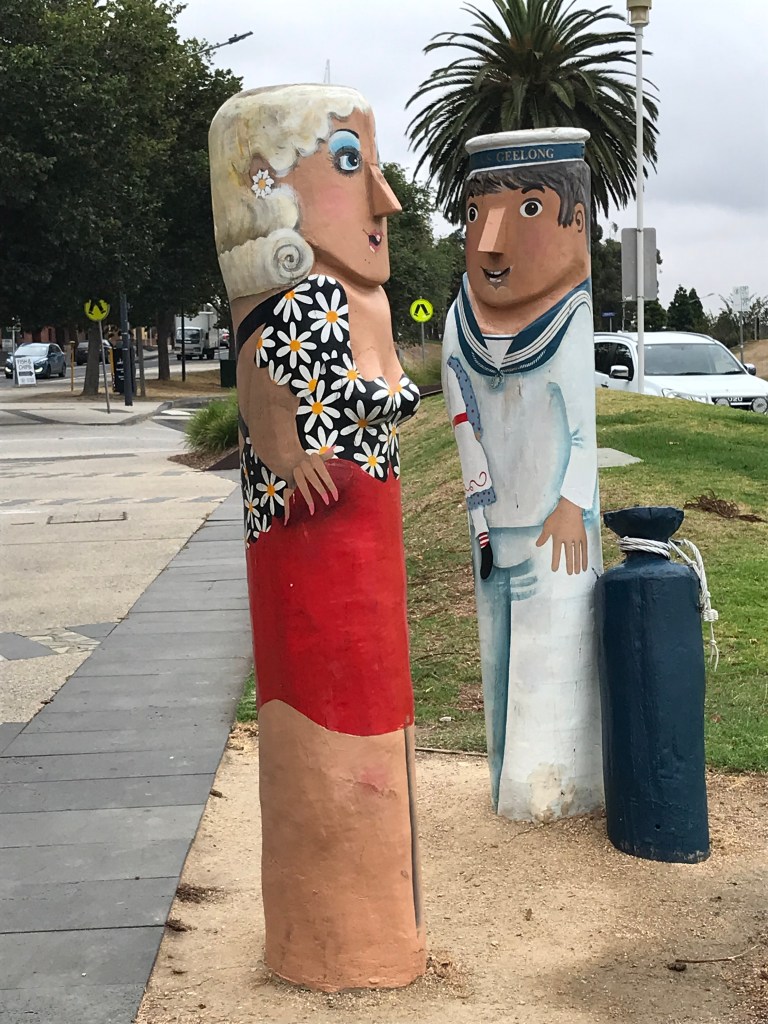
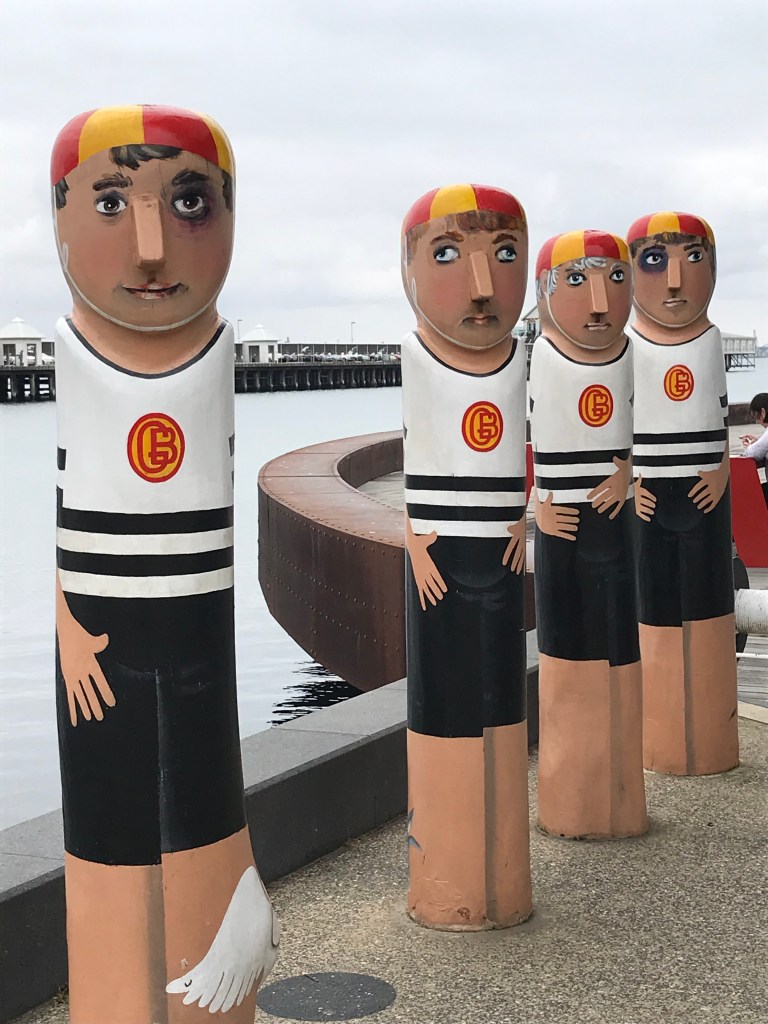
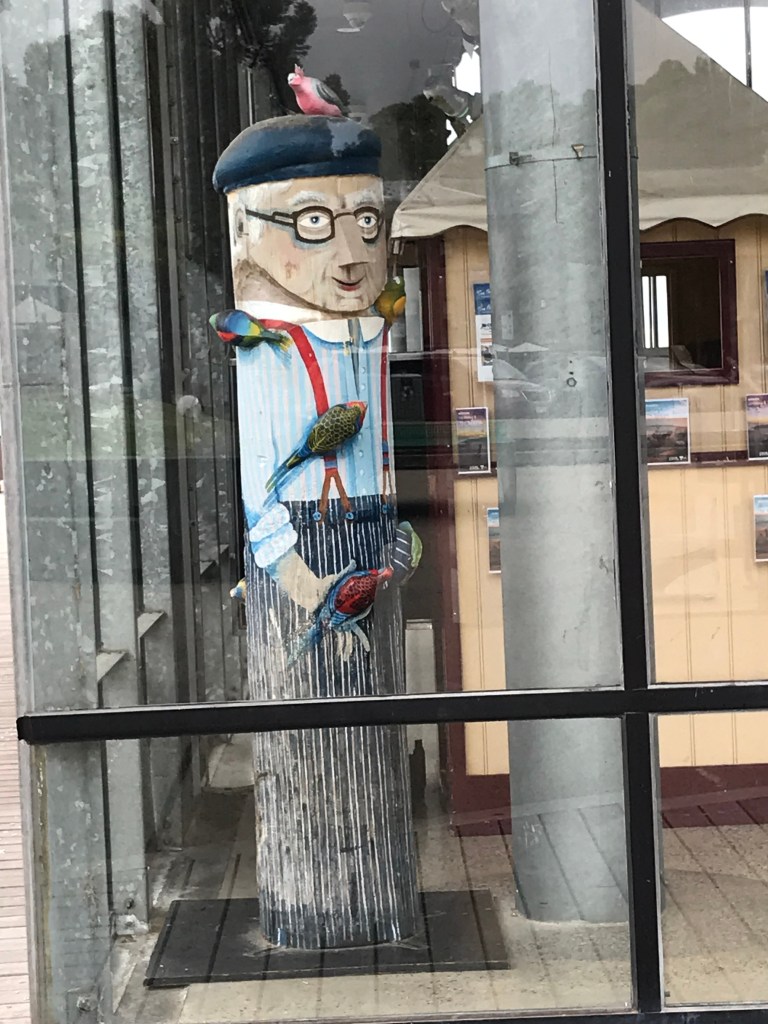
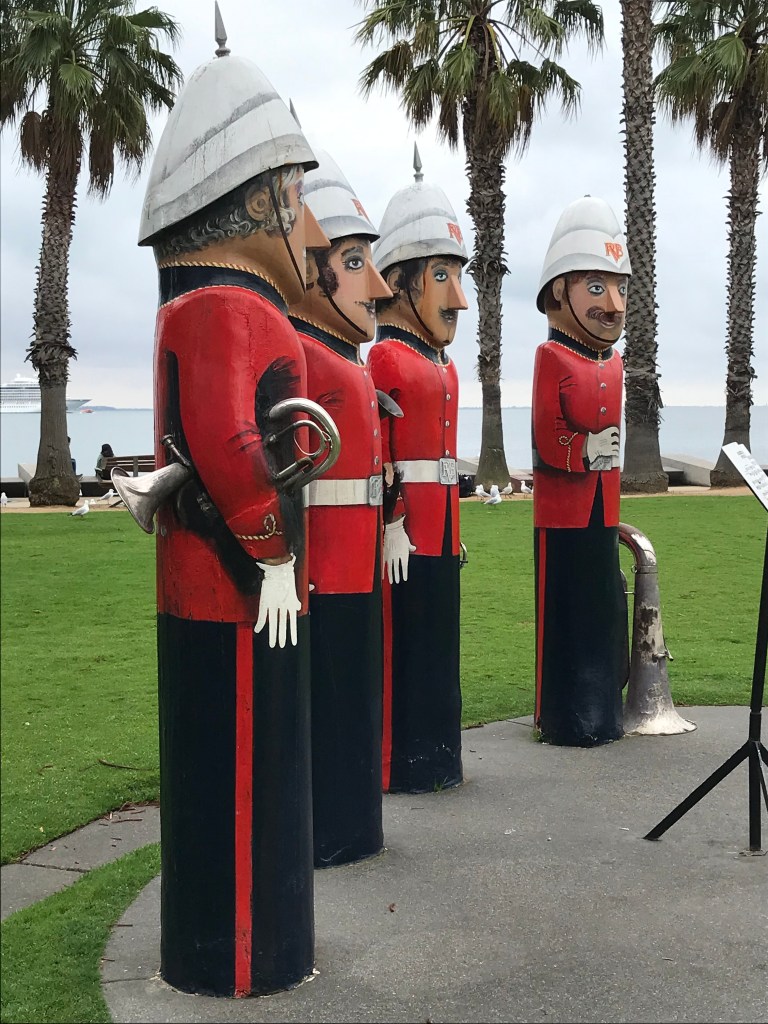
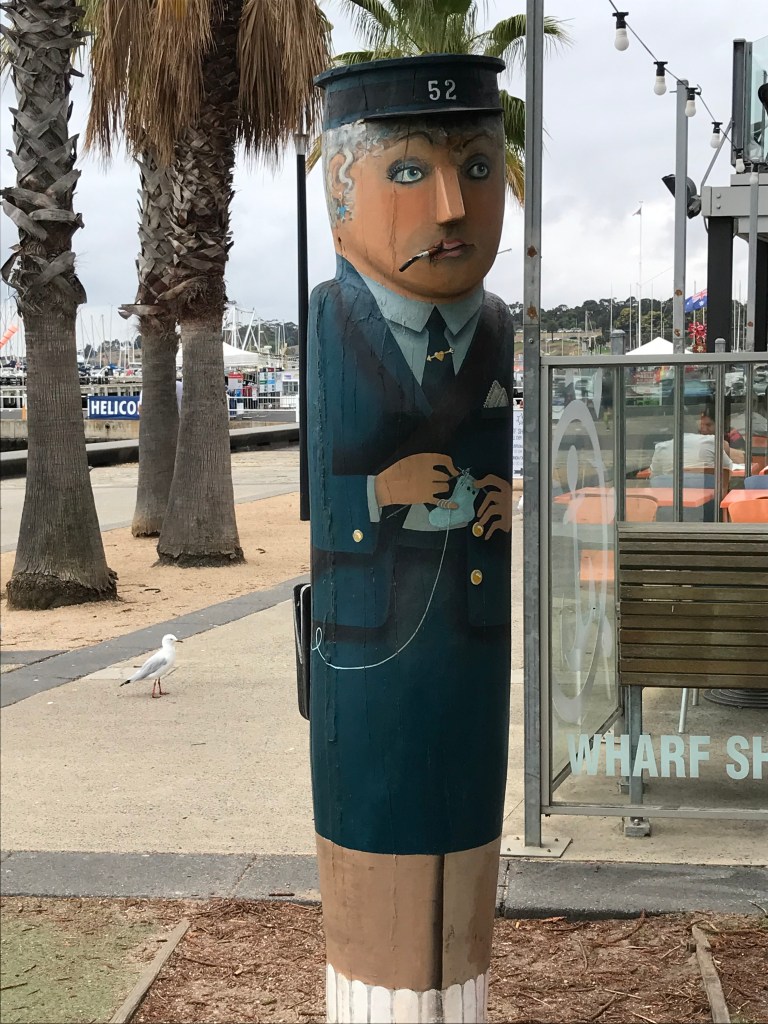
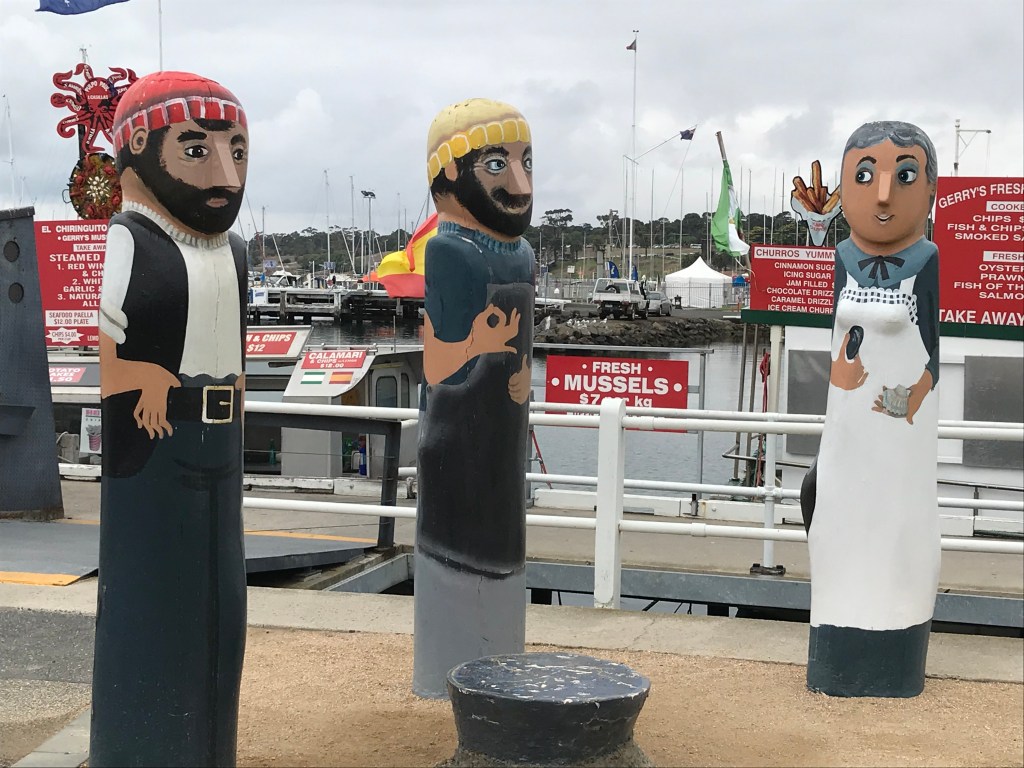
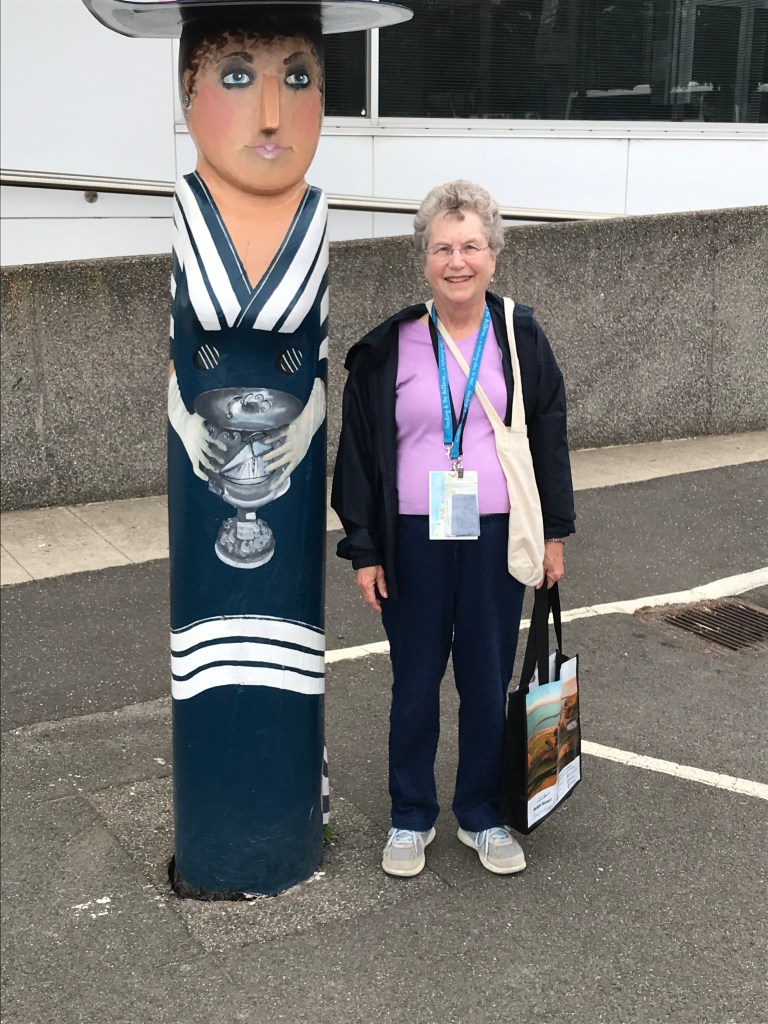
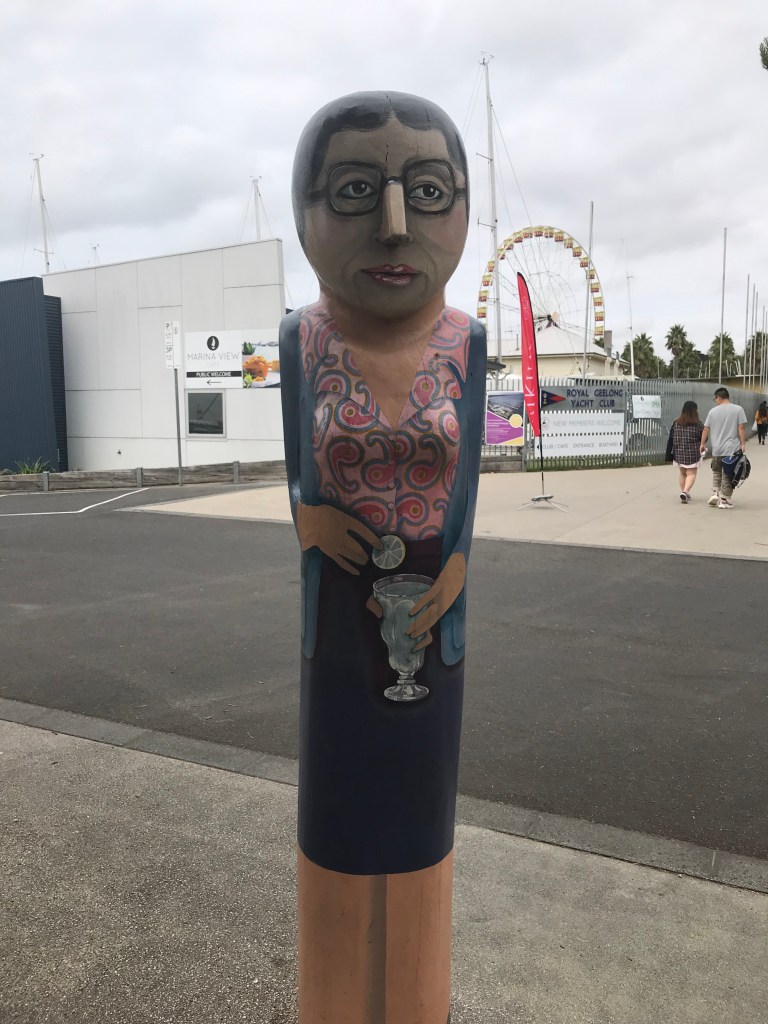
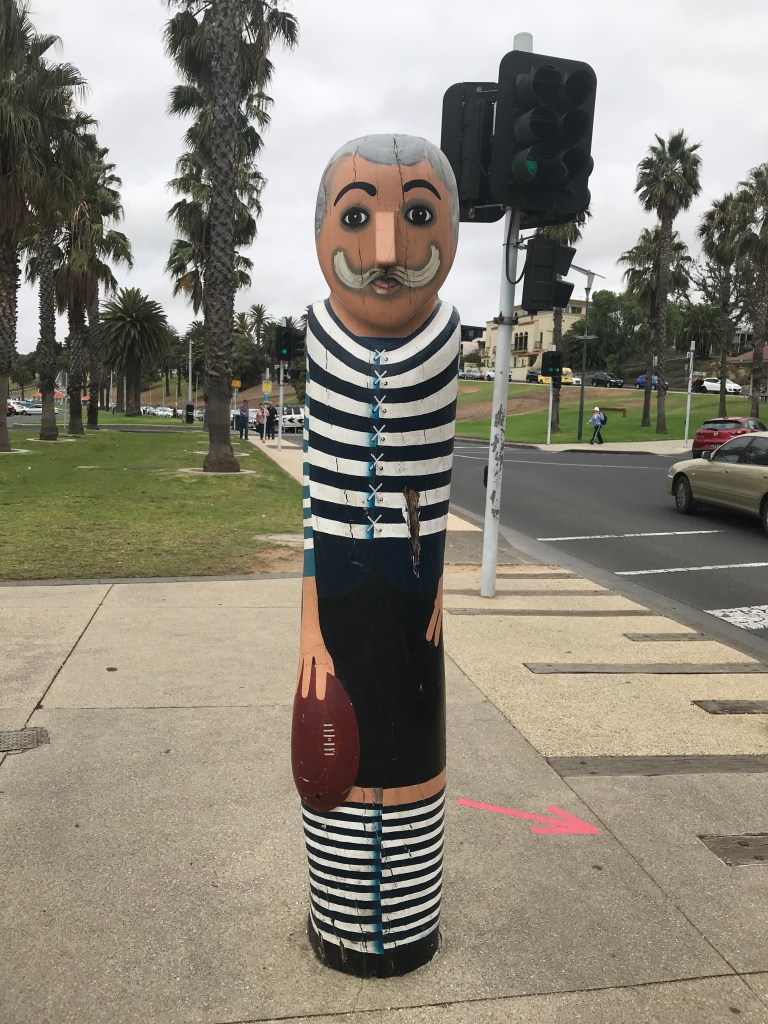
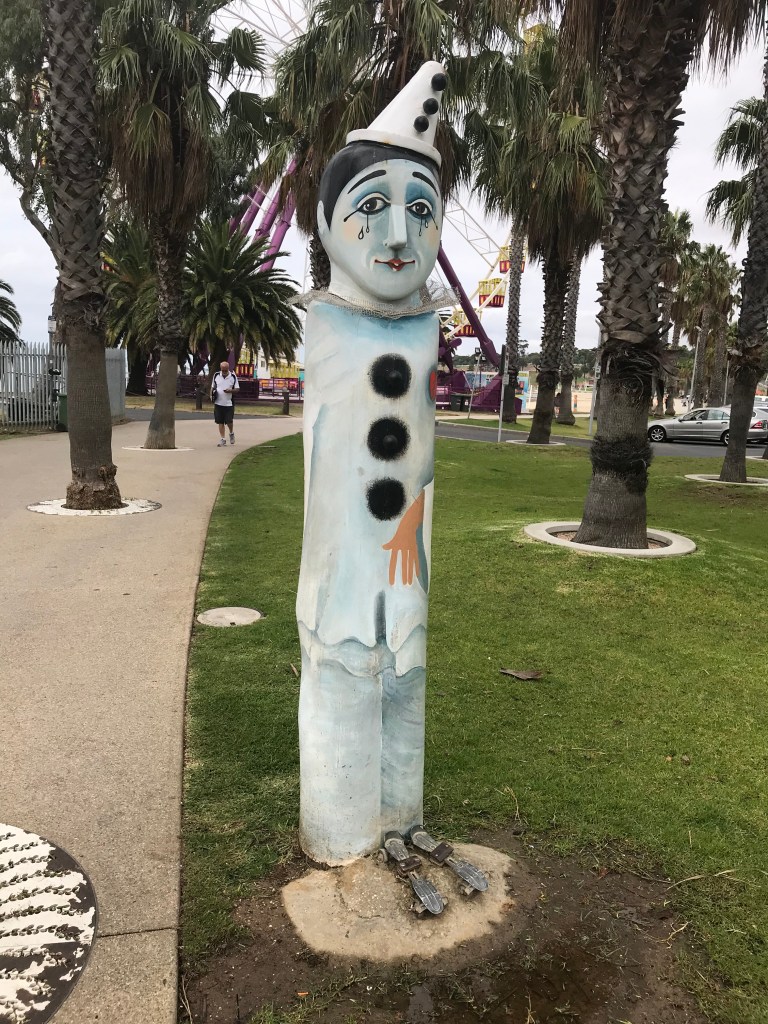
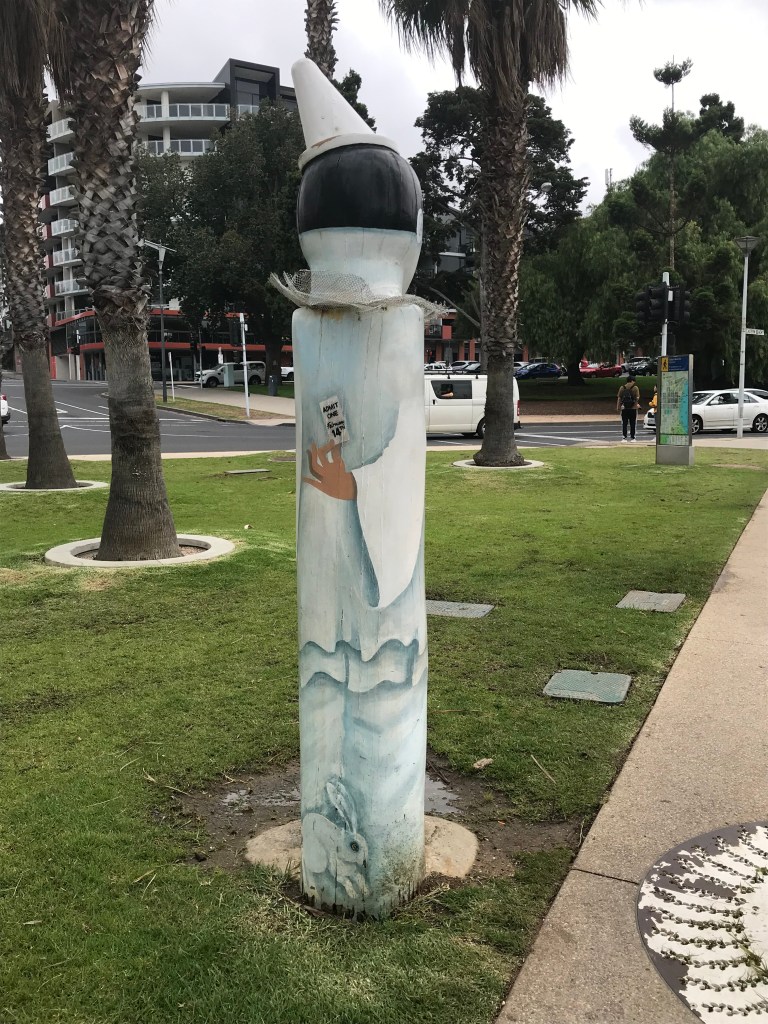
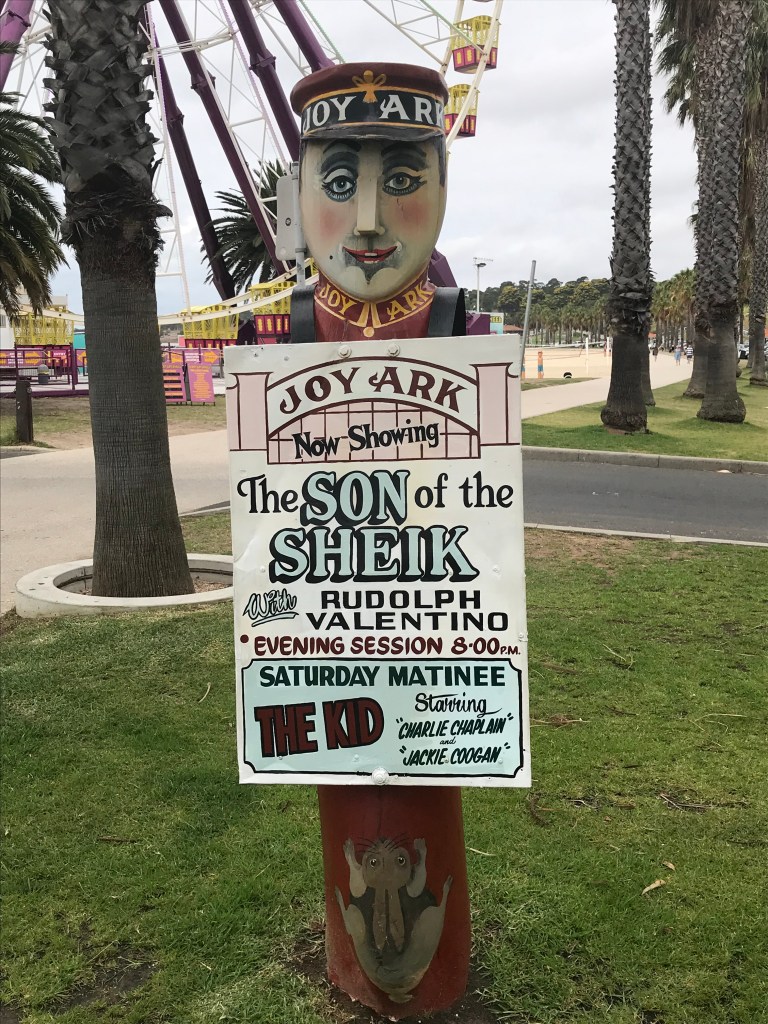
The lovely waterfront is populated with painted bollards.  These were carved from the piles holding up the old pier, painted by an artist, and repositioned.  Someone heard there was a problem because they weren’t being maintained; another that they are so popular a tourist draw that many more are planned.  Whatever the reality, they are great fun and I share with you photos of several. Note the rabbit at the bottom of the back of the clown and the cigarette dangling from the mouth of the female bus conductor (though you may not be able to see such detail.)

Geelong doesn’t have a pier for cruise ships so we were tendered in to the Geelong Yacht Club, greeted by volunteers armed with bags, maps, and guidebooks for us, including a 4×6” card with a map of the immediate area on a lanyard, and sent on tour or let lose in the city. 

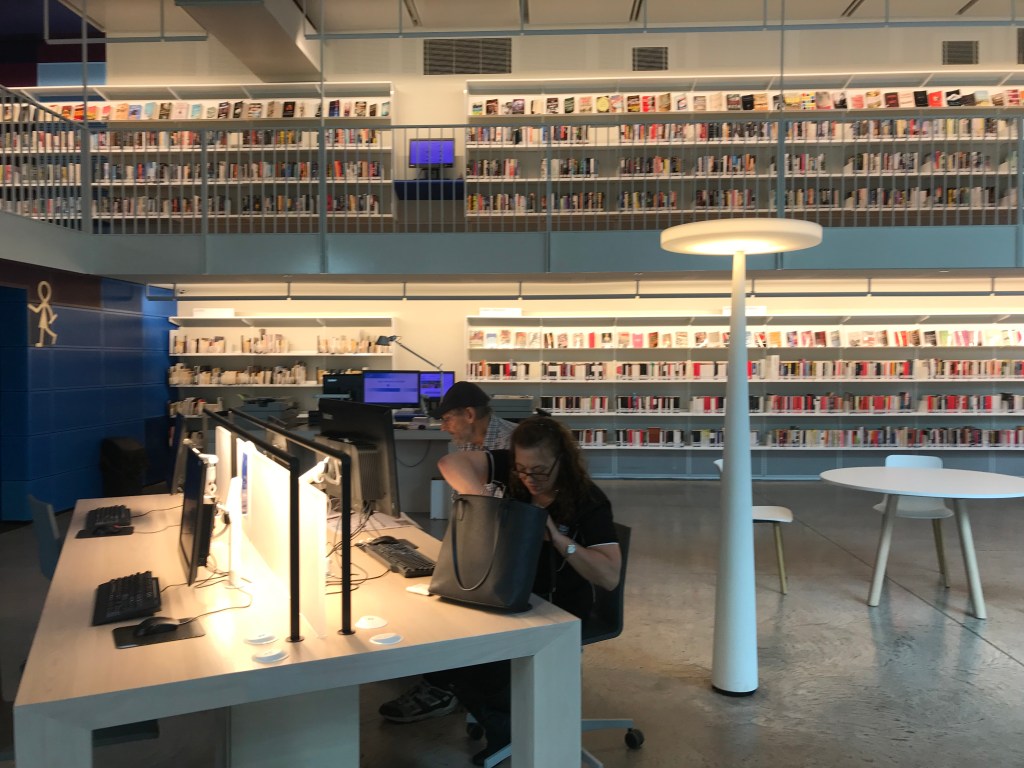
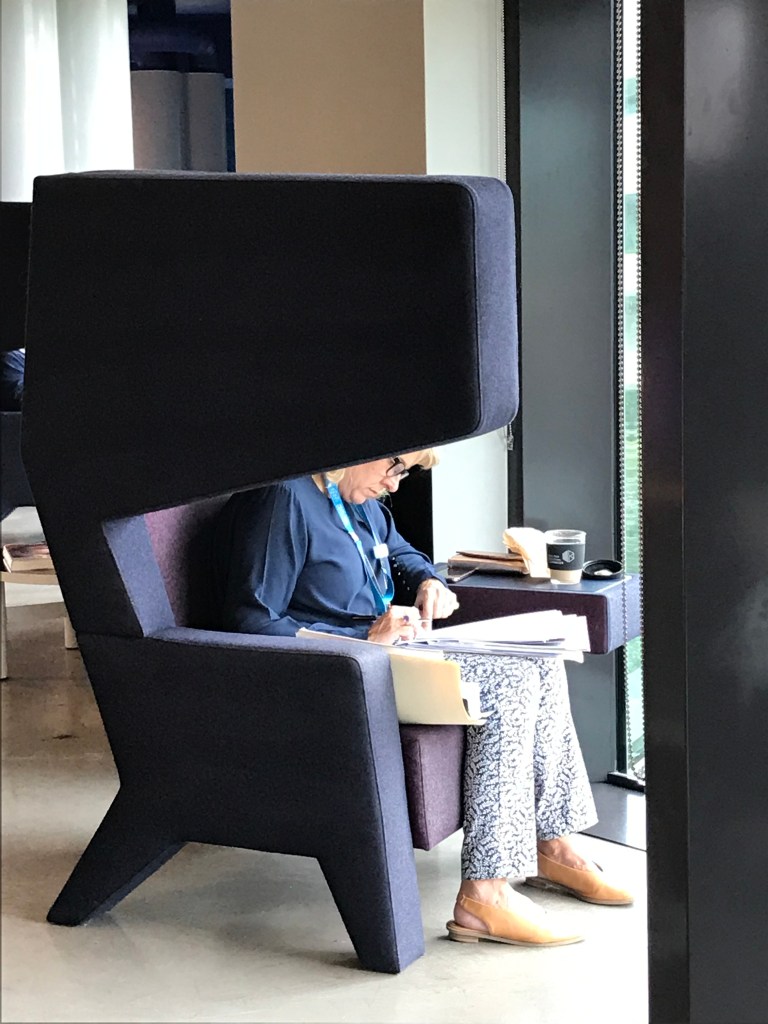
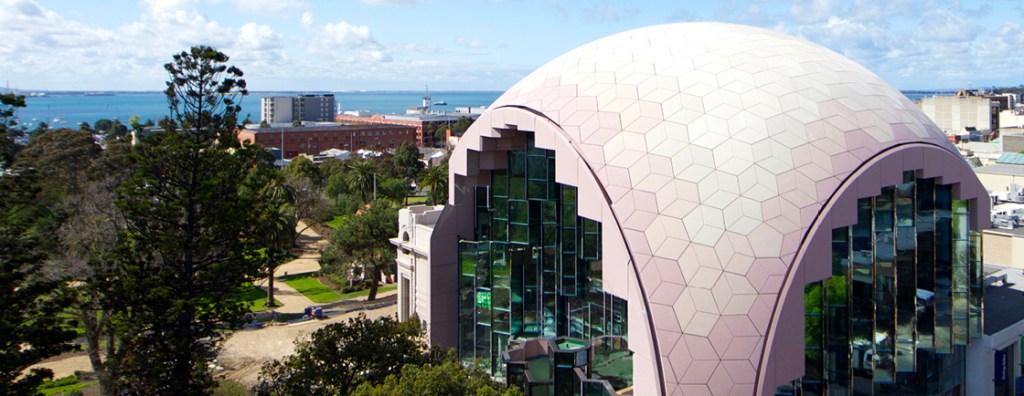
Since we arrived right in the heart of the city, it was easy to walk around and I set out to visit the new public library (of course.)  Wow!  I want one just like it!  Called the Geelong Library and Heritage Center (the Dome), it defied my poor attempts at photographing it so I swiped a photo from its website for the blog.

We missed the Wool Museum, unfortunately, but did get a bus tour of the region, nicely situateded on a peninsula between the ocean and the bay.