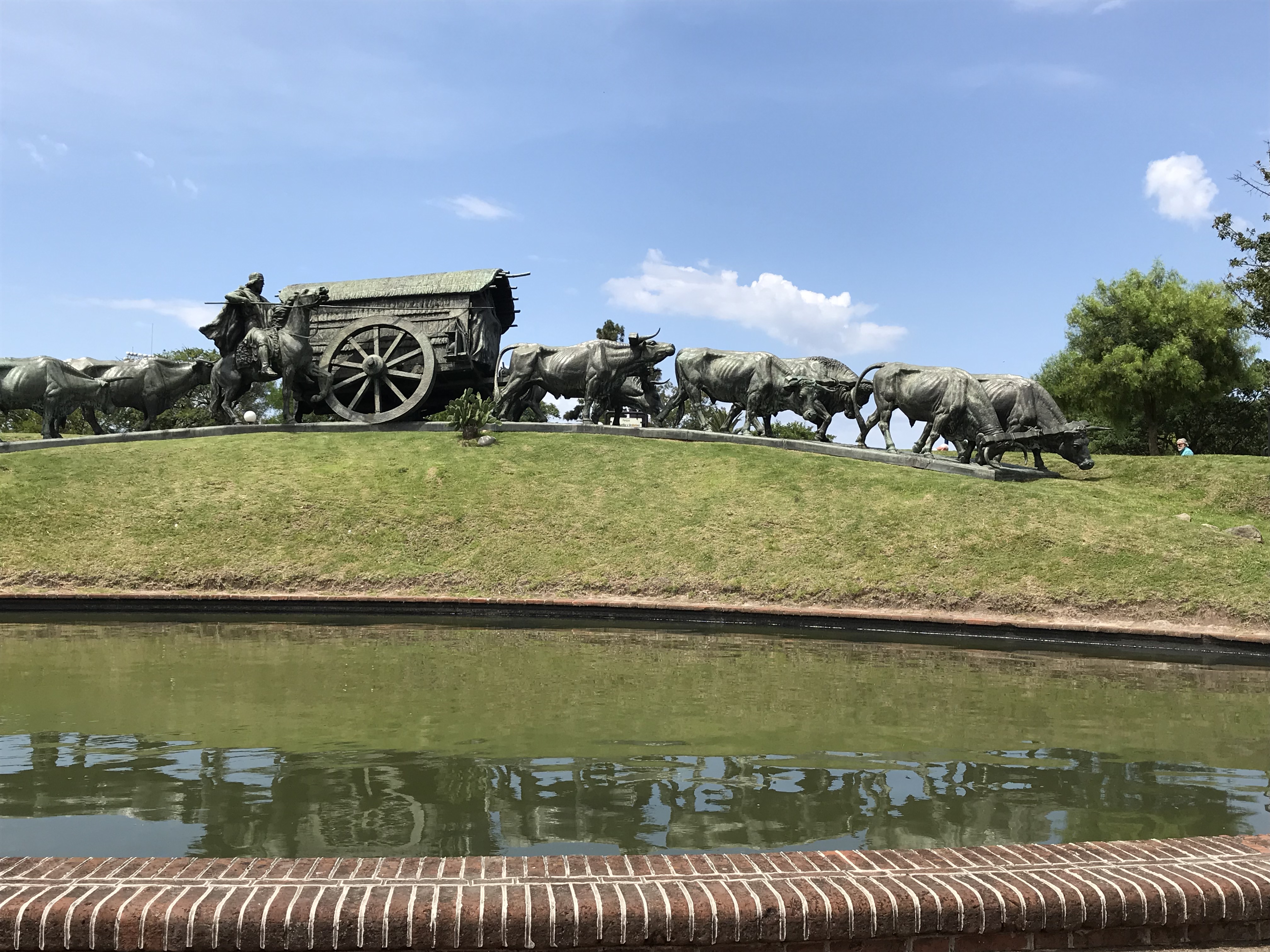
January 23 Montevideo, Uruguay

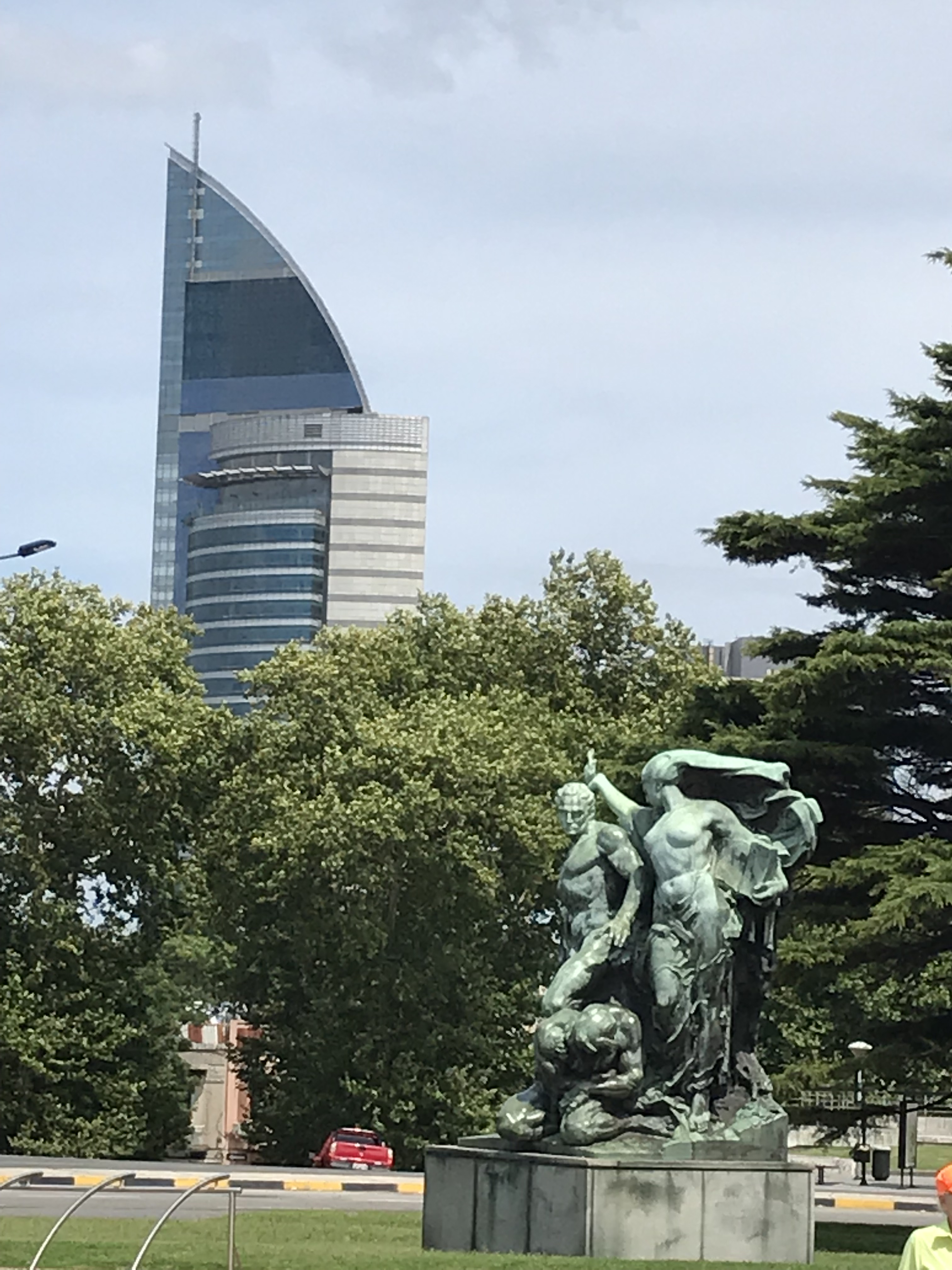
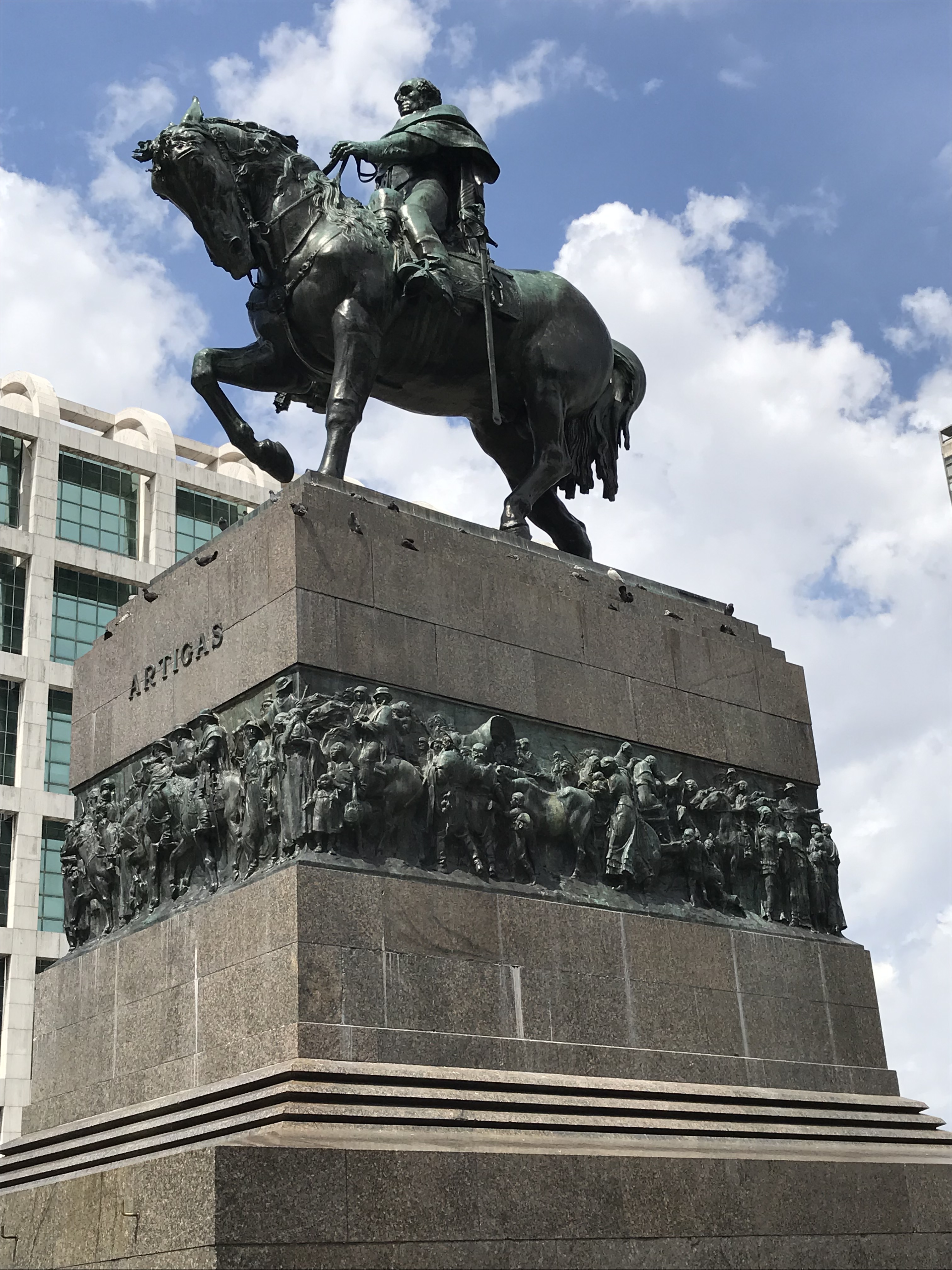
Montevideo is on the Plate River, the estuary formed by the confluence of the Parana & Uruguay rivers.  On the map I see this area as an ocean bay, but, since it’s fresh/brackish water, it’s considered river, and it’s quite brown because the rivers that form it have a lot of silt. The cruise dock is close enough to walk easily into the ‘old town.’ but we took a bus tour anyway.  Good guide and I liked Uruguay instantly.  It’s a mostly rural and agricultural small democracy.  Originally a Spanish colony (it received independence in 1825), the population includes a large portion of Italian immigrants but very few Indians or blacks.  An early president conducted a genocide against the Indian tribes (not their finest hour, they acknowledge) and, although the port received African slaves, they were all in transit to other parts of South America.

A useful fact in both Uruguay and Argentina is that shops aimed at tourists take American dollars and even give change in dollars—something I’ve not encountered before.
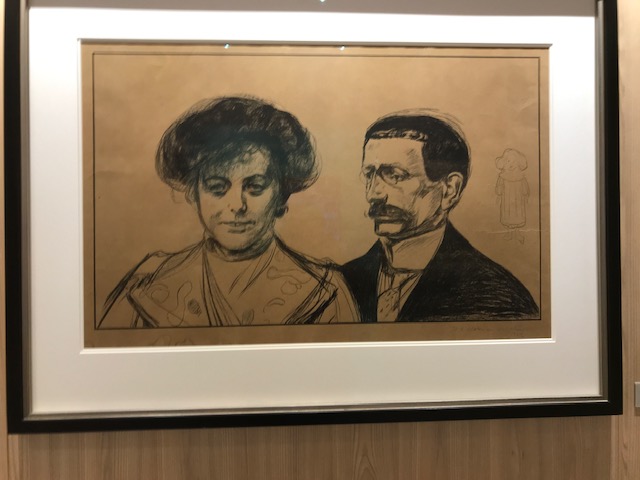

Munch Revisited.  Since my original post about 2 weeks ago, I’ve walked several times past the lithograph of the couple Munch titled Anna and Walter Leistikow (depicted above), the name of the couple portrayed who were his friends; Walter was also a fellow painter who organized an exhibition of Munch’s work in Berlin.  I continue to be fascinated by the portraits, in part due to the couples’ facial expressions, their orientation with respect to one another… and for a very faint sketch of a small child in night dress barely visible in the background over the man’s left shoulder.
     I believe the title of Norwegian Gothic I assigned to the picture is entirely wrong; at best, it could only apply to Walter and what seems to be his very serious or dour expression.  The figure of the child begs several questions: Who is she?  What is her relationship to the couple?  Is she real; or imagined?  Why is her image so faint in contrast to that of the couple?  Shipboard exhibition notes suggest the child is Gerte, the couples’ young daughter who possibly has awakened from sleep; this explanation seems stretched to me.
     Another answer can be gained from looking closely at Anna, Walter’s wife and central figure to whom our eyes are drawn by her husband’s orientation and gaze. She dominates the picture and her direct expression differs markedly from Walter’s.  I think Anna is (elusively) smiling… possibly because the child’s image represents an idea Anna has of an actual or imaginary child. The faintness of the child’s image suggests she may be more imaginary than real; of a child not yet born or even conceived.  What do you think?–Chris
January 21-22 at sea

I seem to need the two sea days to recover from the 3 land days!  But tomorrow we begin a series of 4 land days…  I realize when I posted a few days ago about what to do on sea days I completely omitted anything to do with the body or exercising.  In addition to my informal walking, there are organized walks and exercise classes (mostly at 5 am…) as well as an excellent fitness center and a slew of activities in the spa including various Nordic sauna & cold pool types.  I also omitted the very popular (but not yet attended by us) trivia contest each noon.  There are movies both in the theater and on the tv.  I’ve just discovered we can actually watch news on tv but I’d rather not… There is a book club and ship choir, and the author & writers’ workshop has been replaced by a photographer & photography lectures and workshop.  There is also, of course, the nightly entertainment, some of it quite elaborate shows, beginning at 9:15—which is the time I’d rather be in my room reading.  I find I need time quietly by myself and bridge is pretty much sufficient activity.

This afternoon there was an Andrew Lloyd Webber concert—appropriately ended with ‘Don’t cry for me, Argentina’ since we’re on our way to Buenos Aires.   I enjoyed hearing the ship’s wonderful singers (and pianist) whom I miss by not attending night performances.  They are excellent!  The ship choir of passengers also sang very well. 

Next our absolutely outstanding bridge teacher and his wife (herself an excellent bridge player who hosts knitting sessions (there’s another activity) in the morning and helps with duplicate in the afternoon), Michael & Beverly Walker hosted a reception for all participating in the bridge program.  Despite Viking’s lack of advance publicity (we didn’t even know there would be bridge instructors and duplicate), it’s been very popular–up to 9 tables at duplicate plus 2-3 playing social bridge and most of us attending classes. Michael says he’s taught bridge on many cruises and never had such a large participation.  He figures 20% of the passengers have participated to some degree.  The occasion was saying goodby to those leaving the ship in Buenos Aires, where a new contingent (hopefully including bridge players) will board.  It was, of course, also nice to get together informally.

January 19-20 Rio de Janeiro, Brazil

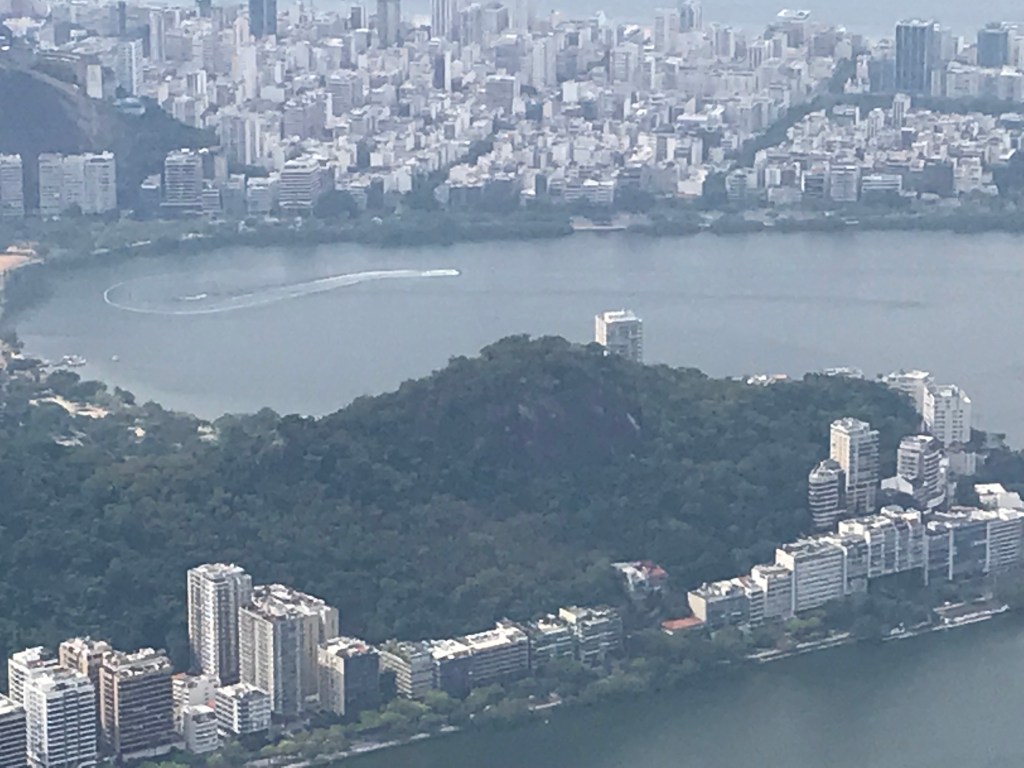
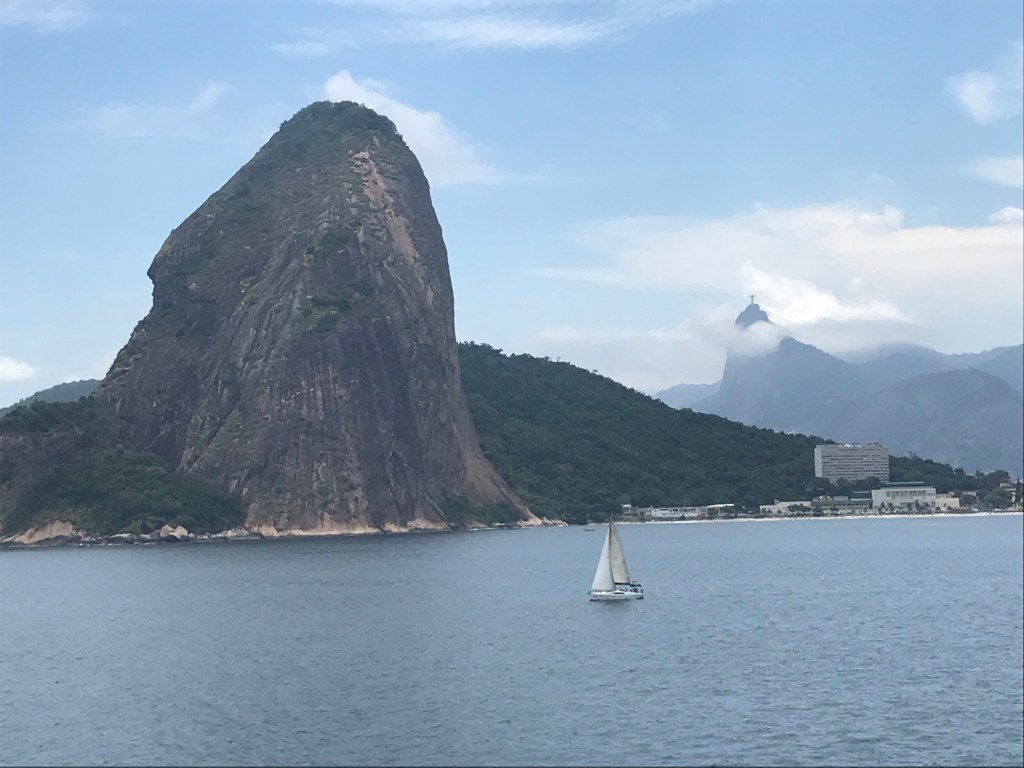
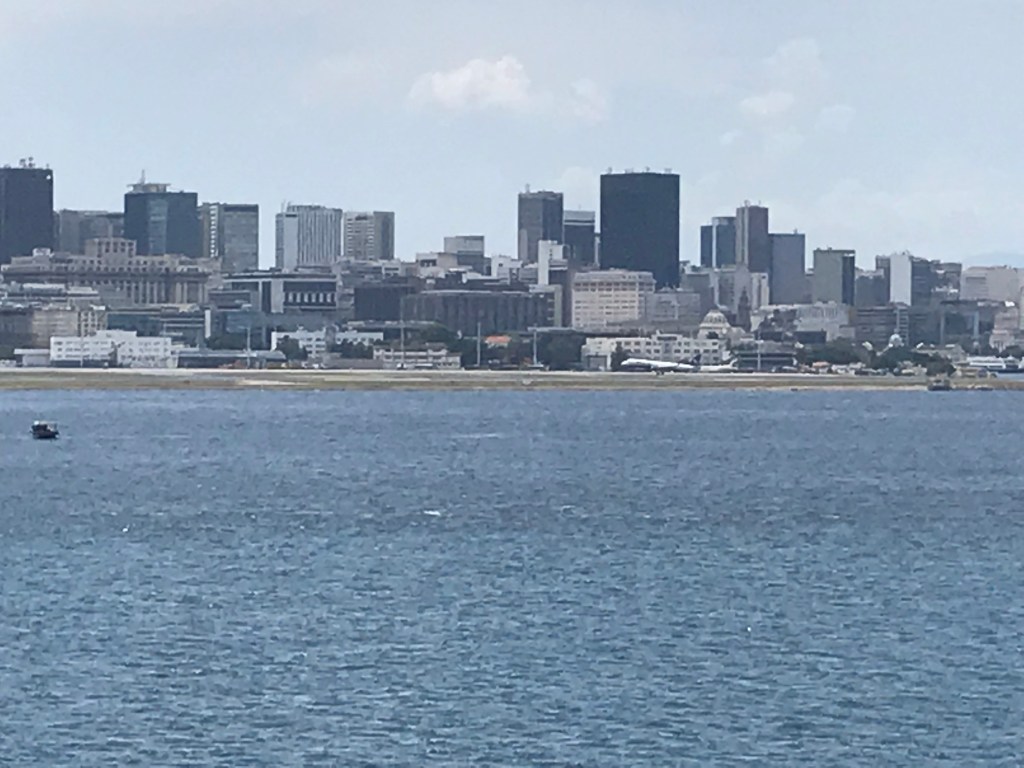
What a beautiful, complicated harbor with bays, bridges, and abrupt granite mountain peaks!  Just like in the photos… 

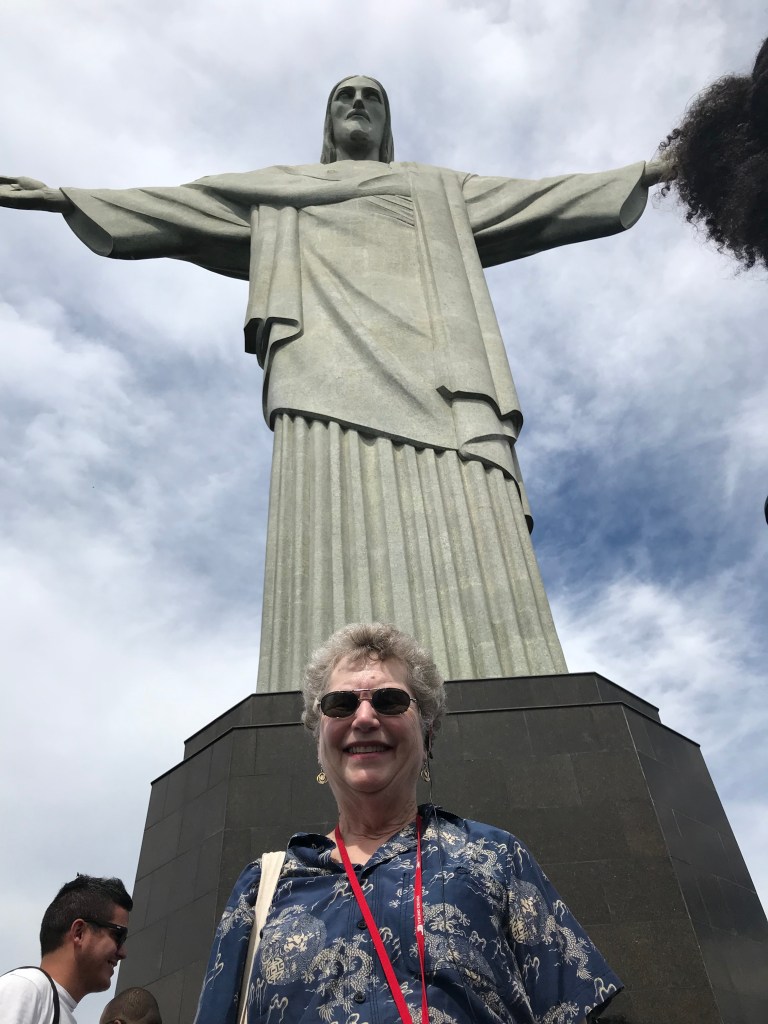
The first morning we took a bus to the cog railway that goes up through Tijuca National Park (jungle) to the statue on Corcovado mountain of Christ the Redeemer with his arms wide. The railway doesn’t go all the way to the statue; you need either to take a lot of steps or an elevator & two escalators.  The railway staff took Chris from the bus to the top (including escalators) in a wheelchair!  Impressive statue and view of the surrounding area. 

A friend had suggested we visit the H. Stern jewelers since Brazil is famous for precious and semi-precious stones.  We didn’t find them, but our guide Paola had a friend at another reputable jeweler and our bus was going right by their shop at Copacabana.  She arranged for him to meet us and the bus dropped us off.  So we did some jewelry shopping, and they transported us back to the ship—probably the most independent thing we’ve done.

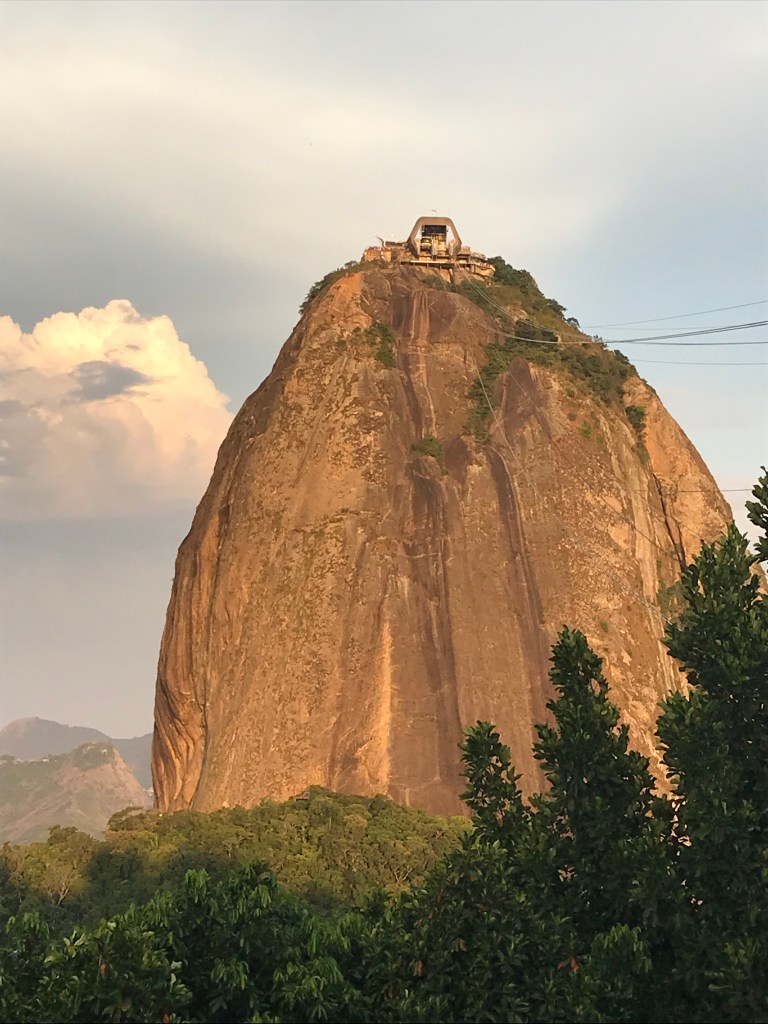
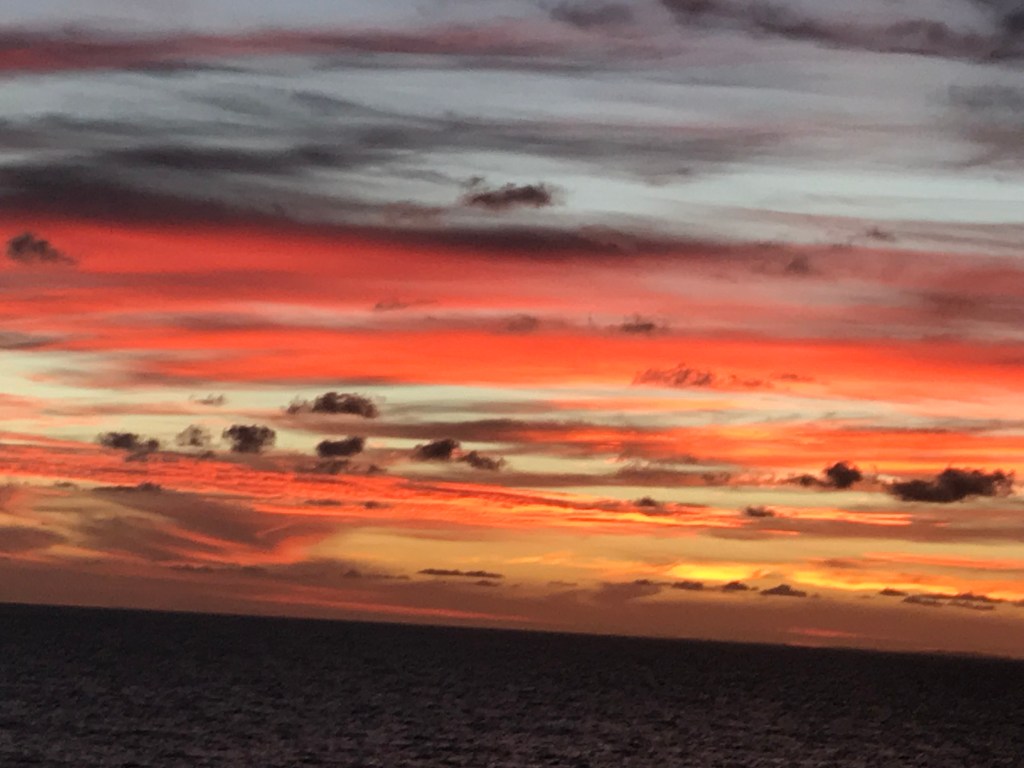
Later in the afternoon another bus and guide took us to Sugarloaf , the conical granite peak you ascend on two cable cars.  That was fun and another great view of the surrounding area.  We were there for sunset, which was pretty though I think the sunrise and sunsets we’ve seen from the ship were more impressive.  Of course, you always take a chance with weather.  Our cruise director said the first time she saw the Christ statue she could only see the feet due to fog. 

It was foggy in the morning but cleared and, despite forecasts to the contrary, we had two sunny and hot (90 degrees plus) days in Rio.

The second morning we went on a bus tour of the highlights of the city.  We had almost thought of cancelling—we were tired and had already taken two buses through the city—but we were glad we went.  Our guide was fantastic.  Originally from Italy, John was so interested in and knowledgeable about architecture, history, and culture that it was fascinating.

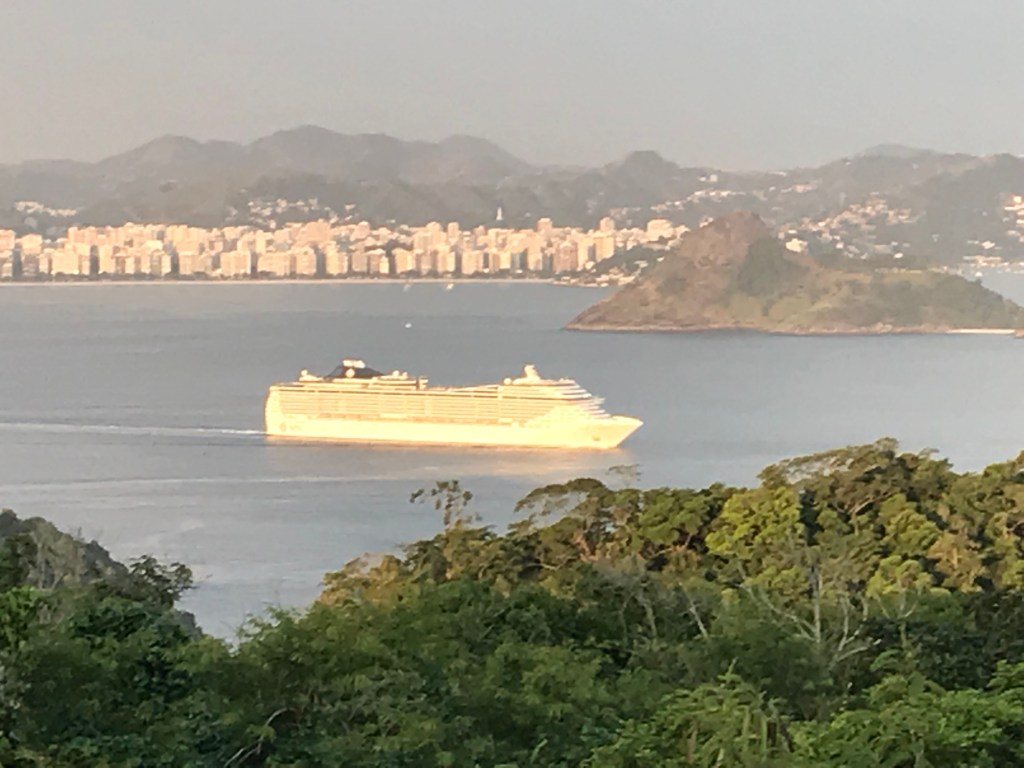
We sailed out after lunch and that was lovely too, but it’s amazing how tiring three consecutive days in port were!  We did get an extra hour of sleep because the clocks were turned back—presumably the beginning of many turning backs! — Cynthia

Paparazzi?… The morning we arrived in Rio was warm, and initially, cloudy; more significantly, we were met by a hovering helicopter.  The same or a similar machine followed closely over the rear deck of the World Café, so we ate al fresco while being observed.  Within a matter of minutes that helicopter was replaced sequentially by 4 others (of different shapes and colors),,, and subsequently by 3 others, which may or may not have been different than the earlier ones.  Anyway, for 30 min or so noisy sheep dogs nipped at our heels and herded us into harbor while we ate.  Why?

     A hint at the reason came with scrambling waiters and supervisory restaurant staff at some point in the paparazzi parade, hurriedly setting previously empty tables, which were then quickly filled with waving diners.  When asked, the Restaurant Director indicated Viking had hired local film crews to record Viking’s first arrival in Rio.  (A single helicopter followed our departure as well.)

     So, the next time you watch Masterpiece Theater or see another Viking promotional film clip, look for a Viking Ship sailing into or out of a large metropolitan port amidst small islands with conical mountains (one of which is likely Sugarloaf).  With such a fleeting, small scale view, however, you are unlikely to see a frowning, grey-haired diner on the rear deck. — Chris

January 18 Amarcao dos Buzios, Brazil

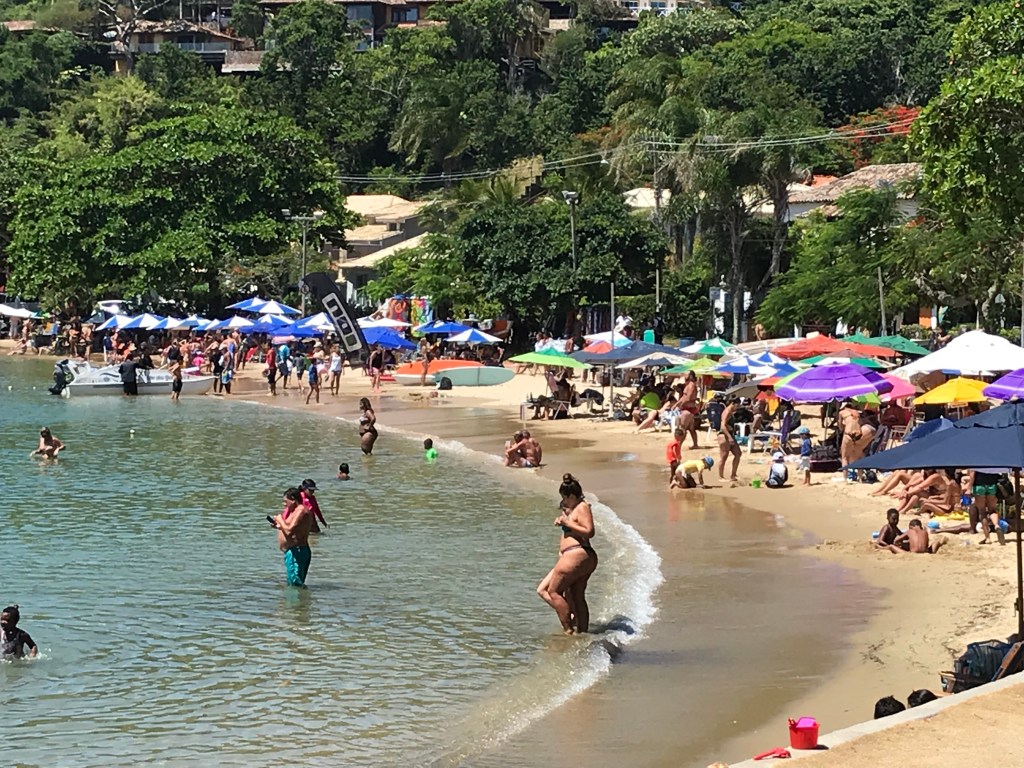
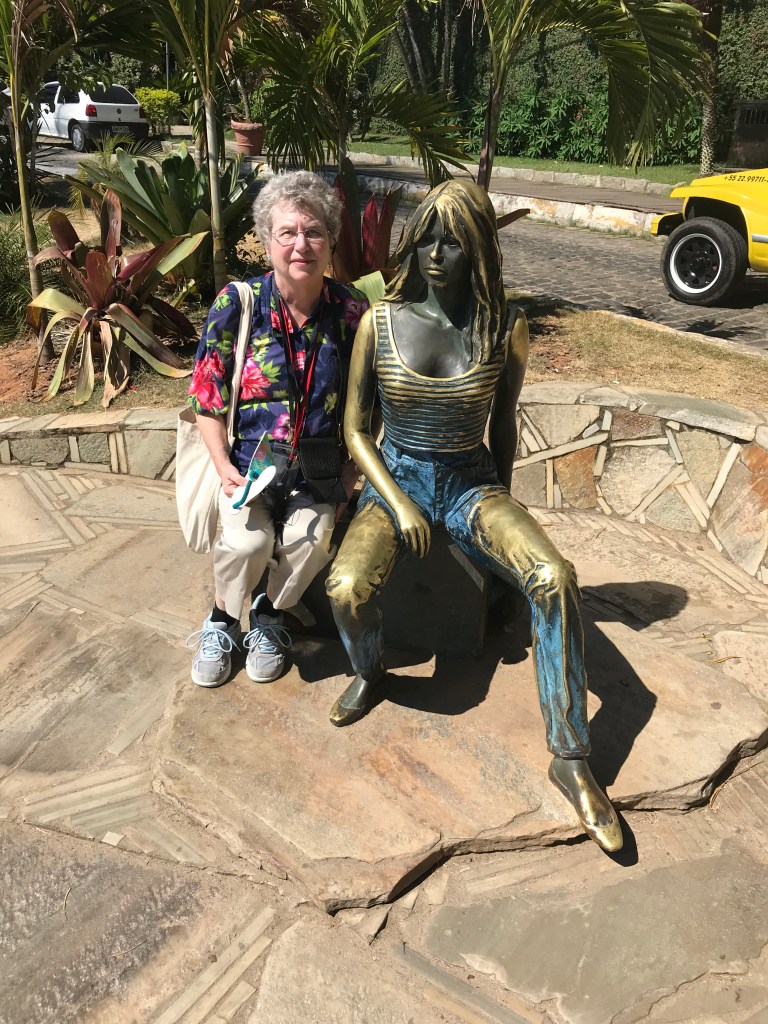
Buzios was a fishing village (with 26 beautiful beaches) about 2 hours by car north of Rio de Janeiro until 1964 when Brigitte Bardot, tired of the paparazzi in Rio, arrived and immediately turned Buzios into a tourist destination.  Now, I’m told, almost all people who live there are involved in tourist trade.

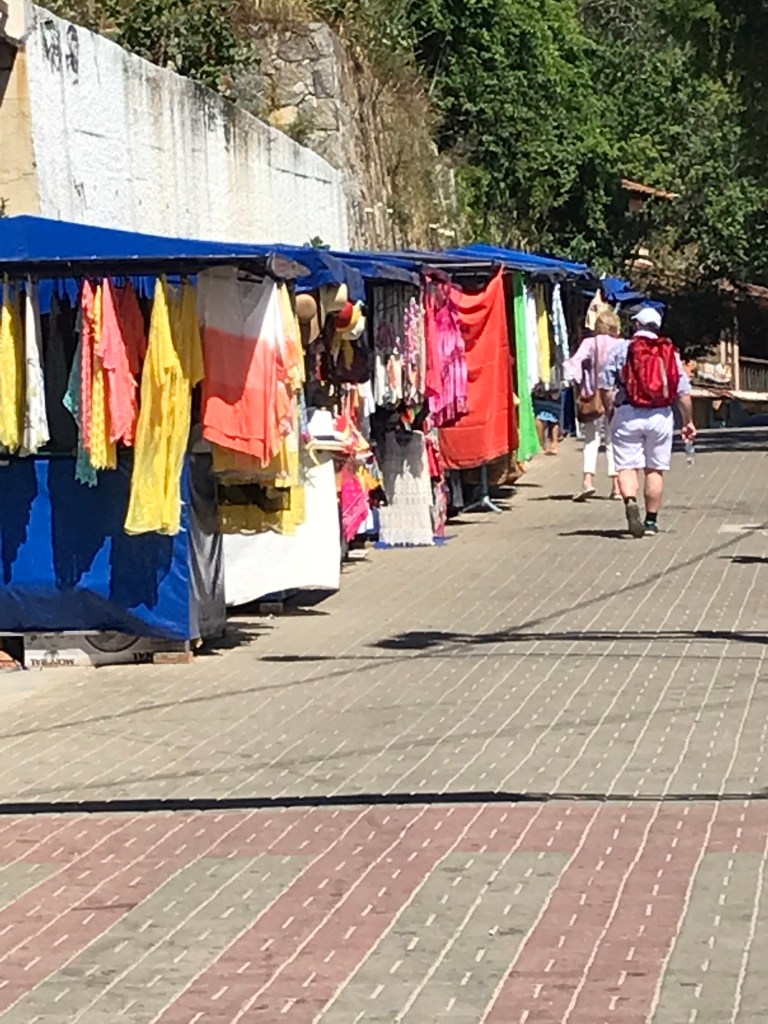
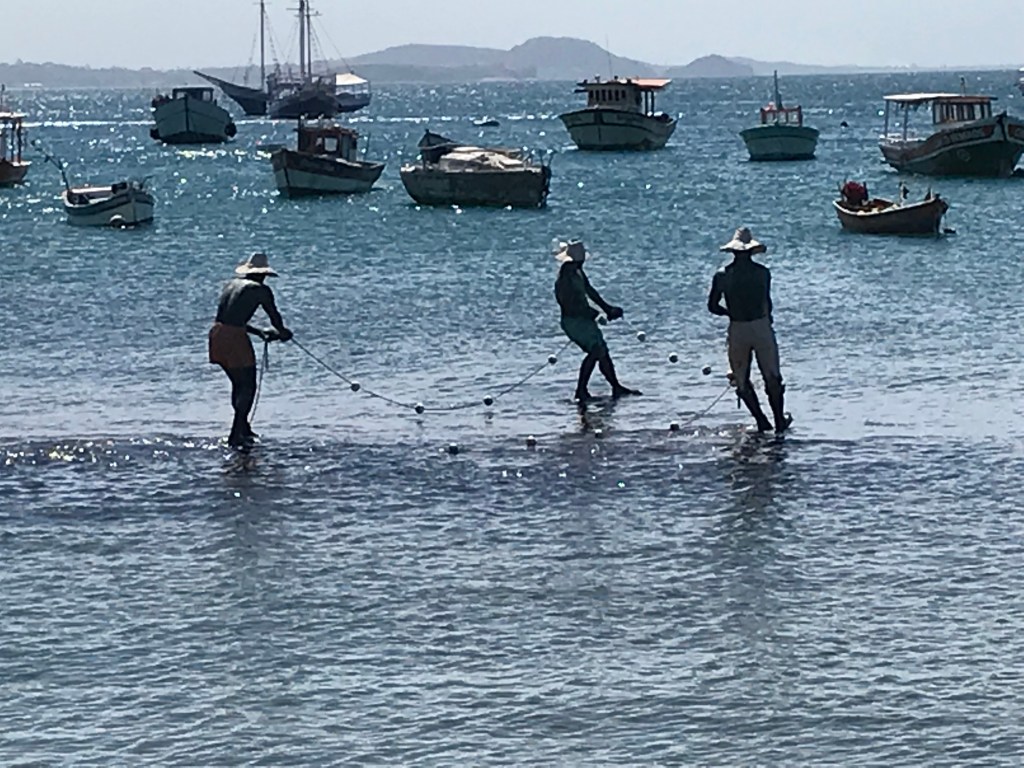
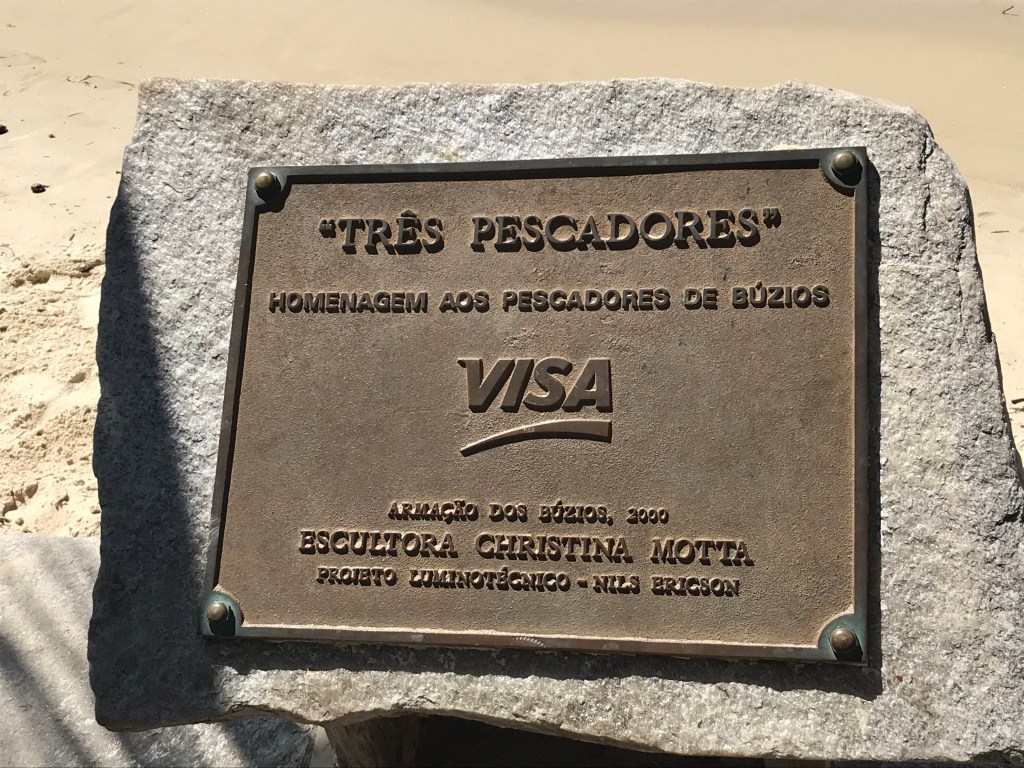
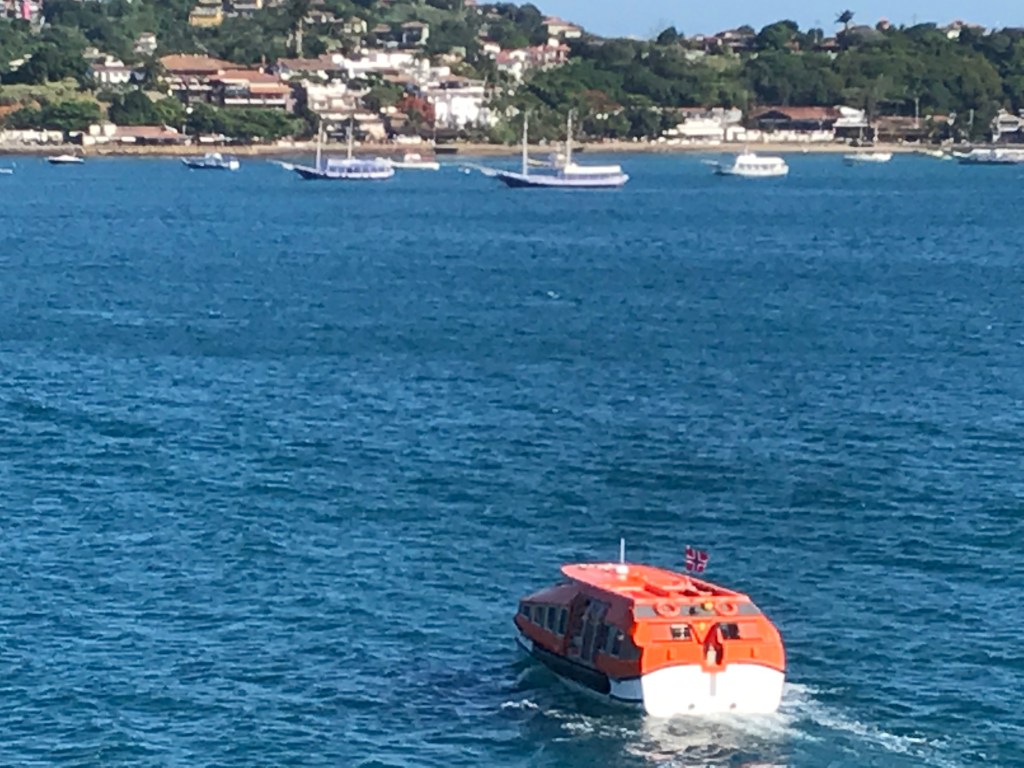
We were tendered ashore (see tender photo above) and went on a walking tour.  Even along the shore it was hot (90 degrees I think) and many walkers dropped out along the way including Chris.  I’m not sure why we chose a walking tour—we mostly avoided them for the whole trip—since there was a trolley, catamaran, and schooner tour available.  But our guide was a lovely young man who taught Portuguese and English in high school; if I didn’t pay close attention I could even believe he was American since he had little accent.  There’s little to see in Buzios except the beautiful beaches, restaurants, and tourist shops as well as the bronze statues by a local artist dotted around town (two pictured above.) –Cynthia

Viking Speak: “We are not “Tourists”; we are “Travelers”!  Or when tendering folks from ship to shore, travelers are instructed to “disbark” the ship, not, I guess, to be confused with the effect of rubbing vigorously against a tree.  —Chris

January 17 at sea

A reasonable question is ‘What do people who don’t play bridge do on sea days especially when there are several in a row?’  I’m actually not sure myself.  A sampling (I’m sure I’m omitting many): An author does a popular writers’ workshop addressing issues of how to write.  There is a lot of mahjong.  Jigsaw puzzles are out and board games such as scrabble are available—some on electronic tables.  There are cooking classes/demonstrations, tours of the kitchens and laundry (apparently very interesting—who knew.)  Many mini concerts are held around the ship.  Today saw a screening of Aida from the Met.  Some folk, of course, spend much of their time in and around the pools.  We have lectures (though I’m less than impressed by some of the lecturers and less than interested in some of the topics.)  Today a highlight was a simulator flight on a 747 from where we are to Rio, including views of scenery and explanation of all the controls.  It was offered by a passenger who is also ‘one of Viking’s resident astronomers’ and coincidentally a pilot.  He was very good, and it was enjoyable and informative.  The best lecturers seems to have been amateur enthusiasts (the pilot is a professional pilot but involvement in flight simulators is a hobby—though I gather he writes some of the manuals;  the other good one is the whale/dolphin watching guy who also spoke about the Amazon.)  –Cynthia

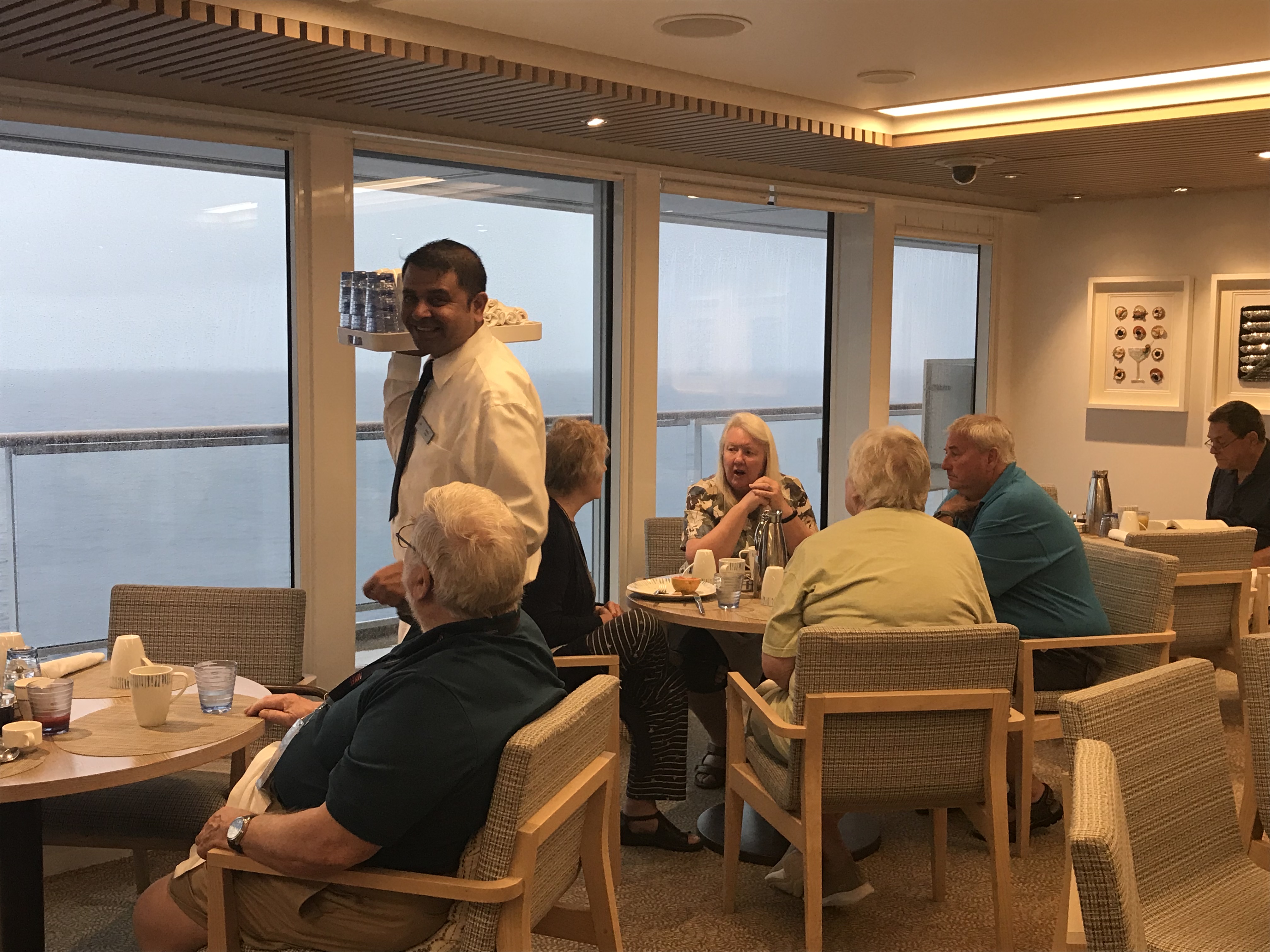
Al  Fresco Dining.  One of the benefits of dining at the World Café on Deck 7 is eating outdoors at the rear of the ship; not to mention the views, where ocean and sky meet and the horizon is visible through an arc of about of 140 degrees.  Sunsets are outstanding and it’s a nice walk from our stateroom.  Sure, the space is warm and humid, but the aft deck breeze is refreshing and constant (even more so now the ship’s mechanical problems have been resolved and we are clipping along at 17 knots.); normally about half the tables are shaded.  A diverse array of freshly prepared hot (and cold) dishes are only a few steps away inside, at the Café’s smorgasbord (aka cafeteria). Moreover, always courteous and friendly waiters provide drinks (and seat cushions) on request.  What’s not to like?  Besides, why go on a Cruise through southern waters if one wanted simply to stay indoors and cool all the time?  (Both conditions are present this time of year in Vermont; and more inexpensively!) 

     Unfortunately, this al fresco space is congested, serving three not always compatible functions: dining (and occasionally, preparation), sun-bathing and soaking.  Squeezed aft of the Café’s out-back tables, three rows of chaise lounge chairs face each other across a very, very small infinity pool and an elevated hot tub, both of which interrupt a diner’s view of the expansive ocean, winking waves, blue sky and fleeting clouds.  There is, after all, a more spacious pool centrally located with chaises, bar, and bar fare further forward on the same deck…why crowd the aft deck? 

    Moreover, three times so far (suggesting an ongoing frequency of five day or so), the Café has set up a lunch-time preparation and serving station in place of most of the shaded aft tables, restricted dining to sun-drenched tables or those in the cool interior.  Today, the special fare was freshly made and cooked pasta… but insufficient space to enjoy these al fresco. –Chris      

January 16 Salvador da Bahia, Brazil

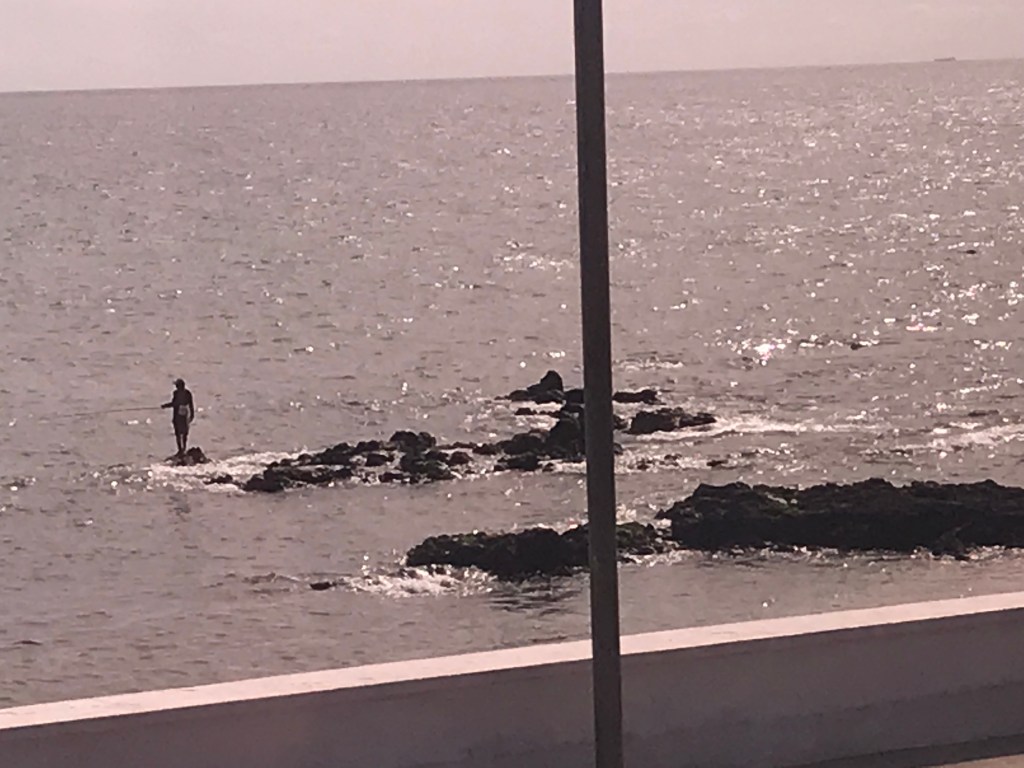
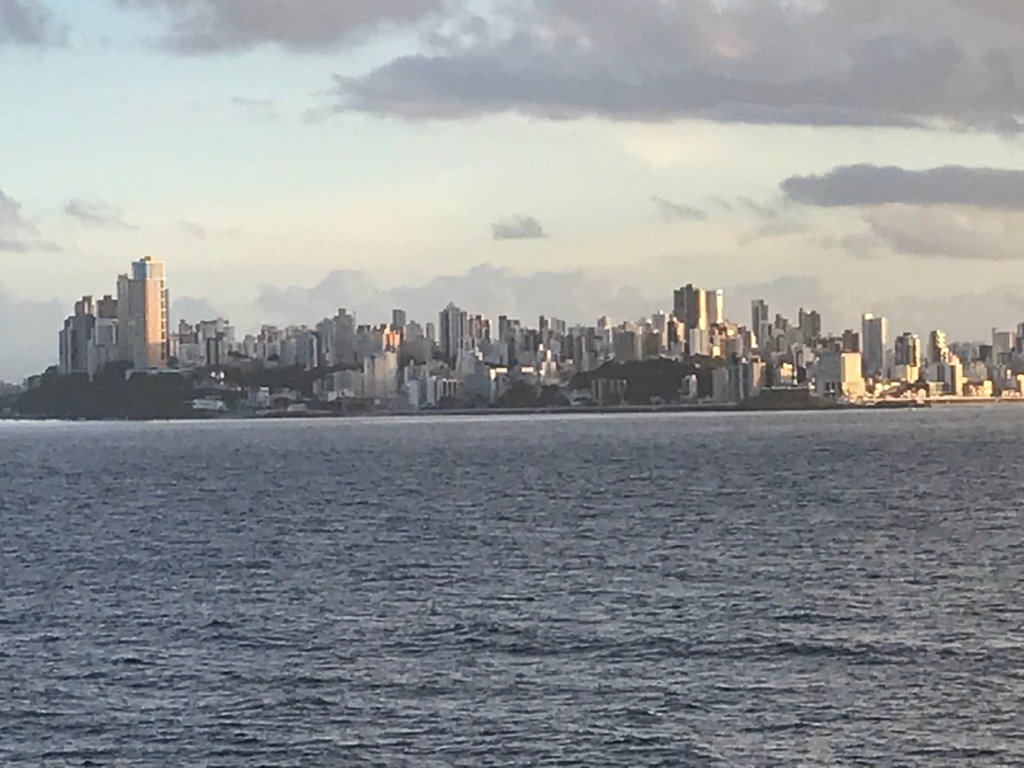
I woke very early this morning and noticed I could see lights showing shore was visible so I went on our balcony and watched for a couple of hours.  Sunrise came and then the bay and we sailed into the harbor.  It was beautiful.  I think I’ll try to be up to watch as we sail into other ports. 

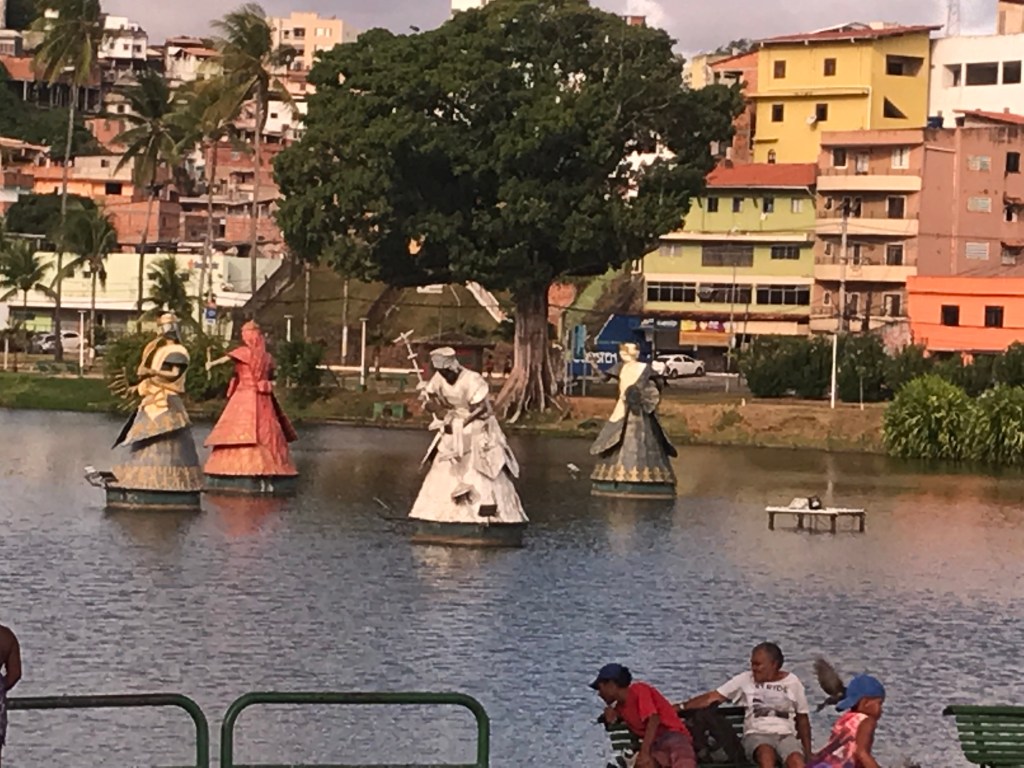
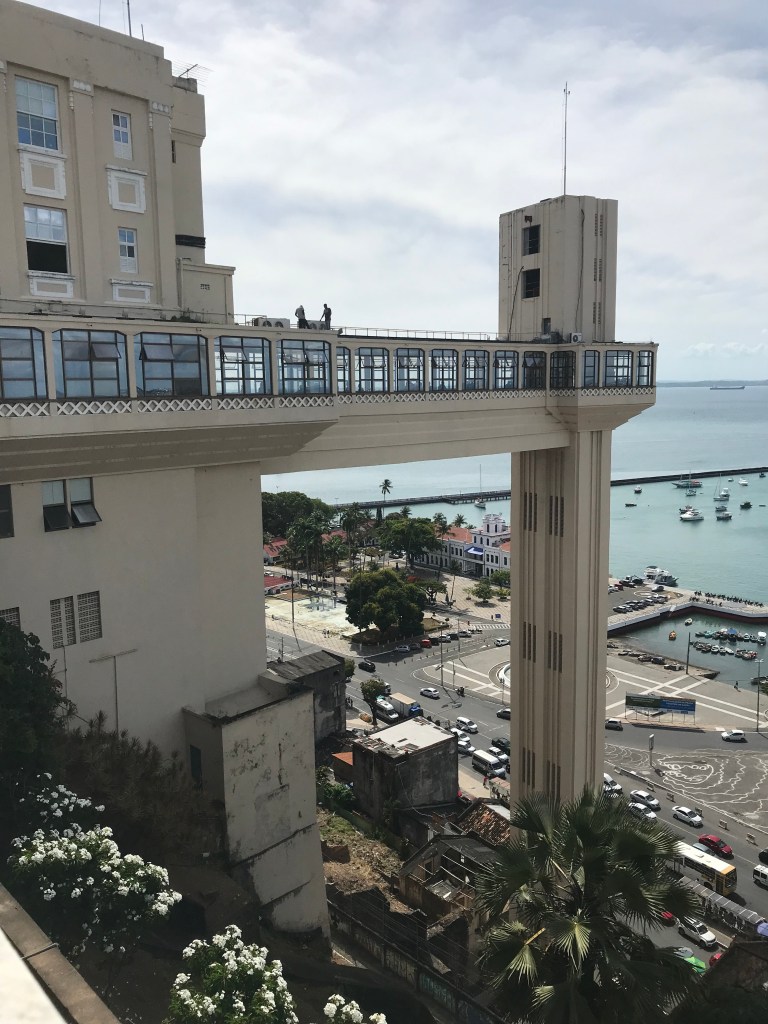
I walked into the city and visited the crafts market where I saw little of interest (some nice hammocks), very loud and crowded for a Vermont girl.  On our bus tour in the afternoon the guide did a reasonable job with the material she had but there really didn’t seem much to see.  Someone told me later that it had a really interesting history so perhaps we could have had a better narrative. Salvador da Bahia was the first capital of Brazil.  It was a center of sugar cane production and, therefore, a major destination for African slaves; thus the city of 2 million or so is 80% black today.  There is much emphasis on African religions, often mixed in with Christianity; each color (ribbon, statue) refers to a different deity—white is Jesus but blue may be the sea goddess or St. Barbara, etc.) When sugar cane lost prominence, the capital was moved to Rio de Janeiro.  The old part of the city has an upper and a lower portion connected by elevators (as well as by roads). The city has lots of empty buildings as they focus on building on the Atlantic side and largely abandoning the bay side.  With unemployment high and much corruption it’s hard to know how they will manage to clean up and rebuild.  They believe in lots of festivals and processions through town however.  They claim their Mardi Gras celebration is bigger than Rio’s though not as well known. –Cynthia

January 14-15 at sea

Despite weather forecasts to the contrary, our days have been warm and mostly sunny.  It is now even predicted to continue for our next two ports.

I forgot to mention the interdenominational service Sunday (Jan 13) led by our indefatigable cruise director Heather.  Heather is always in high heels and exceedingly cheerful, but is also an excellent cruise director.  To add minister to her string of duties seemed a bit much, but she even delivered an excellent homily for Jesus’ baptism.  The service was held in the theater and attracted 150-200 passengers; to assist in ambiance the full-size screen across the front showed the interior of a cathedral as if we were in the pews.  Heather said their photographer goes to churches in each port to photograph so we can change cathedrals each Sunday.  She was pretty sure today’s was in Hamilton, Bermuda.  The service itself sounded very Episcopalian though I must admit I don’t know how many denominations use some of the same prayers and translation of the Apostles’ creed.

Last night we dined on deck (outdoors) with a couple, both physicians, from Los Angeles but originally from Poland—a lovely evening. Tonight we are back at the Chef’s Table. — Cynthi

The Chef’s Table,  Viking Sun offers two specialty dining rooms that have limited seating and require advance registration.  One is Manfredi’s which features Italian cuisine, and the other is The Chef’s Table, which as Cynthia described earlier presents a fixed menu and wines paired with each course.  The menu changes every four days or so and features more tasting-sized portions than full course servings.

     It so happens every day we are at sea we play Bridge in the two rooms comprising The Chef’s Table, with instruction and discussion in the morning and two and a half hours of duplicate play each afternoon. Given our usual seating arrangement, I usually face a very large display of still wine that divides the two rooms… and being “Dummy” frequently, my mind wanders.

     Wine is stored in 3 pairs of cabinets arranged back-to-back.  Each cabinet contains five shelves per side and each shelf, save one, is devoted to a single vintage. which if my math is correct, means the cabinets contain 240 bottles of wine, with about an equal mix of red and white/rose wine. According to their labels, the wines come mostly from the US and the EU, with a few shelves devoted to BR, AU and NZ vintages, and were bottled within the past five years. (From a cursory examination, I would guess the wines are relatively inexpensive, with (restaurant) price per bottle ranging from $25 to $60.)   

     The cabinets seem to be illuminated all day long with artificial daylight lighting. The lighting, however, is provided by LEDs, which don’t produce much heat.  All bottles are oriented neck upwards, and all but a couple of shelves contain corked bottles rather than screw-capped ones.  Cabinets containing reds are provided with circulating air maintained at 18 degrees C (or 64 F), while whites and roses are maintained at 9 degree C (or 48 F).   


     But!…musing about the various wines and their possible tastes changing over time provides a nice respite from Dummy Bridge. —Chris

January 11-13 at sea

The first of three ‘at sea’ days it rained.  How dare it rain for our cruise!  So we dined indoors all day, played (and learned) bridge, and watched a movie.  The following two days were pleasant and still full of bridge.  One evening we dined at the other specialty restaurant (having dined twice at Manfredi’s the Italian specialty restaurant) called The Chef’s Table.  This is a fixed menu four course (including an ‘amuse bouche’) plus a lovely ‘palate cleanser’ that has a paired wine with each course.  It was very nice and we’ll go again (for a different fixed menu). 

Unfortunately, during the second day we learned that our stop at Recife, Brazil intended for Jan. 14 is cancelled so we will actually have 5 consecutive sea days,  That’s fine, but I’m sorry to miss the port.  It seems we have a ‘mechanical problem’ that means we can’t travel at full speed so we need to cut out a port.  Presumably when we reach Rio, they will get the part or whatever we need to fix the problem.  On the other hand, despite the current sunshine, the weather report for the next two ports (as well as Recife) is for rain.  Not auspicious. –Cynthia

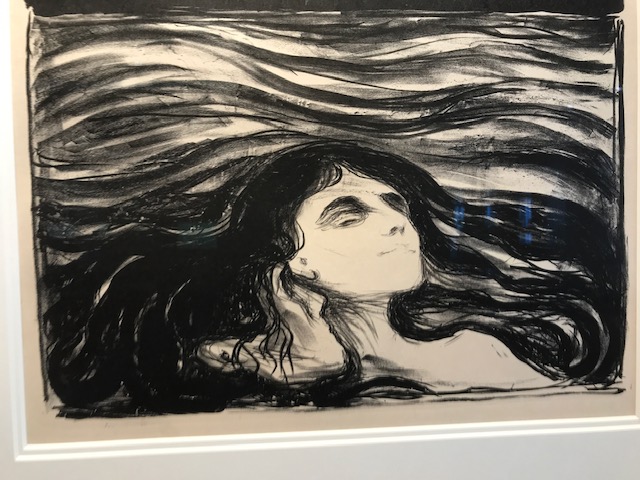
Nordic Dark Humor?  The Viking Cruise Line is noted for its patronage of such middle-brow art as Masterpiece Theater.  Thus, It’s not unusual for the Viking Cruise ships to exhibit works of art.  In the case of Viking Sun (our ship), most of the art is impressionistic in style and featured original lithographs by the Norwegian artist, Edvard Munch (perhaps best known for Panic), as illustrated by the photographs above.  The lithographs are starkly black on either white or sepia paper, and the one of the couple on the right could well be titled Norwegian Gothic, while the other is titled, strangely, On Waves of Love.  Munch is not Gauguin, however, and his art doesn’t seem appropriate for a Cruise in the Southern Hemisphere.  — Chris

January 10 Ile Royale, Iles du Salut, French Guiana

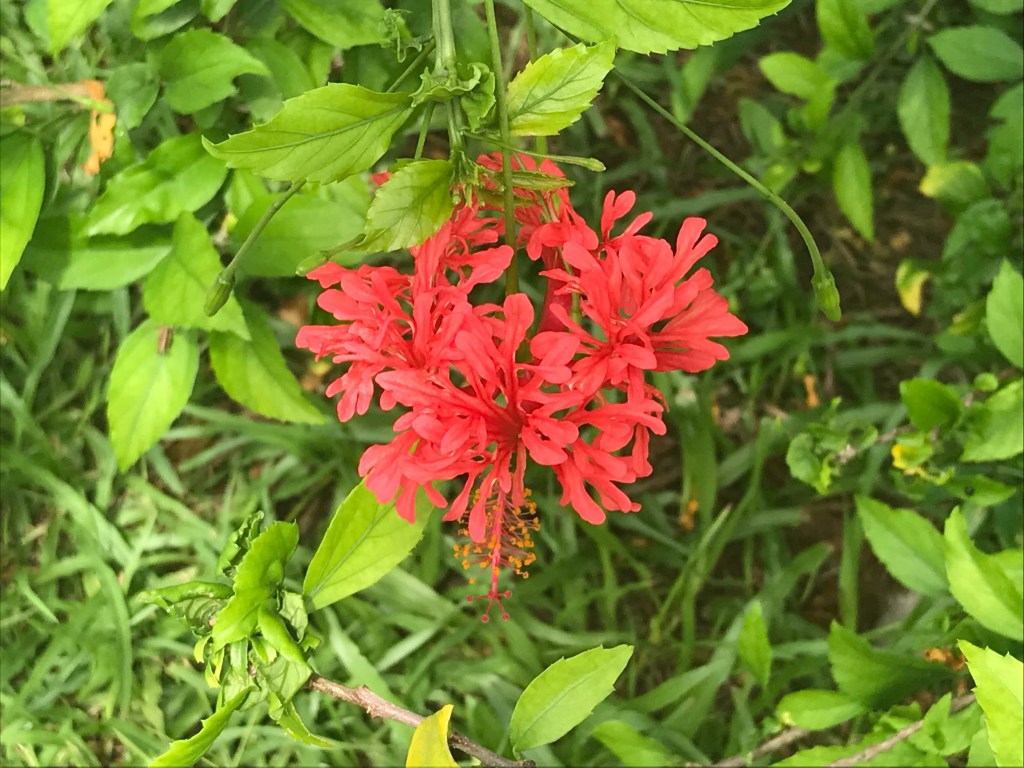
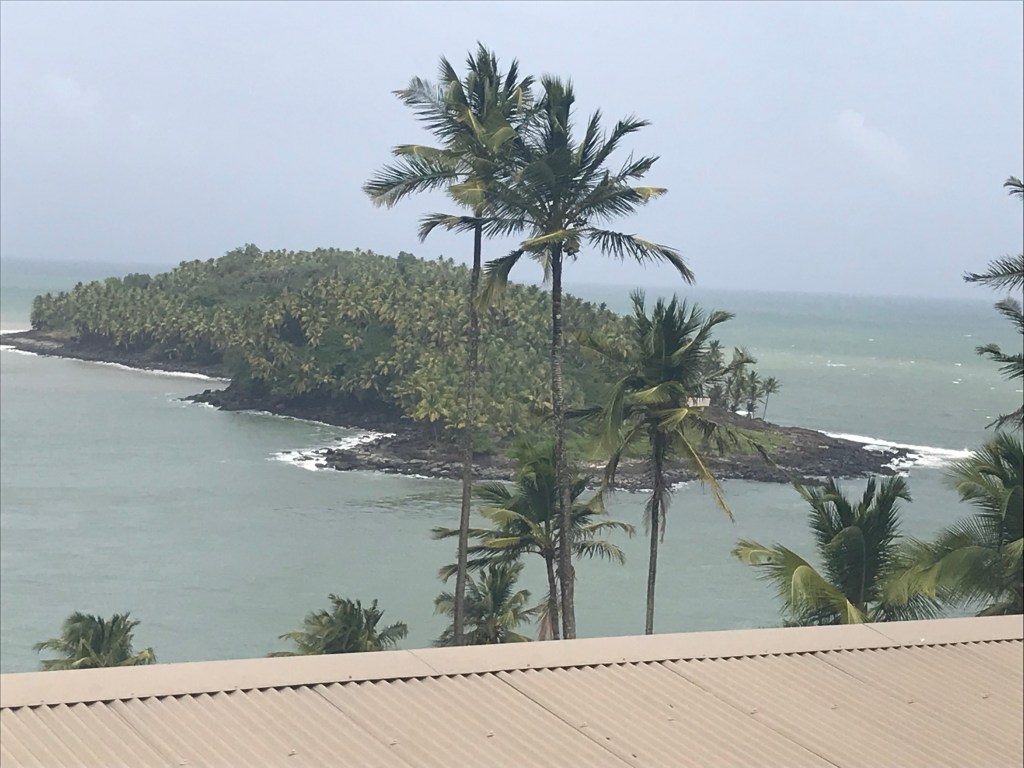
The 3 Iles du Salut, which include Ile Royale and Ile du Diable, were used for many years as a French penal colony.  Alfred Dreyfus was imprisoned here for treason for 5 years and then exonerated.  Henry Charriere was among the few to escape and his story is told in his memoir adapted into a film with Steve McQueen & Dustin Hoffman, both titled Papillon.  A remake of Papillon was made in 2017 starring Rami Malek and a good looking young actor named Charlie Hunnam.  We saw the film on the ship this morning and it’s pretty good.  This afternoon we were tendered ashore to Ile Royale where most of the penal colony was.  It was lovely to walk on a path in the woods—different type of woods from Middlebury’s Chipman Hill, but still.  The map of the trails and buildings seemed to bear little resemblance to the physical reality and the buildings had no signs so it wasn’t otherwise a really memorable stop. There were capuchin monkies and some nice flowers.   One of the buildings is now a small hotel; I can’t imagine who stays there, and staff are primarily ferried to and from the mainland.  From the top I could see Devil’s Island and I saw no evidence of the high cliffs featured in the movie.  Chris chose to stay on the ship—a good choice given the slightly rough sea making it difficult to board the tender and the heat, humidity, and rough trails on land.  We managed also to do our first laundry today; it’s hard to decipher the icons used on the machines but they seem to work fine.

January 8 St. George, Grenada

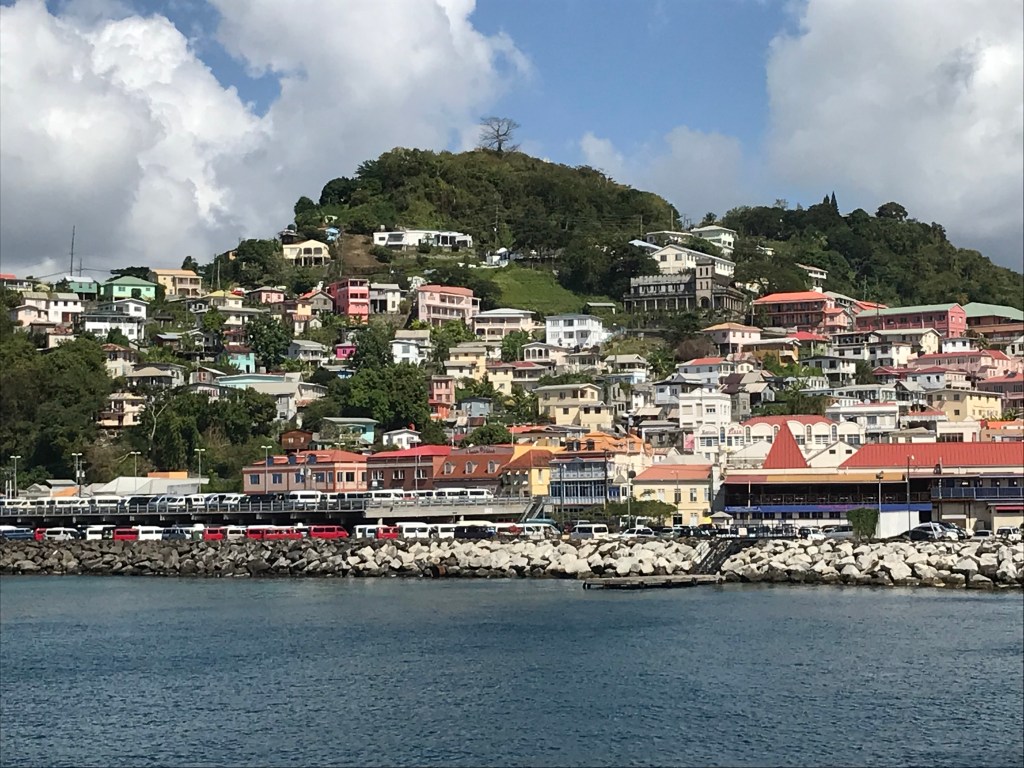
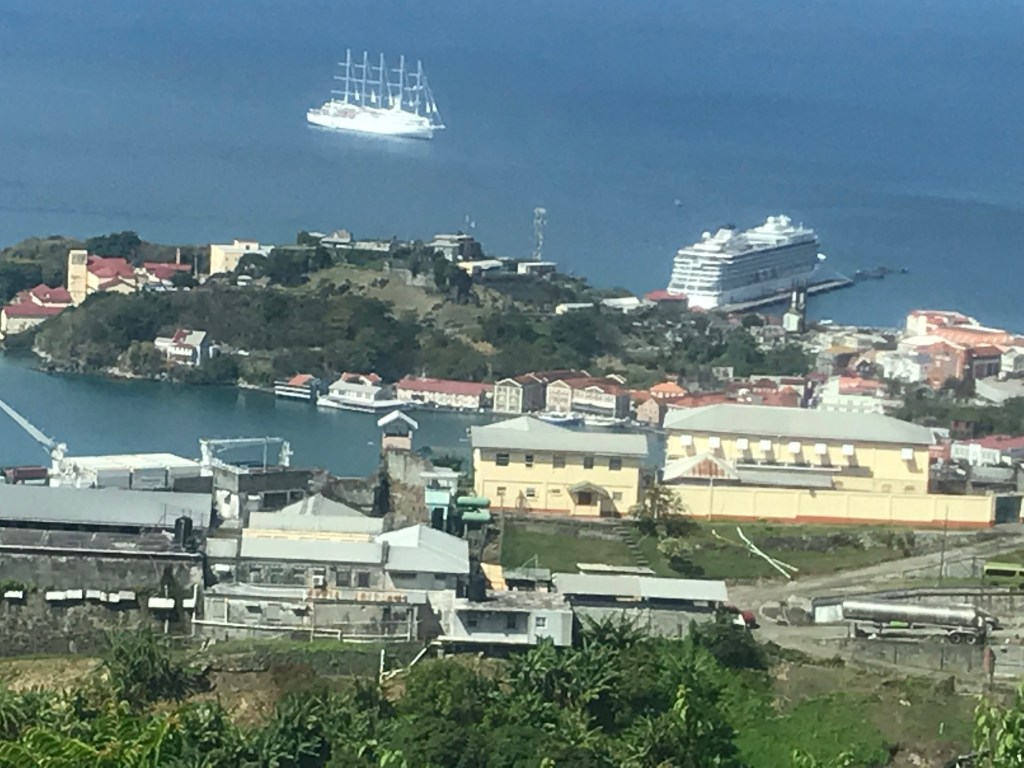
Georgetown, Granada from our ship

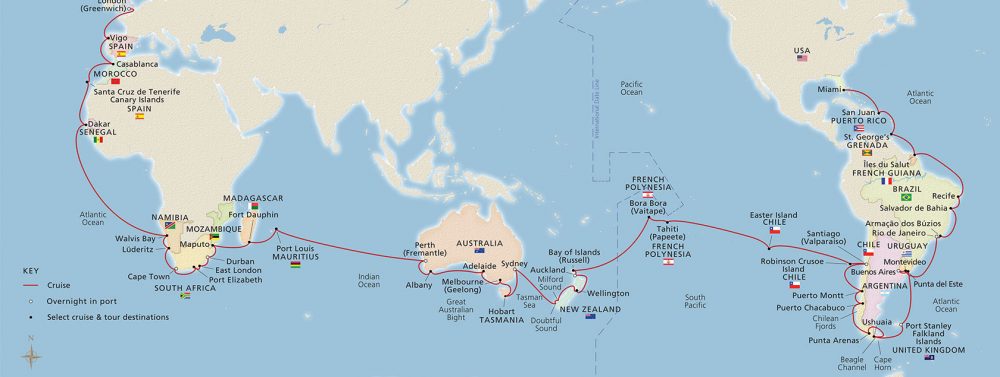
There are 930 guests on board (and 400 plus staff). 450 are going on the full world cruise; 360 disembark in Buenos Aires. I gather we are full for each of the 5 legs but there will be coming and going. 71 of us went on last year’s world cruise and Viking has a 245 day (!) world cruise beginning in August.

Grenada is a pretty volcanic island with lots of hills. The guides expressed thanks to the US for the 1983 invasion; I was surprised. Our excursion was simply a bus ride around the area with a stop for rum punch. Others did snorkeling around the underwater sculpture garden, which is gradually turning into a coral reef, or a tour of a rum distillery.