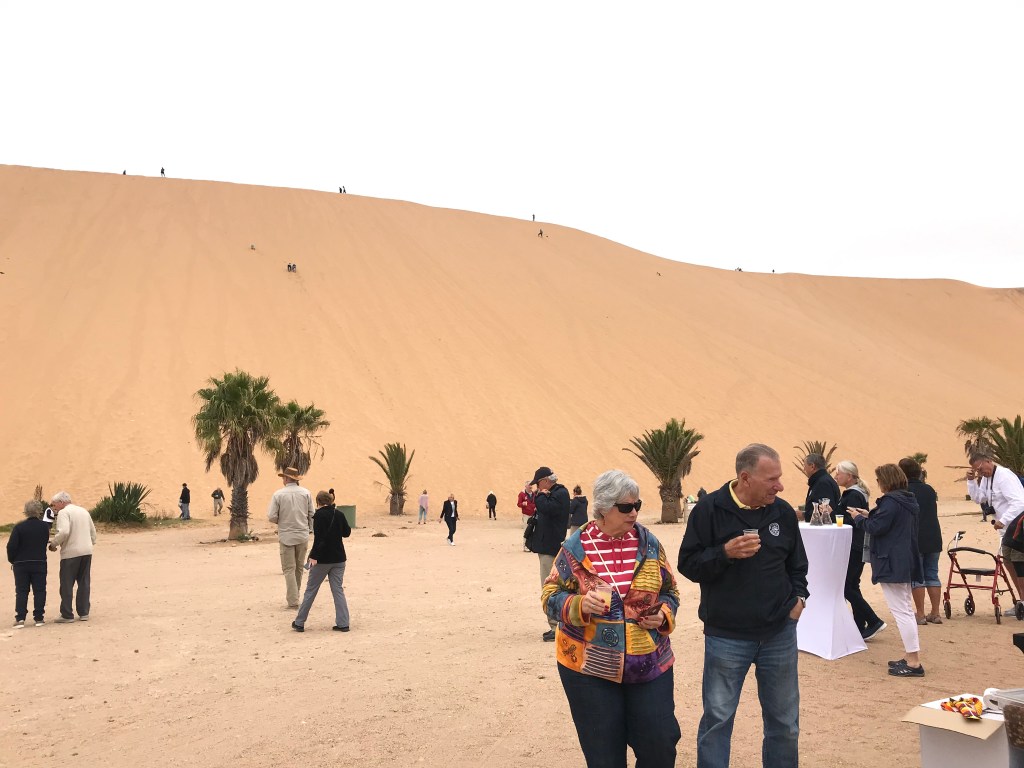
At the dunes 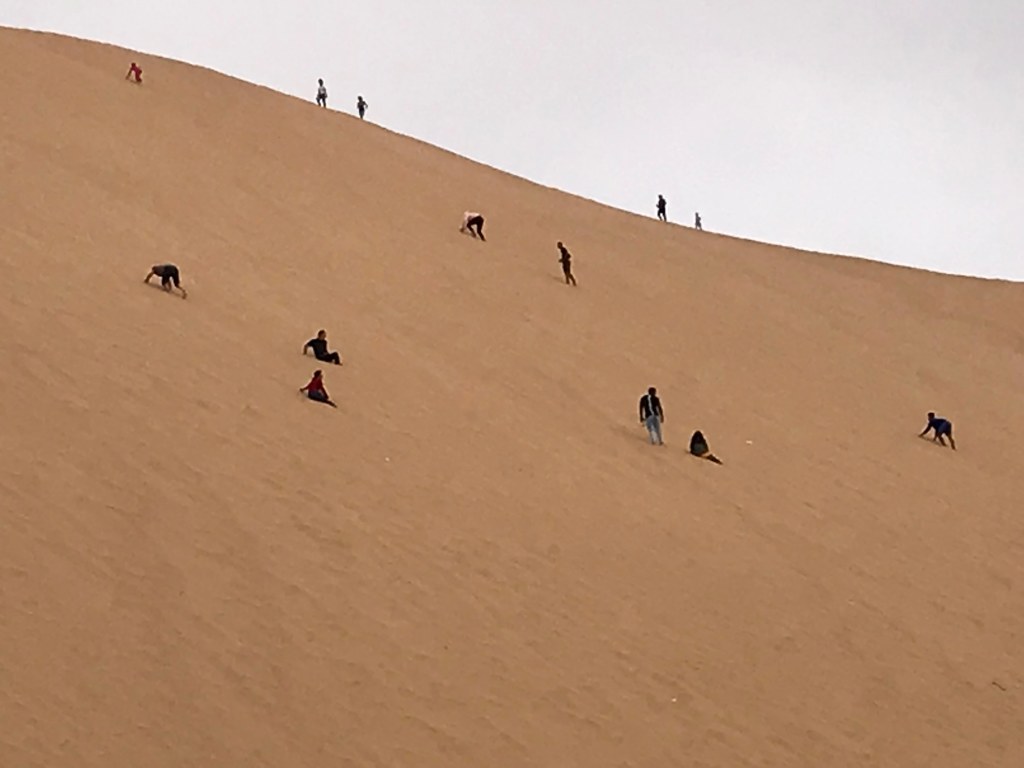
Climbing up and down the dune 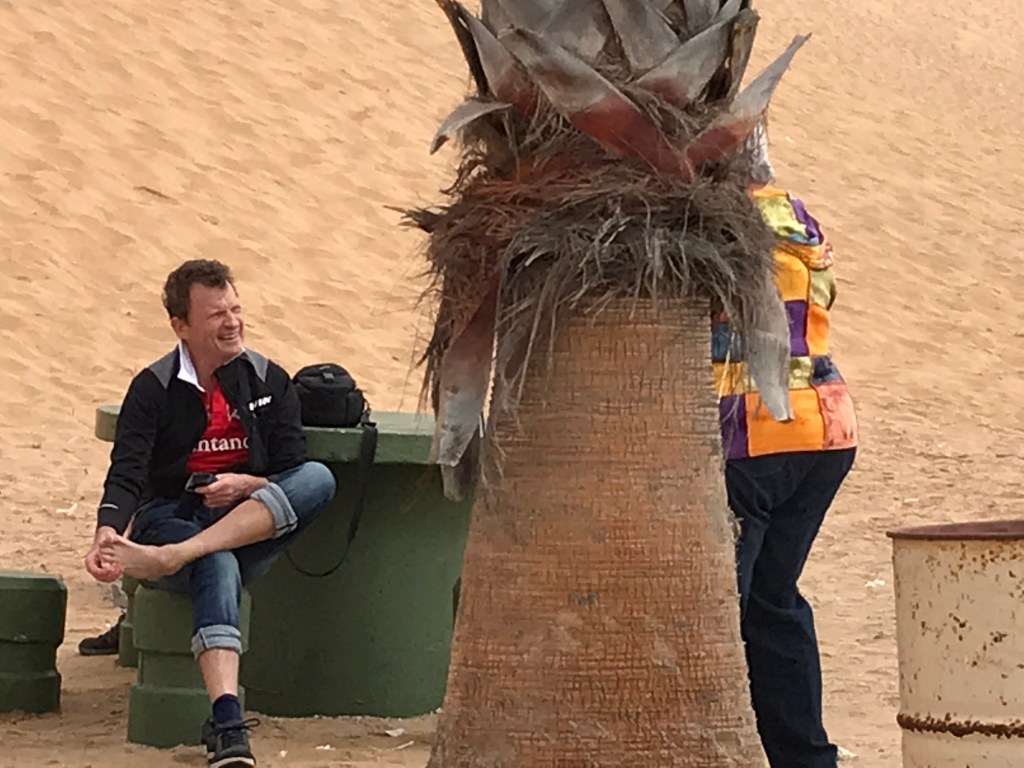
Our captain after descending from the dune 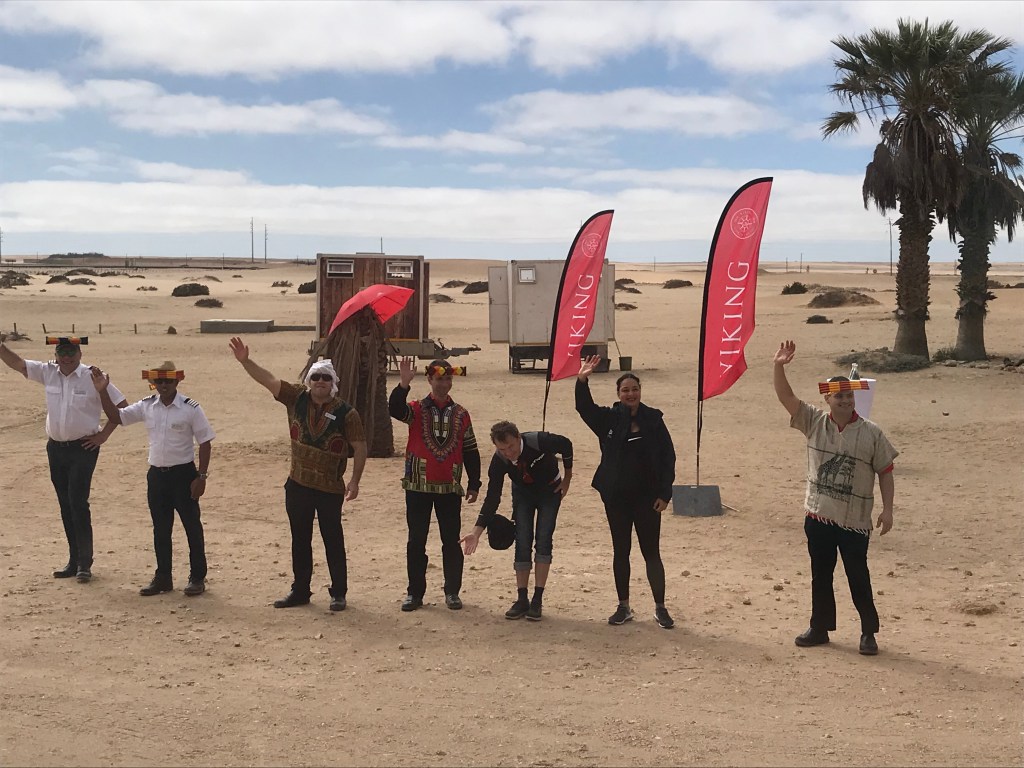
Viking staff waving as we leave the dunes 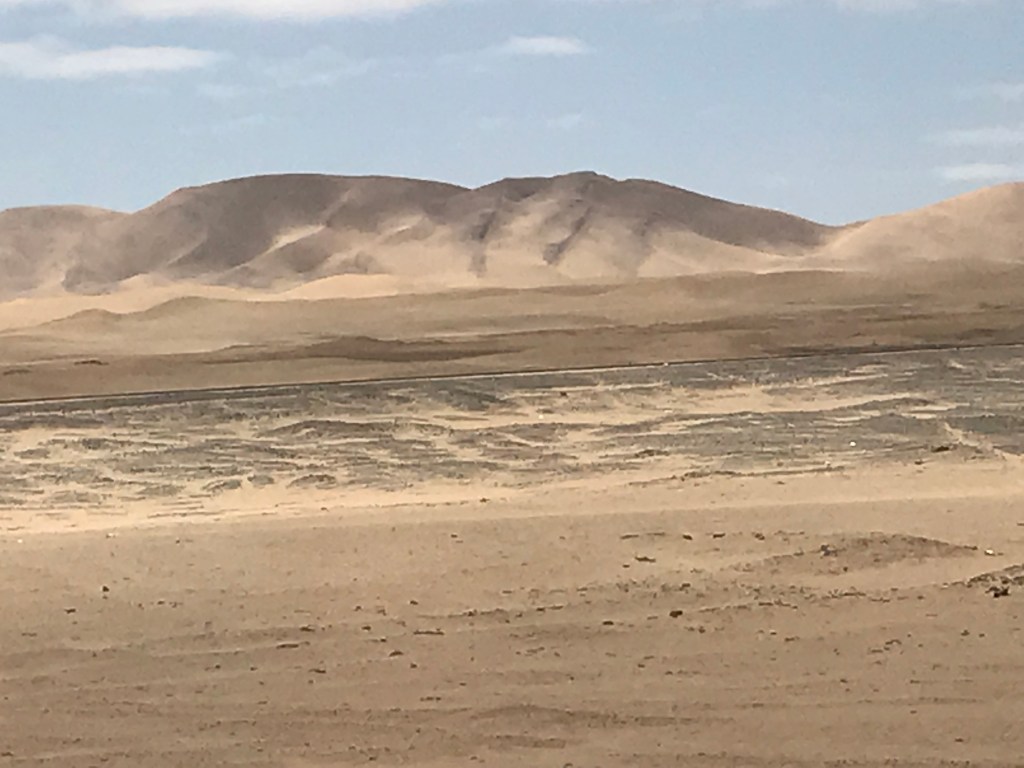
Desert scenery 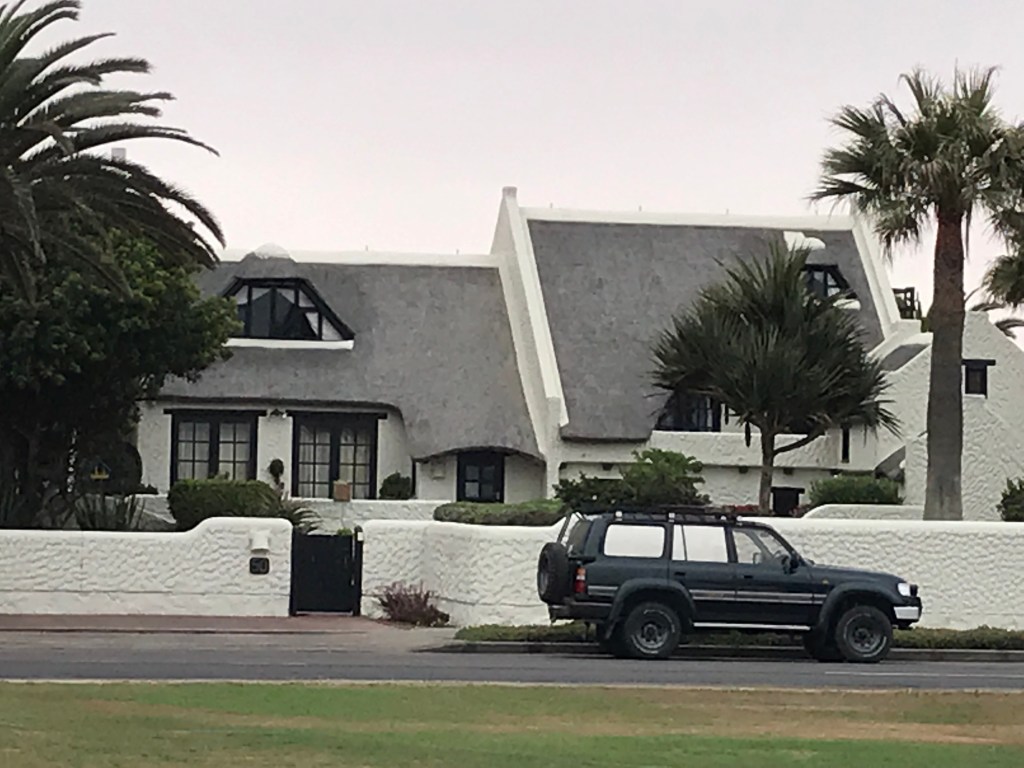
Thatched Namibian house 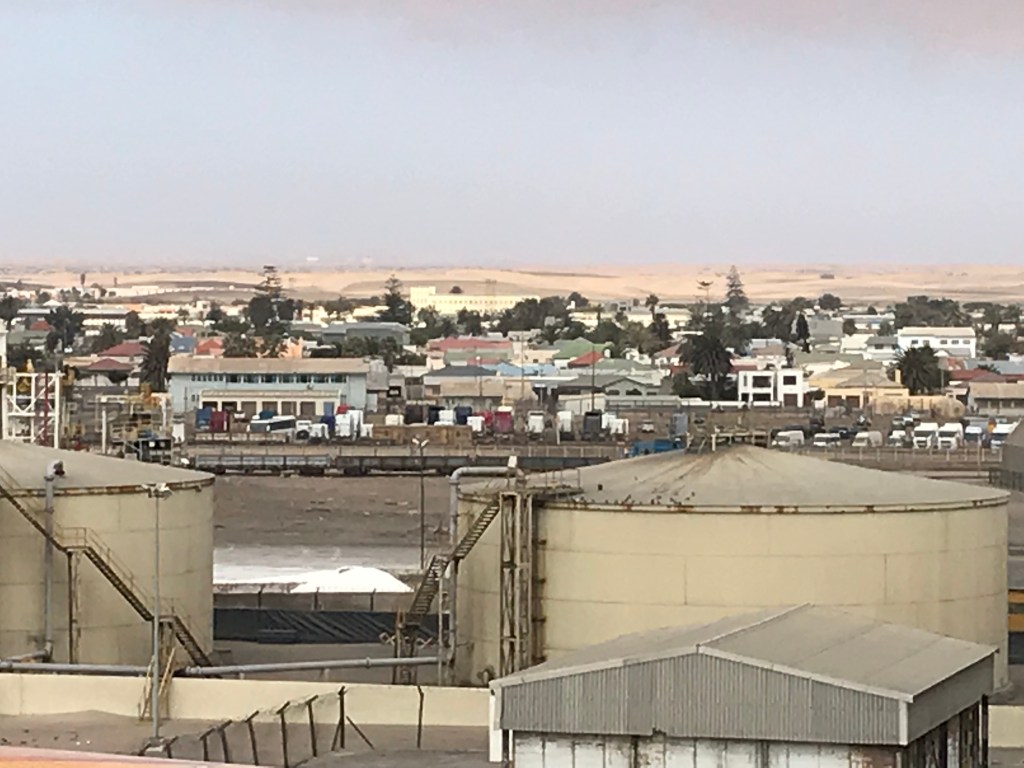
From the ship across the town to the desert 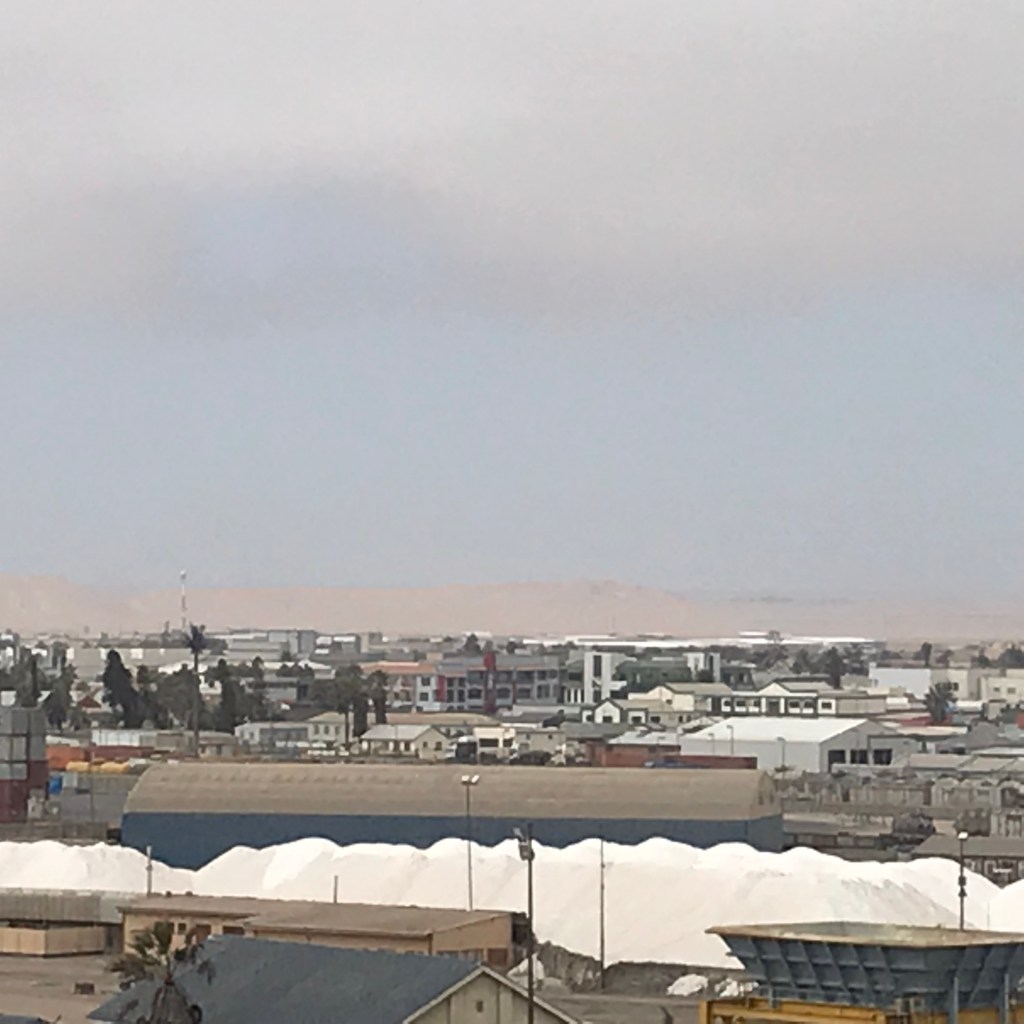
Salt hills awaiting export 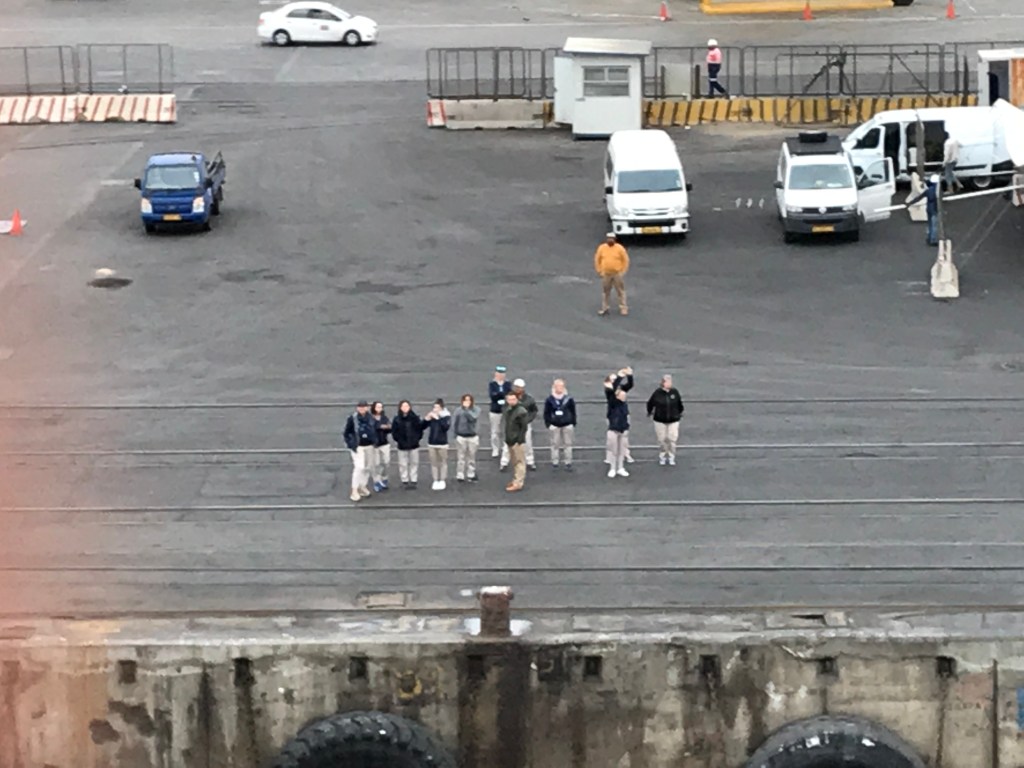
Saying goodbye to us
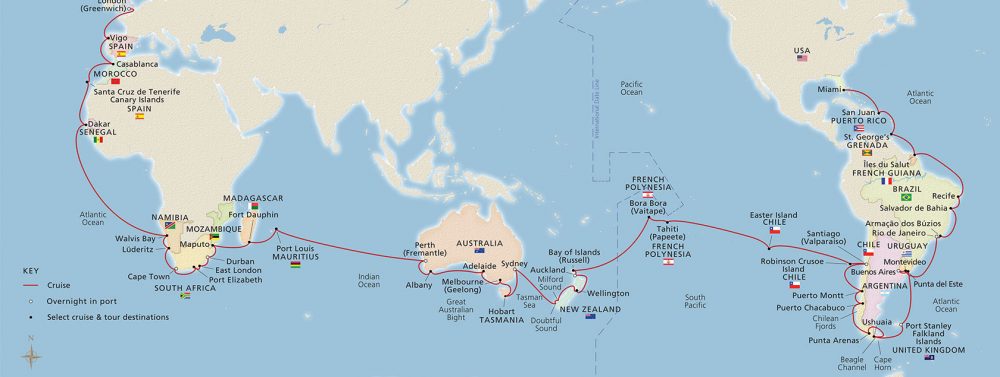
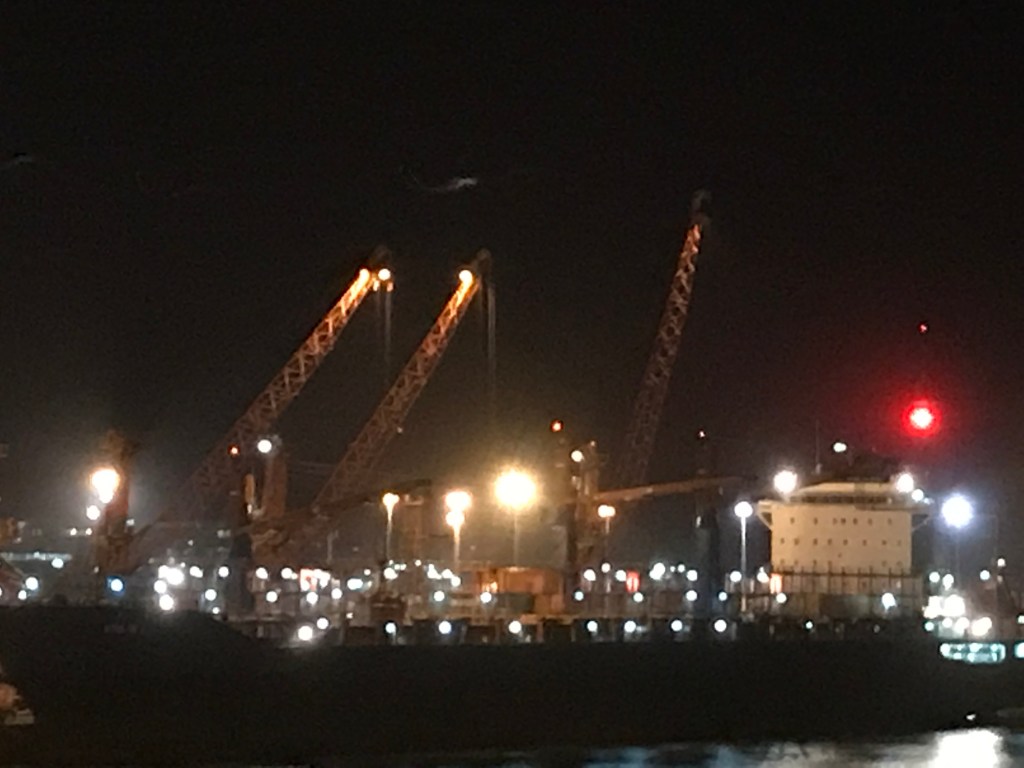
I never expected Namibia to be one of the coldest places we stopped, but it was a chilly, foggy day when we arrived. They had just received a large shipment of coal from South Africa and everyone walking on the pier picked up black soot on their shoes. The ship put out cardboard, towels, and shallow water containers to walk on before boarding, but, even so, the cleaning crew had much work to do when we departed.
Walvis Bay seems to be on a flat area surrounded on three sides by sand dunes. It is a nice-looking town with masonry houses surrounded by masonry walls. The picture I included is of a rather posh house because the only place I was able to take pictures of houses was along the lagoon, which is high-priced real estate. Though most of the houses are smaller with higher walls, they are similar—including usually nice gardens. Some houses have thatched roofs (like the one in the photo)–our South African guide explained that thatched roofs are wonderful for keeping you warm in the winter and cool in t summer, but are expensive to maintain and also significantly boost your insurance premiums (because of the fear of fire; so do wooden houses.) All in all it was a nice-looking town.
Walvis Bay remained a South African possession even after Namibia received its independence in 1990, but in 1994 after the election of Nelson Mandela, South Africa decided to focus on domestic concerns and allowed Walvis Bay to join Namibia.
The west coast of Namibia (and stretching north into Angola and south into South Africa) is the Namib Desert, the only coastal desert in the world. It is an amazing sight—cliffs of sand along the coast and inland dunes that can be almost 1000 feet high. Since the eastern part of Namibia is the Kalahari Desert, only the central section is not desert. Amazingly, animals, plants, and people have adapted to living in such a barren, dry environment. It’s not just what you think of as desert animals; there are even desert lions.
Our excursion took us to the lagoon to see flamingos and pelicans and out to the amazing sand dunes. Ship personnel dressed in Namibian & other African costume greeted us at the dunes with drinks and snacks. The excursion manager had mentioned that he had climbed a dune and slid down on a piece of cardboard (and spent the next week getting sand out of…everyplace) but still people, including our captain, climbed to the top of the dunes and slid down. It was hard going because the dunes are steep and made of very fine sand; they can move several meters in a week. We managed to resist the temptation to climb.
As we left, the guides and port personnel waved to us.
Now we begin our week-long trek to Dakar, Senegal across the great African bight (they don’t seem to call it that, but it looks like the Australian Bight but much larger.)

 C&C travel the seas