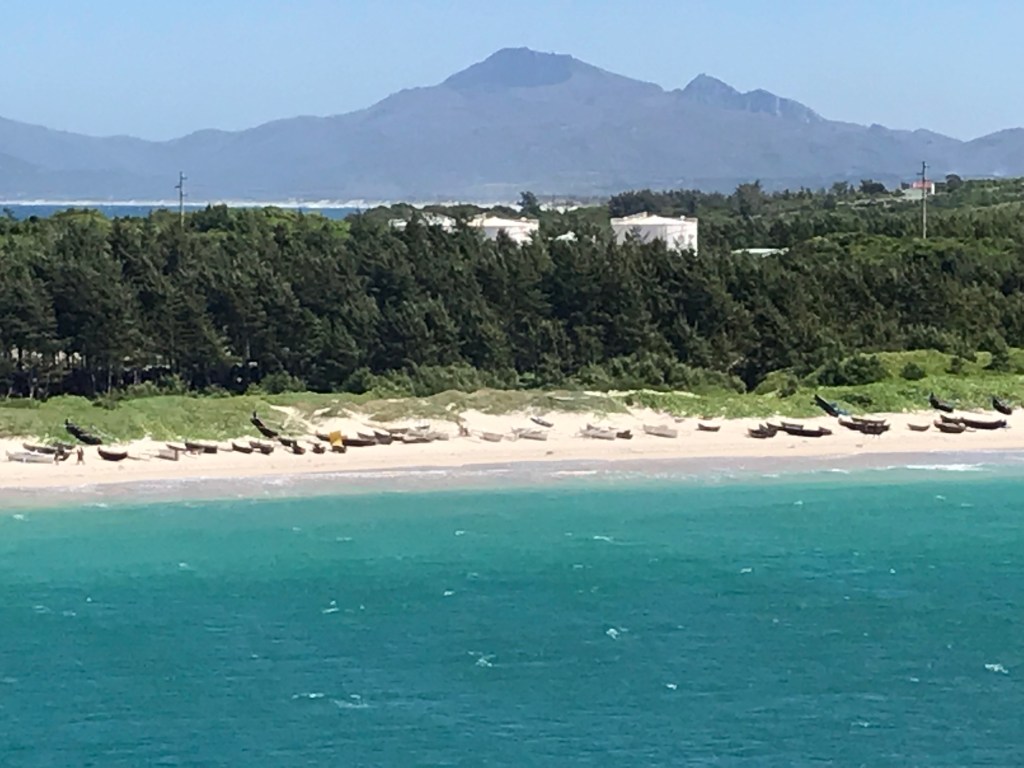
Initial view of Madagascar 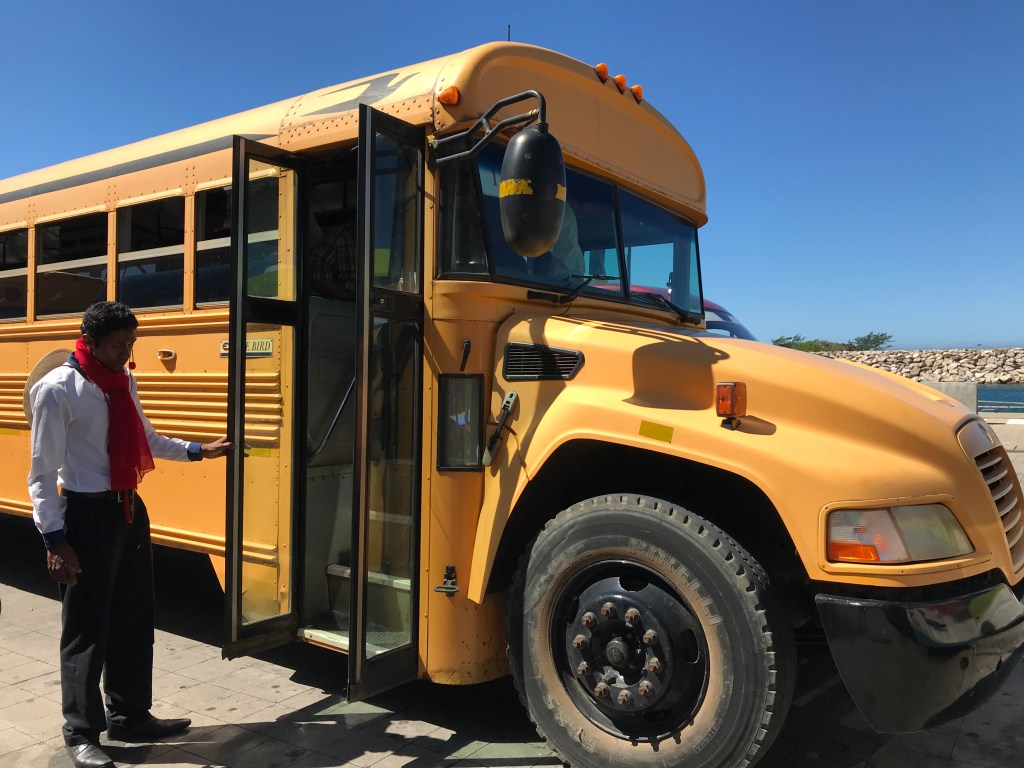
Guide & bus for our morning tour 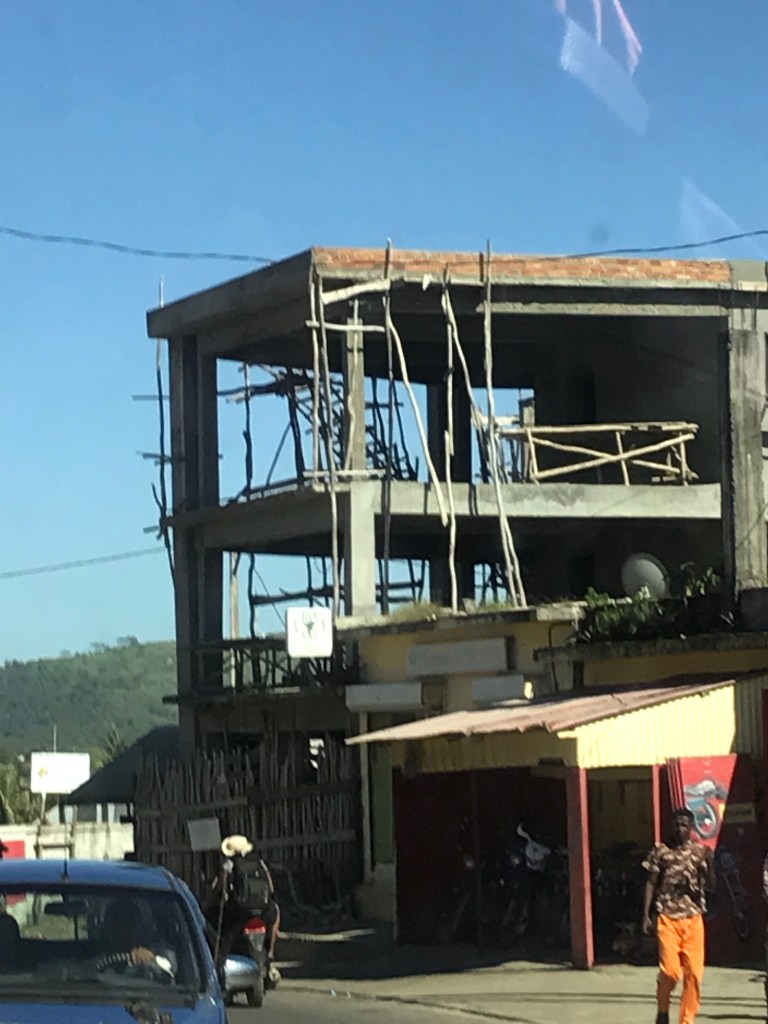
Eucalyptus scaffolding 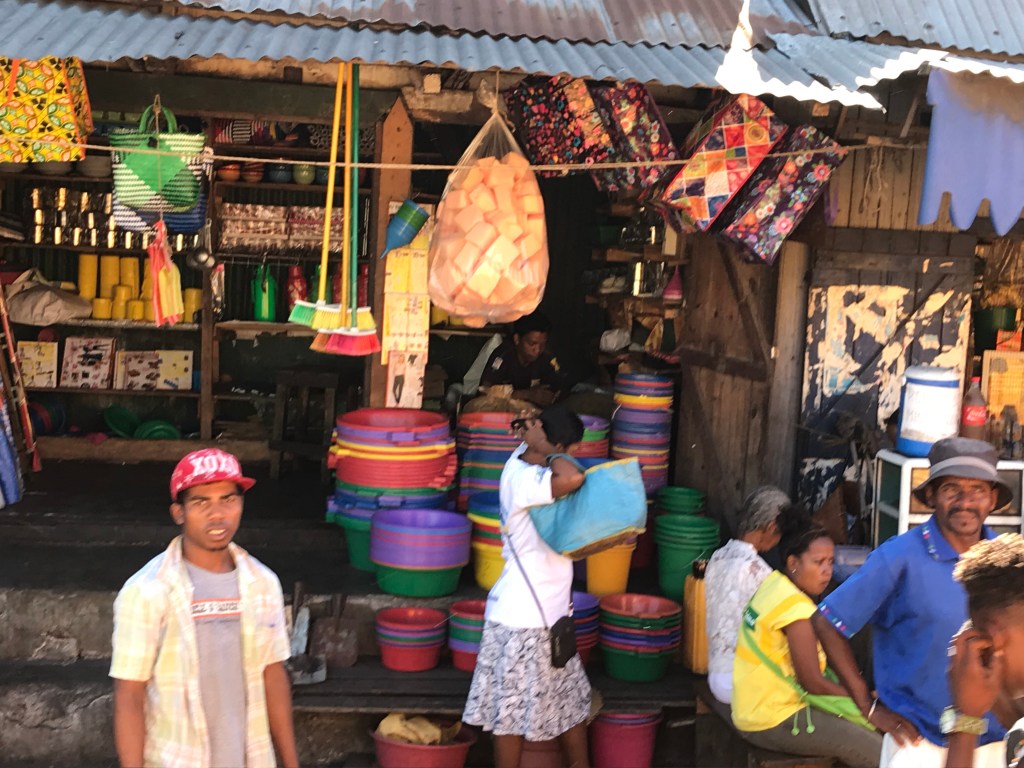
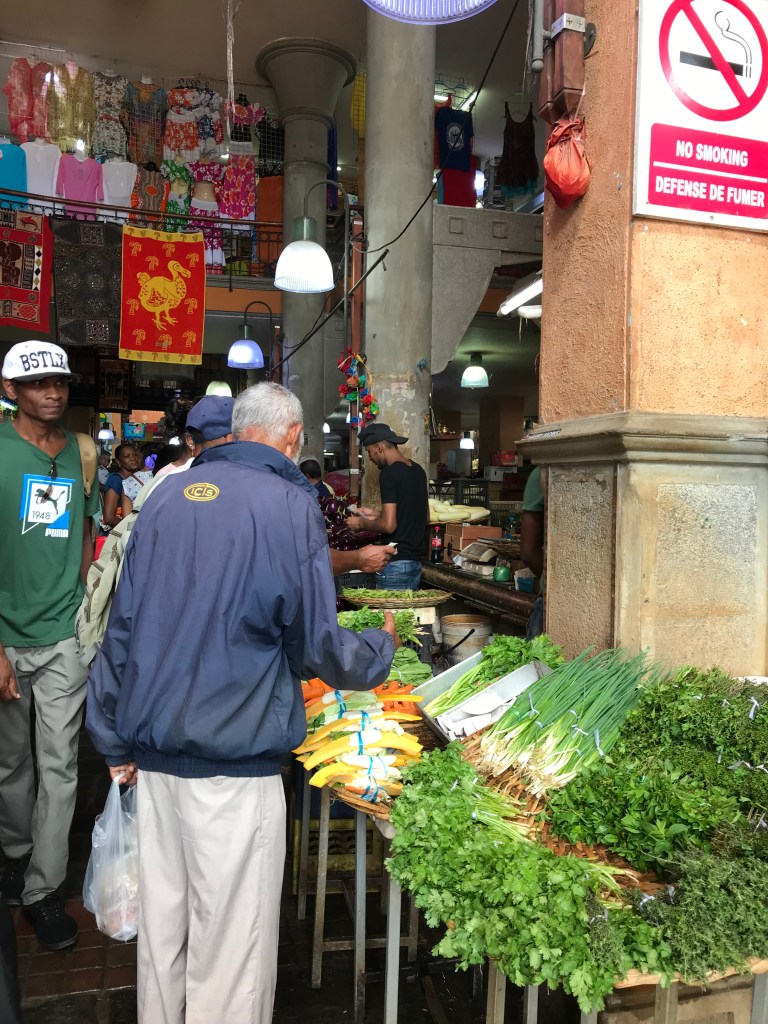
In the market 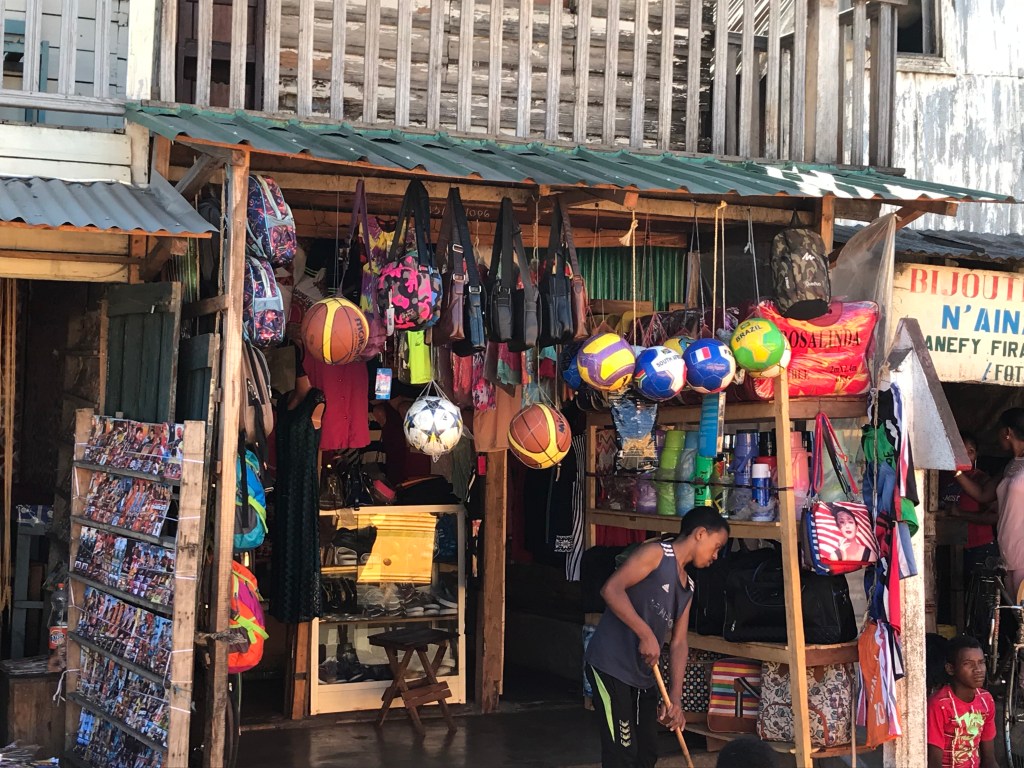
In the market 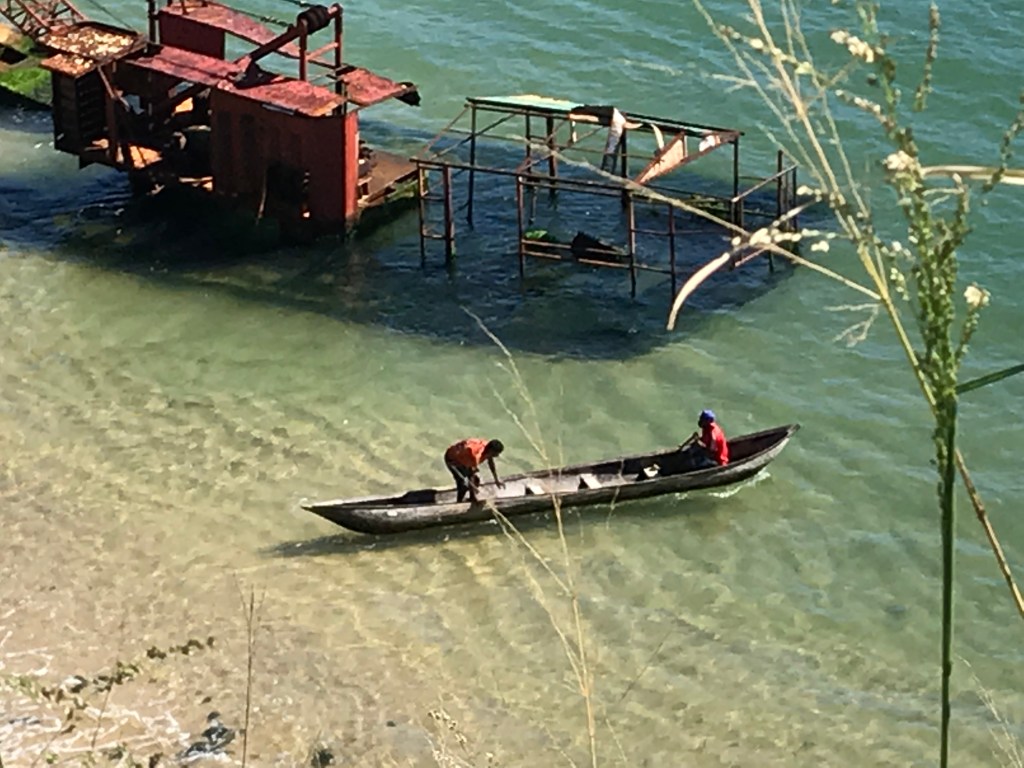
Local boat 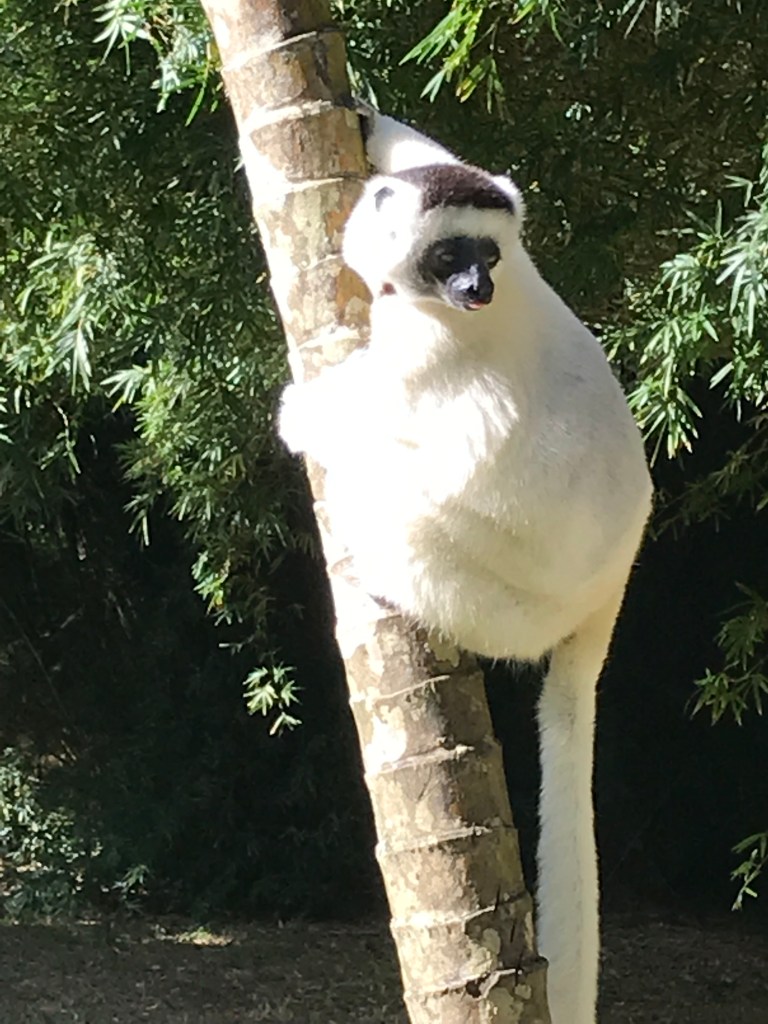
White lemu 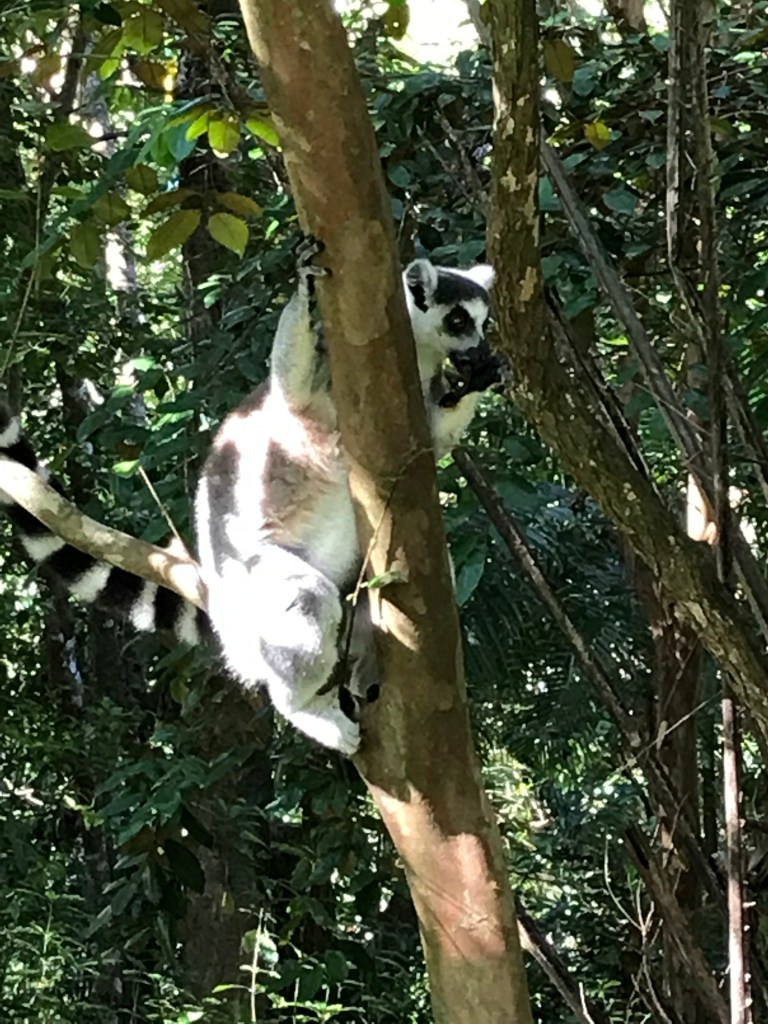
White lemur 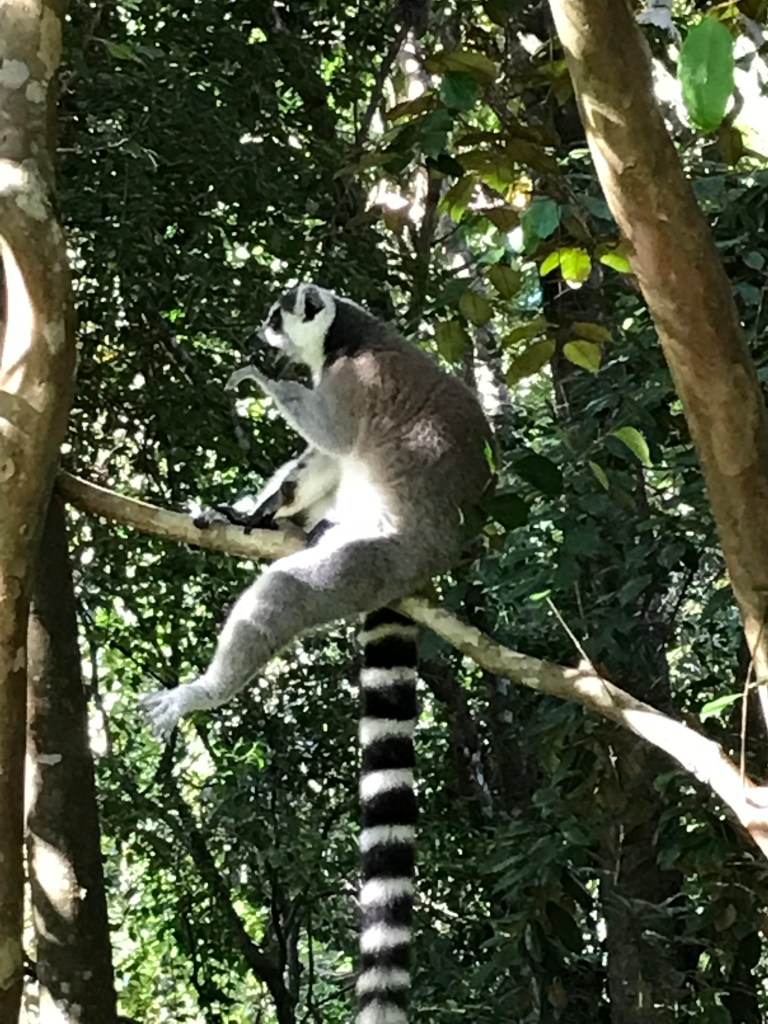
Ringtailed lemur 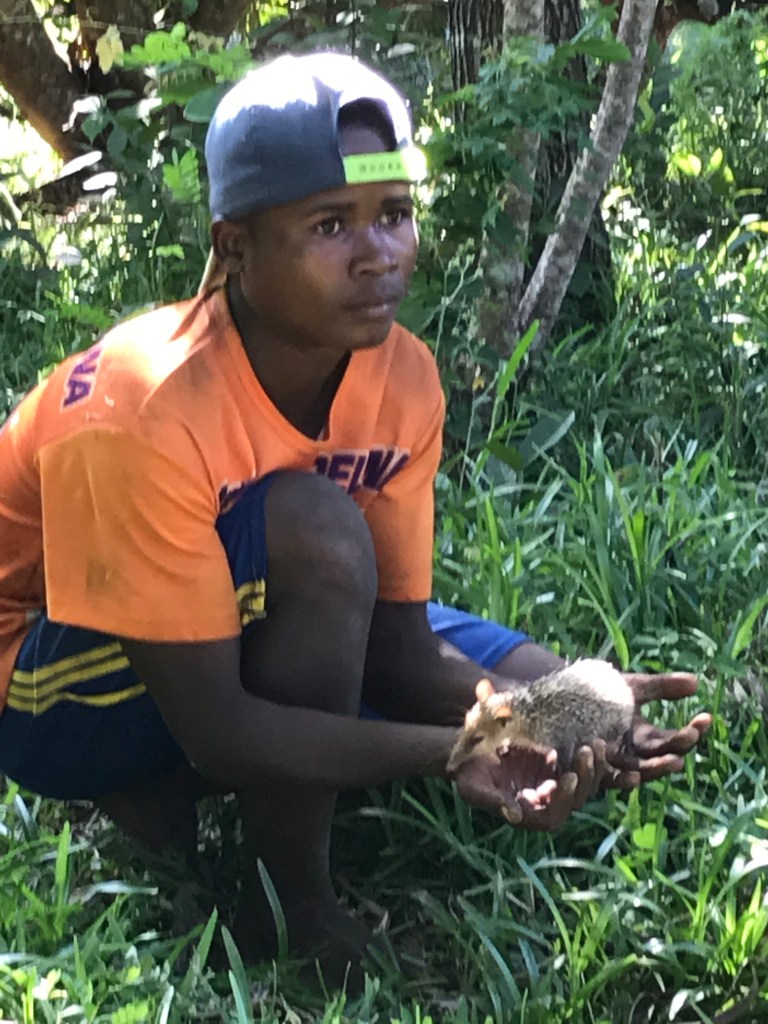
Boy with wild rat 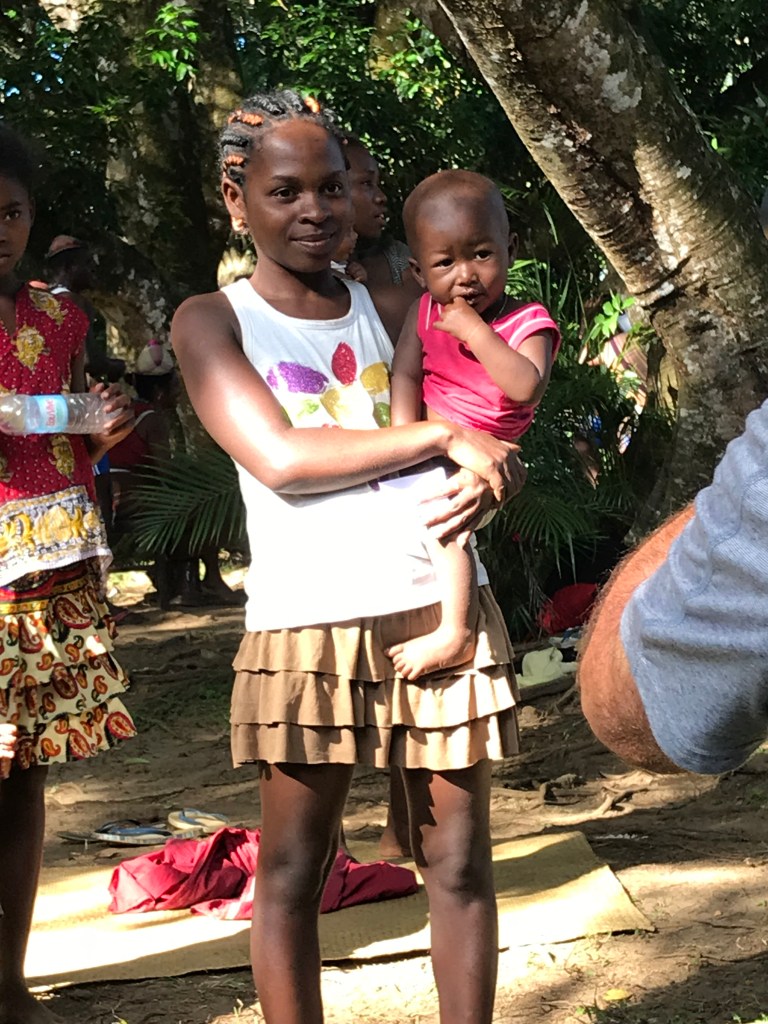
Local children 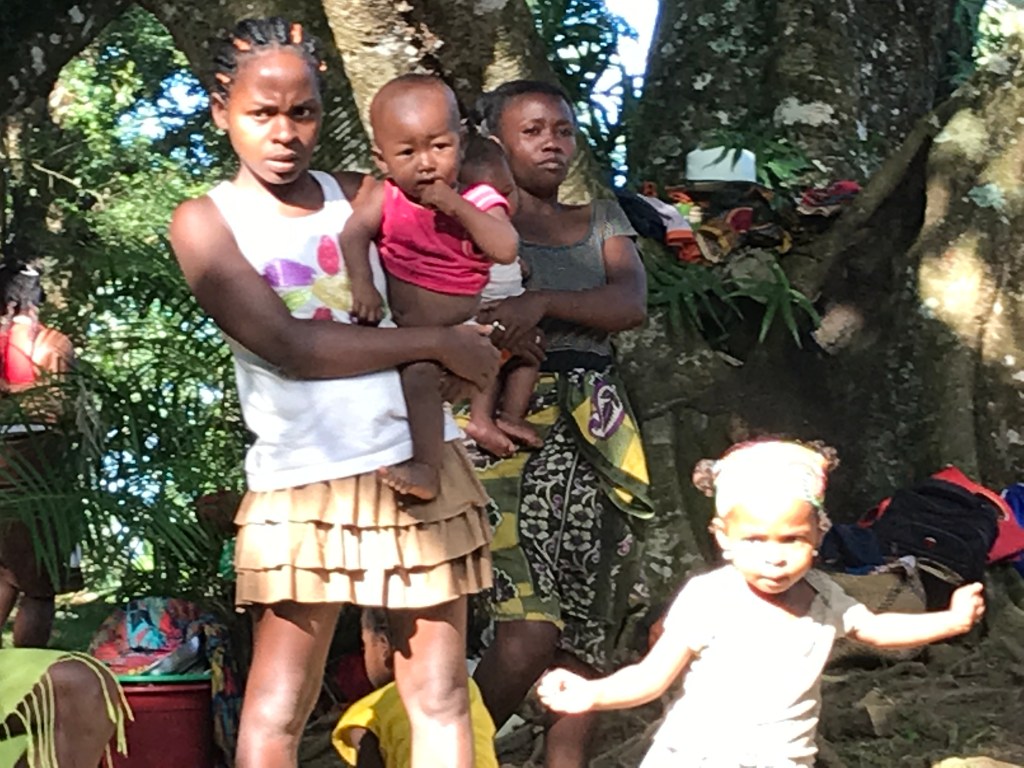
Local children
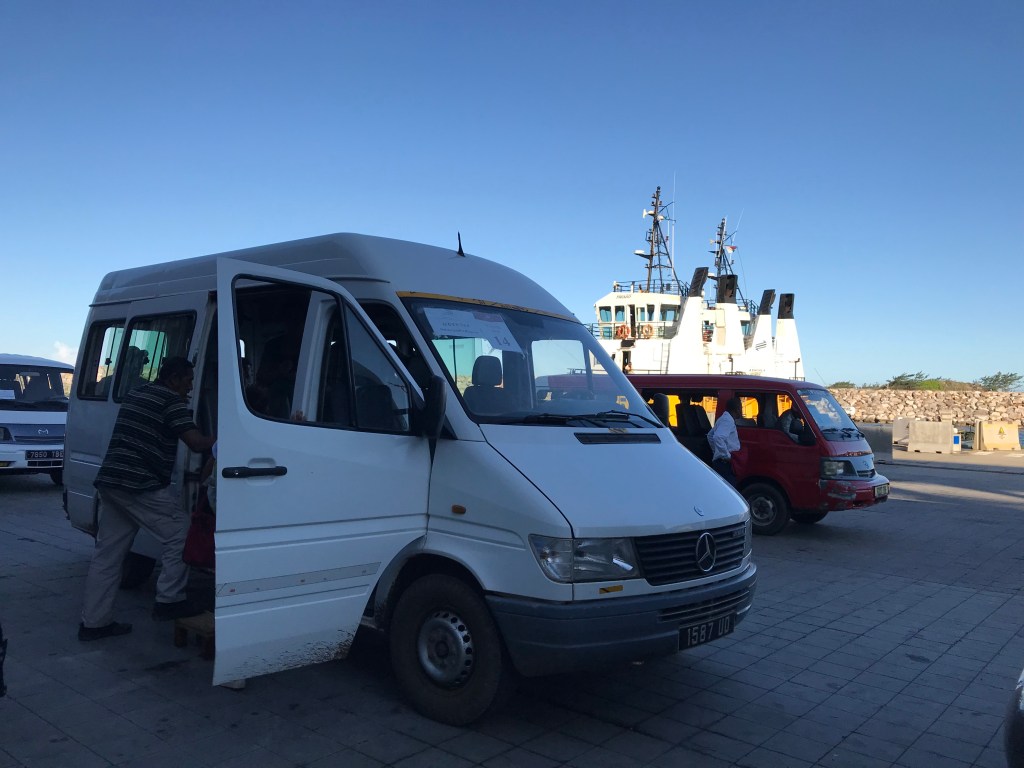
Bus for afternoon excursion 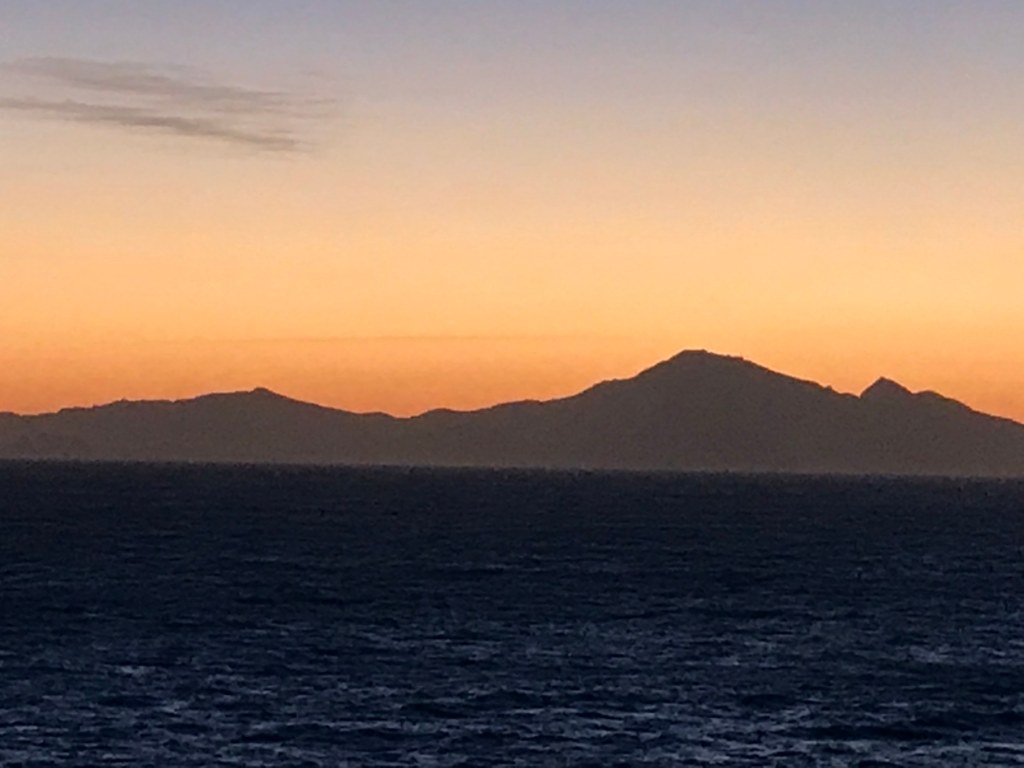
Goodbye Madagascar
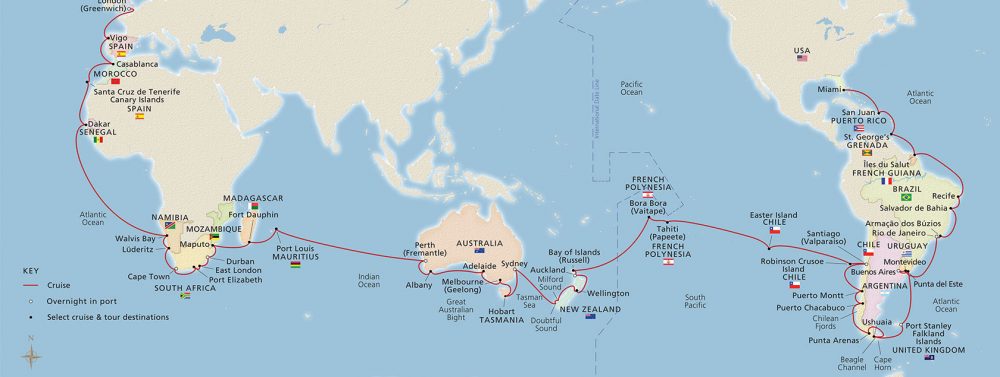
Madagascar, with tales of its many exotic species of plants and animals, has always fascinated me. We can only see a very small piece of it in a day because it is larger than Germany! And mostly there are very poor roads. Fort Dauphin or Tolanaro, near which we docked, is in the southeast of the island. The capital is approximately in the middle, and our guide told us it is a 2 hour flight from Tolanaro to the capital or a 3-day (and 3-night) bus ride. That says something both about distance and, I suspect, about the roads.
The rather new port is in a rural area with good roads; it and the roads, we are told, were built (and owned) 20% by the government and 80% by Rio Tinto, the company (which as nearly as I can tell is headquartered in Australia) that mines the area for black sand, which is exported to Canada and used for titanium (and maybe minerals).
The area reminded me of rural Ethiopia with a dash of Dominica—Dominica because of the mountains and forms of houses (or shacks), Ethiopia because of the bad roads, roadside trash, extreme poverty, using eucalyptus poles for scaffolding in construction, and people everywhere along the road. Many, we were told, walked 15 or more kilometers from their village to jobs in Tolanaro (if they had jobs). Some children (and adults) were happy to wave to us passing; others had their hands out (and sometimes through the windows) for money; a few turned and shook their fannies at us.
The ship had recruited all buses available for our tours and they were a motley assortment of school buses and mini-vans in various ages. All the seats seemed designed to hold 1 ½ people. Sometimes we could have one large seat apiece, other times 2 tried to squeeze in. Heather had warned us that this was a real third world country (especially after, I gather, getting some negative feedback after Mauritius) and to expect few bathrooms, old buses, and guides with varying amounts of English; but, she stressed, they need our business badly and anything you can do to help is appreciated.
We were treated to a bus tour through the very long and large market and to various viewpoints (including a house in the country, built by ‘the richest man around’ as a sort of replica of the U.S. White House). Our guide spoke excellent English and was knowledgeable and funny besides; he said he spent some time in Montana—and I think it was doing a course in bible study, but I may have misheard that.
The Nahampoana Reserve was our destination in the afternoon—primarily to see lemurs. On a very bumpy dirt and potholed and mud road we drove slowly through forest and villages and people in a minivan with a dozen of us jammed into seats not made for 2 westerners to sit together—it was not a comfortable ride.
We saw white, bamboo, brown, and ring-tailed lemurs as well as a few large tortoises. The white lemurs were happy to cavort in trees near us; the bamboo lemurs mostly hid in the bamboo, and the ring-tailed and brown lemurs let us see them but not too close. One of them peed on the head of a woman which surprised her considerably!
At the gathering place where they sold bottled drinks, I traded our ‘coupons’ for a drink each to children in exchange for taking their pictures. They had crafts booths, one selling some nice palm raffia placemats among other things and the other hand-embroidered pillow covers, glasses cases, and other bags. An organization was teaching local women embroidery and they were beautiful! We all agreed the trip was worth the ride.
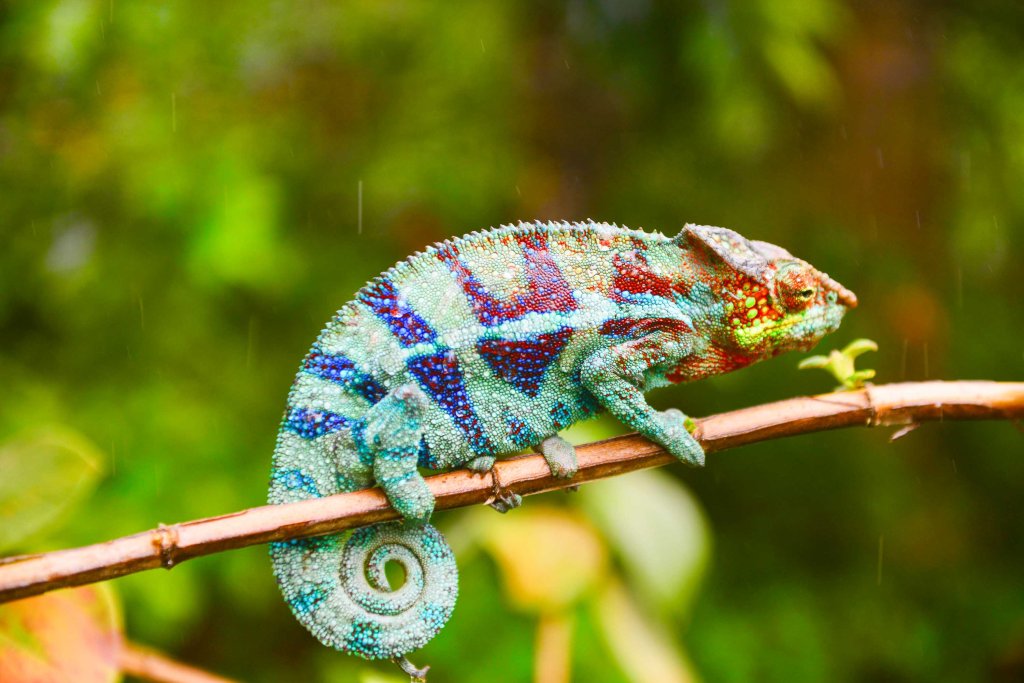
Aye Aye chameleon 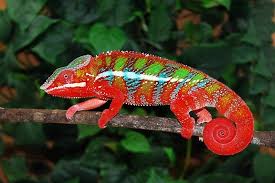
Panther chameleon 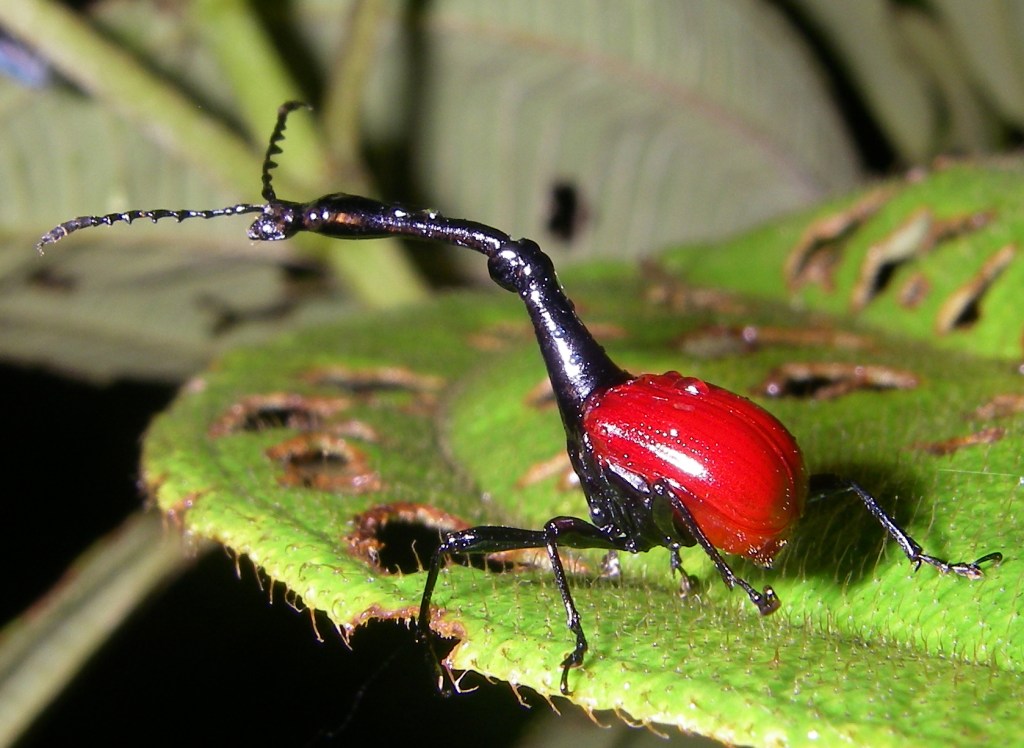
Giraffe beetle (weevil) 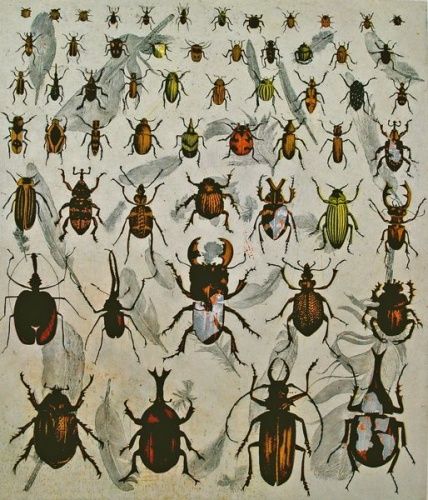
From Darwin’s undergraduate beetles collection 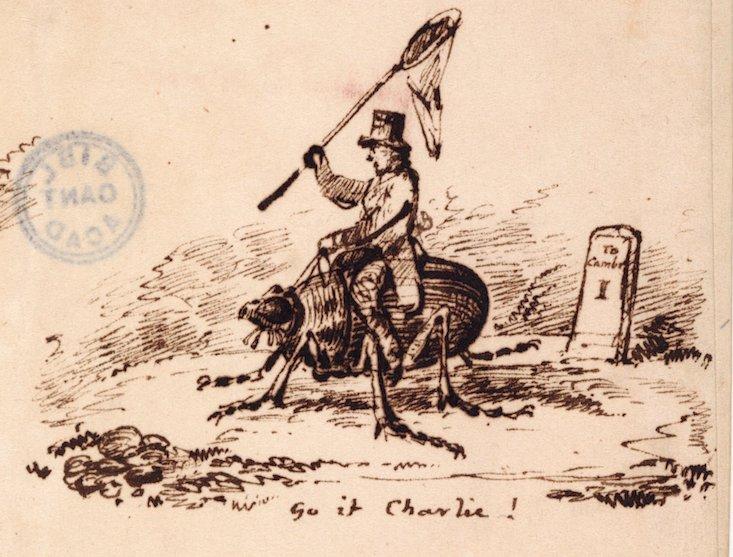
Caricature of Darwin as an undergraduate riding a beetle
Darwin and Madagascar: what if…? Lemurs apparently are found only in Madagascar, a large island off the coast of SE Africa, where a diverse group of 100 different species (in 15 genera and 8 families) occupy a variety of habitats. During our visit recently we saw several of the arboreal types, including white and ring-tailed lemurs. Madagascar is also home to about half the world’s species of chameleons, including the colorful Aye Aye and Panther chameleons. Beetles – the most numerous and diverse group of animals – are unusual on Madagascar as well, as exemplified by the giraffe weevil, which unfortunately we did not see. Nor, even more unfortunately, given his keen undergraduate interest in these insects, neither did Darwin! (So avid a collector was he, that a Cambridge classmate sketched a caricature of him riding a beetle!)
During his historical voyage on the Beagle Darwin explored many islands, notably the Falkland, and Galapagos groups, New Zealand, Australia, and Mauritius. As the voyage progressed he collected specimens at each location for the British Museum and Cambridge University, and his observations progressively became crucially important in shaping his thinking about evolution and the origin of species; especially the origin and evolution of Galapagos finches and their adaptation to the various island habitats. What might Darwin had made of the variety of Madagascar lemurs, chameleons, and beetles; and how might he have speculated concerning origin and evolution of lemurs?
Following Australia, the Beagle visited the Cocos (Keeling) Islands and then Mauritius, en route to Cape Town, and Darwin’s journal documents his preoccupation with how various kinds of reefs – barrier, fringe and atolls — are formed, with little or no mention of resident animals or plants. Darwin apparently saw few or none of these Although Mauritius lies only 700 miles east of Madagascar, the Beagle by-passed the larger island entirely on its way to Cape Town! –Chris







 C&C travel the seas