March 26 Albany, Western Australia

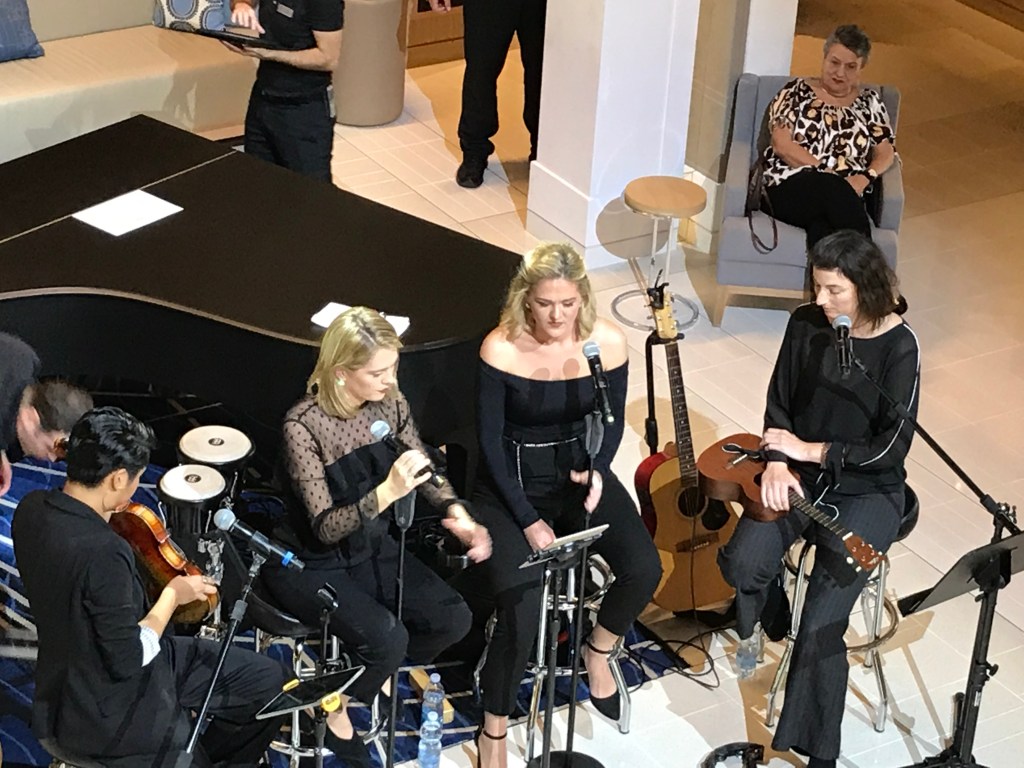
I forgot to mention that, while crossing the Bight, we had an afternoon concert by the ‘Viking Vixens’, an ad hoc group of the ship’s female musicians.

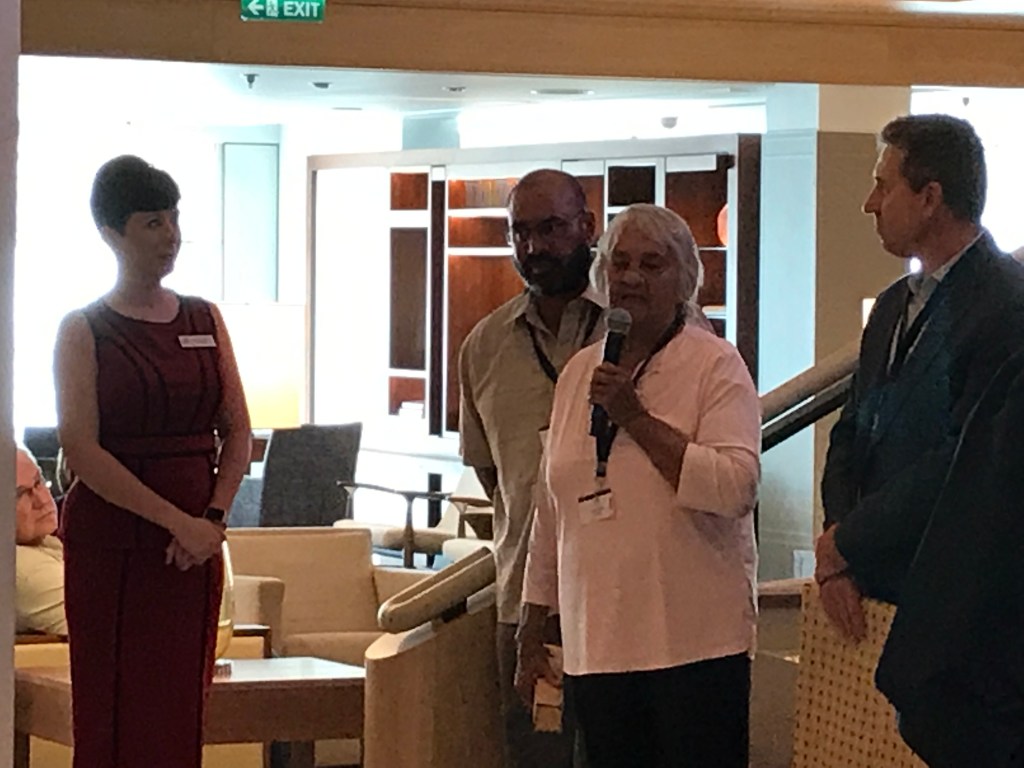
Western Australia is far from the Australia most of us have visited and also from the homes of most Australians.  In 1933, I’m told, Western Australia voted overwhelmingly to secede from the Australian Federation; there was no communication whatsoever except by ship and there seemed no point in ‘belonging.’  By the time the bureaucracy (aided by the lack of communication) in Britain concluded they had no jurisdiction, the railway connecting Perth to Sydney had been built and the issue receded.  They are quite proud of Western Australia which has 1/3 the land mass of Australia although a much, much smaller fraction of the population.  This is Viking’s first visit to the state, and, on our landing in Albany, the ship was boarded by a delegation led by the Mayor for a ceremonial welcome.  On our sail out from Perth, each of us was presented with a postcard, and commemorative coin, printed especially for us by the Perth Mint ‘to mark the maiden visit by Viking Sun to Western Australia.’  I expect we’ll be in the local newspapers as well.  They are definitely trying to boost tourism to add to an economy based on mining, wool, timber, wheat and other agriculture, fishing, and now wine production.  Their beautiful sand beaches boast big waves making it a surfing destination and the site of world surfing competitions.  With a temperate climate (they describe it as ‘Mediterranean’) it is attractive.

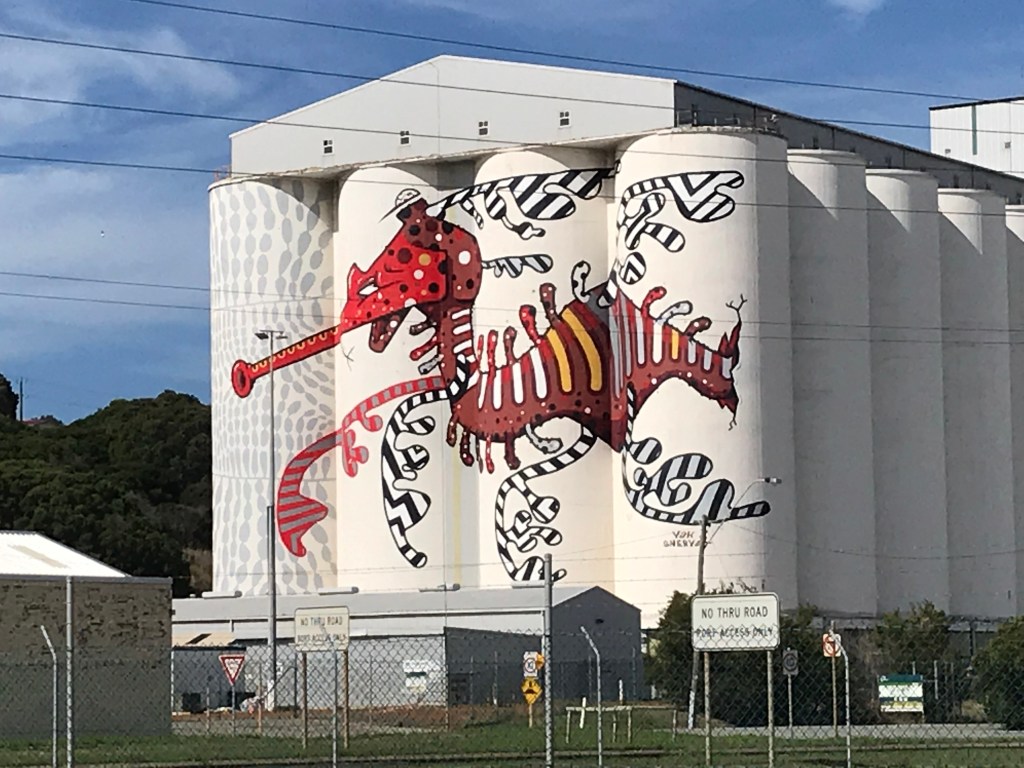
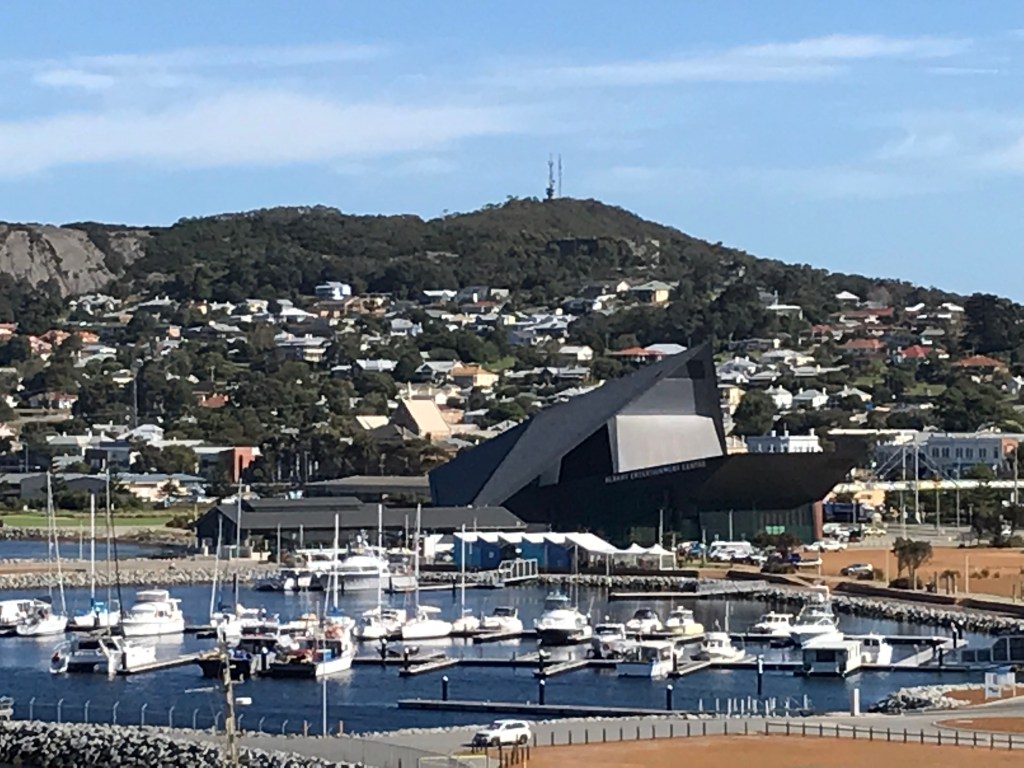
Albany (that’s ‘al’ as in the name ‘Al’ not as in ‘all’ or the way we pronounce the city in New York) has a pretty harbor surrounded by hills.  One of the first sights along the commercial port was huge piles of sand.  Having no idea what they were for and not finding them terribly photogenic without context, I didn’t photograph them.  Later I was told they were awaiting shipment to Japan for the beach volleyball venue of the coming Olympics, and then I wished I’d taken a photo.  Also in the port were large grain elevators decorated with a huge painting of what I was told was a leafy sea dragon, a rare species of seahorse found in Western Australia; painting of old grain elevators as wall art is becoming popular.

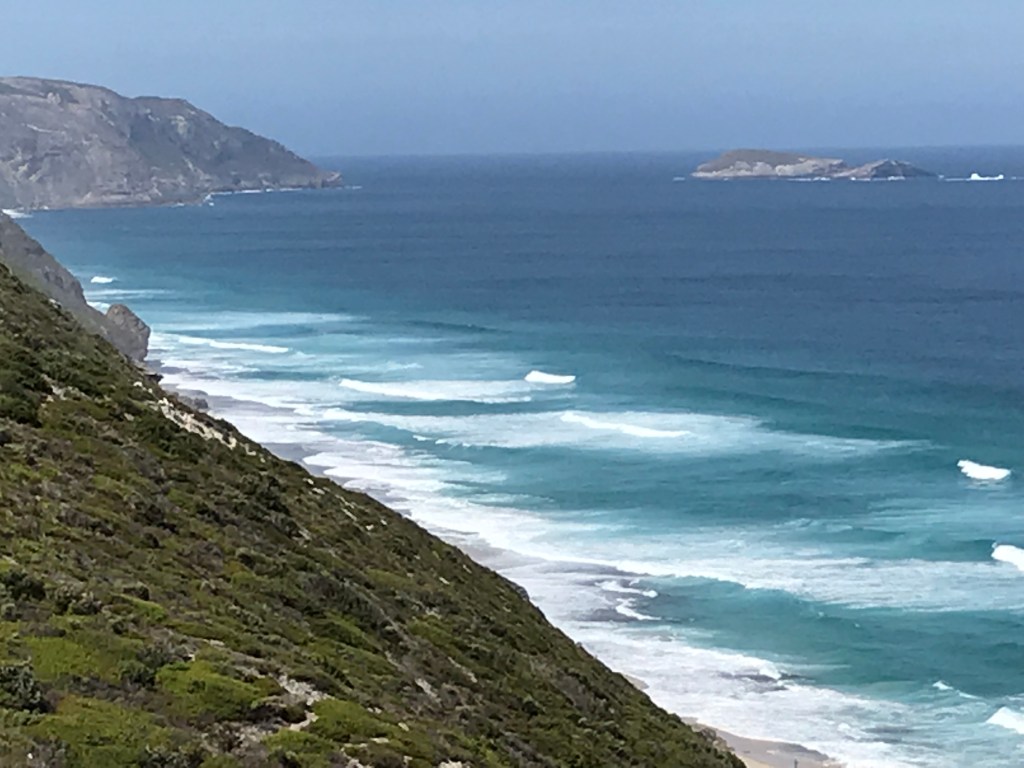
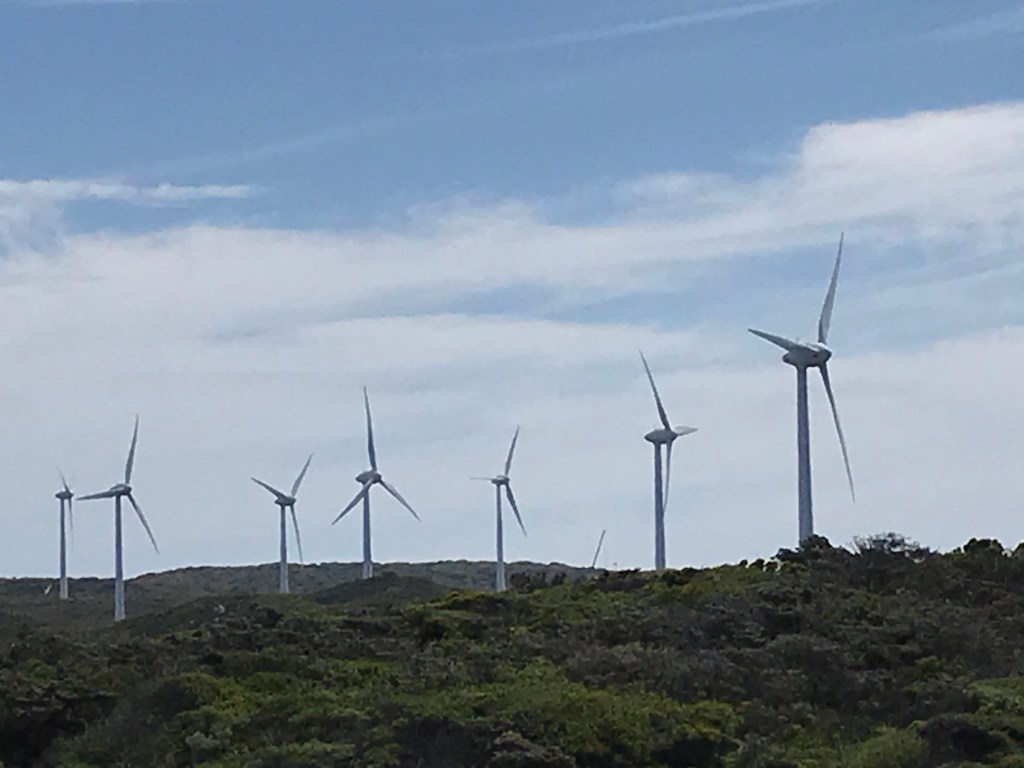
Our tour took us to a wind farm on the headland mostly for the view of the bay and then to the old jail. The Albany area (maybe all of Western Australia, I’m not sure) gets 80% of its power from wind—it’s a very windy area. Albany was established in 1826 as a military garrison to prevent the French from gaining a foothold.  Convicts were also sent here because the locals needed help working the land.  They mostly stayed in the prison only at night and the focus was on rehabilitation rather than incarceration.
March 24-25 at sea in the Great Australian Bight

The news this morning was of our sister ship, the Viking Sky (the ship in which we travelled the Baltic & Scandinavia last year) had lost engine power off the coast of Norway.  You may well have seen this on the news as well.  For their safety (since it’s a dangerous place to drift) the passengers and crew were evacuated via 11 helicopters carrying 30 people each. 

We speak of the ships in terms of their passenger capacity (930) but there are approximately 1 crew member for every 2 passengers so we are talking about well over 1300 people.  There were, we were told, a few minor injuries but nothing serious; everyone was evacuated and put up in hotels; and they managed to dock the ship. 

However, passengers are being sent home and the next scheduled cruise cancelled.  As Heather spoke of the incident during the church service and asked us to pray for all passengers and crew, she pointed out that the crew were trained to handle such events.  The passengers are required by maritime law to attend a safety briefing at the beginning of the cruise (in our case, since it is 5 segments, that means 5 times,) but the crew have safety drills every week so that their responses will come naturally and automatically.

The Bight is supposed to be very scenic with ‘towering seaside cliffs and rock outcroppings lashed by roiling surf,’ but, of course, we can’t see land so that aspect is lost on us. 

Instead, we have possibly the worst seas we’ve had so far making getting around the ship really interesting…  After dinner an enterprising young waiter procured a wheelchair and wheeled Chris back to our stateroom; he was definitely having more balance issues than usual with the rocking and rolling.

The captain told us the weather causing the rough seas is 500 mile to our south.  As mentioned earlier, whitecaps and surface waves are caused by local weather, but the swells (long period waves) and deep movement are caused by happenings sometimes thousands of miles away.

And we gained another two hours of sleep over two days–useful because it’s tiring to navigate around the ship in these conditions.

I have read many books (27 so far) during our cruise–reading is our most frequent after-dinner activity. All have been fiction, mostly mysteries. However, I am now reading The library book by Susan Orlean (which Chris discovered and recommended to me), centered on the Los Angeles Public Library and its destruction by fire in 1986, but it also treats libraries as a much broader theme. She is a wonderful writer (one reviewer said the only non-fiction writer they knew of as good or better than her is John McPhee (I intend to read some of his books on the cruise as well)), and I am enjoying it greatly. –Cynthia

Fjords, Sounds, Bays and Bights; and nary a bite to eat. The Viking Sun has spent about 2 days crossing the Great Australian Bight, so-called because that stretch of the Indian Ocean off the southern Australian coast is much wider and less land-bound than a Bay.  Much, much less land-bound than a fjord and much less bound than a sound.  Not however as subtle an expanse as the New Jersey-New York Bight that extends from Cape May to Montauk Point at the eastern end of Long Island.

     With a map of Australia and appropriate imagination, one could consider the Great Australian Bight resembles a wide, shallow “bite” out of the southern coast of Australia, but Wikimedia assures us there is no etymological relationship between the homophones. —Chris

March 23 Adelaide, South Australia

Adelaide is unusual in that, although it was established in the early 1800s, it was not established as a penal colony, but a town of only free settlers.  It was founded on religious tolerance, attracting both British Calvinists and Prussian Protestants and is known for a history of progressive politics, contribute to its oft-cited standing as Australia’s most livable city.  Adelaide is not on the ocean but situated several miles inland where the British Colonel charged with designing it found a river and springs for a fresh water supply.

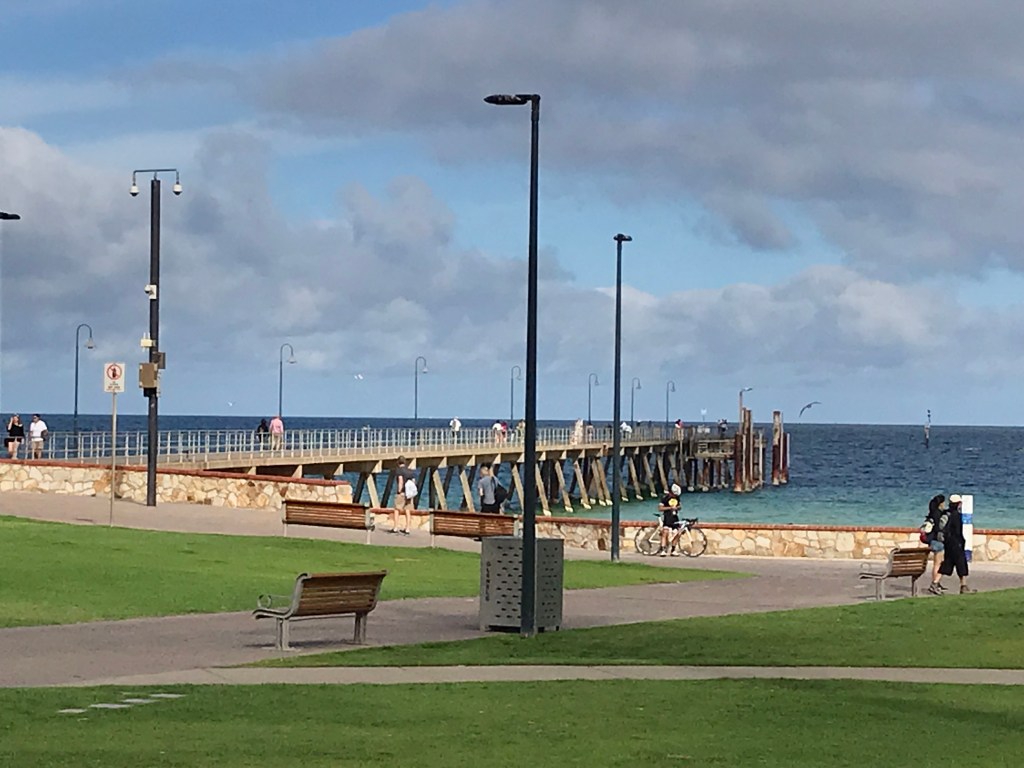
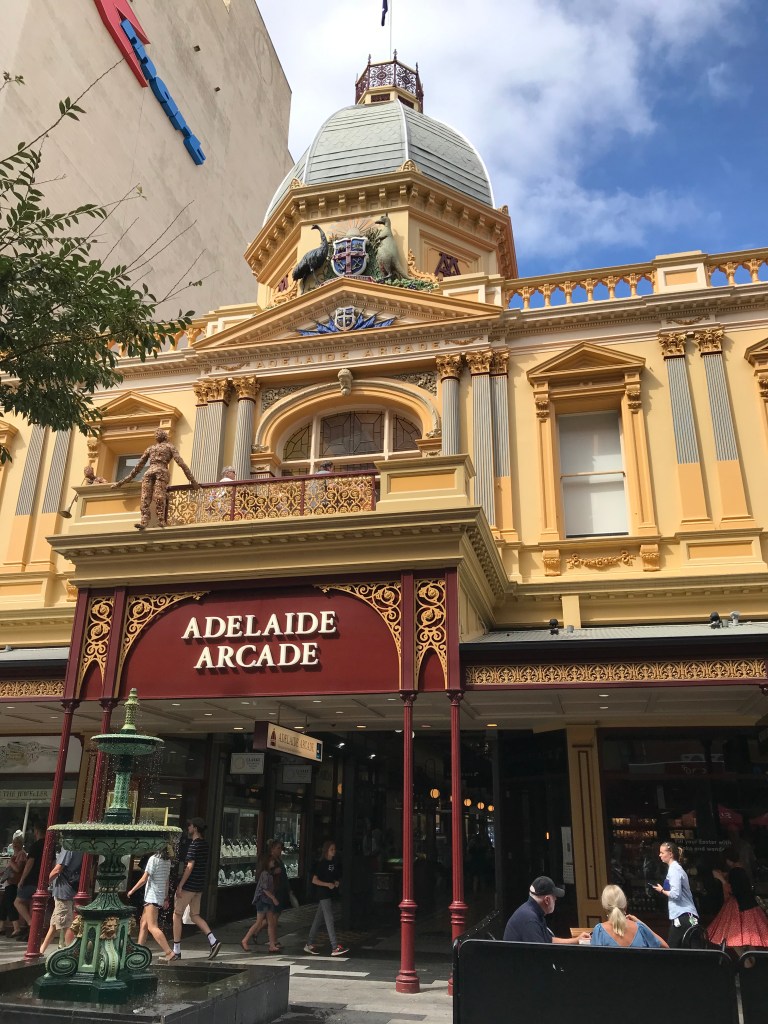
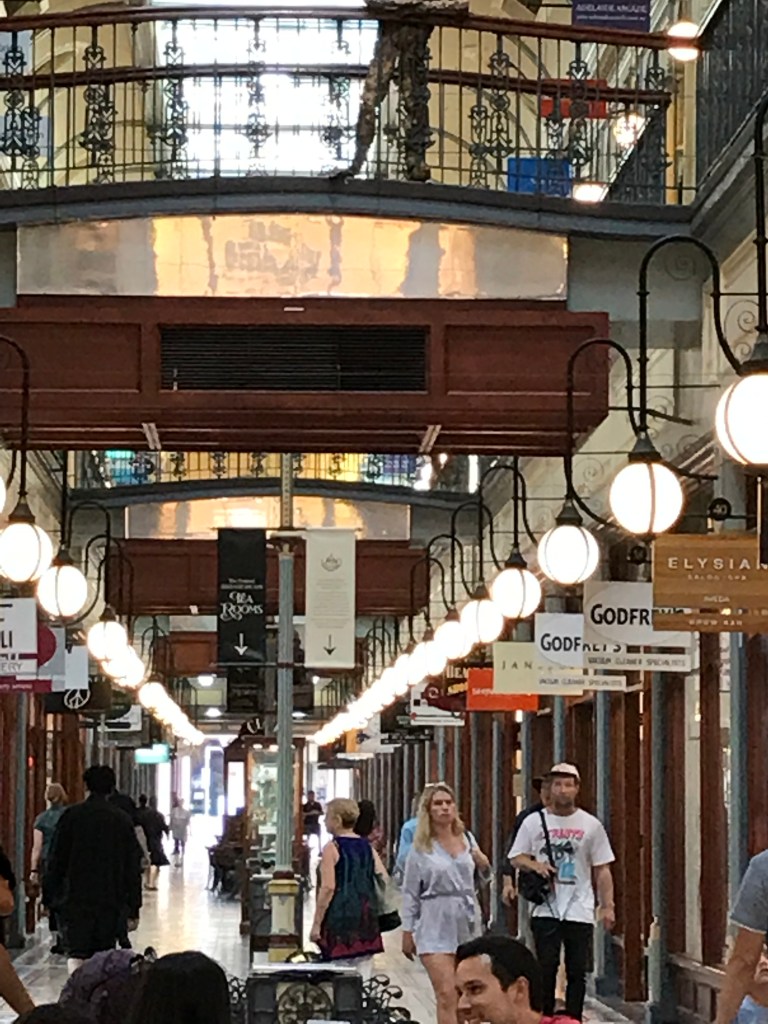
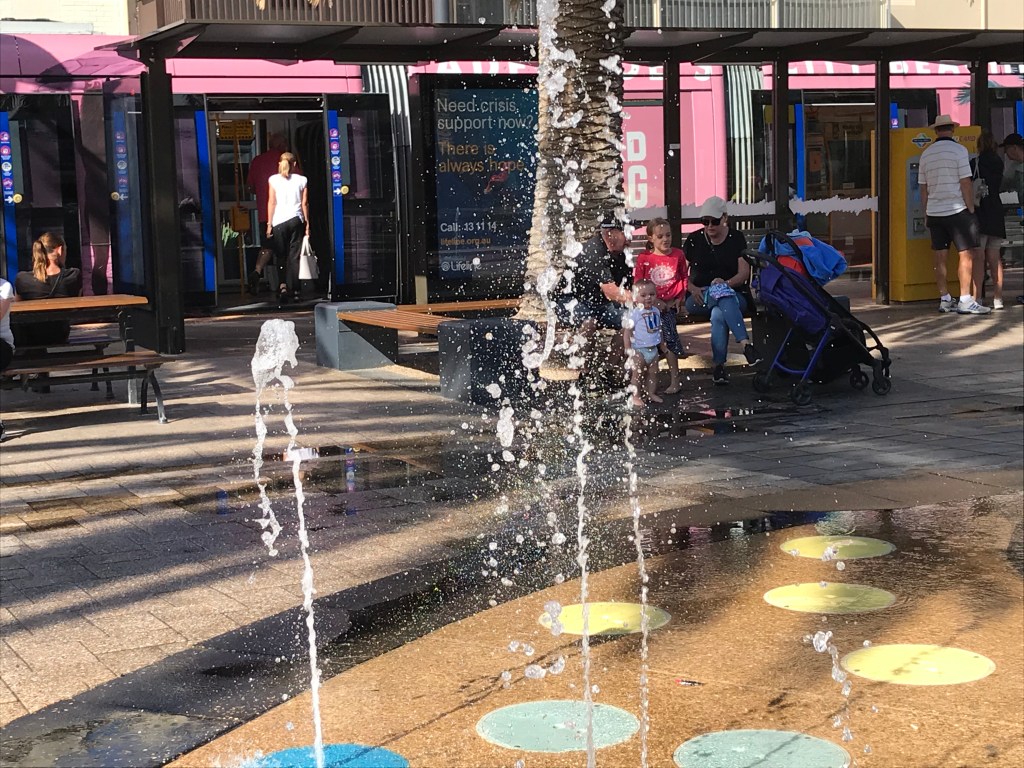
Our port was, therefore, not in the city itself and, instead of a bus shuttle, the ship arranged for transport on the public trains.  We began the morning with a bus tour that took us to the beach community of Glenelg and into the center of the city where we were turned loose at the pedestrian mall.  We could either return with the bus after an hour or so or, as most of us chose, stay as long as we wished and return to the port by train. 

We visited the Southern Australian Museum to see the Aborigine exhibits, did some shopping, had meat pie for lunch (our hankering back to our time in Scotland, and managed to find the train station and our train.  Handily, Viking had arranged a local representative to stand at the station and help us navigate.  It was an uneventful 45 minute trip back to the ship through multiple suburbs, mostly with Scottish names, full of what looked to me like 1940s bungalows, but I believe most were older.  It made us feel good to make our own way around the city successfully—we get so spoiled on a cruise with the ship staff taking care of everything and us just following directions.

We gained ½ hour last night because Adelaide—and indeed all of South Australia as well as Darwin and all of the Northern Territory are one half hour behind eastern Australia.  Some places in Australia are actually ¼ hour off.  This evening after leaving Adelaide we gained another ½ hour. 

March 22 at sea

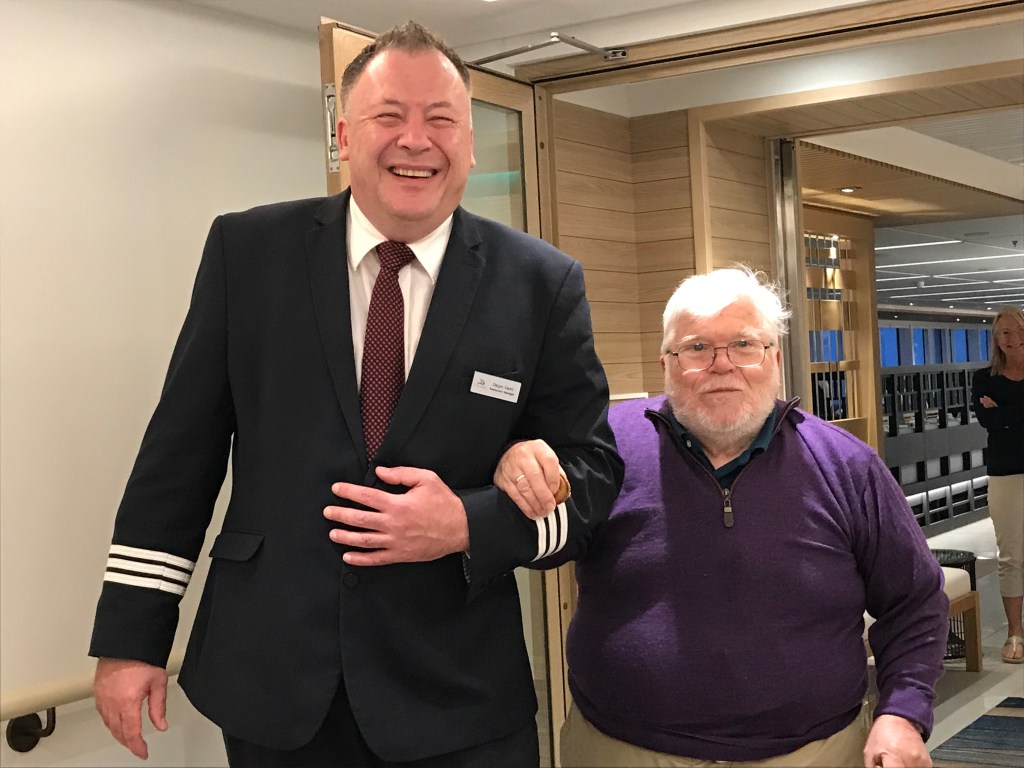
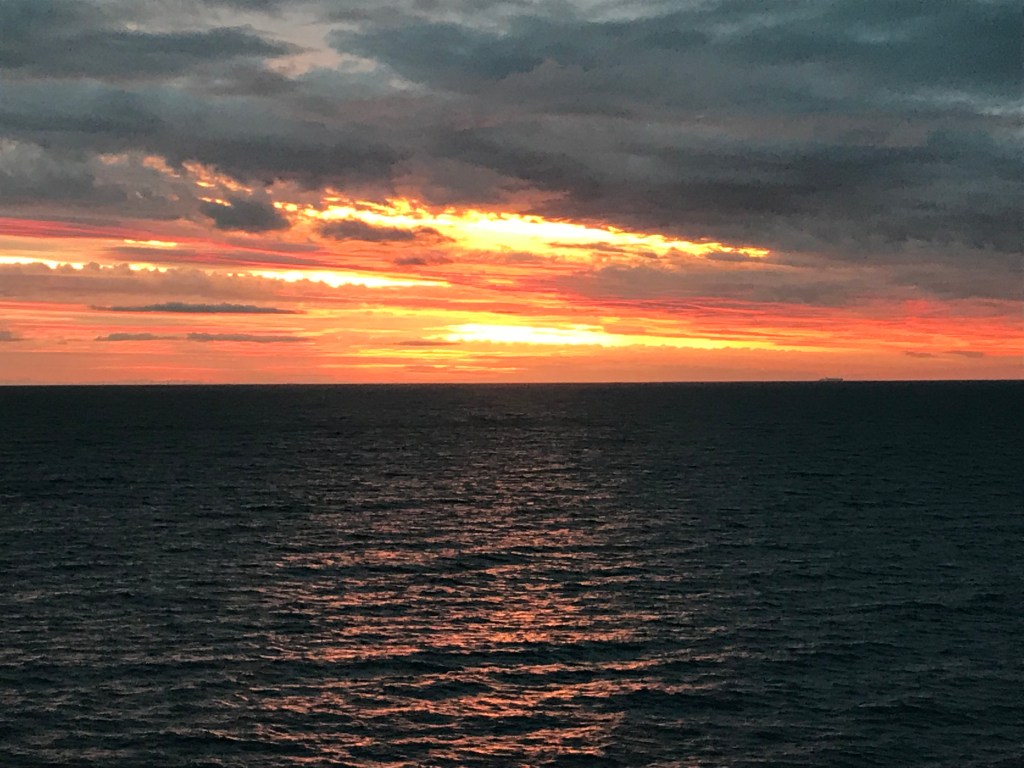
South of Australia is considered part of the Indian Ocean so we have left the Pacific behind.  I thought it was the Southern Ocean, but apparently that begins farther south.  At any rate, we’re experiencing somewhat rough seas (but a nice sunset).  The other photo shows Gami, our Restaurant Supervisor (and very large man) escorting Chris from the Ocean Café to the elevators.

March 21 Geelong, Victoria, Australia

Tasmania has been replaced in my affections by Geelong!  The second largest city in Victoria, Geelong has its own bay/harbor at the mouth of the bay Melbourne (the largest city) is on.  The economy used to be based on wool—they produce the best merino wool in the world—as well as Alcoa aluminum (or aluminium) and other manufacturing.  Now they are transitioning—and expanding tourism.  I wanted to give an indication of how to pronounce ‘Geelong’, but I don’t know the proper marks to use so I’ll just say, pretend it has only one ‘e’ and put the stress on the second syllable.

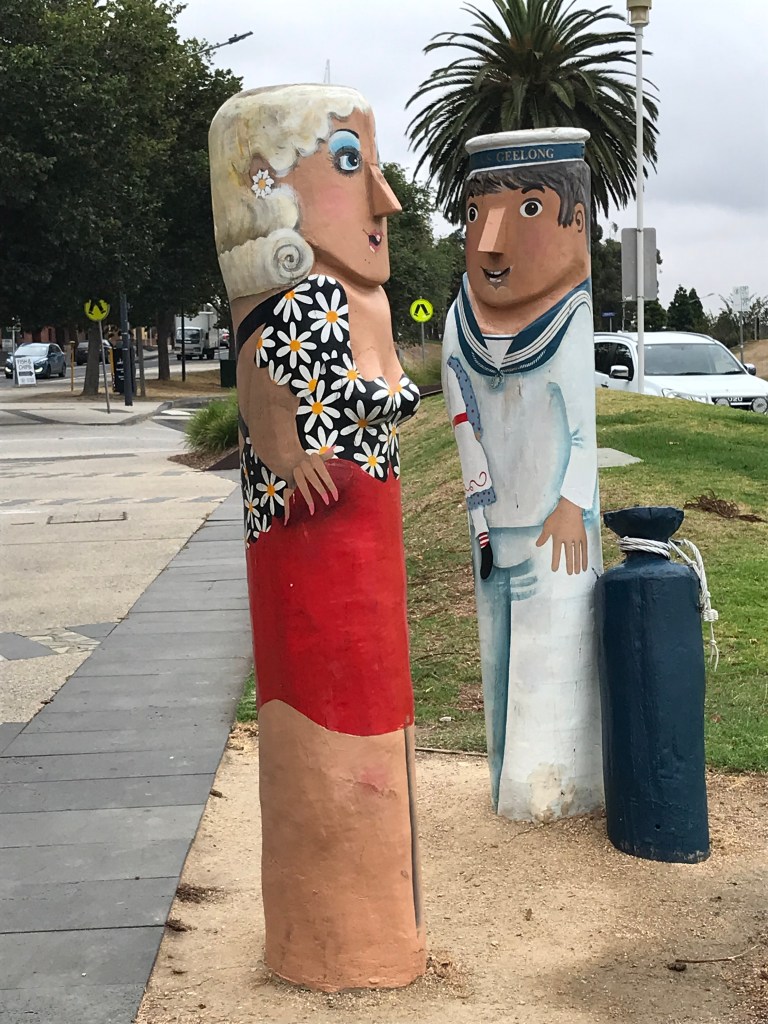
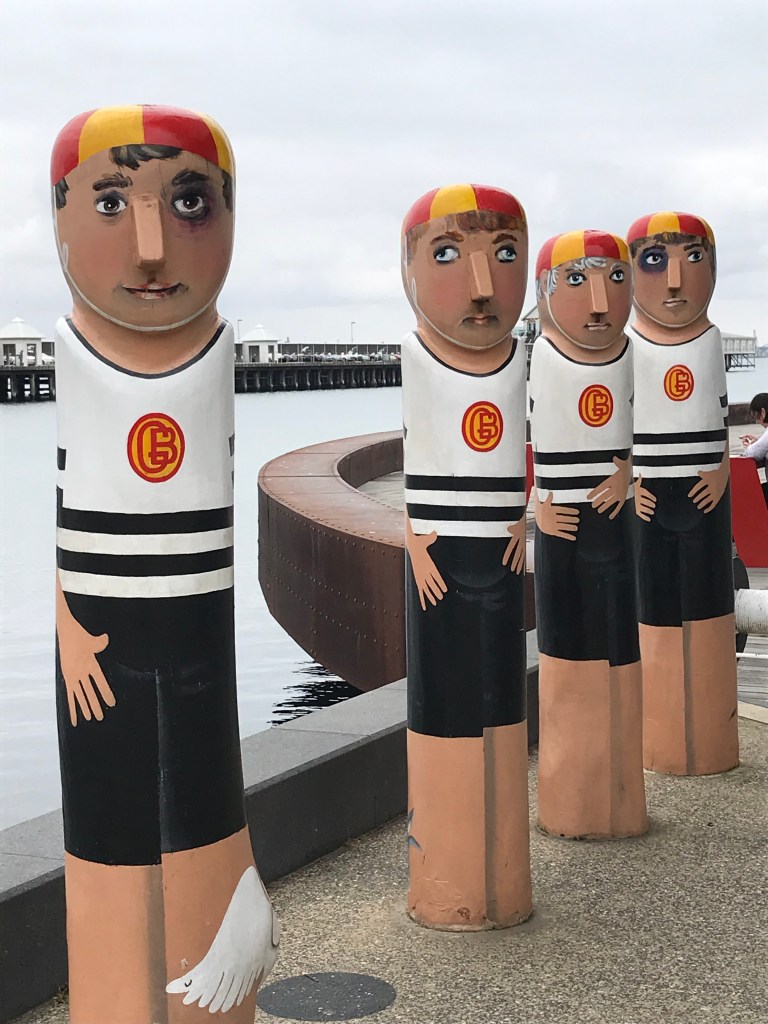
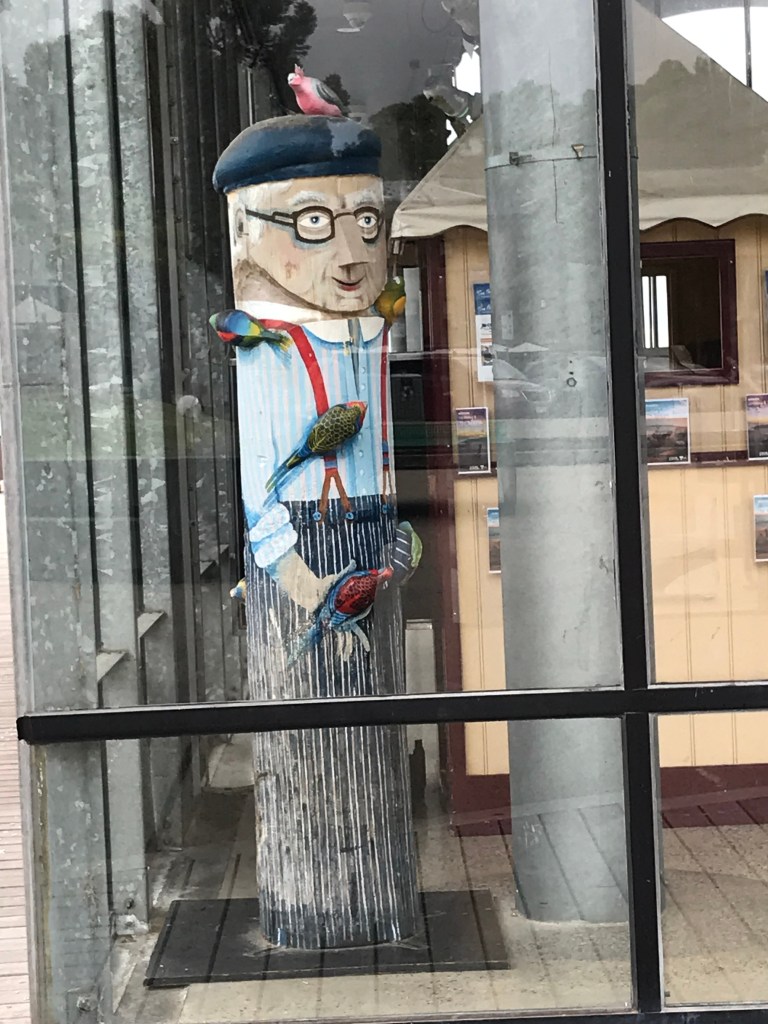
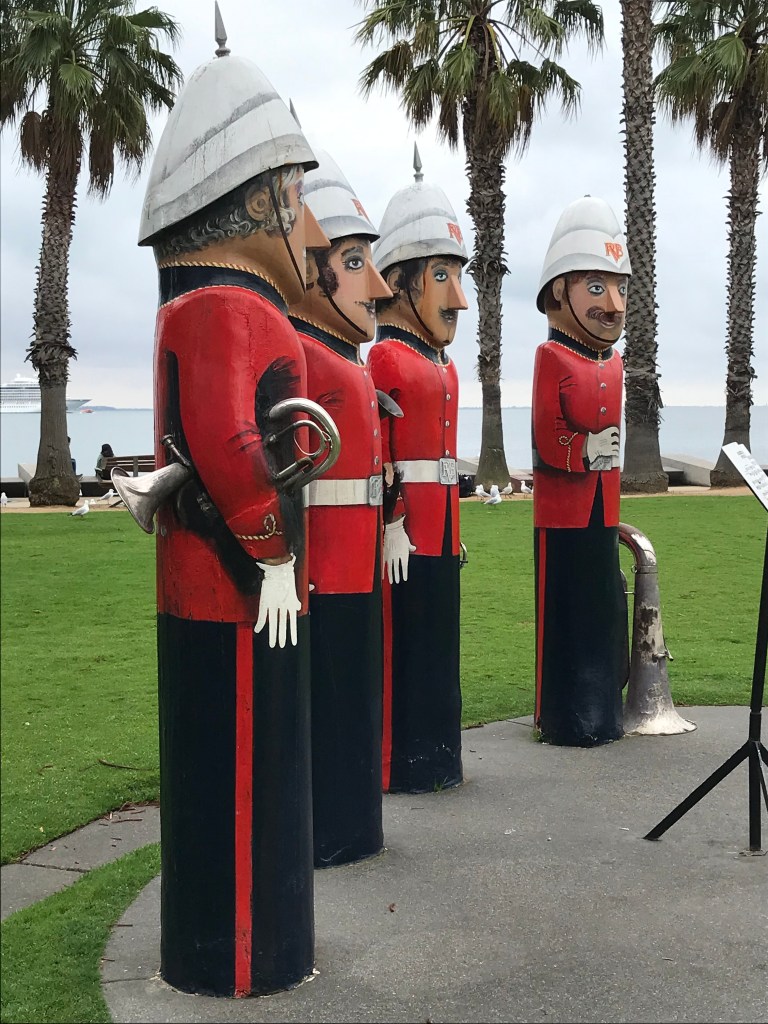
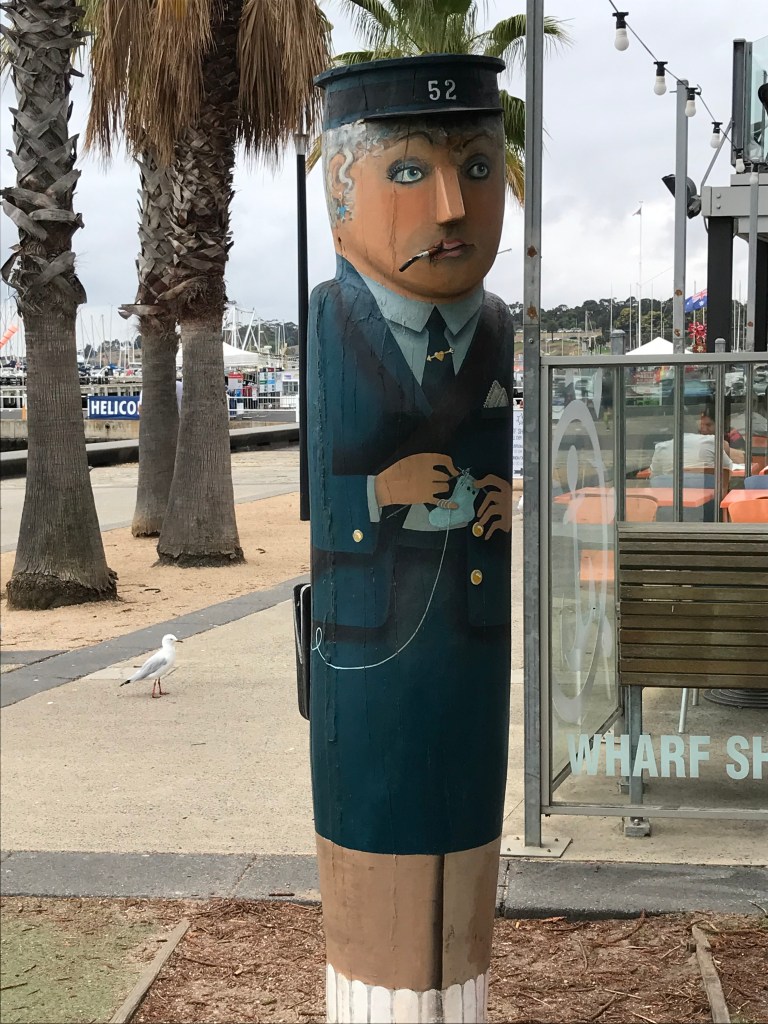
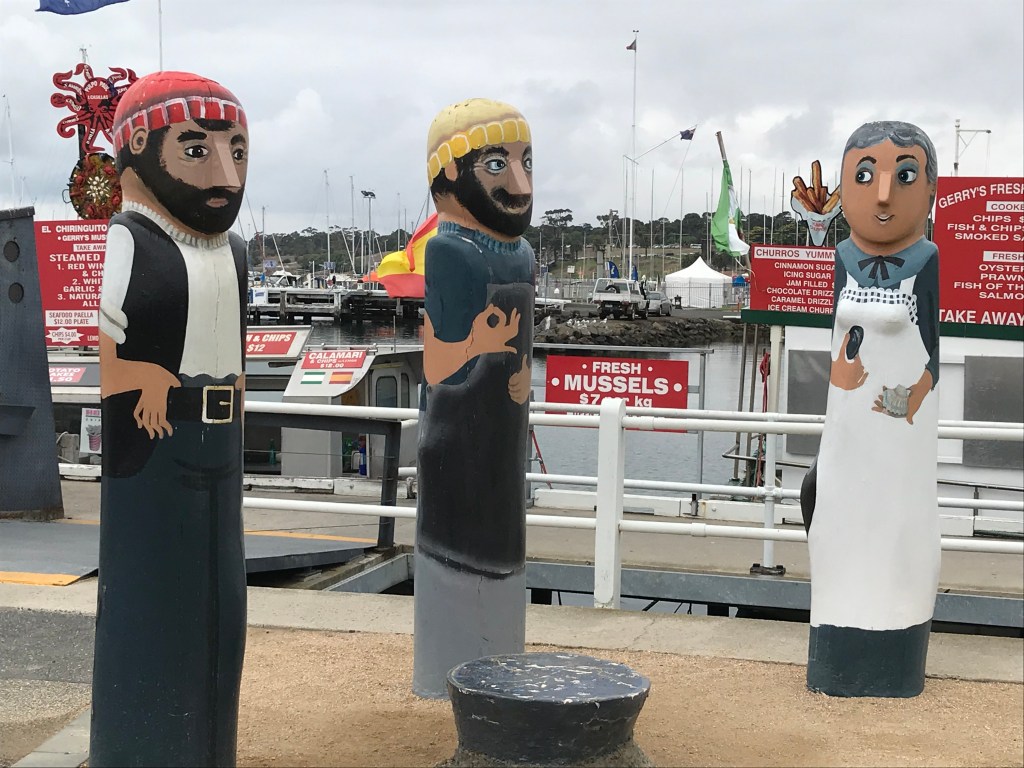
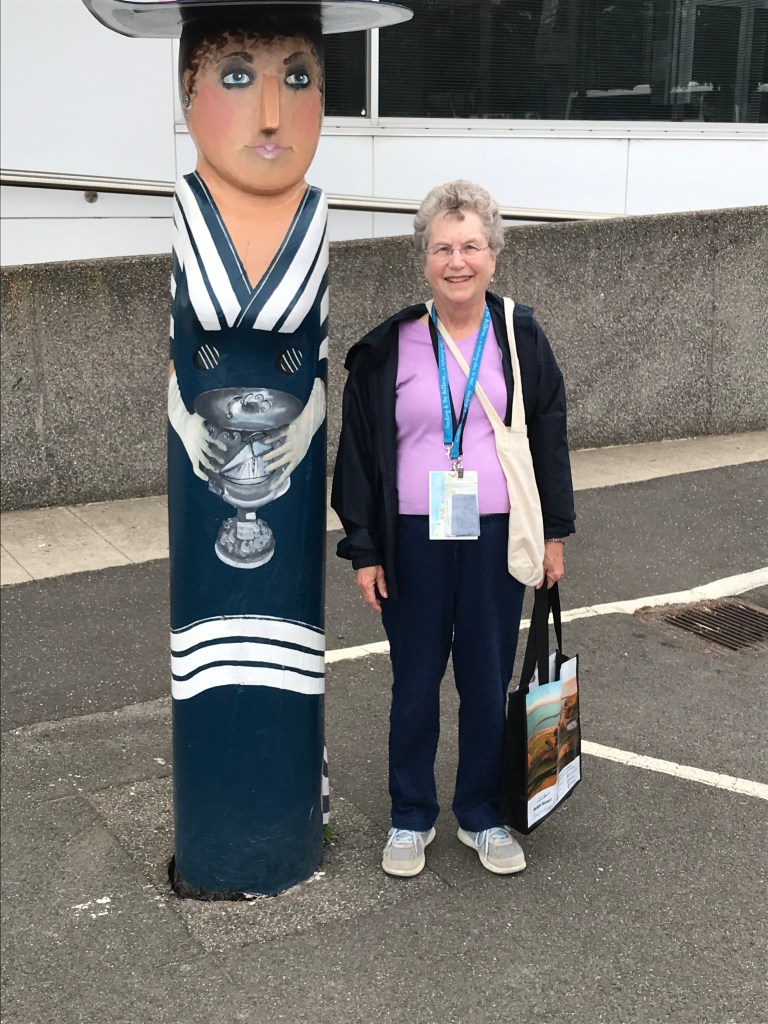
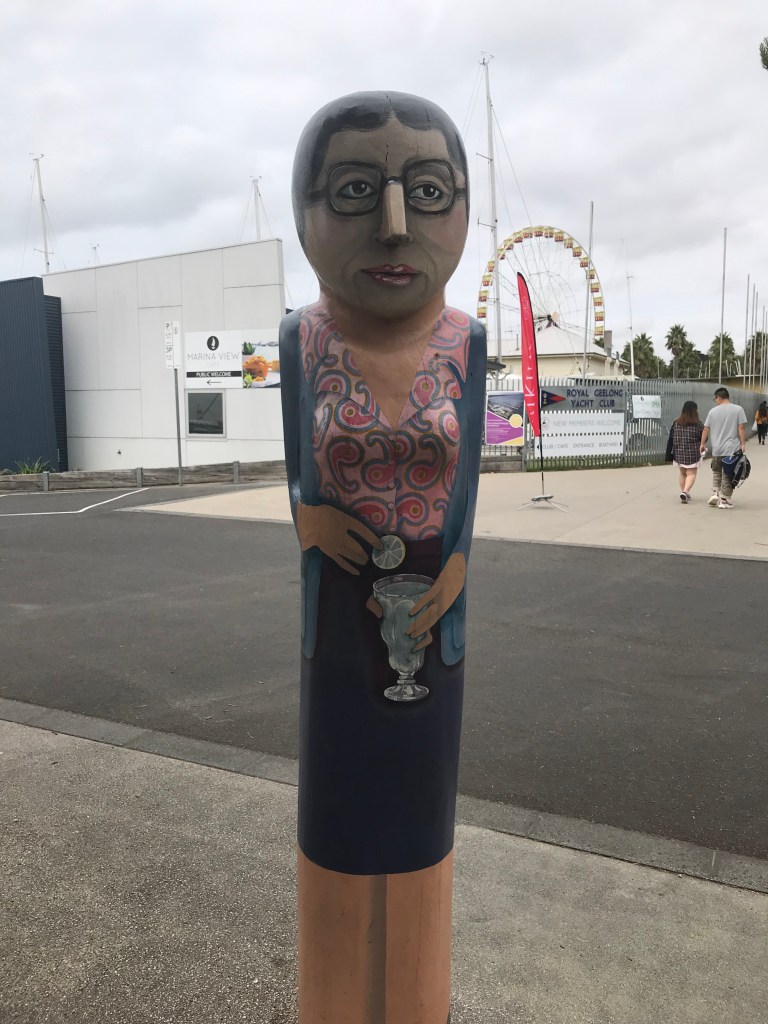
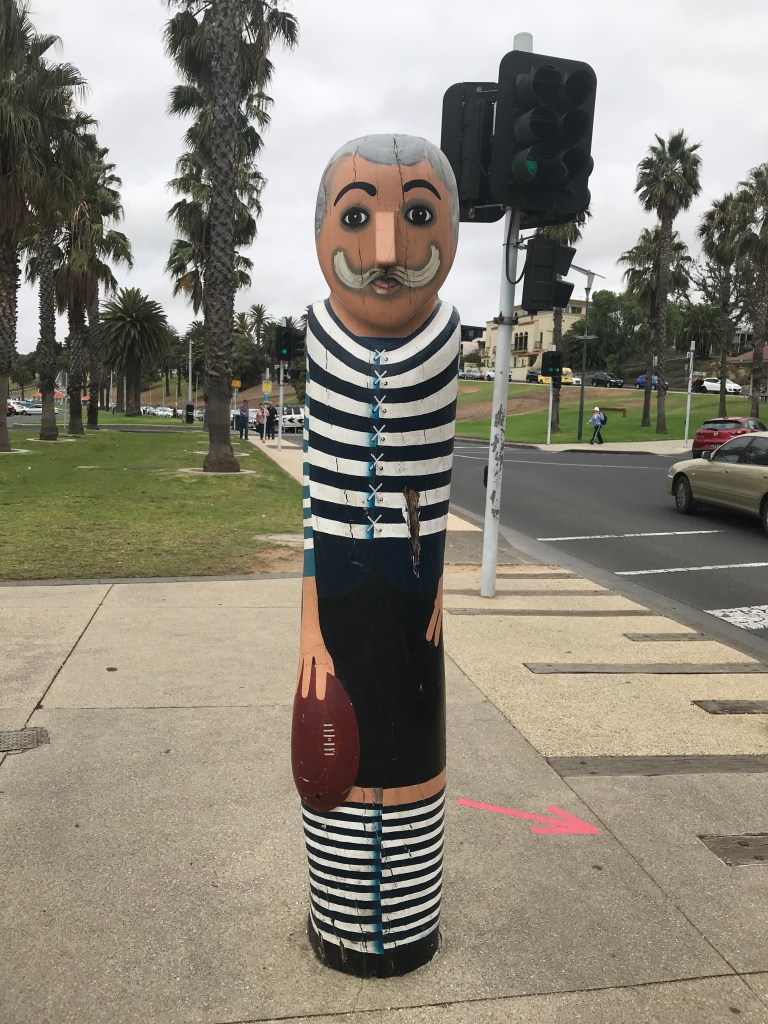
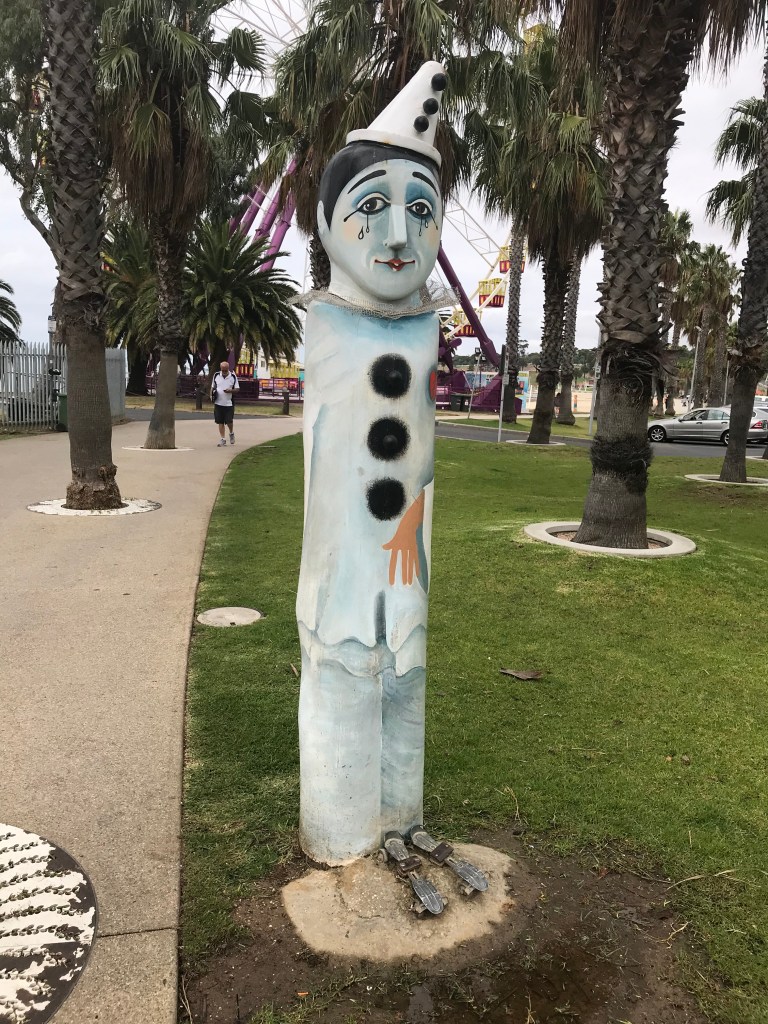
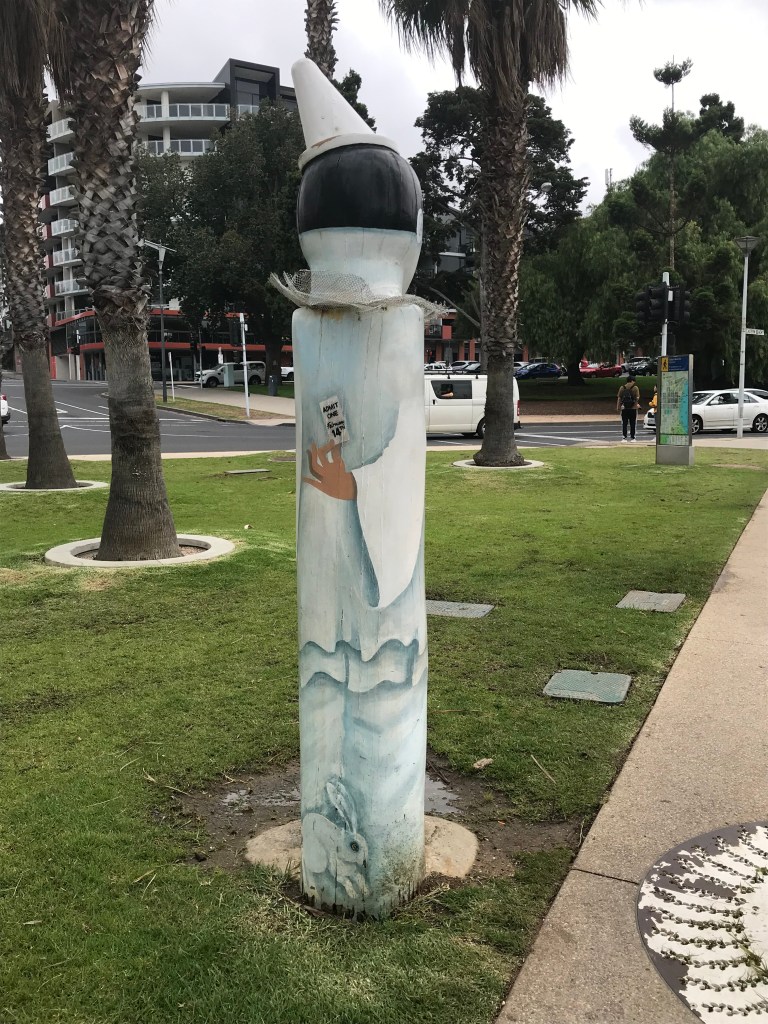
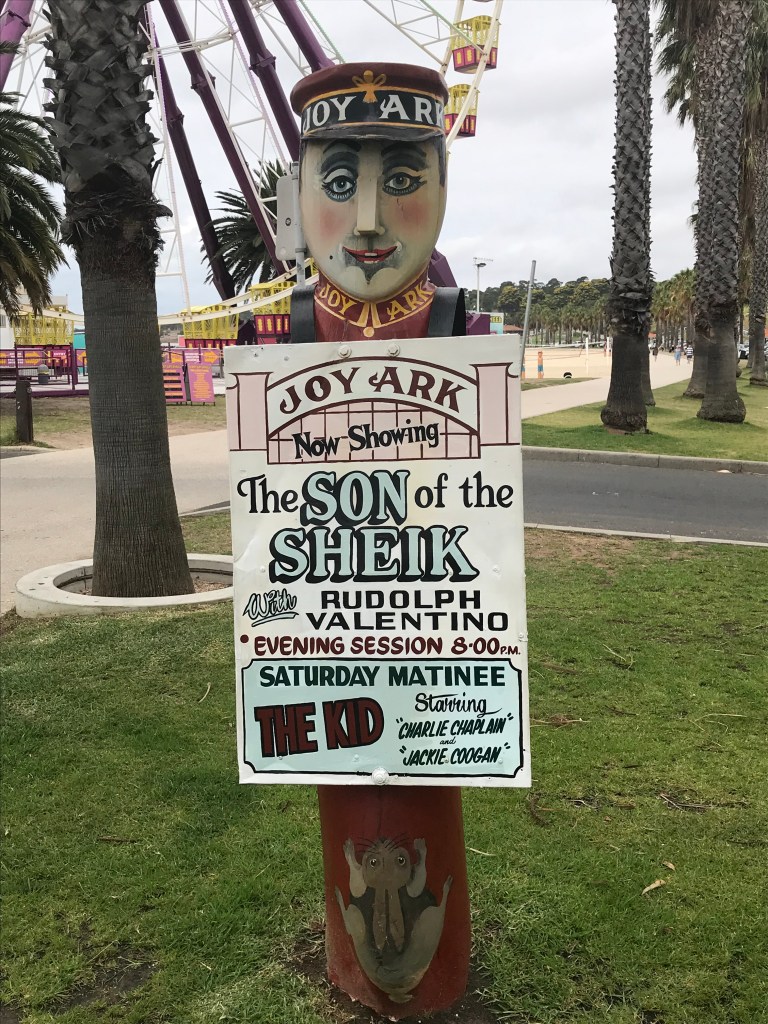
The lovely waterfront is populated with painted bollards.  These were carved from the piles holding up the old pier, painted by an artist, and repositioned.  Someone heard there was a problem because they weren’t being maintained; another that they are so popular a tourist draw that many more are planned.  Whatever the reality, they are great fun and I share with you photos of several. Note the rabbit at the bottom of the back of the clown and the cigarette dangling from the mouth of the female bus conductor (though you may not be able to see such detail.)

Geelong doesn’t have a pier for cruise ships so we were tendered in to the Geelong Yacht Club, greeted by volunteers armed with bags, maps, and guidebooks for us, including a 4×6” card with a map of the immediate area on a lanyard, and sent on tour or let lose in the city. 

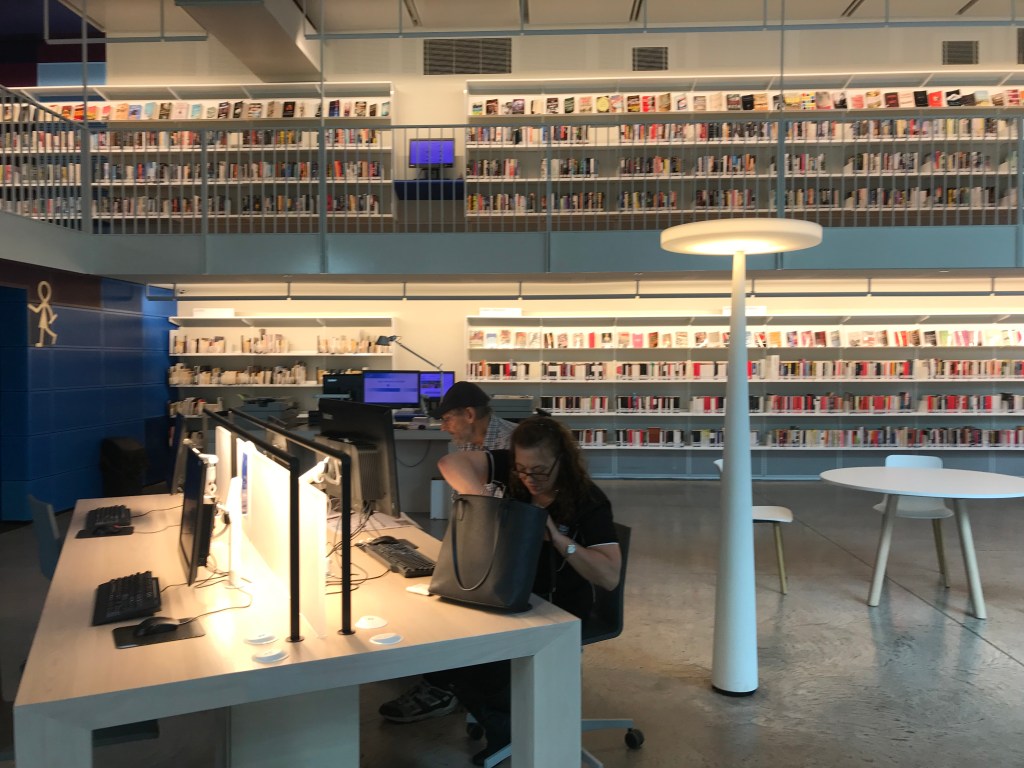
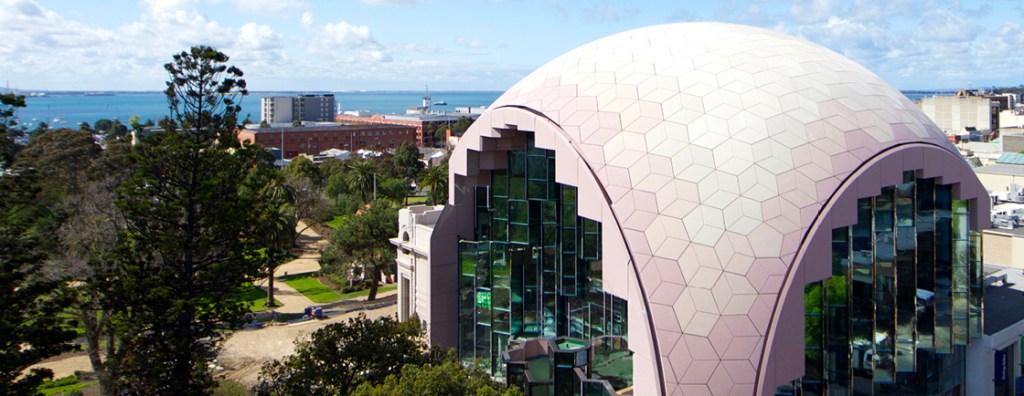
Since we arrived right in the heart of the city, it was easy to walk around and I set out to visit the new public library (of course.)  Wow!  I want one just like it!  Called the Geelong Library and Heritage Center (the Dome), it defied my poor attempts at photographing it so I swiped a photo from its website for the blog.

We missed the Wool Museum, unfortunately, but did get a bus tour of the region, nicely situateded on a peninsula between the ocean and the bay.

March 20 at sea

The Tasman Sea continued to be beautifully calm, so I would consider calmness for 2 out of 3 days of sailing on it to be a continuation of our wonderful luck with weather for the most part.  Considering that the cruise director told us from the start that the weather was our responsibility as passengers, that’s pretty good.  (“We’ll take care of the ship, the transportation, the food, the laundry, the cleaning, the entertainment,” she said; “The only responsibility you have is for the weather.”)

March 19 Hobart, Tasmania, Australia

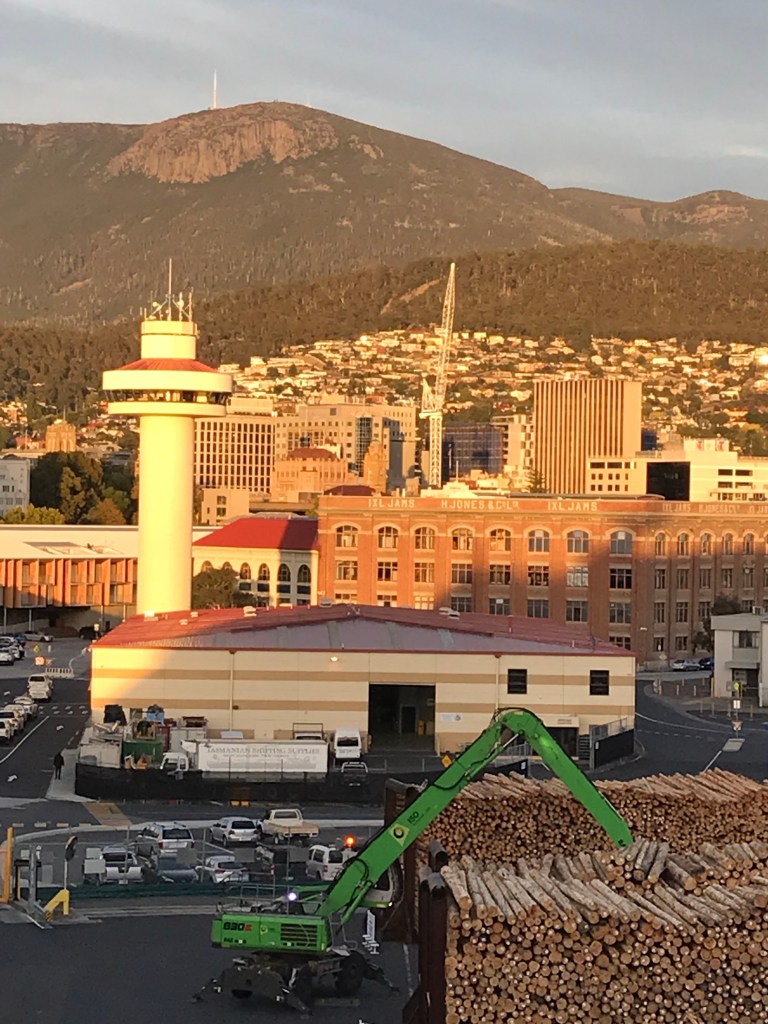
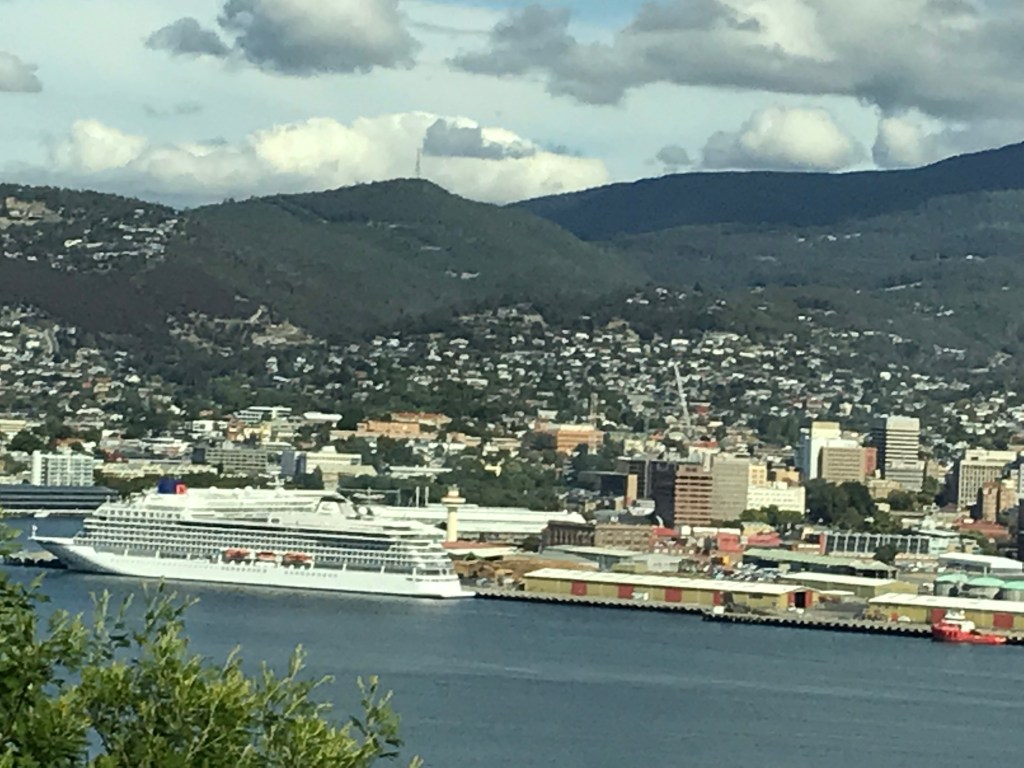
Possibly of all the places we’ve visited thus far, Tasmania might be my first choice of a place to live.  Physically it’s lovely with mountains, valleys, rivers, and very English villages.  The economy relies a lot on agriculture (including wine) and timber, which seems to be working.  Like most of the places we’ve been, housing prices are high and there seems to be a lot of construction.  Tasmania has a population of about 500,000, similar to Vermont, but in land area is closer to the size of West Virginia.  It is, of course, very far from ‘anything’ (a northern hemisphere prejudice) which I would find difficult.  Though it did make me muse that perhaps it would be helpful if Vermont was surrounded by ocean.
Both Hobart and Sydney—as well as Ushuaia, Argentina and Punta Arenas, Chile, not to mention the Iles des Salut, French Guiana—were originally established as penal colonies.  Clearly it was popular to transport your prisoners somewhere far away.  19th century prisons, wherever they were, were no joke.  We would find normal living conditions at that time to be quite uncomfortable, and their prisons were much worse.  Moreover, most transported prisoners were there for minor offenses—like stealing a loaf of bread (major offenses like murder got the offender hung)—and the minimum term seemed to be 7 years. 

In Hobart the pride in convict ancestors became more personal.  Both of our guides gave some version of the story that 20 or so years ago if you asked someone if he or she had convicts among their ancestors, they would say no, of course not—not in our family.  Now people actively search their heritage (also much easier now than in the past) hoping to find a convict because they admire the convicts’ courage, resilience, and great contributions.  One said her son did the searches and called, excited, to say he’d found ‘their’ convict—a 12 year old girl transported for the crime of ‘receiving stolen goods’—some ribbons!  She was placed as a maid in the home of free settlers and, ultimately, married the son of the house and had many children.

When I was probably in junior and senior high school, I had a Scottish pen pal, and she migrated to Australia when she finished school. There were government incentives for women because even in the early ’60s there were so many more men in Australia than women. I forget where she went–or what her name was or really anything useful, but I recall being startled at the idea of moving halfway around the world on your own at probably age 17.

About half the population of Tasmania lives in Hobart, but there are other towns and even cities as well.  As we could see from our included bus tour, it is a handsome city with many Georgian and Victorian buildings and various attractive homes.  The city seems very clean—even government provided houses were neat and well-kept though without the lovely flower gardens of the other houses. 

We did an excursion out of town to a village with the oldest bridge in Australia and to the Bonorong Wildlife Sanctuary and wildlife rescue.  The bridge is a lovely stone viaduct and the village had nice shops—with two charming sweets shops.

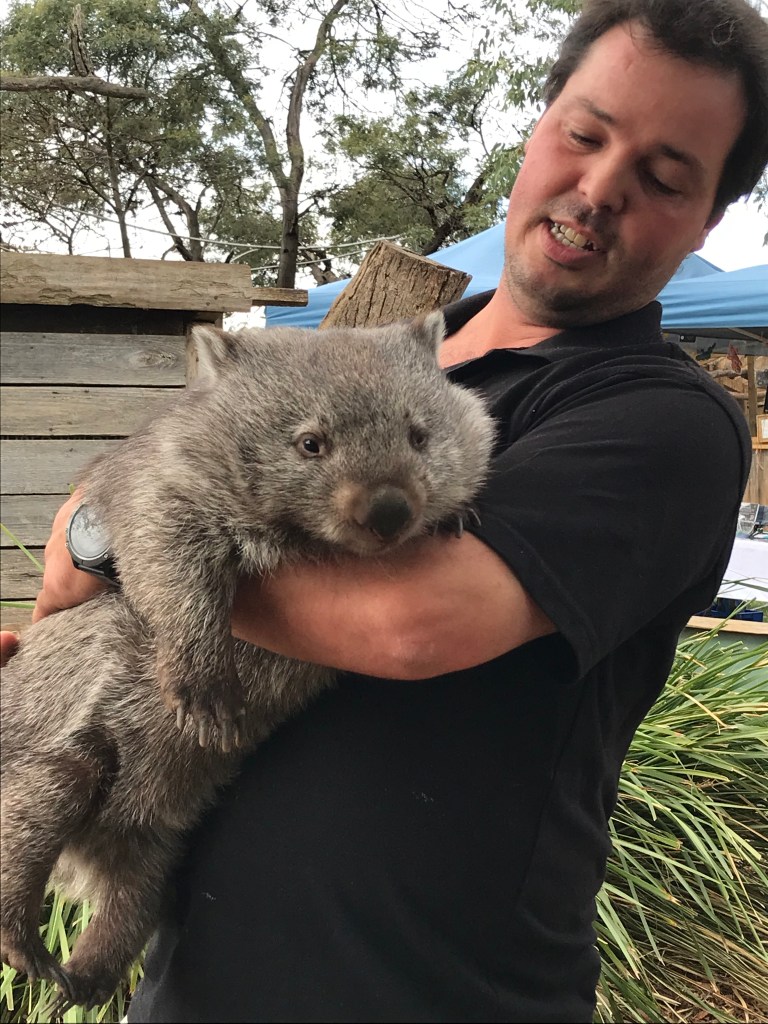
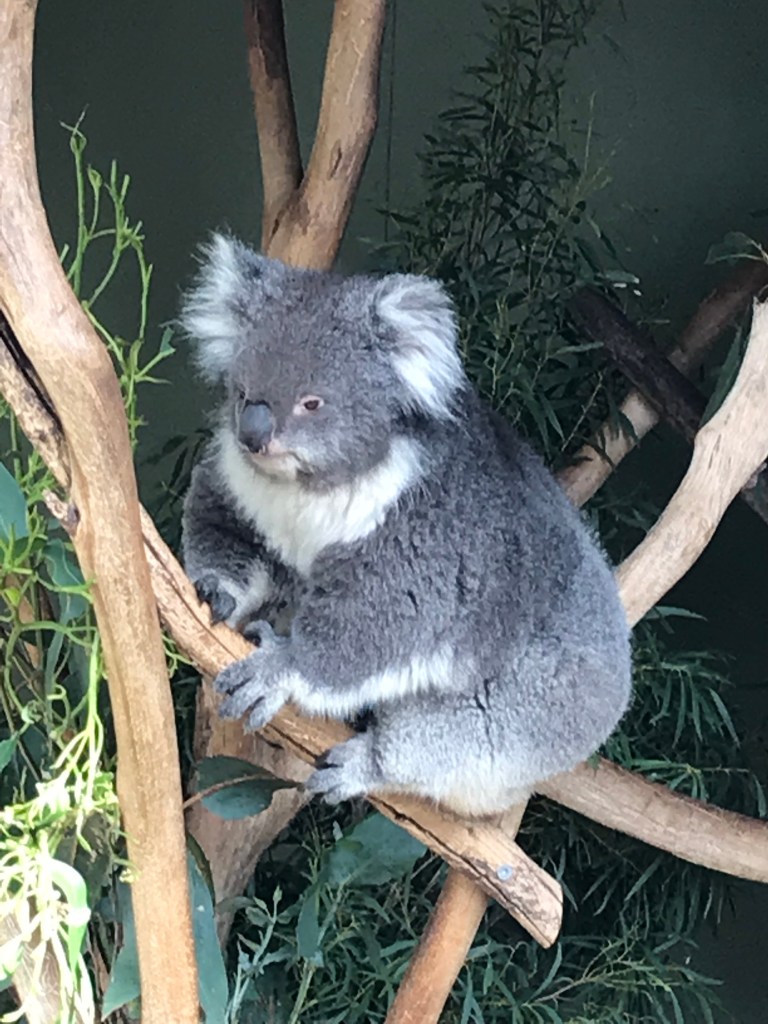
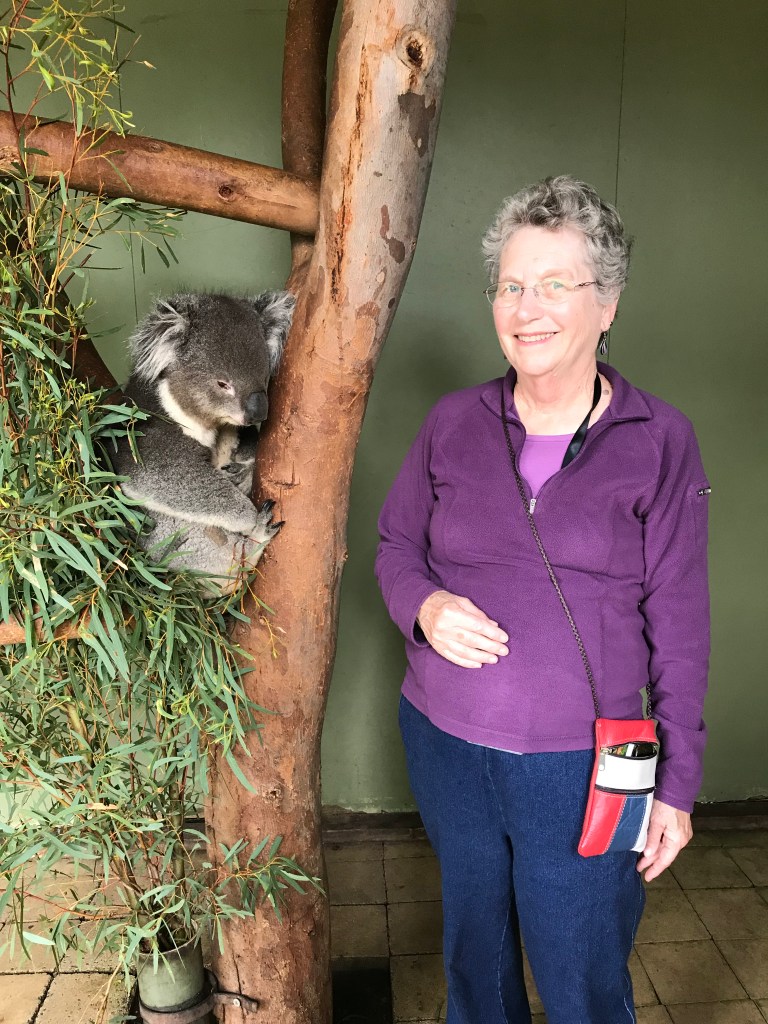
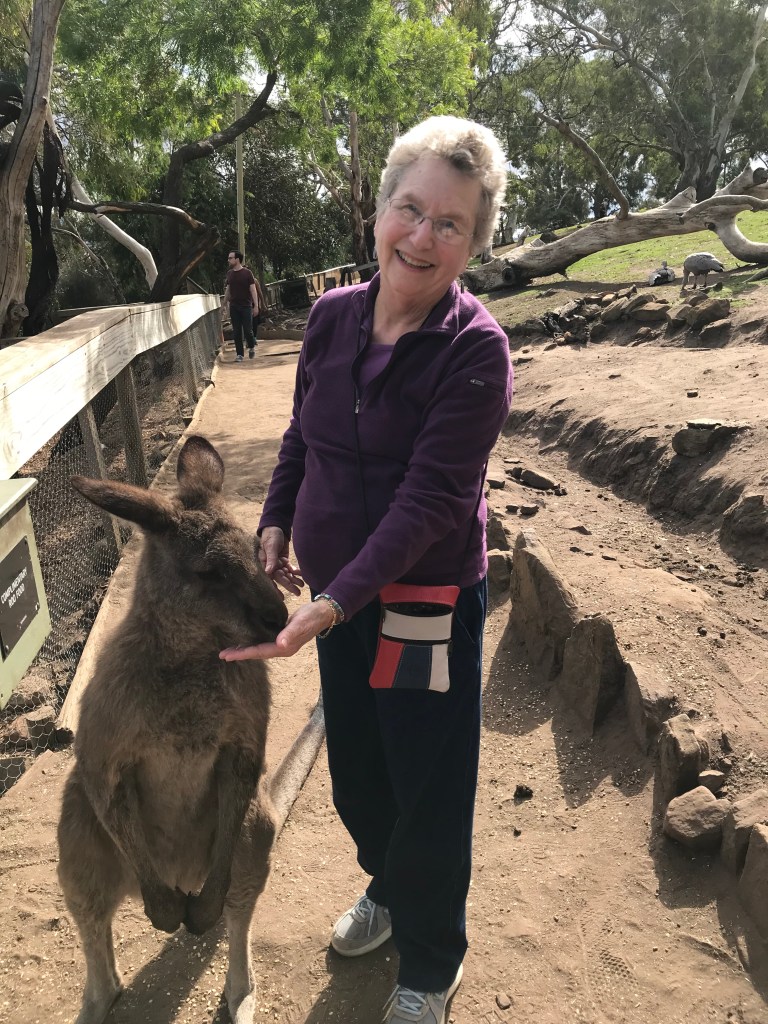
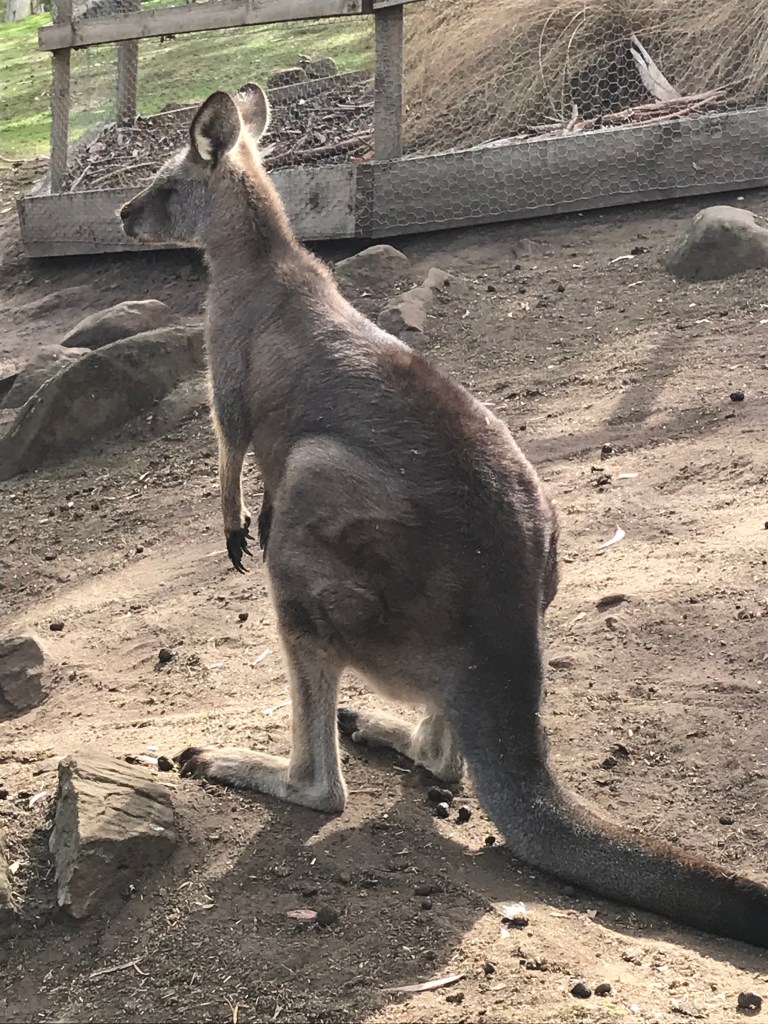
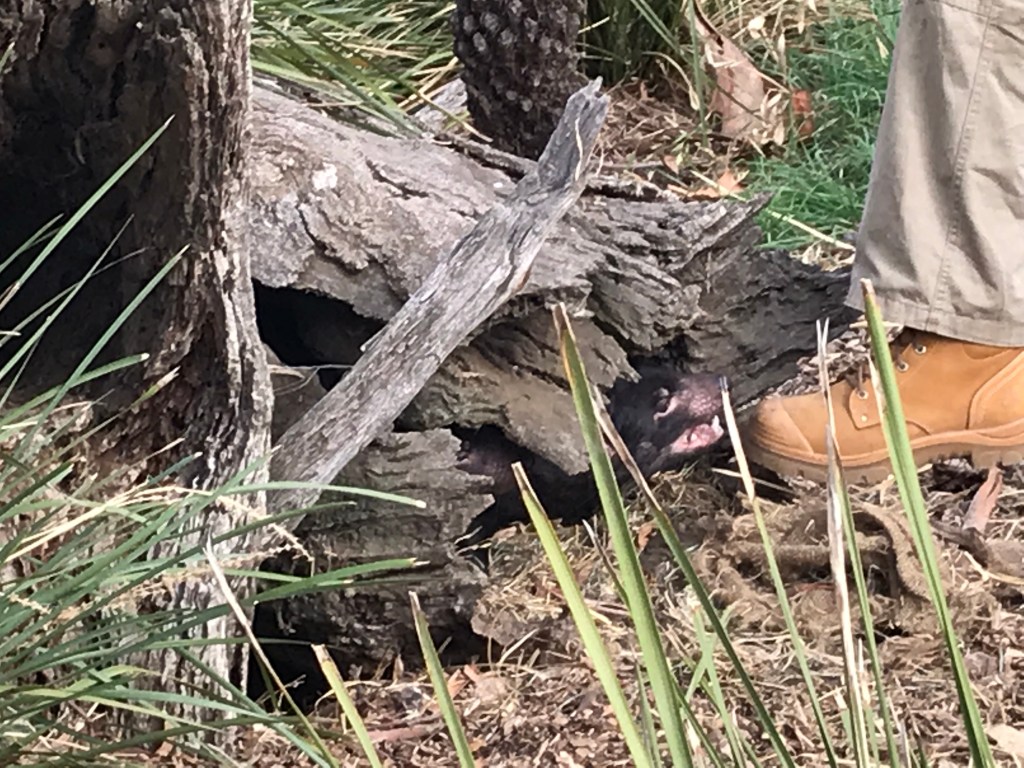
The wildlife sanctuary was created by a young man some 15 years ago and is definitely not the same as a preserve where there are lots of acres and animals roam wild within probably a very long perimeter fence.  Instead, it’s a little like a zoo with each species in its own enclosure, the individual animals pretty used to humans, and feeding by visitors allowed.  Nonetheless, it was wonderful to see animals you couldn’t see otherwise.  The kangaroos remind me of giraffes in Africa—everywhere and happy to see you.  You could feed them and someone offered to take my picture if I wanted to feed one so I agreed.  Koalas are very difficult to see in a preserve because they are at the top of trees and pretty nocturnal.  These were close up and accustomed to their caretakers who could take pictures of a visitor (one at a time, please) next to the koala.  Tasmanian devils are very shy and definitely nocturnal; one emerged part way from its hollow log when one of the keepers stuck his boot in.  He said they were not particularly aggressive, but he’d put his boot in her home and she was telling him to go away.  The sanctuary rescued 40,000 animals last year and 20,000 already this year.  Some can be returned to the wild; some cannot.

A traffic jam made us a little late returning, but the ship waited—the real advantage of being on a ship sponsored excursion.  Sailing away, the Tasman Sea was very calm and we were grateful. d
March 15-17 Sydney, New South Wales, Australia

Three days of rain were predicted for Sydney, but, fortunately, it didn’t all materialize.  We were told it rained heavily the night before we arrived.  I believe, however, the ‘normal’ weather is more sunny than rainy.  It was in the 70s so reasonably warm.

Friday. We arrived in Sydney in the dark and met for our first excursion at 7:10 am—definitely before my preferred hour for being awake and fed—a 9-hour tour to the Blue Mountains just west of Sydney. 

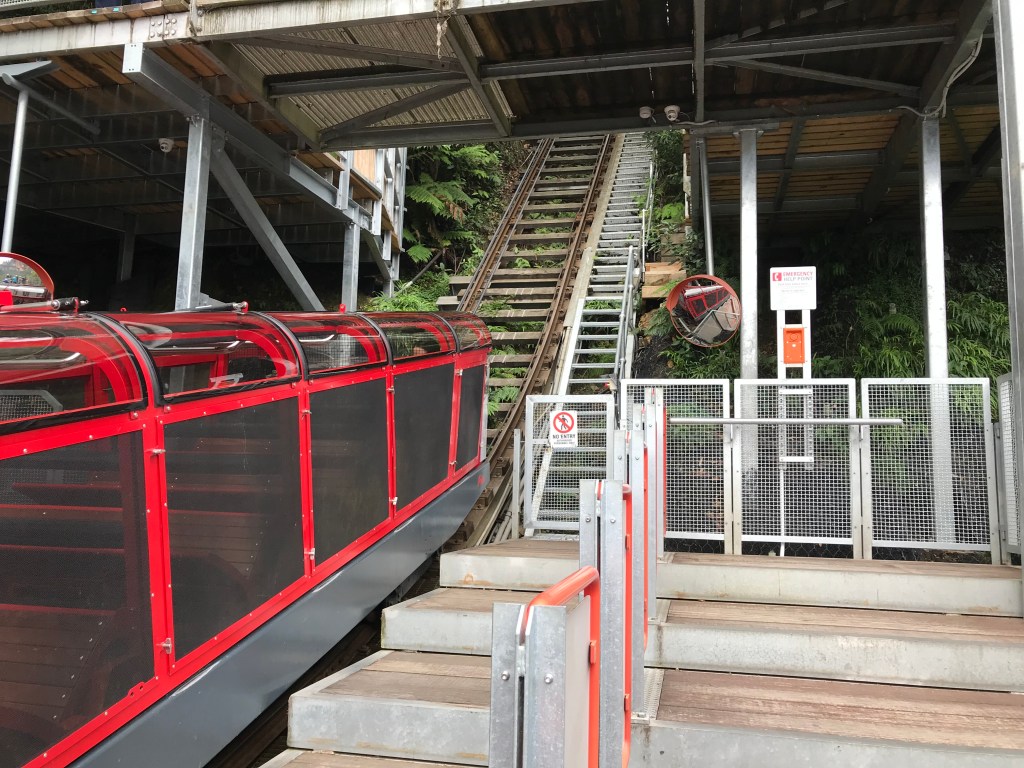
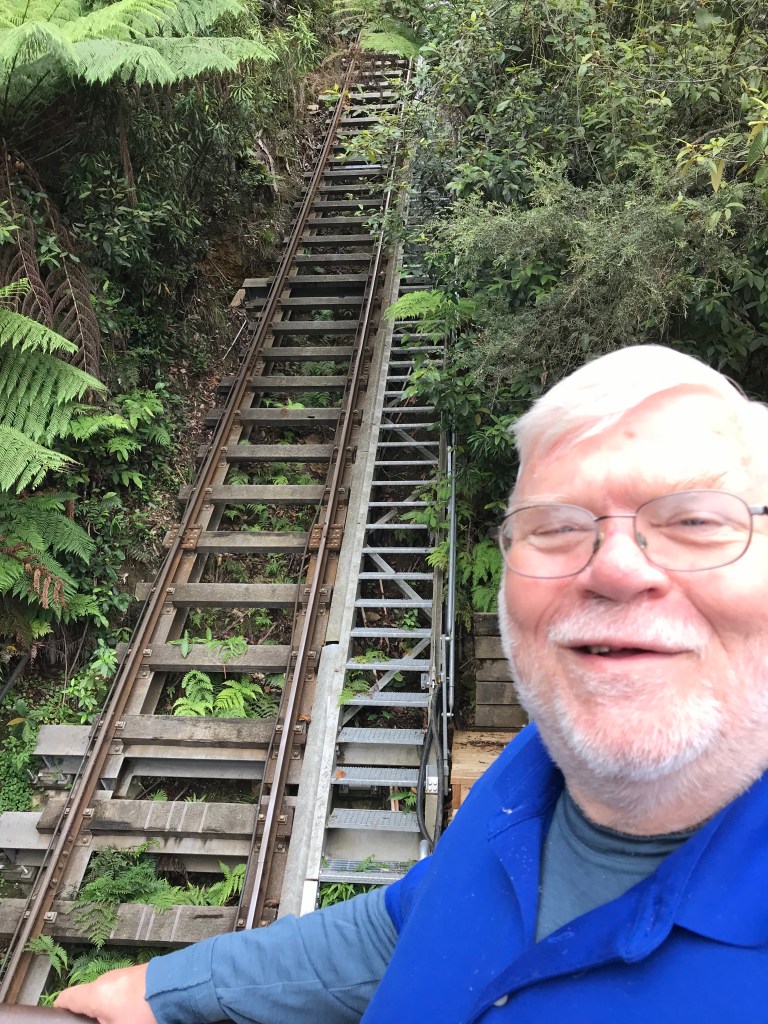
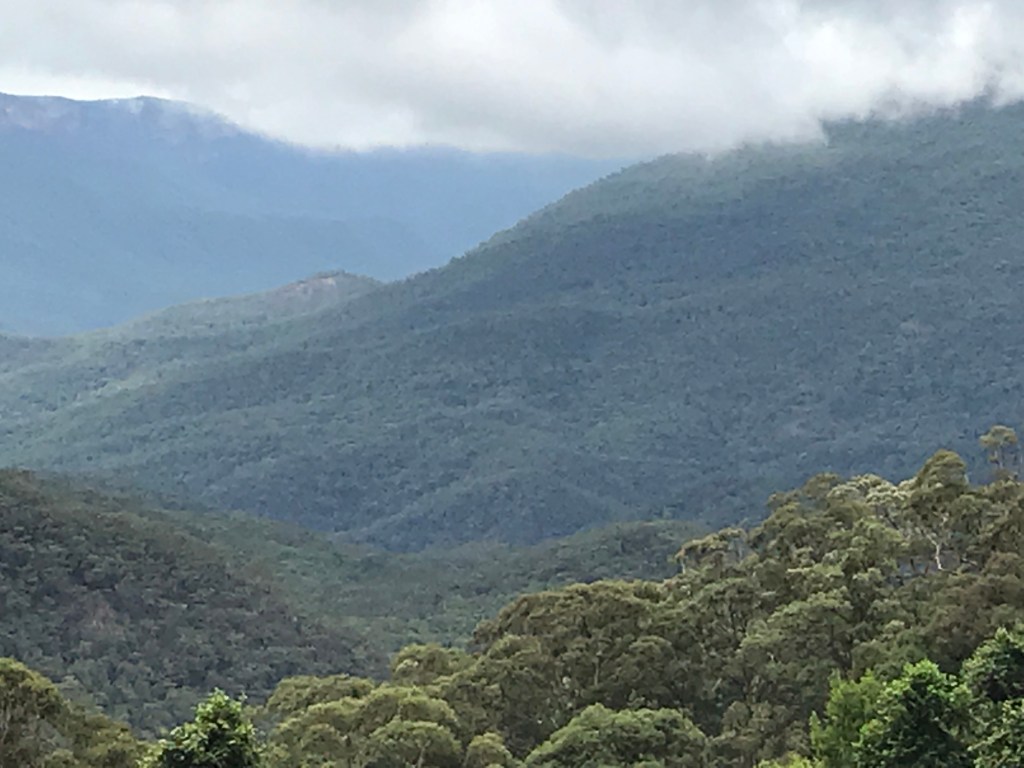
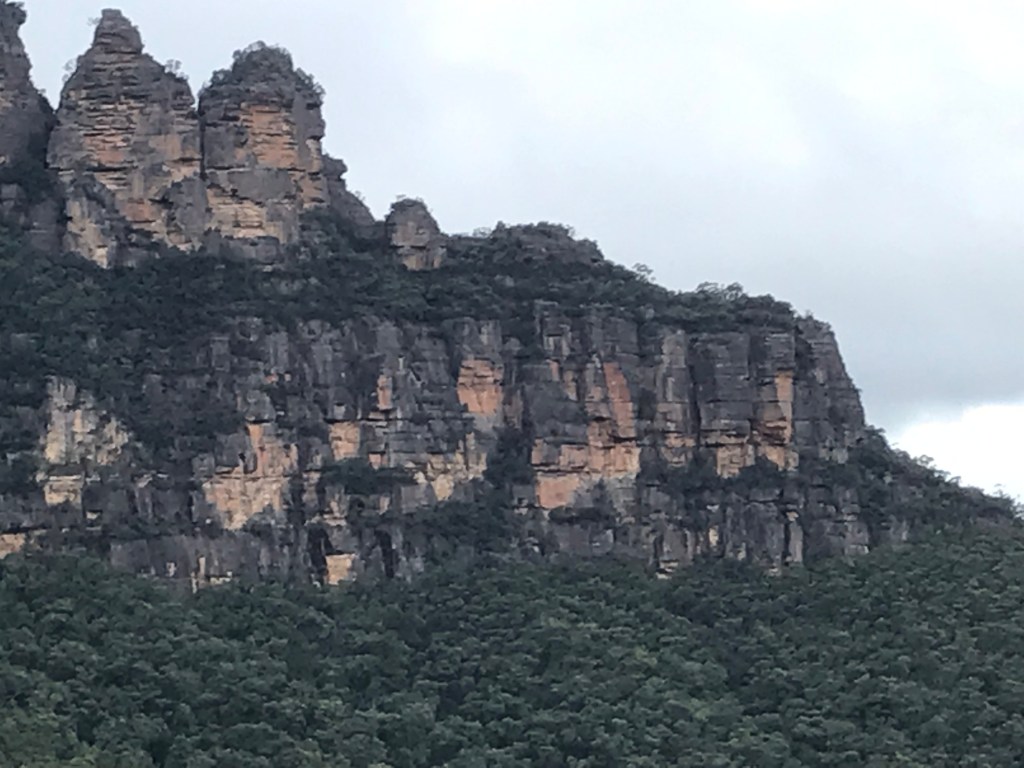
The destination in the Blue Mountains was in a way more of a theme park.  We descended a mountain on a train at a 52 degree angle!  Coming back up was even more impressive (scary, choose your adjective).  Next we tried a cable car over a gorge.  Unfortunately, in the fog we couldn’t see much.  There were some Asian tour groups there at the same time and I was amused to see in the toilet stall the sign above indicating they receive a lot of Asian tourists.  I recall seeing the same signs in the Bangkok airport.  Nonetheless, it says something about facilities available in Asian countries even for people wealthy enough to go on overseas tours.

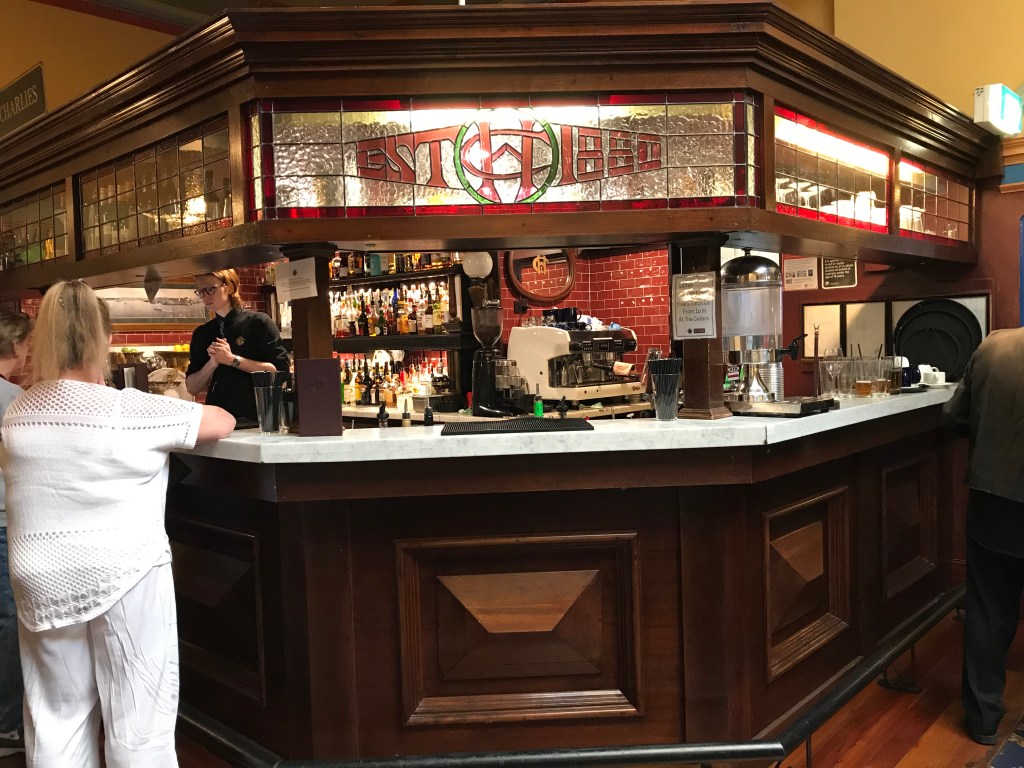
We had lunch at an iconic historic hotel, now I think mostly held together by the tourist groups.

Returning just before dinner time, we crossed paths with many passengers dressed up and leaving for the opera at the Sydney Opera House.  Salome, I believe.

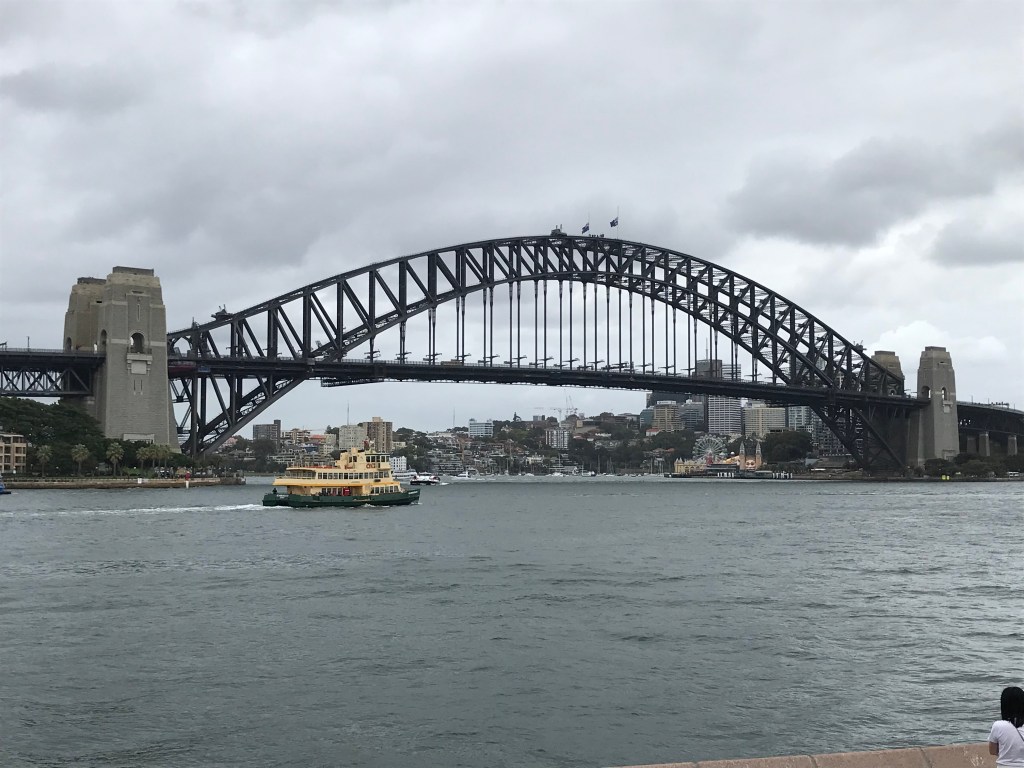
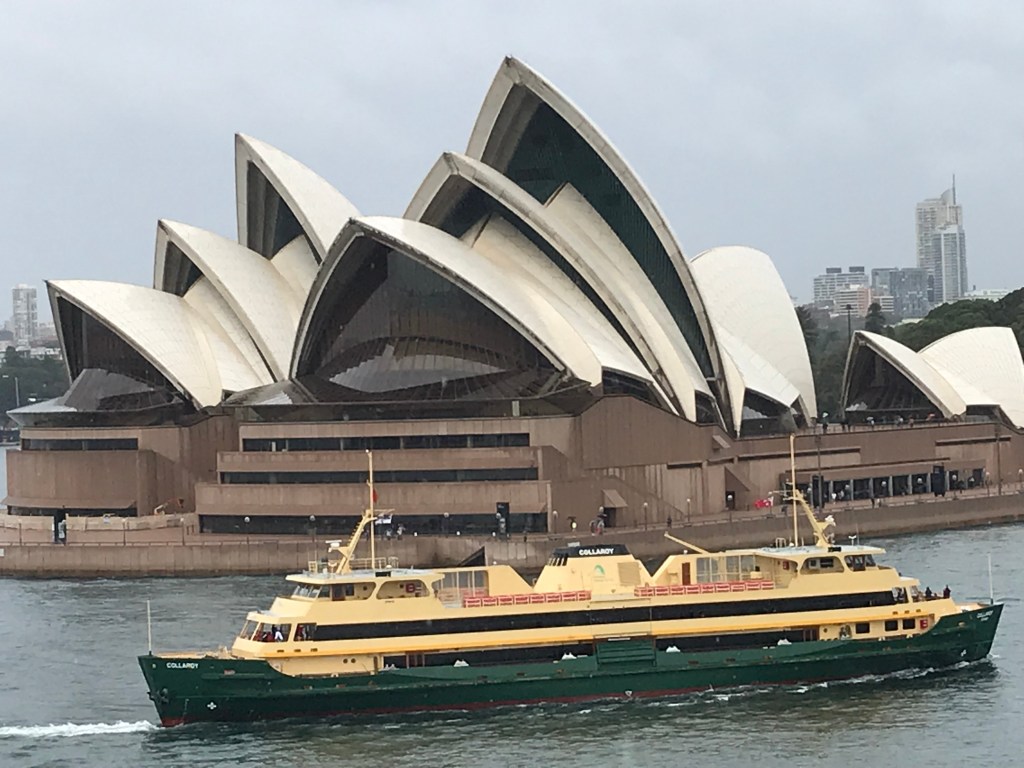
Saturday.  We had no tours planned today and Chris wasn’t feeling well so I took the boat shuttle from our dock a couple of bays away to Circular Quay, what I see as the heart of Sydney.  With the Opera House on one side of the u-shaped bay and ‘The Rocks’ a now bustling shopping and restaurant area on the other and many shops and restaurants along the quay itself, this is a fun place to be and I walked much of it.  On the shuttle I encountered a couple heading to the Opera (La Boheme this time)—they mentioned they could not go in the evening because they hadn’t brought ties!

 The Sydney Harbour is one of the best and longest natural harbors in the world, emerging as it does from the estuary of the Paramatta River.  With its many twists and bays, it makes for a lovely harbor cruise.  The Sydney waterfront is also wonderfully done with many parks and walkways. 

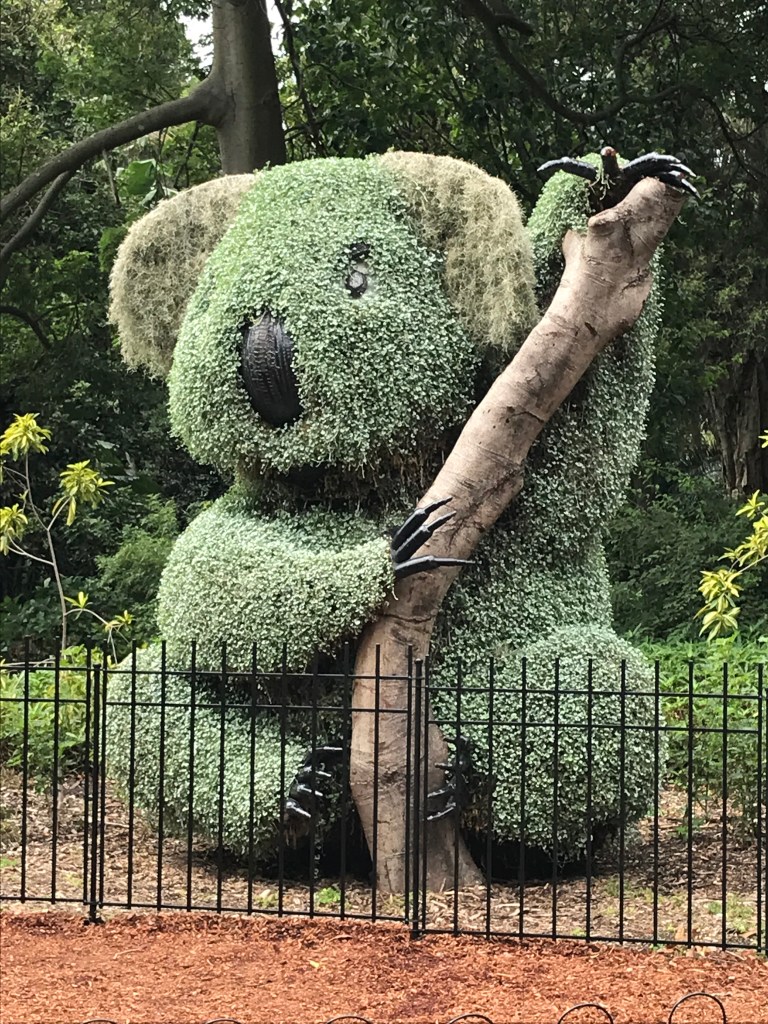
On the other side of the Opera House peninsula is the Royal Botanic garden which stretches for two bays and is a grand and welcoming park.  I walked through it and saw many families enjoying what turned out to be a warm sunny afternoon. 
Sunday.  Today was truly and undeniable raining—pouring even.  We did the ‘included’ tour, which was a bus ride around the highlights of Sydney.  When we reached the viewpoints and photo stops, we and most others remained on the bus but were still drenched just getting from the bus to the ship.  The major stop was at Bondi Beach.  Fortunately we’ve been there before—on a nice day—reinforcing our decision not to get out of the bus.  I had actually seen many of the highlights from my walk the day before, and I was most struck by how close to each other and walkable they were from the waterfront and yet how far apart they seemed from a bus negotiating traffic.
Australia, in recent years, has become proud of its convict background—not their treatment, but rather convicts as their ancestors.  Our guides in Sydney all spoke of the great contributions made by former prisoners, most of whom remained in the area after their terms ended (if they survived), including designing important and beautiful buildings and becoming important and wealthy businessmen contributing much to the growth of the colony.   One building designer in particular was transported for forgery and is now featured on the $10 bill. 

They are also proud to be a country of immigrants.  One guide mentioned the first immigrants arriving 50,000 years ago (presumably from Indonesia, which is very close to the north of Australia).  Of course, the British (including a lot of Irish) arrived in the 19th century and, since then immigrants have come from all over beginning perhaps in the aftermath of each world war.  Although they had an embarrassing ‘whites only’ policy for a long time, that was finally rescinded, and now Asia is the source of many of their immigrants.  I’ve forgotten what we were told in Sydney, but our cruise director mentioned that, after English, the most prevalent languages in Tasmania are Mandarin, Tibetan, German, Italian, and another I’ve forgotten.  Now that I think of it, almost everywhere we’ve been the guides have stressed their multiculturalism and their ’nation of immigrants’ identity.

We sailed away just after lunch.  It should be a lovely trip down the harbor, and many of us gathered in the front lounge eagerly with our cameras, but really it was still pouring rain so not that enticing.

March 11-14 at sea

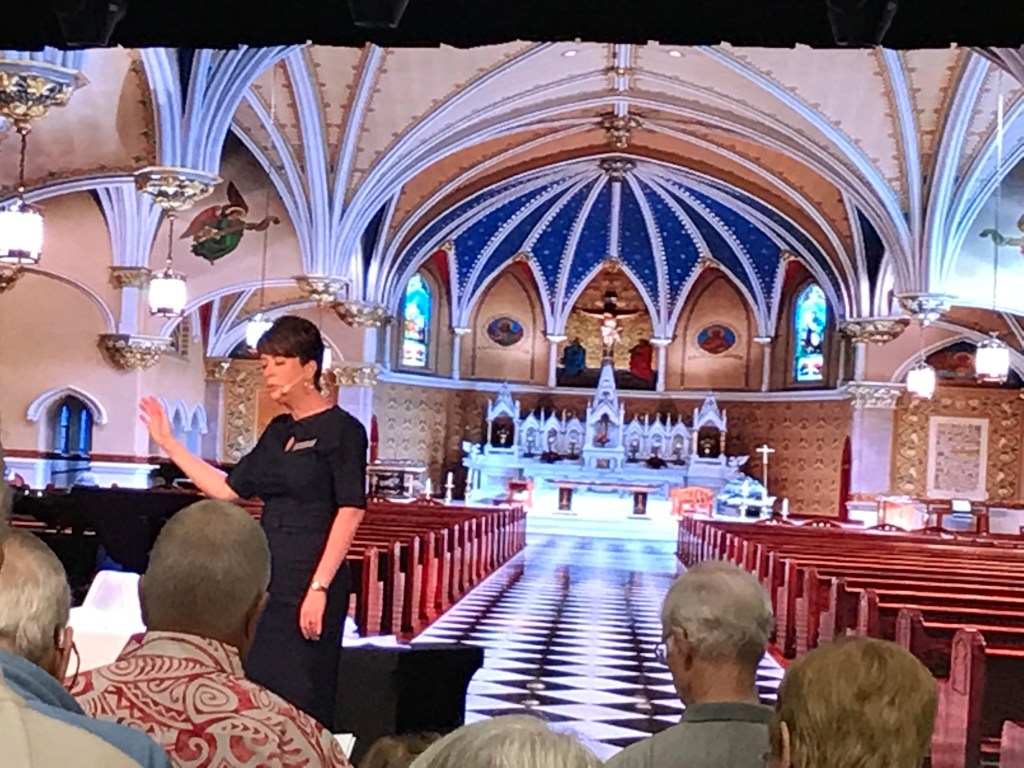
Since Sunday was such a full day, we had church on Monday, complete with communion.  The chef had baked individual rolls or wafers and we dipped them in red wine in huge wine glasses.  As usual, it was a wonderful service.  Heather Clancy, our Cruise Director, who leads it says there is an association of cruise chaplaincy, the source of the order of service and also the bone structure of the homilies (to which she, of course, makes her own inimitable additions.)

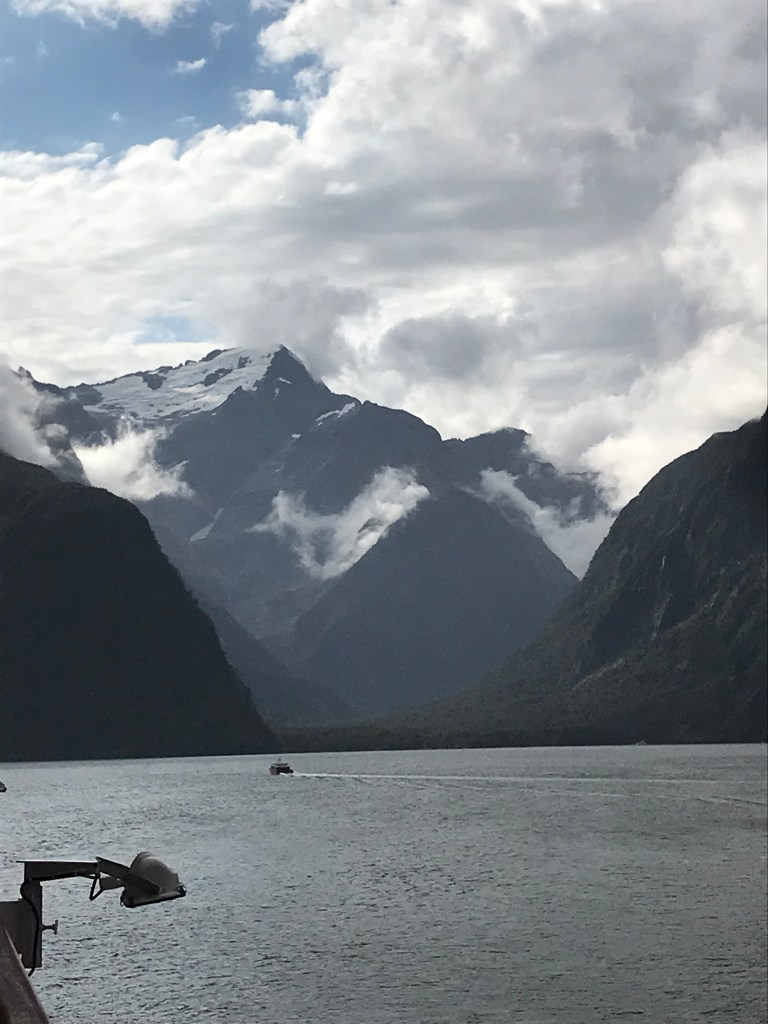
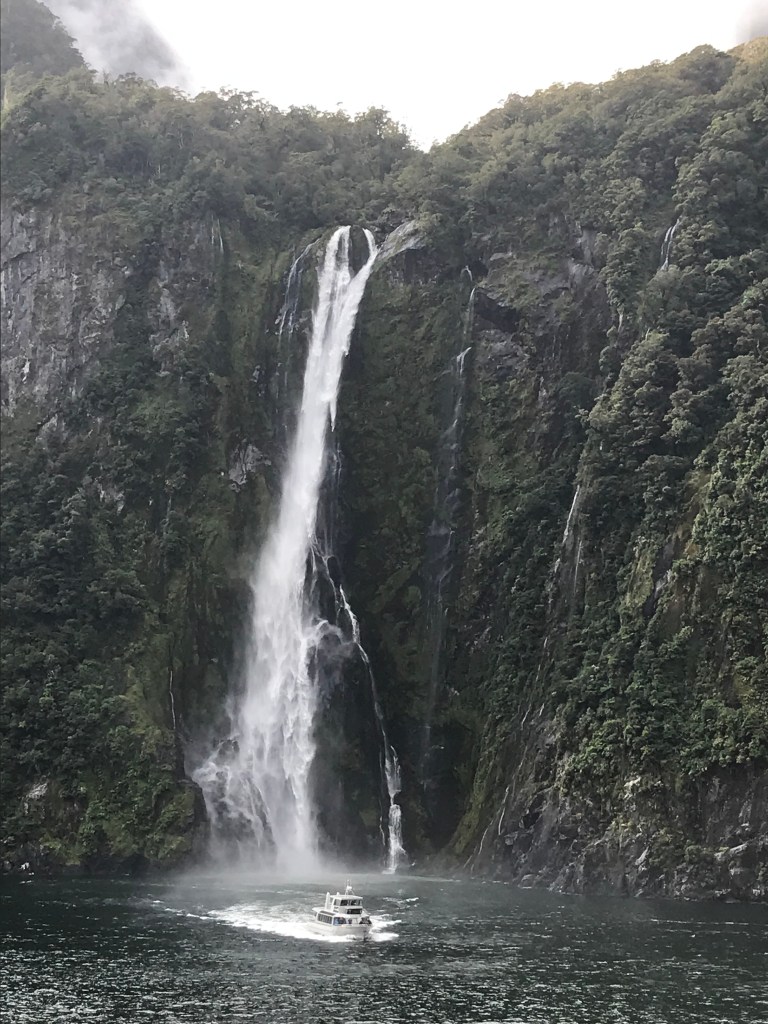
 We didn’t see the western part of the Cook Strait because we left Wellington late in the evening.  By Monday morning we were sailing down the South Island and spent Tuesday sailing the beautiful Doubtful and Milford Sounds.  It was like being back in Patagonia—possibly even more so. Though foggy when we sailed into Doubtful (so named, it is said by James Cook who declined to enter it because it looked a bit tight), by mid afternoon when we entered Milford Sound, the sun had come out and we had a warm sunny traverse.  As we prepared to leave, the clouds returned.  The waterfall in the above photo is from a ‘hanging valley.’  These valleys were part of the ocean; then sea level dropped and the water flowing through the former ocean valley drops directly off a ‘cliff’ into the current sea as a waterfall.

We continued to have a calm and pleasant a journey across the Tasman Sea to Australia—it can be pretty rough.  Besides, we gained two more hours of sleep.  We are now 8 hours behind (earlier) Eastern time according to my watch.  By the time we finish the cruise we’ll be 5 hours ahead…

Many folk are leaving tomorrow including many of the entertainers.  The Virginia Gentlemen, the a cappella group from the University of Virginia, got on in Wellington and leave in Sydney.  They’ve been giving two short concerts each day, and it is certainly a change of demographic to see a bunch of college guys running around the ship (especially attired in their ties and blazers.) –Cynthia

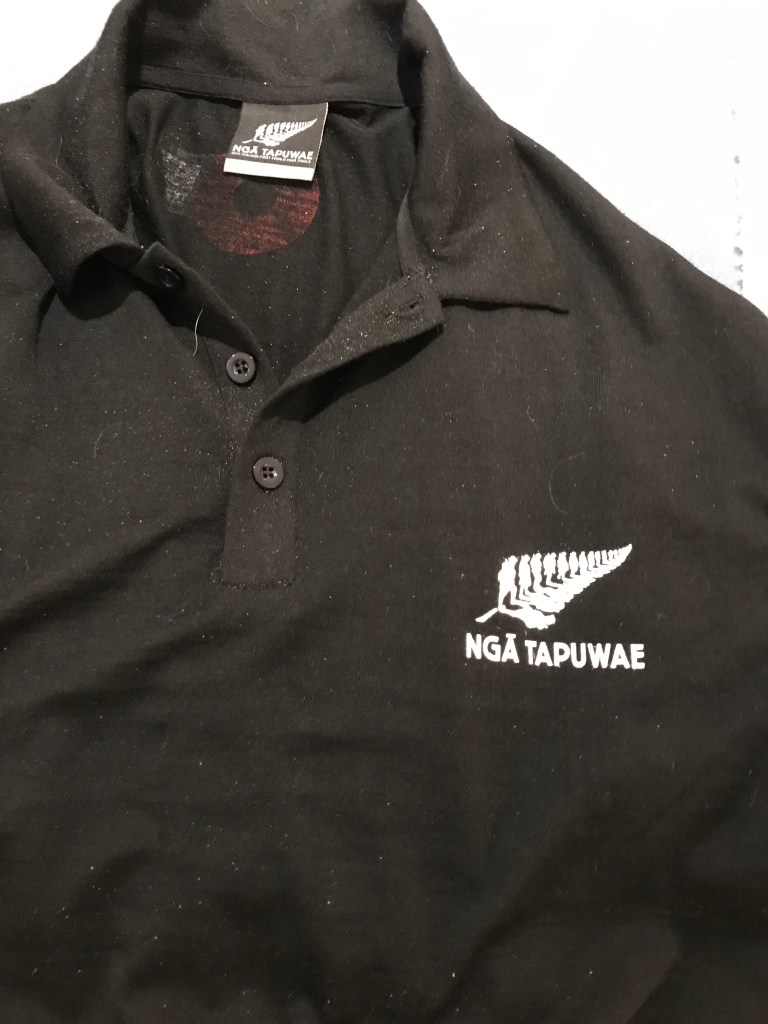
Nga Tapuwae: The Footsteps; and a polo shirt. Back Story: Rugby is New Zealand’s national sport and its national rugby team is the “All Blacks”.  While at Middlebury I enjoyed watching Rugby football matches, because several of my students played.  I also much enjoyed watching a couple of televised Rugby Union matches, including one in which the All Blacks played (not least because before each match they challenged their opponent with a Haka, a ceremonial, extremely vocal and threatening dance.  A Haka is not to be missed: https://www.youtube.com/watch?v=yiKFYTFJ_kw. )

     Given the Haka and the grueling, non-stop and competitive nature of the sport, it seems ironic the All Black’s logo is a simple, graceful fern frond.  While visiting the National Museum (Te Papa) in Wellington NZ, I purchased an all-black polo shirt bearing ostensibly a fern frond image above the Maori phrase “Nga Tapuwae” (left-hand image above).

     To understand the image’s significance, a fern frond consists of a series of opposing leaflets of decreasing size as one moves outwards along the frond. Close up, however, each leaflet of the polo shirt frond resolves as an image of a soldier and an opposing, mirror image, which is either the reflection of the solder or his shadow (right-hand image above).  The solders appear to be trekking along the frond into the distance as the frond decreases in size, moving into the future or the past.  “Nga Tapuwae” apparently is a Maori phrase meaning “footsteps”, and is a reference specifically to marches taken by Maori volunteer soldiers during the ill-conceived and ill-fated invasion of Gallipoli (Turkey) and their subsequent redeployment to the Western Front, during WWI.  

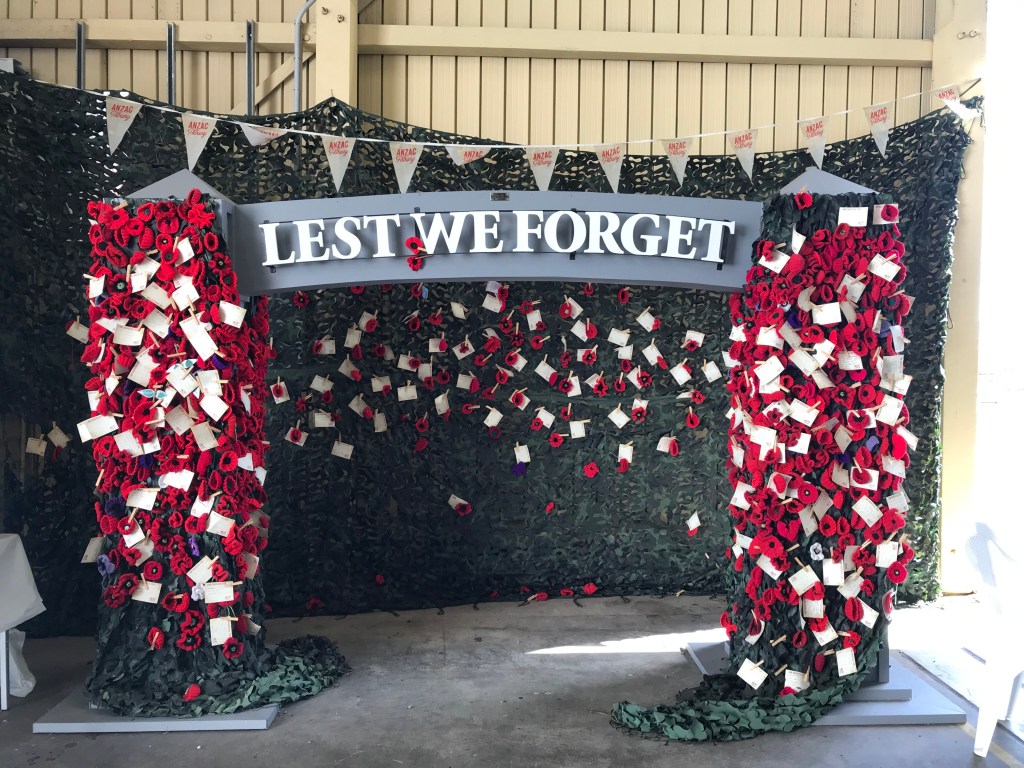
  Historically, I understand their involvement in WWI is the first instance of Maori and Caucasian NZ troops fighting side-by-side (and of NZ and AU troops joining forces in newly formed “ANZAC” (Australian New Zealand Army Corps) regiments, signifying and cementing their combined identities.  Many believe the joining of these forces represents the origin of national identities for these “down-under” colonies, as the result of horrendous casualties suffered as a result of poor intelligence, faulty planning and shoddy tactical execution by Winston Churchill, then First Lord of the Admiralty, and his English naval and army staff, as they attempted to open a second front in what they mistakenly considered the soft underbelly of the German and Austo-Hungarian Empire.  (The Turkish soldiers were, after all, defending their homeland… and there was nothing soft about their fighting!)  Following their retreat, the ANZACs moved from one stalemate along the Dardanelles to another in the first front, in NE France…and one can retrace their footsteps if one wishes and better understand the histories of New Zealand and Australia.— Chris

March 10 Wellington, New Zealand

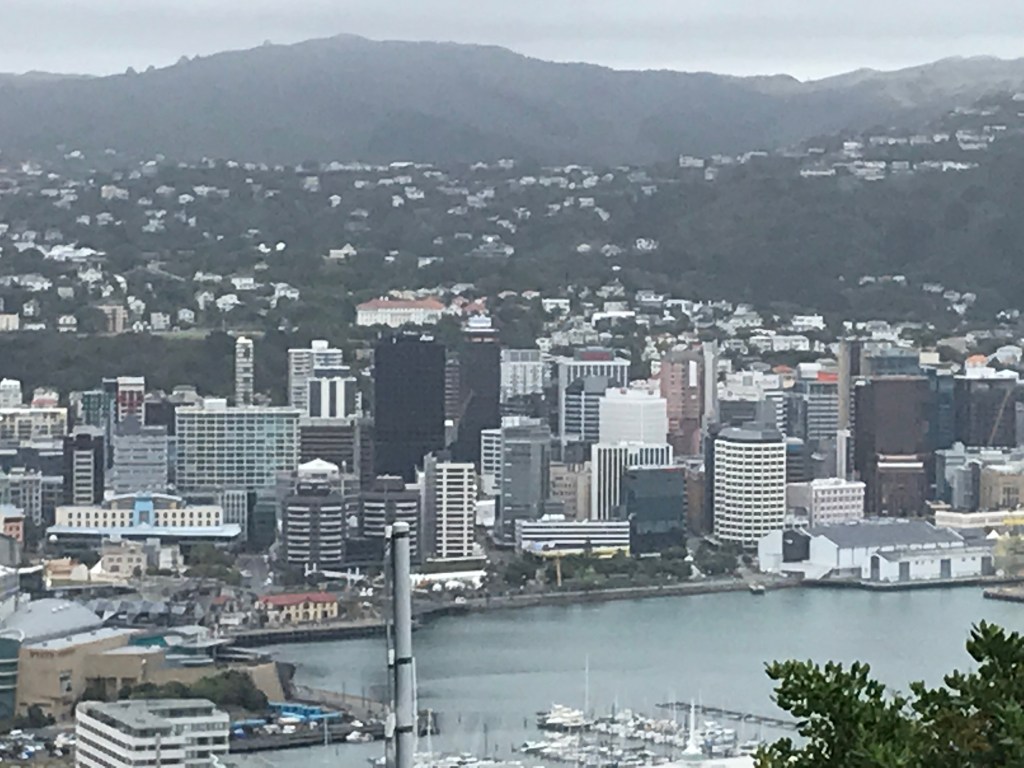
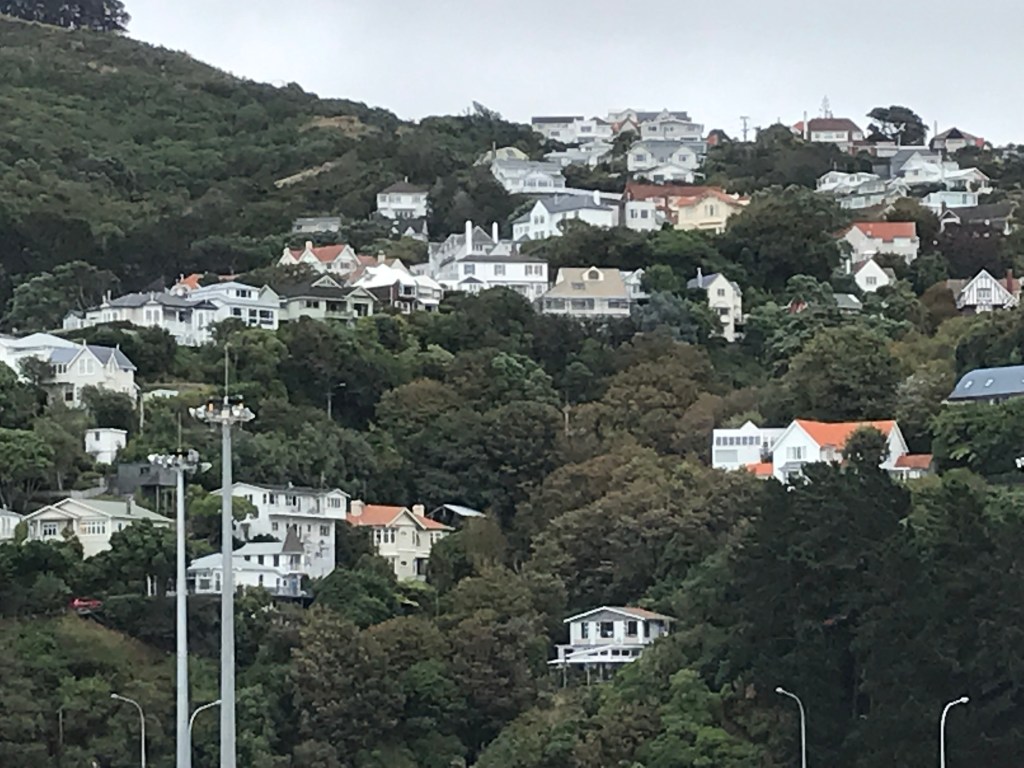
Wellington, the capital of New Zealand, is on the south end of the North Island on the Cook Strait that flows between the islands.  It is smaller than Auckland with almost 500,000 in the region and became the capital because Auckland was a bit far for legislators from the South Island to travel.  The city is built on hills rising from a relatively flat area forming the center.  From the ship we could see houses covering the hillside; they are reached by narrow roads making travel and parking difficult.  In addition, it may be significant vertical distance from the road to the house entrance; therefore, many houses have their own funiculars or hundreds of steps.

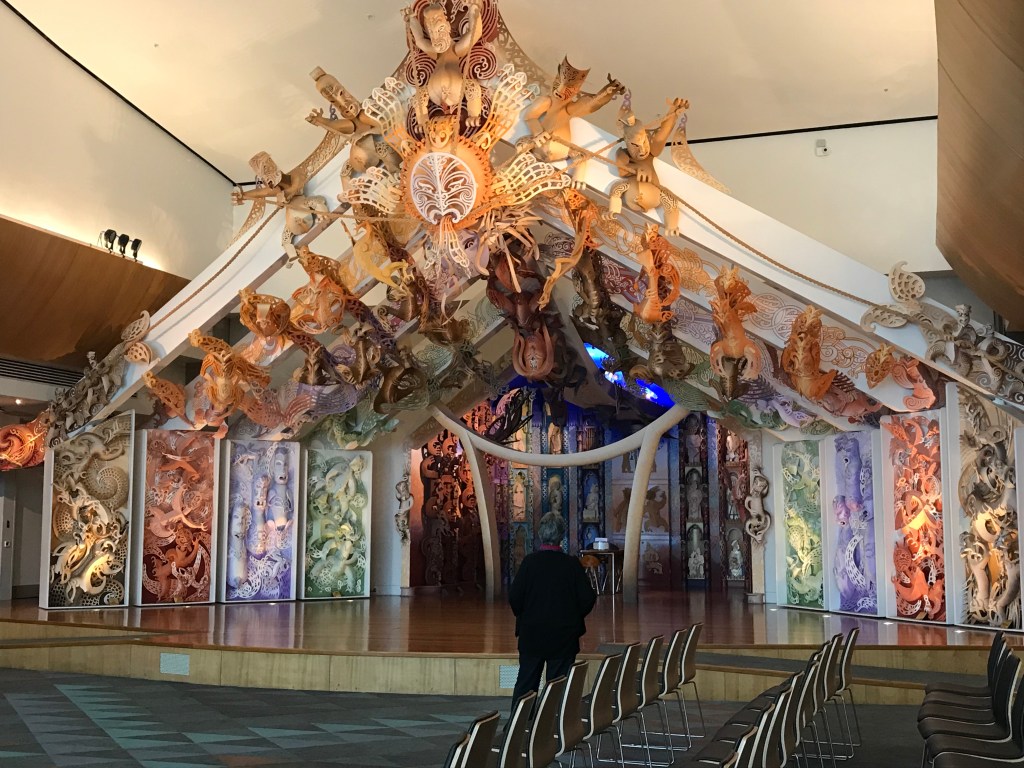
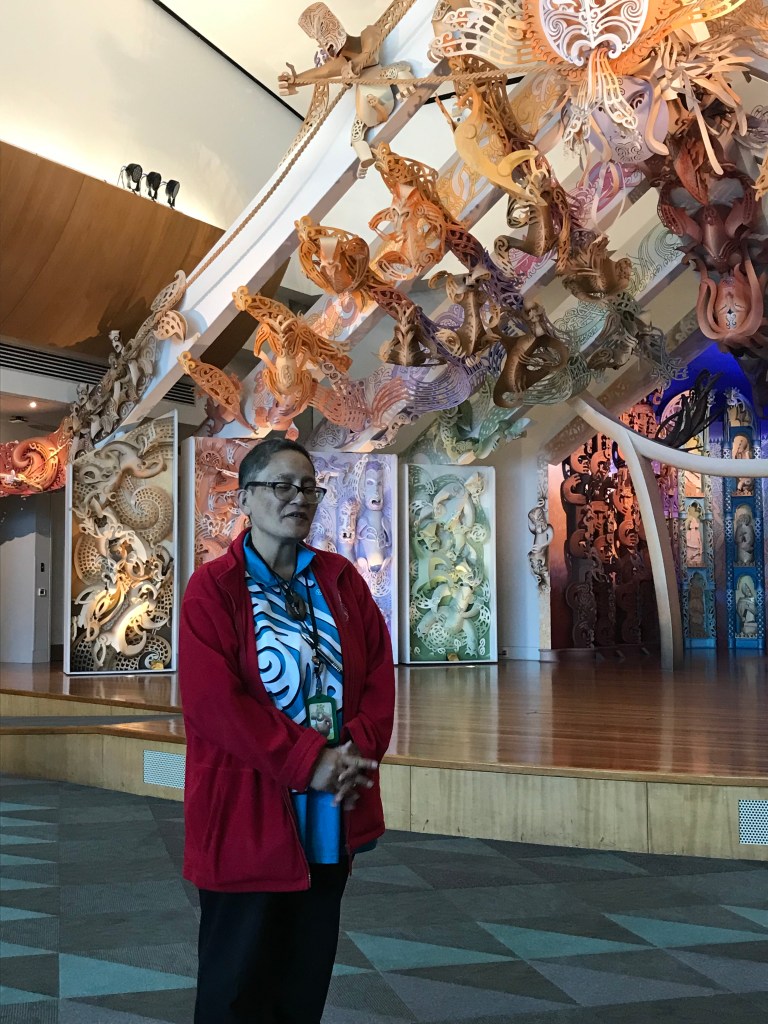
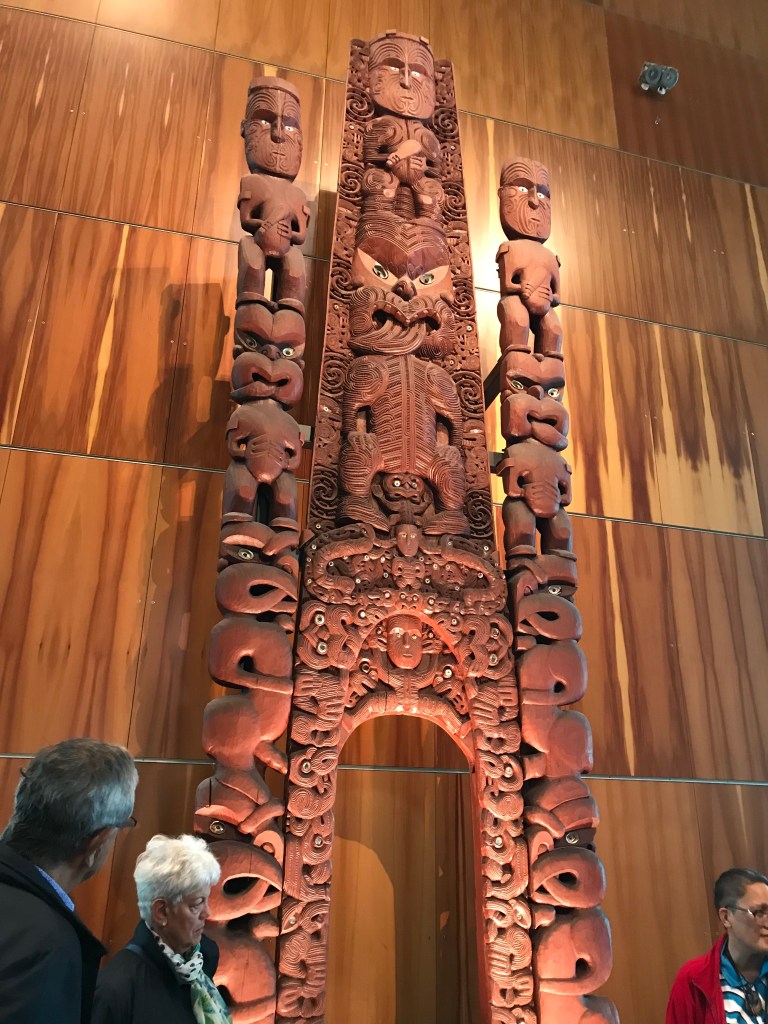
There is a wonderful museum in the center of town, the Te Papa, which focuses on Maori history and multi-culturalism but includes many other exhibits.  Just now it has an exhibit on Gallipoli about the New Zealand involvement in World War I, New Zealand women’s fight for equality (NZ women secured the right to vote many years before other countries such as the U.S.), and the Chinese Terra Cotta Warriors.  Our tour was through some of the Maori sections with both a modern and a traditional marae or meeting place.  The modern marae was designed to welcome people of all cultures.  Then we had a special tour ‘behind the scenes’ to the Archives where a curator showed us some of the rich collection artifacts from weapons to weavings (including beautiful kiwi feather cloaks).  Unfortunately, we were not allowed to photograph in the Archives nor in the Maori section—only the modern marae.  It was a magnificent tour.  Our guides in the museum were both Maori and spoke from the heart as well as from vast knowledge.

Peter Jackson, director of the Lord of the Rings, is from Wellington and much of the films were filmed in the Wellington area so another tour visited some of the sites as well as the Weta workshop where much of the props and digital technology are done. I felt torn about not going on this tour because we might have picked up some Lord of the Rings items for grandchildren.  However, we asked friends who were going to pick up anything they saw for a reasonable price for small boys, and they reported there was nothing relevant and little under $300 at the gift shops!  I certainly no longer regretted taking the tour.