Sunday church 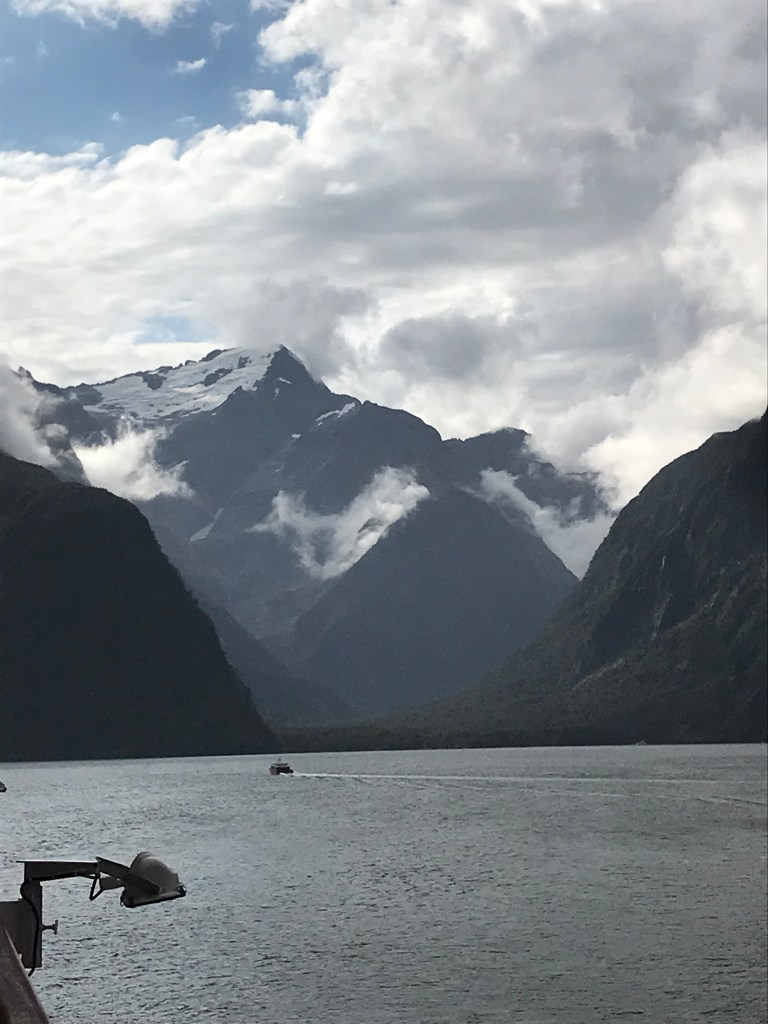
Milford Sound 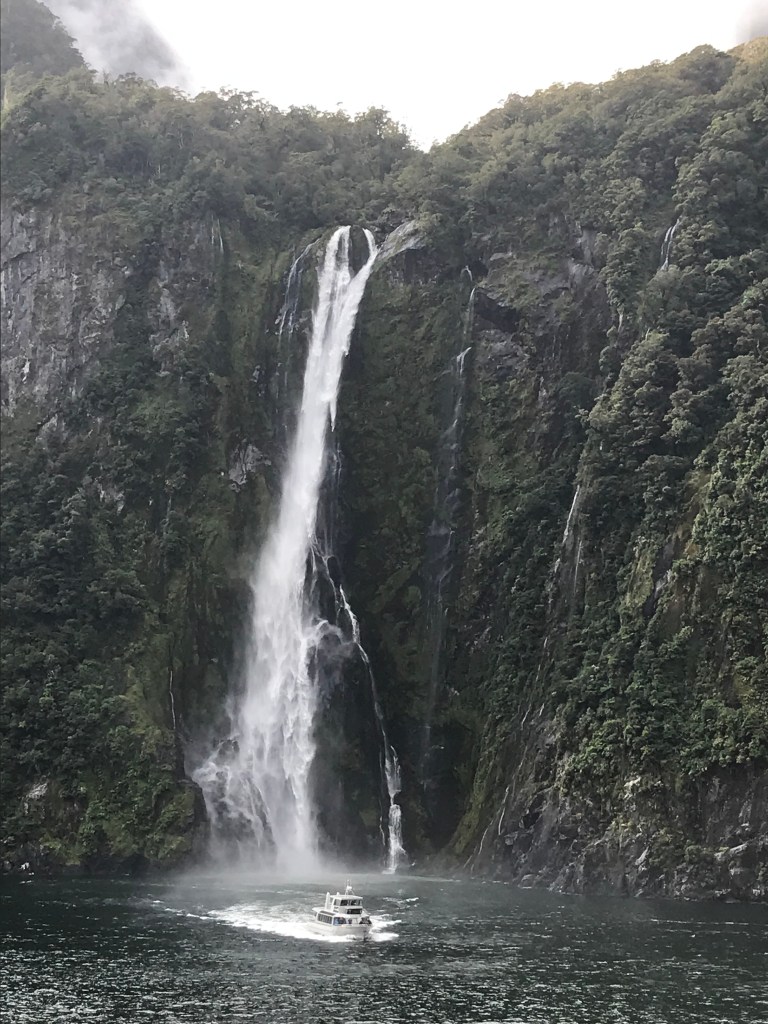
Milford Sound
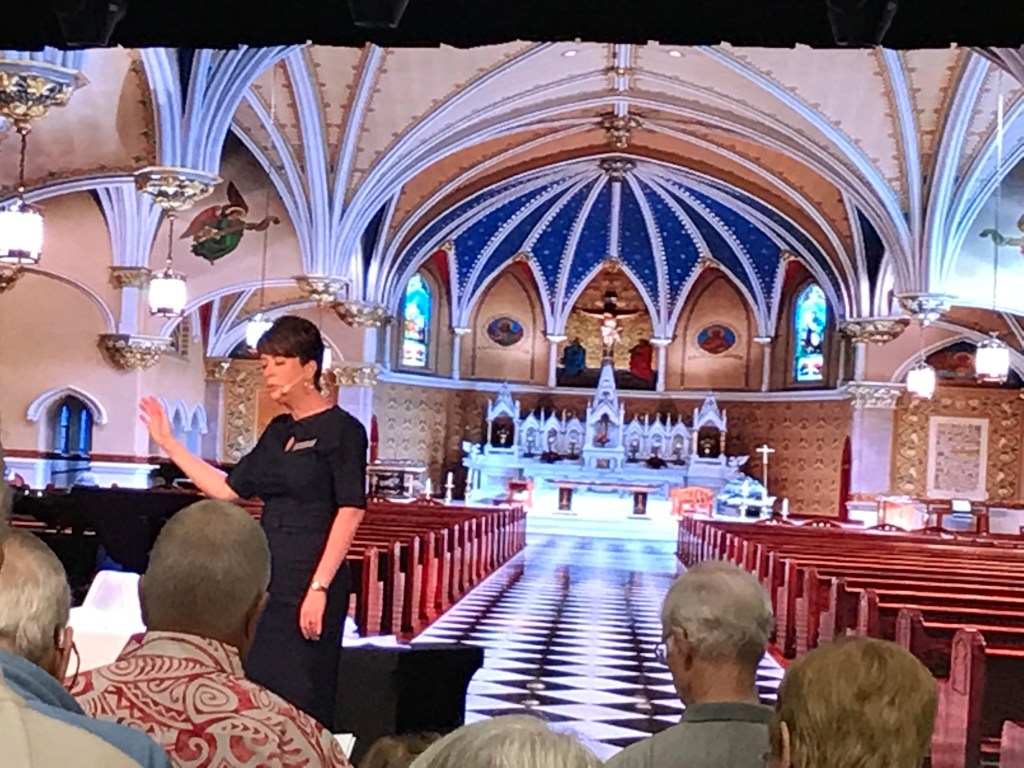
Since Sunday was such a full day, we had church on Monday, complete with communion. The chef had baked individual rolls or wafers and we dipped them in red wine in huge wine glasses. As usual, it was a wonderful service. Heather Clancy, our Cruise Director, who leads it says there is an association of cruise chaplaincy, the source of the order of service and also the bone structure of the homilies (to which she, of course, makes her own inimitable additions.)
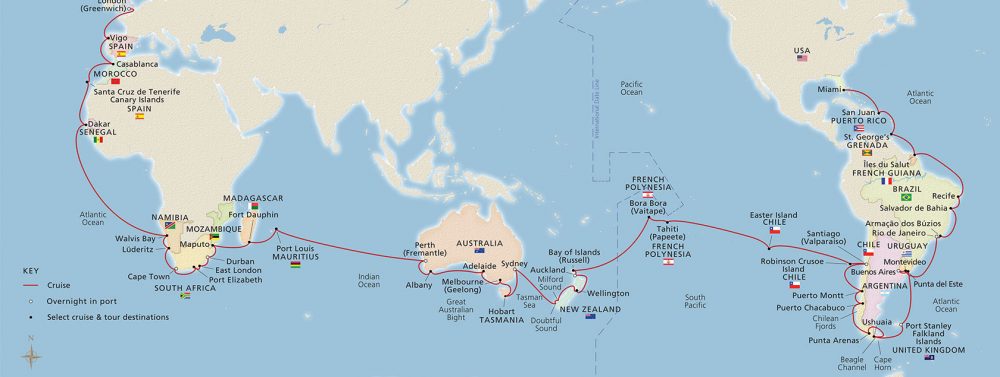
We didn’t see the western part of the Cook Strait because we left Wellington late in the evening. By Monday morning we were sailing down the South Island and spent Tuesday sailing the beautiful Doubtful and Milford Sounds. It was like being back in Patagonia—possibly even more so. Though foggy when we sailed into Doubtful (so named, it is said by James Cook who declined to enter it because it looked a bit tight), by mid afternoon when we entered Milford Sound, the sun had come out and we had a warm sunny traverse. As we prepared to leave, the clouds returned. The waterfall in the above photo is from a ‘hanging valley.’ These valleys were part of the ocean; then sea level dropped and the water flowing through the former ocean valley drops directly off a ‘cliff’ into the current sea as a waterfall.
We continued to have a calm and pleasant a journey across the Tasman Sea to Australia—it can be pretty rough. Besides, we gained two more hours of sleep. We are now 8 hours behind (earlier) Eastern time according to my watch. By the time we finish the cruise we’ll be 5 hours ahead…
Many folk are leaving tomorrow including many of the entertainers. The Virginia Gentlemen, the a cappella group from the University of Virginia, got on in Wellington and leave in Sydney. They’ve been giving two short concerts each day, and it is certainly a change of demographic to see a bunch of college guys running around the ship (especially attired in their ties and blazers.) –Cynthia
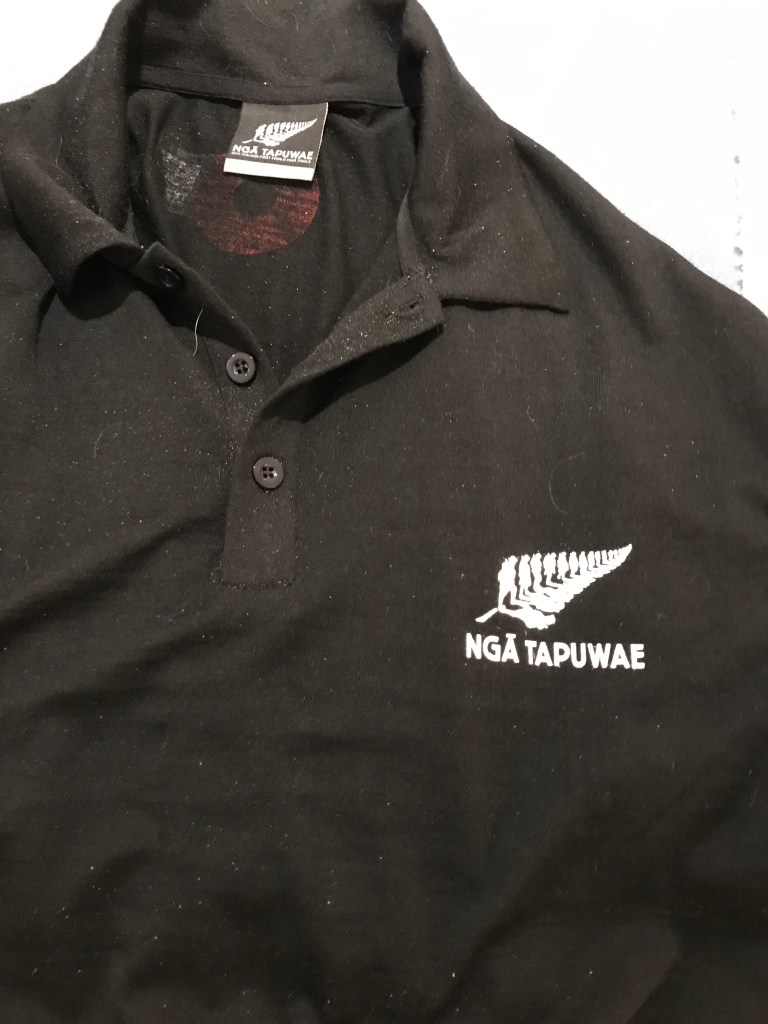
Nga Tapuwae: The Footsteps; and a polo shirt. Back Story: Rugby is New Zealand’s national sport and its national rugby team is the “All Blacks”. While at Middlebury I enjoyed watching Rugby football matches, because several of my students played. I also much enjoyed watching a couple of televised Rugby Union matches, including one in which the All Blacks played (not least because before each match they challenged their opponent with a Haka, a ceremonial, extremely vocal and threatening dance. A Haka is not to be missed: https://www.youtube.com/watch?v=yiKFYTFJ_kw. )
Given the Haka and the grueling, non-stop and competitive nature of the sport, it seems ironic the All Black’s logo is a simple, graceful fern frond. While visiting the National Museum (Te Papa) in Wellington NZ, I purchased an all-black polo shirt bearing ostensibly a fern frond image above the Maori phrase “Nga Tapuwae” (left-hand image above).
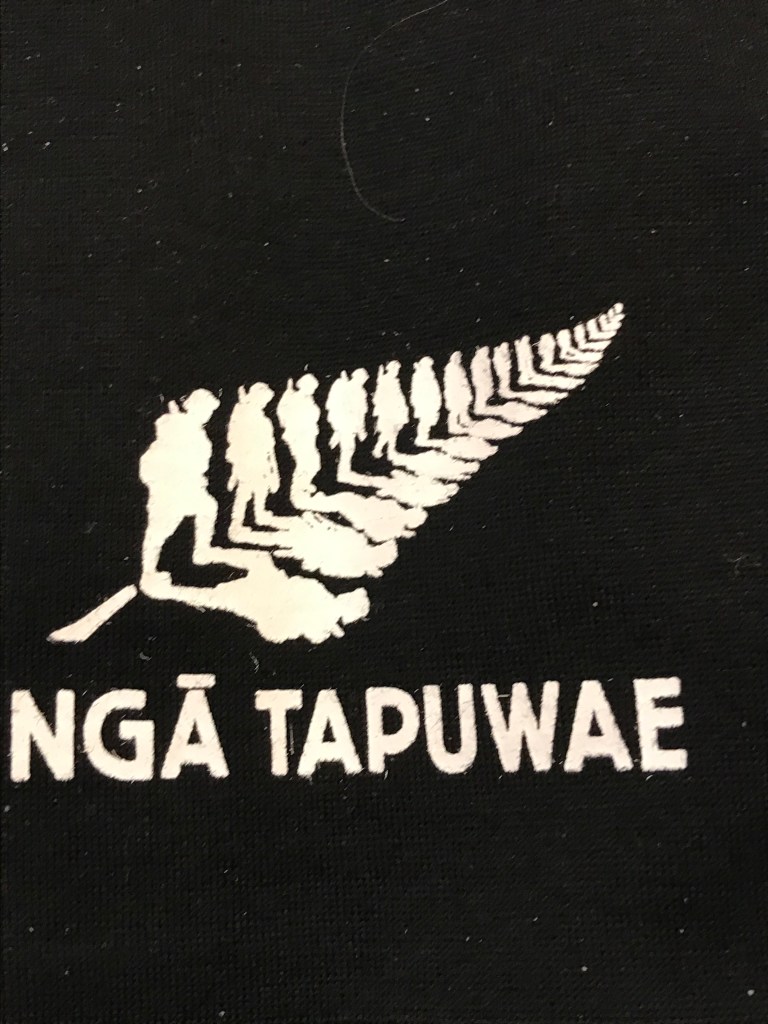
To understand the image’s significance, a fern frond consists of a series of opposing leaflets of decreasing size as one moves outwards along the frond. Close up, however, each leaflet of the polo shirt frond resolves as an image of a soldier and an opposing, mirror image, which is either the reflection of the solder or his shadow (right-hand image above). The solders appear to be trekking along the frond into the distance as the frond decreases in size, moving into the future or the past. “Nga Tapuwae” apparently is a Maori phrase meaning “footsteps”, and is a reference specifically to marches taken by Maori volunteer soldiers during the ill-conceived and ill-fated invasion of Gallipoli (Turkey) and their subsequent redeployment to the Western Front, during WWI.
Historically, I understand their involvement in WWI is the first instance of Maori and Caucasian NZ troops fighting side-by-side (and of NZ and AU troops joining forces in newly formed “ANZAC” (Australian New Zealand Army Corps) regiments, signifying and cementing their combined identities. Many believe the joining of these forces represents the origin of national identities for these “down-under” colonies, as the result of horrendous casualties suffered as a result of poor intelligence, faulty planning and shoddy tactical execution by Winston Churchill, then First Lord of the Admiralty, and his English naval and army staff, as they attempted to open a second front in what they mistakenly considered the soft underbelly of the German and Austo-Hungarian Empire. (The Turkish soldiers were, after all, defending their homeland… and there was nothing soft about their fighting!) Following their retreat, the ANZACs moved from one stalemate along the Dardanelles to another in the first front, in NE France…and one can retrace their footsteps if one wishes and better understand the histories of New Zealand and Australia.— Chris
 C&C travel the seas