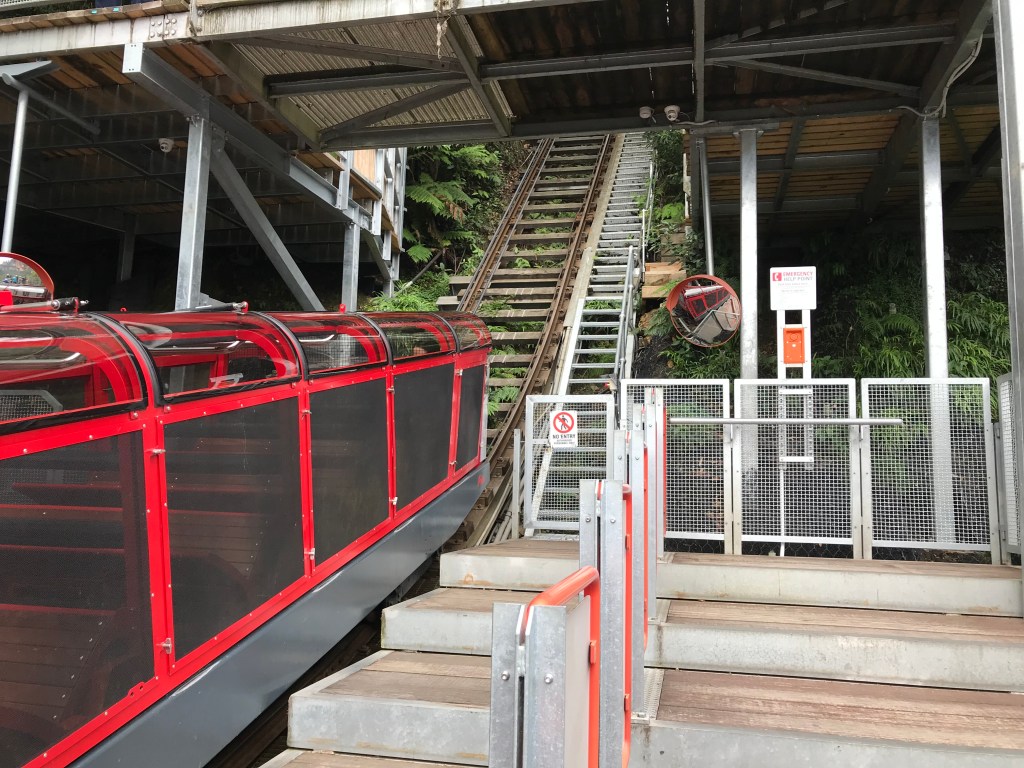
The train waiting in the station 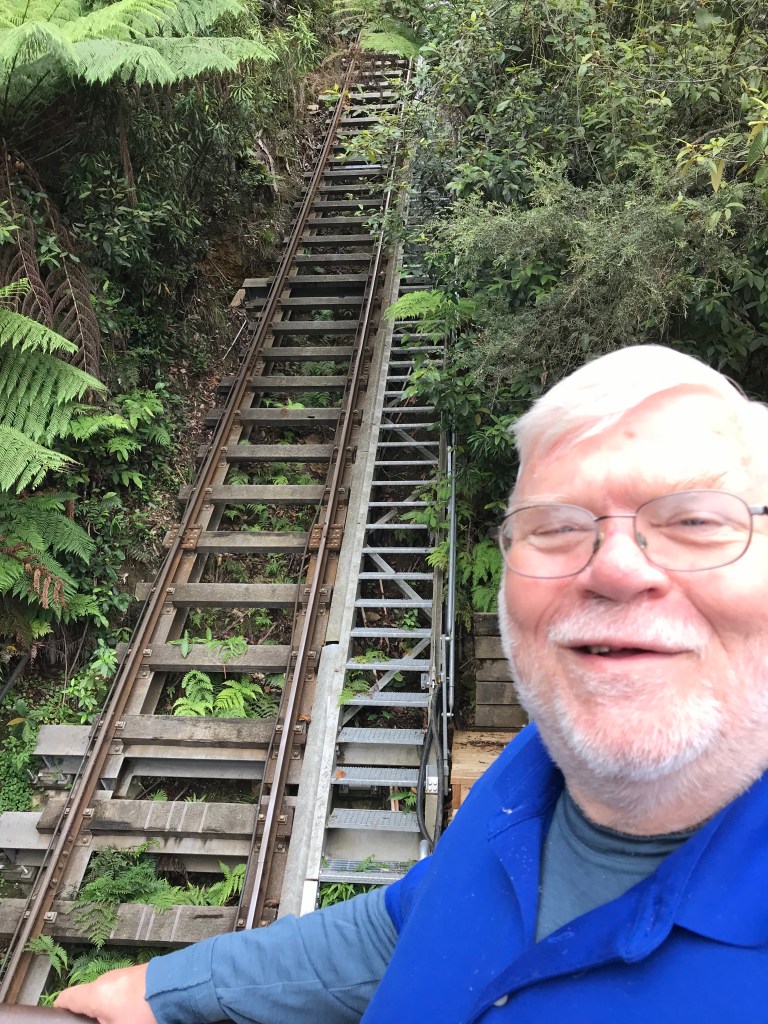
Chris in the station 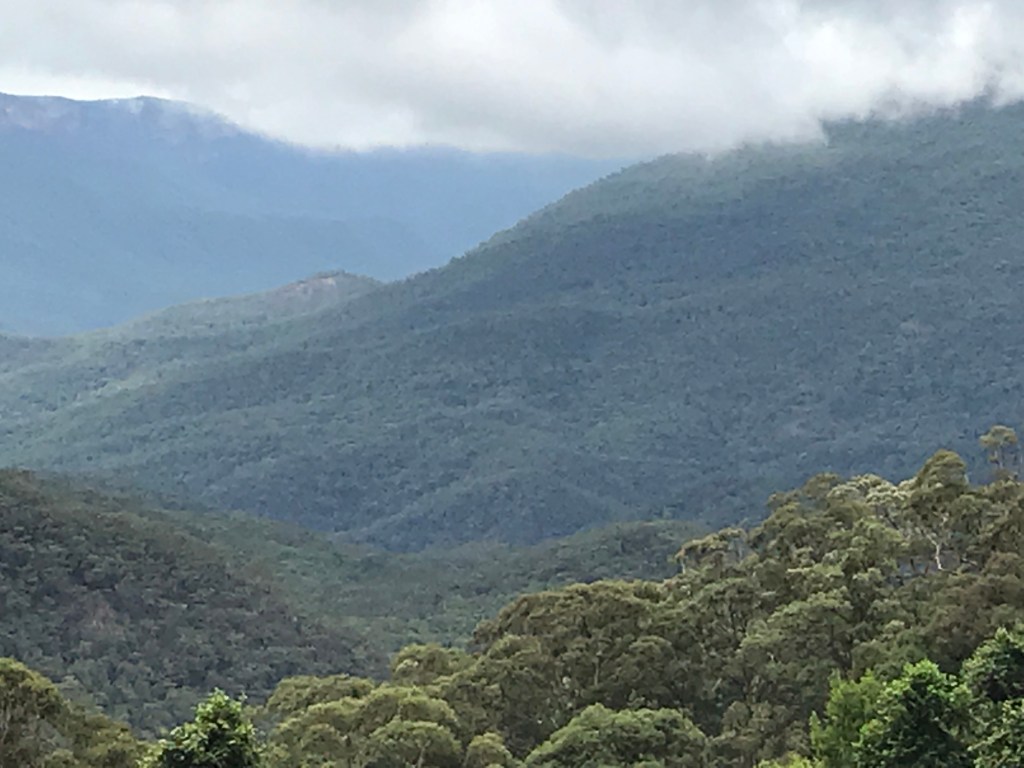
Scene from the mountain 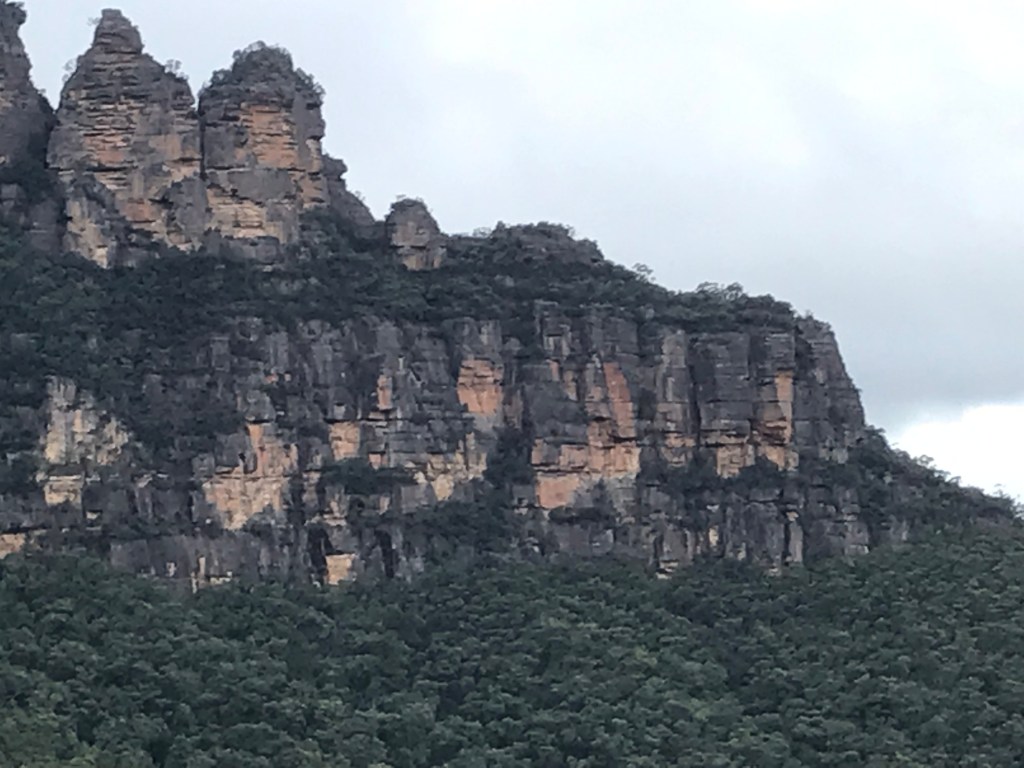
‘Three sisters (rock formations) 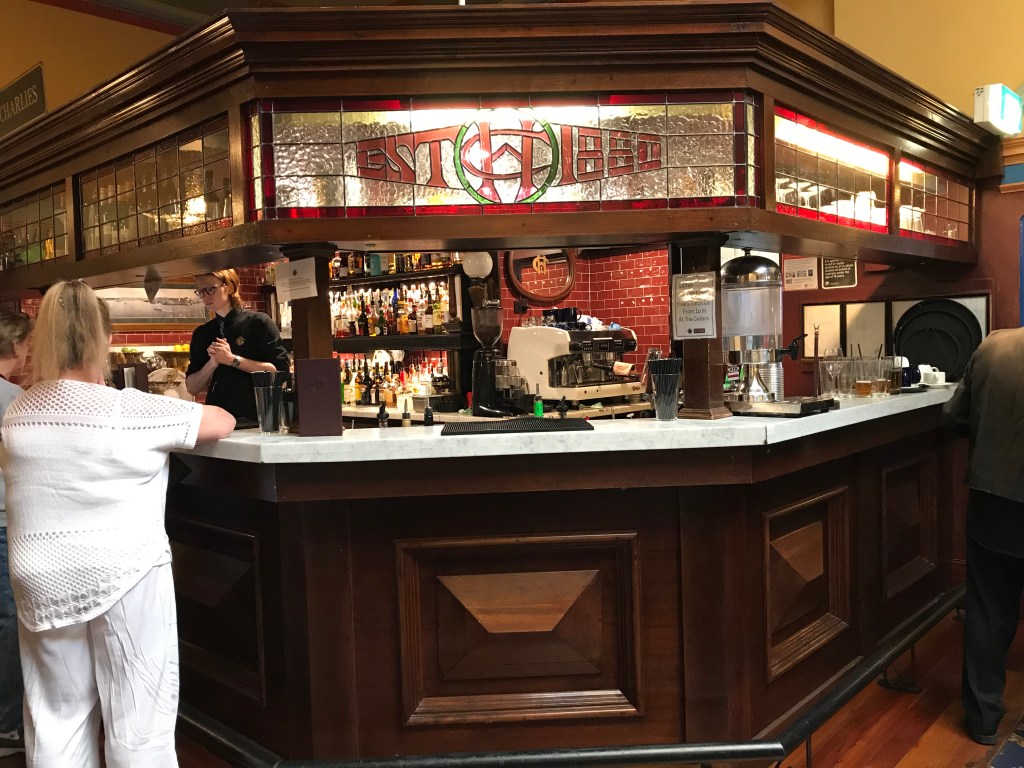
Carrington Hotel bar 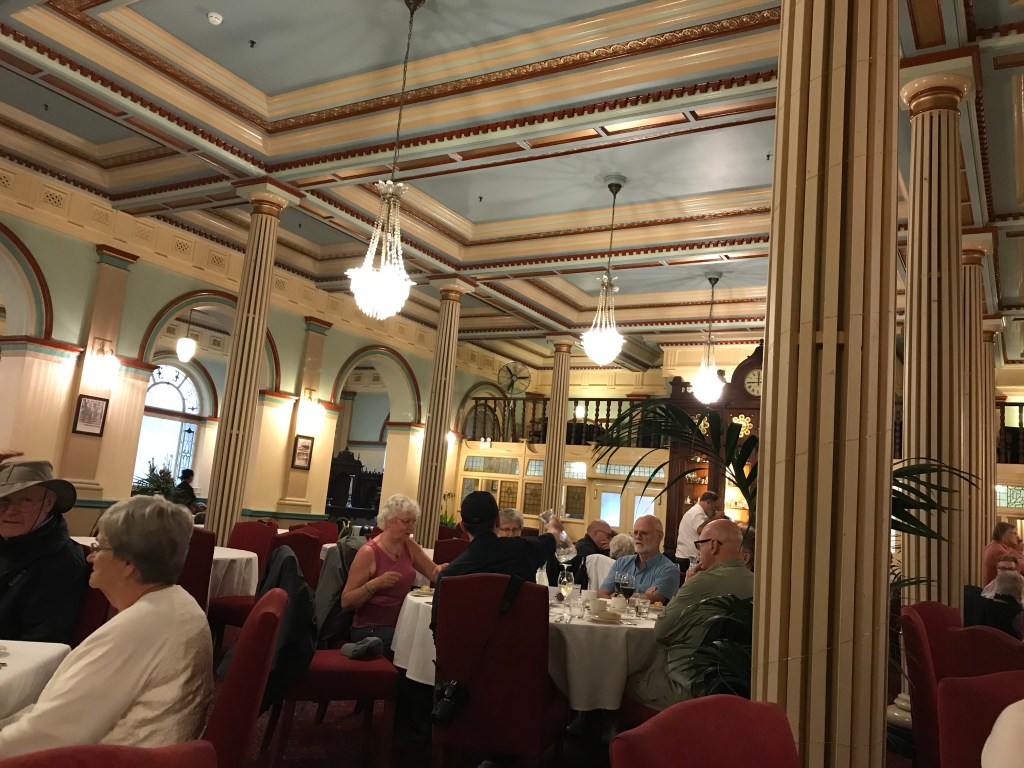
Carrington Hotel dining room 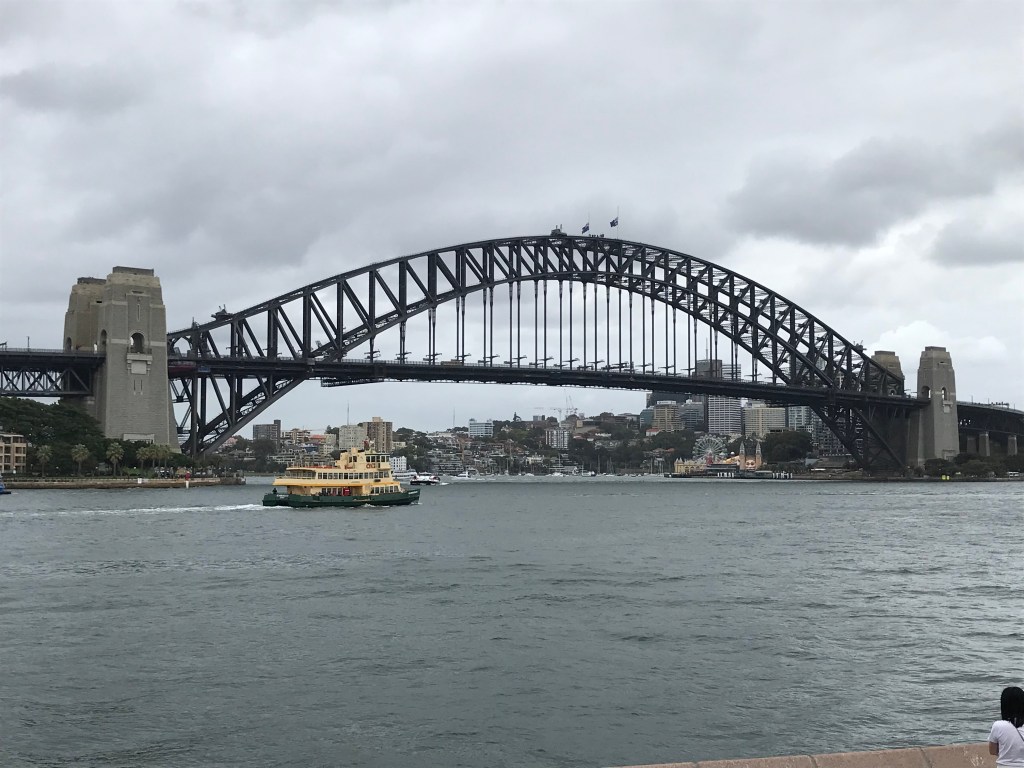
Sydney Harbour Bridge 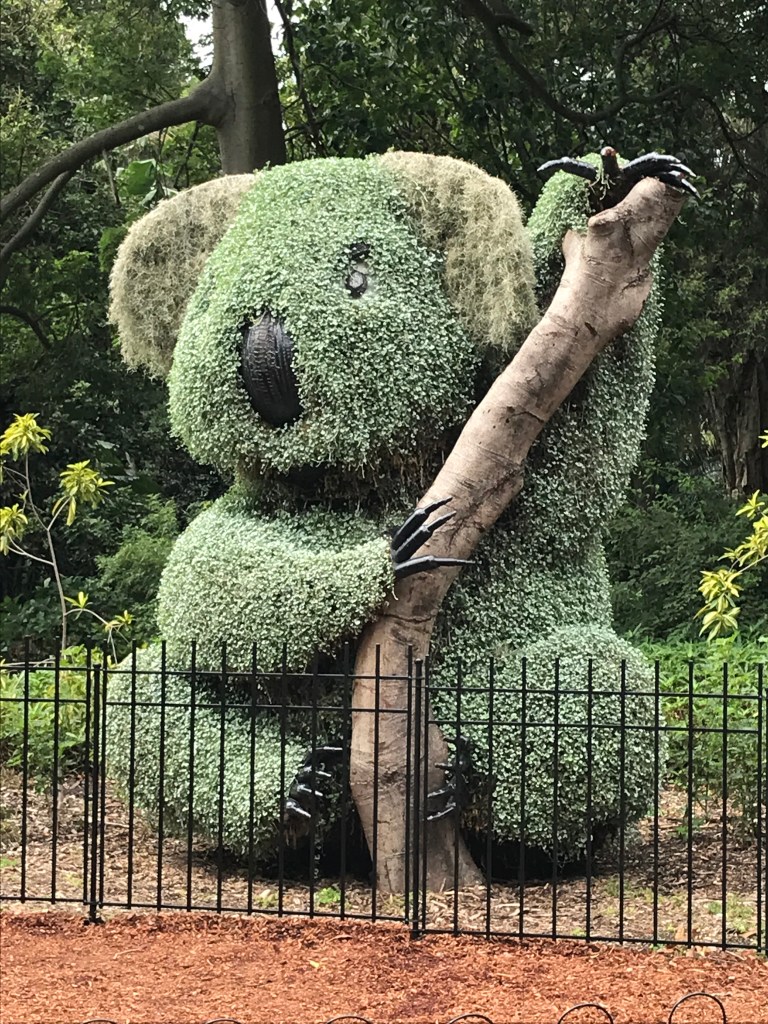
In the botanical garden 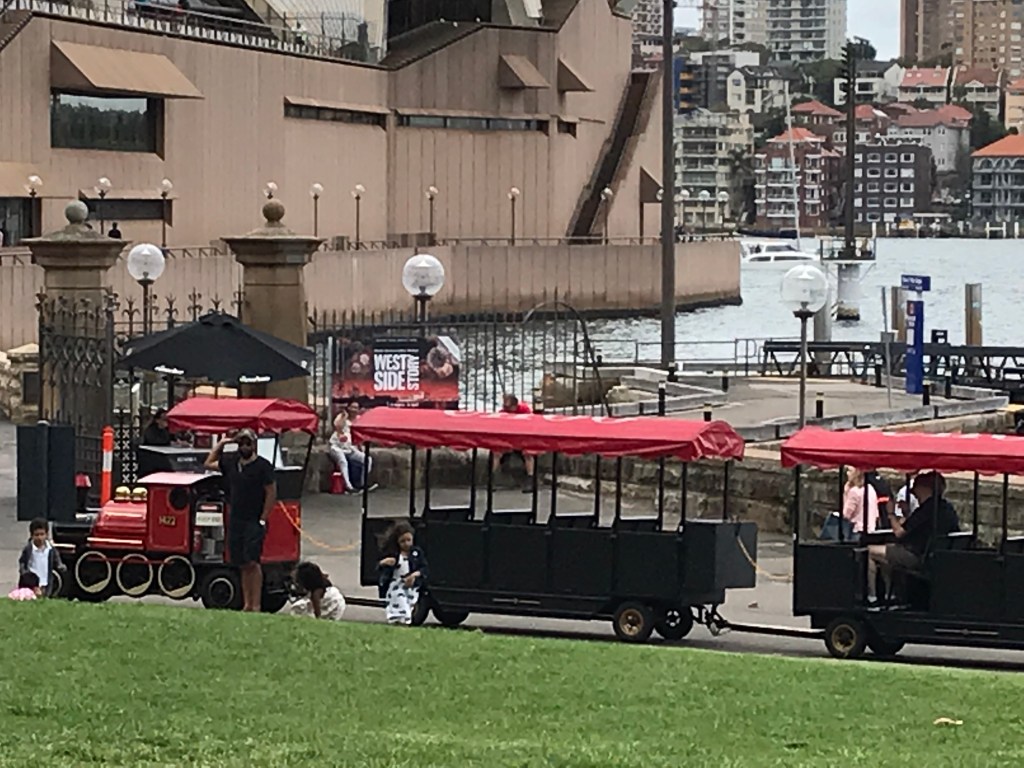
Garden trolley with Opera House in background 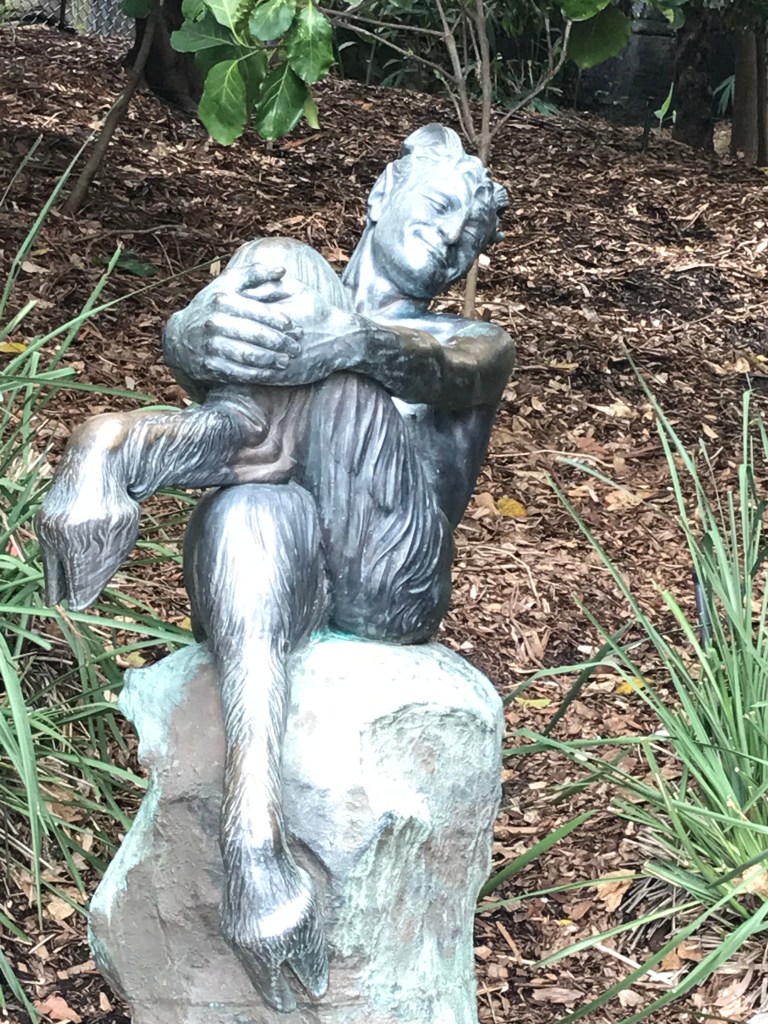
Pan statue in the botanical garden 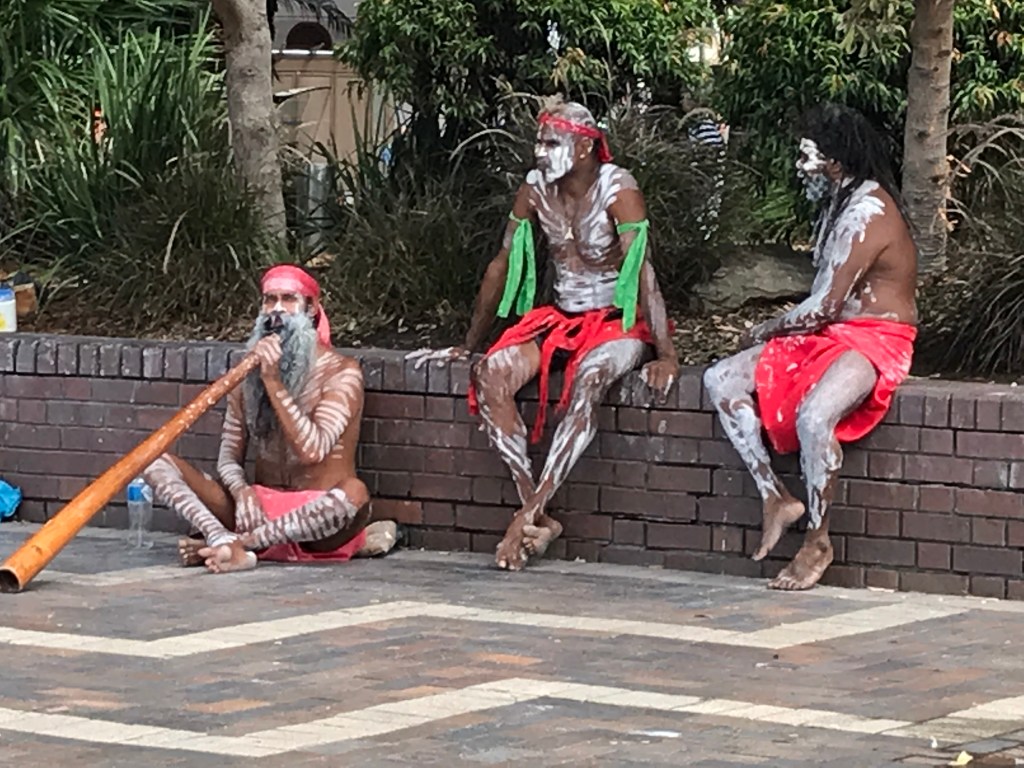
Aborigines playing digereedoo 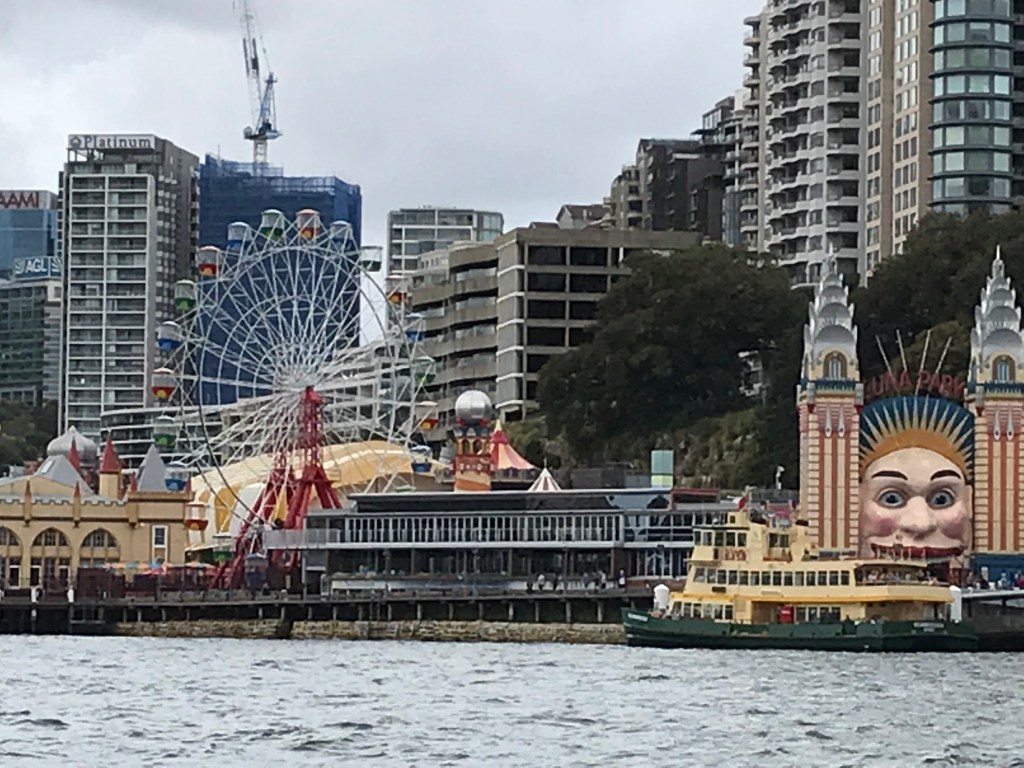
Amusement Park on the harbor 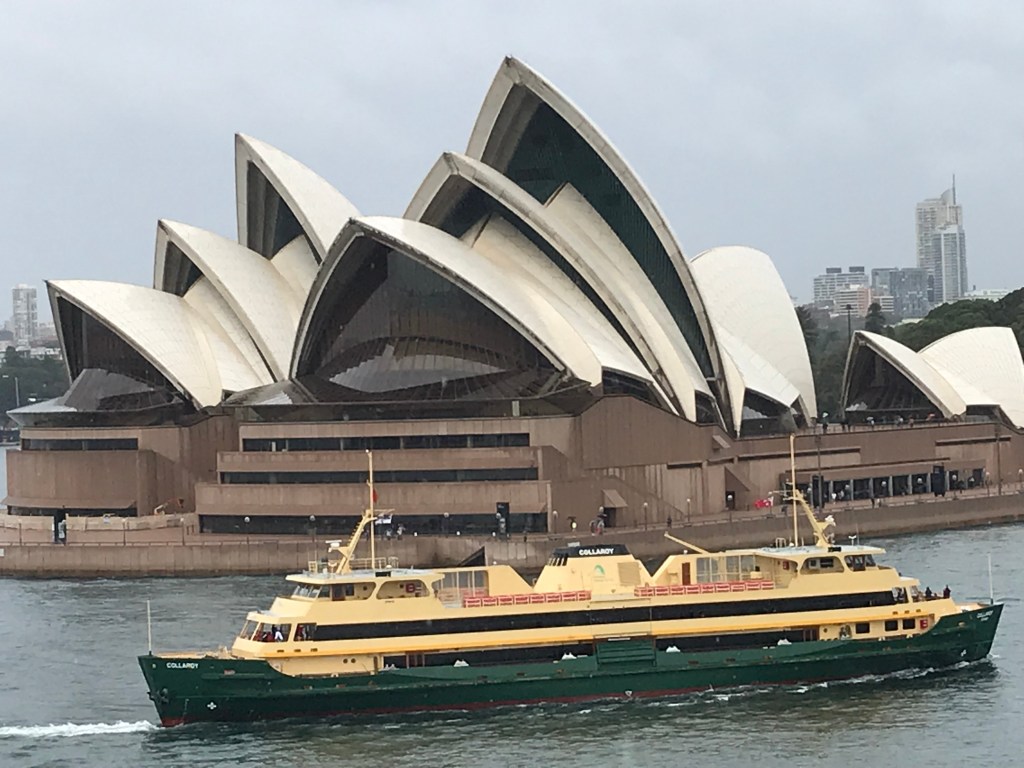
Sydney Opera House with ferry in foreground
Three days of rain were predicted for Sydney, but, fortunately, it didn’t all materialize. We were told it rained heavily the night before we arrived. I believe, however, the ‘normal’ weather is more sunny than rainy. It was in the 70s so reasonably warm.
Friday. We arrived in Sydney in the dark and met for our first excursion at 7:10 am—definitely before my preferred hour for being awake and fed—a 9-hour tour to the Blue Mountains just west of Sydney.
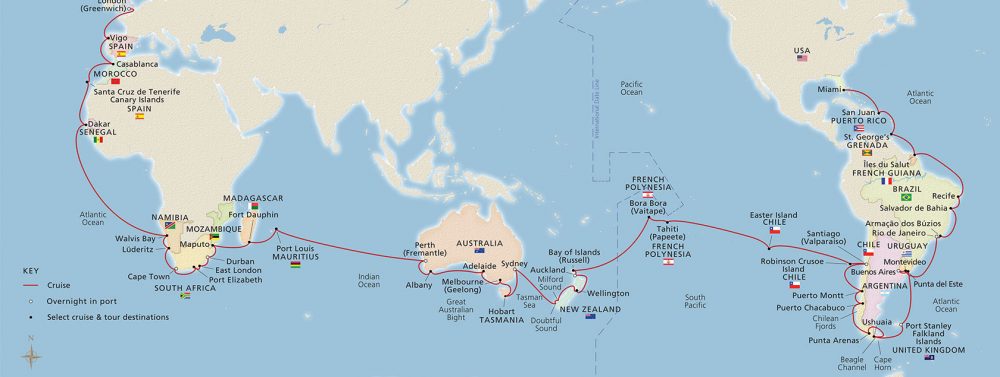
The destination in the Blue Mountains was in a way more of a theme park. We descended a mountain on a train at a 52 degree angle! Coming back up was even more impressive (scary, choose your adjective). Next we tried a cable car over a gorge. Unfortunately, in the fog we couldn’t see much. There were some Asian tour groups there at the same time and I was amused to see in the toilet stall the sign above indicating they receive a lot of Asian tourists. I recall seeing the same signs in the Bangkok airport. Nonetheless, it says something about facilities available in Asian countries even for people wealthy enough to go on overseas tours.
We had lunch at an iconic historic hotel, now I think mostly held together by the tourist groups.
Returning just before dinner time, we crossed paths with many passengers dressed up and leaving for the opera at the Sydney Opera House. Salome, I believe.
Saturday. We had no tours planned today and Chris wasn’t feeling well so I took the boat shuttle from our dock a couple of bays away to Circular Quay, what I see as the heart of Sydney. With the Opera House on one side of the u-shaped bay and ‘The Rocks’ a now bustling shopping and restaurant area on the other and many shops and restaurants along the quay itself, this is a fun place to be and I walked much of it. On the shuttle I encountered a couple heading to the Opera (La Boheme this time)—they mentioned they could not go in the evening because they hadn’t brought ties!
The Sydney Harbour is one of the best and longest natural harbors in the world, emerging as it does from the estuary of the Paramatta River. With its many twists and bays, it makes for a lovely harbor cruise. The Sydney waterfront is also wonderfully done with many parks and walkways.
On the other side of the Opera House peninsula is the Royal Botanic garden which stretches for two bays and is a grand and welcoming park. I walked through it and saw many families enjoying what turned out to be a warm sunny afternoon.
Sunday. Today was truly and undeniable raining—pouring even. We did the ‘included’ tour, which was a bus ride around the highlights of Sydney. When we reached the viewpoints and photo stops, we and most others remained on the bus but were still drenched just getting from the bus to the ship. The major stop was at Bondi Beach. Fortunately we’ve been there before—on a nice day—reinforcing our decision not to get out of the bus. I had actually seen many of the highlights from my walk the day before, and I was most struck by how close to each other and walkable they were from the waterfront and yet how far apart they seemed from a bus negotiating traffic.
Australia, in recent years, has become proud of its convict background—not their treatment, but rather convicts as their ancestors. Our guides in Sydney all spoke of the great contributions made by former prisoners, most of whom remained in the area after their terms ended (if they survived), including designing important and beautiful buildings and becoming important and wealthy businessmen contributing much to the growth of the colony. One building designer in particular was transported for forgery and is now featured on the $10 bill.
They are also proud to be a country of immigrants. One guide mentioned the first immigrants arriving 50,000 years ago (presumably from Indonesia, which is very close to the north of Australia). Of course, the British (including a lot of Irish) arrived in the 19th century and, since then immigrants have come from all over beginning perhaps in the aftermath of each world war. Although they had an embarrassing ‘whites only’ policy for a long time, that was finally rescinded, and now Asia is the source of many of their immigrants. I’ve forgotten what we were told in Sydney, but our cruise director mentioned that, after English, the most prevalent languages in Tasmania are Mandarin, Tibetan, German, Italian, and another I’ve forgotten. Now that I think of it, almost everywhere we’ve been the guides have stressed their multiculturalism and their ’nation of immigrants’ identity.
We sailed away just after lunch. It should be a lovely trip down the harbor, and many of us gathered in the front lounge eagerly with our cameras, but really it was still pouring rain so not that enticing.
 C&C travel the seas